As fencing is based on two noble concepts: namely, the cuts on the one hand—with which you desire to bring your enemy to a standstill—and the counteractions on the other hand—that is, how you remove the strikes which your enemy directs at you and how you should make [them] a powerless thing of no importance. The manner in which you complete the cuts and direct them in the work has been sufficiently explained earlier, and because each cut is used both for defense against your enemy’s strike (in order to remove [it]) and also to injure their body, the cuts could not be taught without teaching about the counteractions. Therefore, as you previously learned to cut the cuts, you will likewise have also been taught and instructed how you should move the cuts aside. This cannot be separated (whether or not it now really belongs to the cuts), yet it is also necessary to deal specifically with this using a different division.
Therefore, take note from the beginning that the counteraction is two-fold.
The first is that you only counteract in the common way, due to fear and without any specific advantage, in which you then do nothing except hold your weapon in opposition to your counterfencer, such that you catch the strikes as they occur from your opponent. Also, you do not desire to damage them; it is solely sufficient that you can withdraw from them without injury.
NAch dem das Fechten auff zweyen fürnemen stucken beruhet, als nemlich zum ersten auff den
Häuwen mit welchen du dein feindt begerst zustillen, dann zum andern auff dem Versetzen,
das ist wie du die Häuw so von deinem feindt auff dich gericht möchst abschaffen, krafftloß und
die nichtsöllig machen solt. Wie du aber die Häuw volbringen und ins werck richten, ist hievor
gnugsam erkleret, dieweil aber ein jeder Hauw so wol zur gegenwehr deins feindts streich,
damit abzuschaffen gebraucht wirt, als zur verletzung seins leibs, haben die Häuw ohn mit lehrung
der versatzungen nicht können gelehrt werden, derwegen wie du bißher gelehrt die Häuw [Ⅰ.15v.1] hauwen bistu zugleich auch wie du die Häuw abtragen solt, gelert und underricht worden, dises
ob es wol mit den Häuwen wie jetzt gehört, nit kan abgesondert werden, wil doch von nöten sein,
hie von insonderheit mit underschiedlicher theilung zuhandlen. Merck derwegen anfenglich
das des Versetzens zweyerley ist, das erste ist da du ohn allen sondern vortheil, gemeniglich nur
aus forcht versetzest, in welchem du nichts anders thust, dann mit deinem Wehr, so du deinem
gegenfechter entgegen heltst die streich die von im beschehen aufffahest, auch nit begerest ihn zu beschedigen, allein benüget an dem, wie du ohn schaden von ihm abziehen mögest.
Ⅰ.15r.3Ⅰ.15v.1
8.1linked passage
8.2
[2] When you are compelled into this counteraction with force and haste, observe that you can still free yourself by stepping away and you can return with advantage in the Before. Liechtenauer also informs about this counteraction, when he states:
Guard yourself from counteraction; if this plight happens to you, it will burden you.
1570 Edition · fol. Ⅰ.15v.2
[Ⅰ.15v.2] Wenn du aber zu disem versetzen mit gewalt unnd ubereilen getrungen wurdest, so sihe doch
das du dich mit abtritten endtledigest, und mit vortheil zum Vor wider kommen mögest, Von
dieser versatzung nun, thut auch Lichtenawer meldung da er spricht.
Vor versetzen hüt dich, Geschichts dir not es mühet dich.
Ⅰ.15v.2
8.2linked passage
8.3
[3] He does not intend to absolutely forbid the counteraction with this, meaning that you should not learn anything except cutting. However, it is to your detriment (as mentioned above) if you were to accustom yourself to counteract to the point that it becomes an excess, such that you would be forced to only counteract. Thus, it is not useful that you scream loudly with strikes, nor that you would want to thoughtlessly cut in simultaneously with their strikes with your eyes closed. This is not fencing, but instead is consistent with a foolhardy peasant’s brawl.
1570 Edition · fol. Ⅰ.15v.3
[Ⅰ.15v.3] Mit welchem er das versetzen darumb nit gar wil verbieten, nemlich das du nichts anders
dann zuhauwen lehren solt, dann wie es dein schad, wie droben gehört, wann du dich auff das
versetzen woltest gewehnen, dieweil es an dem zuvil, so du zu versetzen gedrungen wurdest, Also
ist es nicht nutz so du mit streichen uberbolderst, gleichfals auch hingegen unbedacht gleichsam
mit zugethanen augen hinwider mit seinen streichen zuglich hinein Hauwen woltest, welches
dann keinem Fechten, sonder vil mehr einem unbesunnenen Bawren getrösch gleichförmig.
Ⅰ.15v.3
8.3linked passage
8.4
[4] For the sake of greater usefulness, I want to separate out cuts and the counteractions that occur with a strike and to teach you solely how you should use such cuts for counteracting, which can also occur in two ways. Firstly, when you proceed to move your counterpart’s strike aside or rebuff it with a cut, and after you take their frontal defense, you rush their body with a cut.
1570 Edition · fol. Ⅰ.15v.4
[Ⅰ.15v.4] Aber umb mehrer nutz willens, will ichs Hauwen und versetzen so mit einem streich geschicht
alhie abtheilen, und dich lehren allein wie du solche Häuw zu versatzung brauchen solt, welches
dann auch auff zweierley weiß mag beschehen, Erstlich da du deines gegenparts streich zuvor
abtregst, oder mit einem Hauw abweisest, darnach wenn du im die vorwehr genommen, mit
einem Hauw seinem leib zueilest.
Ⅰ.15v.4
8.4linked passage
8.5
[5] The other type of counteraction is that you simultaneously counteract and injure your counterpart, which the Old Masters then praise as deservedly superb. The saying arose from this that, “a correct fencer doesn’t [solely] counteract, but instead, if their opponent cuts, then they also cut; if their opponent steps, then they also step; if their opponent thrusts, then they also thrust.”
1570 Edition · fol. Ⅰ.16r.1
[Ⅰ.16r.1] Die ander Art zuversetzen ist, da du dein widerpart in einem streich zugleich versetzest und verletzest,
welches die alten fürnemlich wie denn billich loben, daher das sprichwort erwachsen, ein
rechter Fechter versetzet nicht, sonder Hauwet man so Hauwet er auch, trit man so trit er auch,
sticht man so sticht er auch.
Ⅰ.16r.1
8.5linked passage
8.6
[6] Regarding the first: you should now know that the High Cut suppresses all other cuts below itself from above (thus the Wrath, Middle or Crossing, and Low Cut). In this way, when you leap out of their cut and simultaneously cut at their cut in that moment in which they strongly let fly (such that you correctly hit the same), you weaken their weapon to an extent that you can well cut the second [strike] at their body before they correctly recover.
Now, as the High Cut (from above with a downward motion) suppresses all the other strikes, it would be driven off by the Wrath or Crossing Cut, and the Low Cut also takes out the High Cut by lifting the High Cut upward (if it is executed with strength and if it is supported by stepping out).
1570 Edition · fol. Ⅰ.16r.2
[Ⅰ.16r.2] Von ersten soltu nun wissen, das der Oberhauw alle andere häuw als den Zorn, Mittel, oder
Uberzwerch unnd Underhauw, von Oben undersich dempffet, auff dise weiß wann du ihm
auß seinem Hauw springest, und zugleich auff seinen Hauw in dem er herfleucht mit sterck Hauwest,
damit du ihm so du anders recht antroffen, sein Wehr dermassen schwechst, das du den
andern wol zu seinem leib Hauwen kanst, ehe er sich recht erholet. Wie nun der Oberhauw
die andern streich alle von Oben nider dempfft, so würdt er von dem Zorn oder Uberzwerchhauw
abgetriben, und nimpt auch der Under so er mit sterck geschicht, unnd dem mit außtretten
geholffen wirdt, die Oberhäuw ubersich aus.
Ⅰ.16r.2
8.6linked passage
8.7
[7] If two identical cuts with their assigned steps thus occur together—so that one fencer steps a little before or after the other, as that also occurs in the blink of an eye—the cuts also bring their counteraction into play. This counteraction is included in the first and straight cuts.
The second counteraction is that you simultaneously counteract and hit, which occurs with the inverted cuts like the Squinter, Glancing, Crown, and Crosswise Cuts. You heard above during the explanation of each cut how these are to be completed.
1570 Edition · fol. Ⅰ.16r.3
[Ⅰ.16r.3] Wo aber zwen gleicher häuw mit ihren zugeordneten tritten also zusamen geschehen, das ein
trit ein wenig vor oder nach dem andern, wie das auch augenblicks geschicht, so bringen sie ihre
versatzung mit, dise versatzung aber ist begriffen in den ersten und geraden Häuwen, die ander
versatzung aber ist, da du zugleich versetzest und triffst, geschicht mit den verkehrten häuwen,
als den Schielhauw, Glütz, Kron, unnd Zwirchhauw, wie solches denn volbracht, hastu
Oben bey erklerung eines jeden Hauwes gehört.
Ⅰ.16r.3
8.7linked passage
8.8
[8] These inverted cuts were superbly invented for the purpose that using them simultaneously counteracts and hits. Therefore, so that I deceive in nothing and so that you can be well advised to greater understanding and instruction, I will provide an example of the counteraction with the Crosswise Cut.
1570 Edition · fol. Ⅰ.16r.4
[Ⅰ.16r.4] Dann solche verkehrte Häuw sind fürnemlich darzu erfunden, das damit zugleich versetzt
und getroffen wirdt. Aber damit ich nichts hindergehe, so du zu mehrerm verstand und underweisung
möcht gerathen, will ich ein Exempel des versetzens mit dem Zwirchhauw geben.
Ⅰ.16r.4
8.8linked passage
8.9
[9] Position yourself into the Wrath Guard. If you are cut at from above, step with your right foot toward your counterpart’s side and cut a Crosswise Cut—that is, short edge across and inward simultaneously—such that you intercept their cut on the Strong of your blade close to their crossguard and you hit their left ear with the outer part of your sword. Thus, you have then simultaneously counteracted and hit, one with the other.
1570 Edition · fol. Ⅰ.16v.1
[Ⅰ.16v.1] Schick dich in die Zornhut, wirt denn auff dich von Oben her gehauwen, so trit mit dem
Rechten fuß gegen deines widerparts seiten, und Hauw mit einer Zwirch das ist, kurtzerschneid
uberzwerch zu gleich mit hinein, also das du sein Hauw auff die sterck deiner klingen, nahe bey
deiner Kreutzstangen aufffangest, und mit dem eussern theil deines Schwerdts sein Linck Ohr
treffest, so hastu denn zugleich versetzet und getroffen mit einander.
Ⅰ.16v.1
8.9linked passage
8.10
[10] Regarding the other cuts which neither counteract nor hit, such as the Short Cut and Misser, etc.: [they] are not actually considered to be part of fencing, but instead are admitted only due to circumstances or by chance so that fencers can use them to mislead, incite, anger their opponent, and drive their opponent from their advantage. This does not often occur without risk, so no counteraction can occur when using them.
1570 Edition · fol. Ⅰ.16v.2
[Ⅰ.16v.2] Was die andere Häuw mit welchen weder versetzt noch troffen wirt, als da ist der Kurtzhauw
und Feler &c. werden eigentlich dem Fechten nit zugerechnet, sonder nur per accidens oder
zufelliger weiß zugegeben, den Mann damit zuverfüren anzureitzen, zornig zumachen, und aus
seinem vortheil zutreiben, welches denn offtermals nicht ohn gefahr beschicht, kan derwegen damit
kein versatzung auch nit beschehen.
Following the previous, sufficient reports made in the first part of the fencing, both about the stances and cuts; these have brought you to this point where, by using the same, you will come under your opponent’s sword. The correct seriousness and striving arise only at this point: namely, how you drive them, frighten them, and force them to such an extent with all the types of work in the Middle, like misleading, pursuit, changing, doubling, and pressing after, so that with swift work, you can achieve and obtain the prize (which is the goal that all fencers desire).
NAch dem bißher im ersten stuck des Fechtens, beide von den Legern unnd Häuwen gnugsamer
bericht gethan, und die also ferr kommen, das du dem Mann durch dieselben under das Schwerdt kommen,
so erhebt sich erst der Rechte ernst und streit, wie du nemlich mit allerley Mittel arbeit als Verführen,
Nachreisen, Wechseln, Doplieren, Nachtrucken, ihn dermassen treibest, engstigest und zwingest, damit du
den Preiß so als ein ziel dahin alle Fechter begeren, gesteckt, mit geschwinder arbeyt erreichen unnd erhalten
mögest.
Ⅰ.16v.3
8.11linked passage
8.12
[12] It is by no means sufficient and correct to have begun, if you do not likewise also carefully press forwards towards that upon which the major skill is based and which embodies everything in this chapter about Handwork. This must occur in many ways, each of which has its own specific terms and manner of speaking. Therefore, it will be necessary to clearly report and inform you about the same, as to what they are and how they should be completed.
1570 Edition · fol. Ⅰ.16v.4
[Ⅰ.16v.4] Denn es mit nichten gnug wol und recht haben anfangen, wo du nit gleichfals auch fürsichtiglich nachtruckest,
daran dann die gröste kunst gelegen, und alles hie in diesem Capitel der Handtarbeit begriffen. Dieweil aber
dasselbig auff mancherley art geschehen muß, deren jeder sein sonderlich wort und art zu reden hat, wil von nöten
sein, von demselben was sie seyen, wie sie volzogen werden sollen, klerlich bericht zuthun und zuverstendigen.
Ⅰ.16v.4
8.12linked passage
8.13
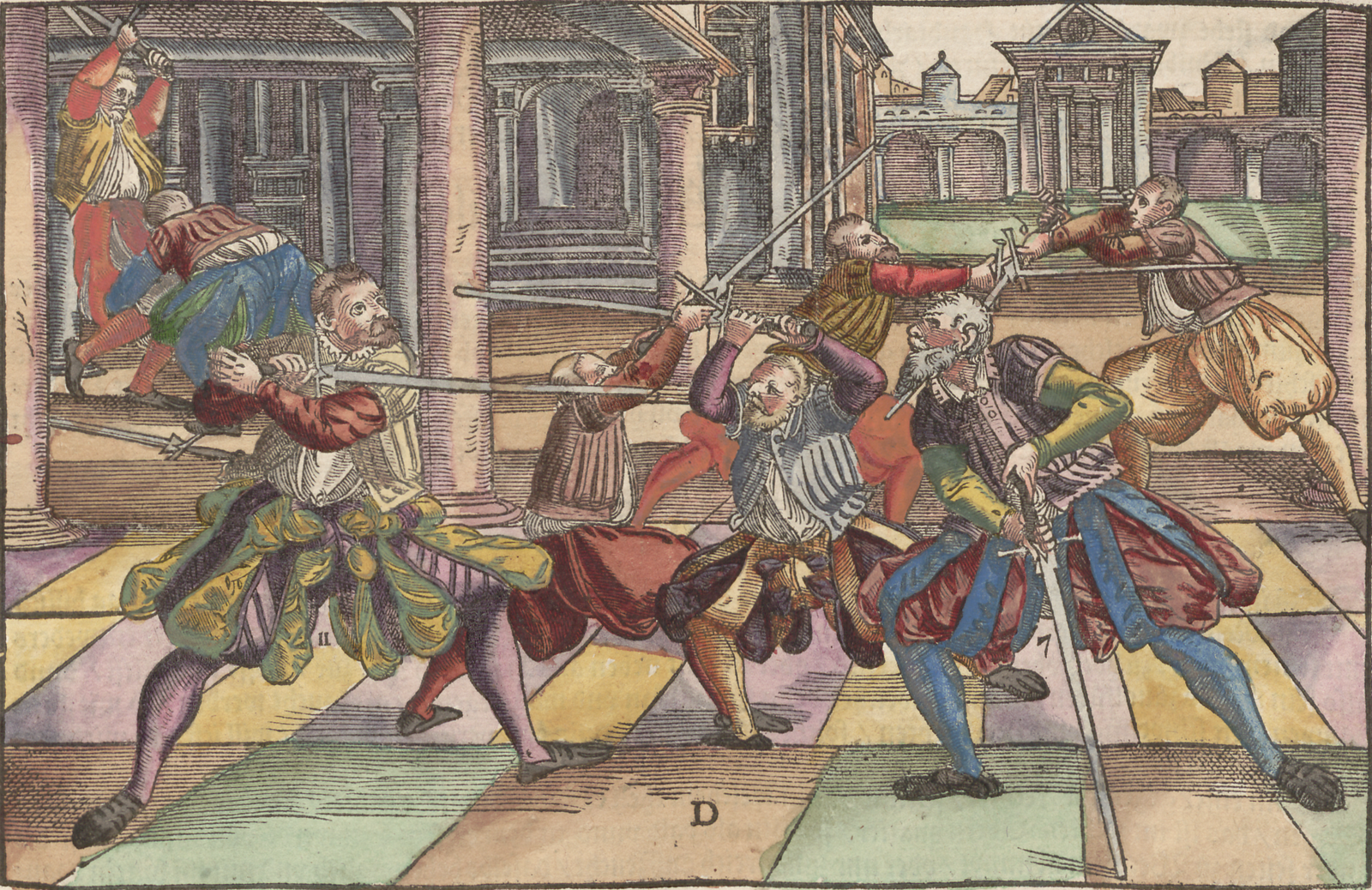
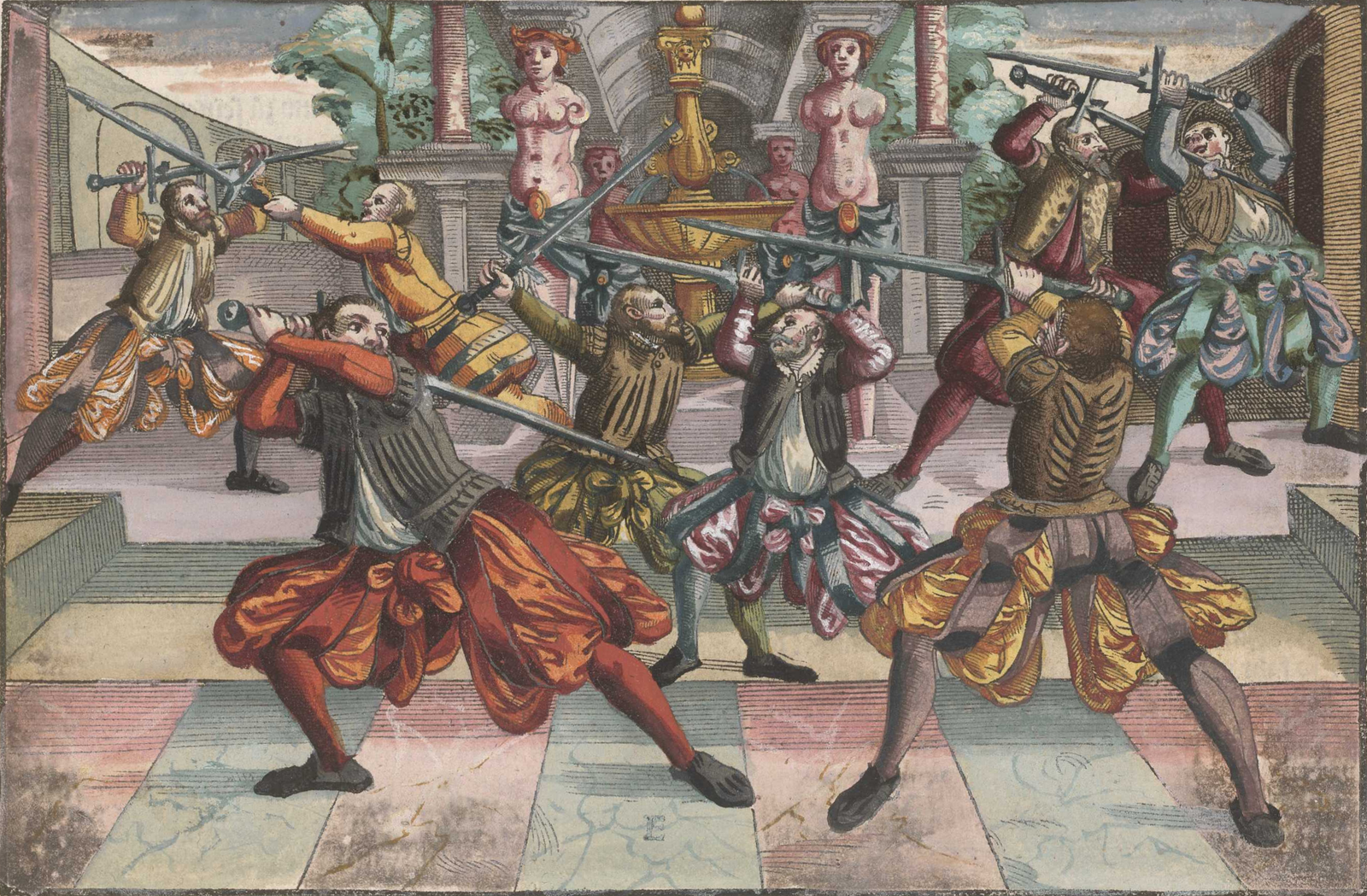
[13] Indeed, the entirety of Handwork is found primarily in the binding (or, that is, remaining): to pursue, slice, strike around, move around, mislead, fly away, set off, counteract, pull, double, invert, snap, miss, circle, round, twist, twist through, change, change through, slice off, crush hands, shift forward, hang, rip out, block, restrict, grip past, run in, etc.
1570 Edition · fol. Ⅰ.17v.1
[Ⅰ.17v.1] Und steht zwar die gantze Handtarbeit vornemlich im Binden oder bleiben, Nachreisen, Schneiden, Umbschlagen,
Umblauffen, Verfüren, Verflügen, Absetzen, Versetzen, Zucken, Doplieren, Verkehren, Schnappen,
Felen, Zirckeln, Rinden, Winden, Durchwinden, Wechseln, Durchwechseln, Abschneiden, Hendtrucken,
Vorschieben, Hengen, Außreissen, Sperren, Verstellen, Ubergreiffen, Einlauffen, &c.
This is when the swords touch on one another. There are two types of remaining: the first, when the swords are held on one another in order to see what an opponent wants to fence and where they want to attack their counterpart.
Afterward, regarding the second, which occurs with strikes: when you position yourself as if you were going to pull a strike in order to recover but only flick back around obliquely, arriving back in again with the short edge at the point where you had cut with the long edge previously.
Remember here the word Fülen, which means something like ‘testing’ or ‘sensing’, so that you can be aware whether they are hard or soft on your sword with their bind, etc.
HEist wann die Schwerdter an einander Rüren, Bleiben ist zweyerley, Erstlich wann die Swerdter an einander
gehalten, zusehen was der Mann will fechten, unnd wo er seinen gegenman anzugreiffen in willens. Darnach
zum andern, welches mit streichen geschicht, wenn du dich stellest, als ob du zuckest einen streich zuerholen, und
nur schlechts widerumb umbschnelst, und mit kurtzer schneid wider dahinein kompst, dahin du zuvor mit Langerschneid
gehauwen. Hie merck das wort fülen welches soviel heist, als brüffen oder empfinden, damit du gewahr
werden magst, ob er mit seinem Band hert oder weich an deinem Schwerdt ist, etc.
This is an especially good Handwork, and whoever is well practiced in this and knows well how to use it can deservedly be praised as a master. You conduct yourself in pursuit like this: you hurry after your counterfencer to the opening (because your counterfencer cuts with their weapon either too high or too low or too far out), and you thus prevent them from completing their cut. This can properly be used against those who fence with the cuts sweeping wide around themselves. I will explain it to you with this example, so that you can better understand it.
DIß ist ein sonder gut Handtarbeit, und welcher darin wol geübt und das wol weiß zu brauchen, mag billich
ein Meister gelobt werden, und helt sich mit dem Nachreisen also, Wann du (so dein gegenfechter entweders
mit seinem Wehr zu hoch uber oder undersich, oder zu weit neben aus Hauwet) ihm zur Blösse nacheilest, unnd
also sein Hauw zuvolfüren hinderst, welches denn füglich kan und mag gegen die gebraucht werden, so mit ihren
hauwen weit schweiffig umb sich Fechten, solches damit du es desto baß verstehen mögest, will ich dirs mit disem
Exempel erkleren.
Ⅰ.17v.3
8.15linked passage
8.16
[16] When an opponent fences against you, [you must] perceive which [of the four] part[s] they hold their sword in. If they move in the right Ox (which is in the upper right quarter), immediately or in that moment in which they lift up their sword from there to change to the other side (or only pull up to strike), you should quickly and cunningly cut under the same and use those cuts and techniques from which you can simultaneously and immediately have your counteraction. If, however, they fence from the low guards, then take note of whether they fence from the left or right sides so that you cunningly follow them with the long edge under their sword and strike at the closest opening immediately and in that moment in which they lift.
1570 Edition · fol. Ⅰ.17v.4
[Ⅰ.17v.4] Wann einer gegen dir Fechtet, so nim war in welchem theil er sein Schwerdt führet, fürt ers dann im rechten
Ochsen, das ist im rechten Obern quatier, so soltu als bald unnd in dem er sein Schwerdt von dannen auff die
ander seiten zu Wechseln abnimpt, oder nur zum streich auffzeucht, daselbs behendiglich und mit list hinein Hau=[Ⅰ.18r.1] wen, und dich doch solcher hauw und stuck gebrauchen, auß welchen du gleich mit und als bald dein versatzung haben
magst, Ficht er aber aus der Underhuten, so merck das du jhm (er Fecht von der Lincken oder Rechten seiten)
als bald und in dem er aufffehrt, underhalb seinem Schwerdt listiglich mit der Langschneid nachfolgest, und der
nechsten Blöß zu streichest.
Among the Handwork, this is also correctly considered a core technique. When you are rushed by your counterpart with quick and fast sequences, you have no better technique to obstruct and hinder than with the slice, which you should keep in mind beforehand in all sequences as a special gem invented for this purpose.
You must complete the slice as follows: after you receive your counterpart’s sword with the bind, you should tarry there, to feel whether they want to lift from the bind or strike around. As soon as they strike around, then follow them with the long edge on their arm, push them back from you with the Strong or ricasso and let fly. Cut at the closest opening before they can recover.
IST under der Handarbeit auch der Rechten kern stuck eines, dann so du von deinem gegenpart mit behenden
und geschwinden stucken ubereilet, kanstu ihn mit keinem andern stuck besser stecken und hindern, dann mit dem
schnit, welches du dir dann auch in allen stucken als ein sonders hie zu erfunden kleinot, im vorraht behalten solt,
Du must aber das Schneiden also volbringen, nach dem du deines widerparts Schwerdt mit dem Band empfangen,
soltu daran verharren, zufülen ob er vom Bandt abgehn oder umbschlagen wolt, als bald er umbschlegt, so
fahr ihm mit der Langen schneiden auff sein Arm nach, stoß ihn mit der sterck oder schilt im ruck von dir, laß fliegen,
und ehe er sich erholen mag, so Hauwe der nechsten Blössen zu.
Striking around from the sword means that when you are bound on from your right toward their left, lift back from the same bind to strike around or flick a strike at the other side.
HEist vom Schwerdt umbschlagen, wann du von deiner Rechten gegen seiner Lincken angebunden, vom selben
Bandt wider abgehest, zur andern seiten umbschlegest oder zu schnellest.
[Dropping down] is: from whichever side you bind your opponent on their sword, then in that moment in which the sword touches, invert your hand and let it drop down with the half edge facing downward, and while that occurs, pull your hilt upwards into the high to strike, and this can be executed on both sides.
IST, von welcher Handt du dem Mann an sein Schwerdt bindest, so verkehr in dem es riert dein Hand,
und laß mit halber schneid undersich ablauffen, und zuck under des dein Hefft ubersich in die höh zum streich,
und solches treib zu beiden seiten.
[Misleading] is completed like this: when you display with gestures as if you wanted to fence at an opening of your counterpart, but you do not execute it and instead hit the strike at another opening (at which you think you can most properly arrive without injury). Yet many other techniques belong to misleading, like the Squinter Cut with the face, the missing, flying away, twisting, dropping down, drawing back, the circle, and others. This is also due to the fact that misleading does not arise solely from the sword, but instead also arises from quite a variety of body language indicators. These are no longer techniques [with the sword], but they are techniques and characteristics of the fencer because it is directed according to each characteristic and custom in fencing: as one fencer is angry, another demure; this one is quick and spry, that one fences slowly. Misleading also uses the same configuration and is directed the same way in the work.
HElt sich also, wann du dich mit geberden erzeigest, als ob du deiner gegenpart zu einer Blöß zufechten wöllest,
thust es aber doch nit, sondern schlechst den streich zu einer andern Blöß hinein, zu der du am fuglichsten ohn
schaden zukommen vermeinest, und ob aber schon vilerley stuck so dem verführen zustendig, als der Schillerhauw
mit dem gesicht, das Verfelen, Verfliegen, Wincken[!], Ablauffen, Verzuck, Zirckel und andere, auch dero wegen
das Verführen nit allein mit dem Schwerdt, sonder auch mit den geberden mancherley hieraus entstehet, so
seind doch dessen nit mehr art, als art und eigenschaft der Fechter seind, denn es richt sich durchaus nach eines jeden
eigenschafft unnd gewonheit im Fechten, als da der zornig, einander sitsam, diser geschwindt und hurtig,
jhener langsam fichtet, also auch das Verführen gleicher gestalt gebraucht und in das werck gerichtet wirt.
[Flying away] must occur like this: when you cut at the opening of your counterpart in the Onset or fully within the work, and they move against you to receive your strike in the air. Do not allow them to touch your sword with their blade, but instead forcibly draw this strike back in the air with a sweeping motion to another opening. This work is useful against those who are only desirous to pursue your sword and not injure the body.
MUß also geschehen, wann du im zufechten oder voller arbeit deines widerparts Blöß zuhauwest, er aber dein
streich in der lufft zu empfangen dir entgegen fehret, das du in nit lassest mit seiner Klingen an dein Schwerdt
rühren, sonder in der lufft solchen streich mit einem flug wider abzuckest, zu einer andern Blöß, welche arbeit den
gegen disen sehr nützlich, o nur dein Schwerdt nachreisen und nit den leib zu verletzen begirig.
Because all fencing sequences require two things (as indicated above), namely cutting and moving aside or counteracting the cut with the sword, take note of this here: this Handwork is the correct way to move aside or counteract, with which you not only receive the strike obliquely and do not cut back, but instead, in that moment in which the set off touches, you simultaneously hit at their opening with steps out to the side. Thus, in the Onset when you arrive in the Change [Guard], if they cut at you from above, rise upward toward their strike with the long edge, and simultaneously step with your right foot toward their left, and set them off. In that moment in which it glances off, immediately turn the short edge and flick toward their head.
DIeweil alle Fechtstuck, wie oben angezeigt, zwey ding erfordern nemlich Hauwen, unnd die hauw mit dem
Schwerdt abtragen oder versetzen, so merck das hie dise Handtarbeit das recht abtragen oder versetzen ist, mit
welchem du nit allein die streich schlecht empfahest, und nit herwider Hauwest, sonder auch zugleich in dem der absatz
rühret zu seiner Blöß mit außtretten triffest, als kompstu im zufechten in Wechsel, Hauwet er dir als dann [Ⅰ.19r.1] von Oben zu, so fahr ubersich mit Langerschneid gegen seinem streich, und trit zugleich mit dem Rechten fuß gegen
seiner Lincken unnd setz ihm ab, gleich in dem es dann glützt, so verwendt die kurtze schneid, unnd schnell ihm
gegen seinem Kopff.
[The catapult] is nothing other than: you let a cut fly like a catapult at your opponent’s head. Therefore, position yourself into the guard of the Fool and pull your sword back through next to your right [side]. In that moment in which you pull your sword back, step toward them with your right foot, and catapult your cut at their head. This Catapult Cut should then fly straight, like a stone thrown from a sling. Whatever else is necessary for the catapult, you will find described in subsequent plays.
ISt nichts anders dann so du einen Hauw in einem Schlauder dem Mann zum Kopff fliegen last, also schicke
dich in die Hut des Olbers, und zeihe dein Schwerdt neben deiner Rechten zuruck durch, trit also in dem
du dein Schwerdt zuruck zeuchst mit deinem Rechten fuß zu im, unnd Schlauder ihm deinen Hauw zum Kopff,
Diser Schlauderhauw sol eben daher fliegen wie ein stein auß einer Schlaudern geworffen wirdt, was aber sonst
mehr von Schlaudern nötig, findestu in stucken hernach beschrieben.
Pulling is that which is very good Handwork. You can masterfully mislead your counterfencer, and you should execute this as follows: after you have bound your opponent with the long edge or cut in at an opening, then quickly pull back upward (as if you wanted to cut at the other side); however, do not continue, but instead quickly complete the cut with the short edge back at that point from which you started.
MIt zucken welches ein sehr gut Handtarbeit ist, kanstu deinen gegenfechter meisterlich verführen, welches du
also treiben solt, Nach dem du deinen Mann mit Langer schneiden angebunden oder eingehauwen hast, zu
einer Blöß, so zuck behend wider ubersich als ob du auff die andere seiten Hauwen wöllest, fahr aber nit fort, sonder
vollendt den Hauw mit kurtzer schneid behendt wider an den ort, von welchem du abgangen bist.
[Doubling] is making a cut or sequence twice in this way: cut firstly from your right at their ear. When the swords glance together, push your sword’s pommel through under your right arm and simultaneously raise both arms. Hit them with the short edge behind their blade at their head. This Handwork is called doubling because a cut can be doubled (or completed twice) by this means: first with the long edge, then with the half edge.
ISt ein Hauw oder stuck doppel machen auff dise weiß, Hauwe erstlich von deiner Rechten zu seinem Ohr, als
dann wann die Schwerdt zusamen glitschen, stoß dein Schwerdts Knopff under deinem Rechten Arm durch,
fahr zugleich mit beiden Armen auff, und schlag ihn mit kurtzer schneiden hinder seiner klingen auff sein Kopff.
Dise handtarbeit wirt derowegen Doplieren geheissen, dieweil dardurch ein Hauwe dopelt oder zwifacht volbracht
wirt, erstlich mit Langer, denn mit halber schneidt.
The inversion is: bind onto your counterpart’s sword toward their left, and, in that moment in which it touches, push your pommel through under your right arm and simultaneously pull your head toward your right (well out from the strike). Following this, press their blade or arm away from you and downward with crossed hands so that you force them so they can no longer work. You, however, make your own space to work according to your pleasure.
VErkehren ist, binde deinem widerpart gegen seiner Lincken an sein Schwerdt, unnd stoß in dem es rürt den
Kopff under dein rechten Arm durch, entziehe ihm zugleich dein Kopff wol auß dem streich gegen deiner Rechten,
truck volgends sein Kling oder Arm mit geschrenckten henden von dir, undersich damit du ihn zwingst das er
nit mehr arbeiten kann, machst aber dir blatz nach deinem gefallen zu arbeiten.
There are two kinds of snapping around. The first: when you use inversion to come at their arm or blade (as just described). Then stiffly hold their blade or arm under yours using the crossguard and let your blade snap around at their head during this.
VMbschnappen ist zweyerley, das eine, wann du wie jetzt bemelt ihm mit verkeren auff sein Arm oder Klingen
kommen, so halt im sein Klingen oder Arm, mit kreutzstangen steiff under dir, unnd laß under des die klingen
umbschnappen seinem Kopff zu.
Ⅰ.19v.2
8.27linked passage
8.28
[28] The second: when they have pressed you down using inversion, then yield to them with your left foot toward their right and simultaneously grip up over their right arm with the pommel. Pull that downward and let [your blade] snap around under their blade with the short edge toward their head, so that your hands end up crossed over one another.
1570 Edition · fol. Ⅰ.19v.3
[Ⅰ.19v.3] Das ander, so er aber dich mit verkeren undersich getrungen hat, so weich ihm mit dem Lincken fuß gegen seiner
Rechten, und greiff zugleich mit dem Knopff oben uber sein Rechten Arm, ruck den undersich, und laß under
seiner Klingen mit kurtzer schneid gegen seinem Kopff herfür umbschnappen, das dir dein hendt kreutzweiß uber
einander kommen.
Anyone can well miss; however, only a well-practiced fencer knows how to do so properly, and to use it usefully at opportune times. Therefore, you will want to execute a missed strike advantageously so that you can recover another out of it. Therefore, pay attention: when you cut at an opening and your counterpart wants to counteract you, don’t allow the cut to touch, but instead let it drop downward and cut at another opening.
As an example: move into right Wrath in the Onset. As soon as you can reach them, step and cut at the left ear up to their sword, but in the cut and before it touches, lift the pommel and let the blade drop downward as an intentional miss next to their left, and pull around your head. Cut at their other side from the outside and over their right arm at their head.
FEhlen kan ein jeder wol, aber solches mit fug und zu gelegener zeit nützlich zugebrauchen, weis allein ein wol
geübter Fechter, Derowegen wiltu mit vortheil ein Fehlstreich thun, das du ein andern daraus erholen möge[st],
so nim war. Wann du zü[!] einer Blös einhauwest, und dir dein widerpart versetzen will, das du den Hauw
nit rüren sonder ablauffen last, und hauwest zu einer andern Blös zu, als zu einem exempel. Im zugang komm
in rechten Zorn, und als bald du ihn kanst erlangen, so trit und Hauwe dem lincken Ohr zu biß an sein Schwerdt,
in dem Hauw aber, ehe und denn es rüret, so erhebe den Knopff und laß die kling neben seiner Lincken fehl ablauffen,
und zuck umb den kopff, als dann Hauwe im zur andern seiten, aussen uber sein rechten Arm zu seinem Kopff.
When you stand in front of your opponent in the bind and both you and they move the swords in the air above your heads and neither wants to reveal an opening before the other, then the circle is an exemplary and good work to use which you should form like this: cut through in front of yourself with the half edge and crossed hands from above next to their right side, so that your two hands remain above your head. During the cut, cross your right hand strongly over your left so that you can easily reach or scratch their right ear with the half edge. If they then swipe after the sword with their arms downward, step with your right foot well to the side, out to their right side, or step backwards, and cut a straight Hairline Cut at their head.
WAnn du im Bandt vor dem Mann stehest, unnd beide du und er die Schwerdter uber dem Kopff in den lüfften
führen, aber keiner vor dem andern sich Bloß will geben, so ist der Zirckel ein ausbündige sonder gute arbeit
zu gebrauchen, welchen soltu also machen, Hauwe mit halber schneid und geschrenckten henden von Oben,
neben seiner Rechten seiten für uber durch, das dein beide hendt ob dem Haubt bleiben, im Hauwen aber schrenck
dein Rechte hand dapffer uber dein Linkce, damit du ihm das Recht ohr wol mögest mit halber schneid erlangen
oder schürpffen, wischt er als dann mit den Armen undersich dem Schwerdt nach, so trit mit dem Rechten fuß
wol beseits auff sein Rechte seiten oder hindersich zu ruck, und Hauwe ein geraden Scheitelhauw zu seinem kopff.
The round has two forms: single and double. The single round is when you withdraw your sword from your counterpart’s blade or opening in one sweeping movement over your head and let it fly around in the air so that you form a round circle.
The double round is this: when you strongly withdraw from their sword so that it circulates twice in full sweeping movements above your head (once on each side). You will extensively see and learn in the sequences how and which of these rounds (both single and double) would be more serviceable for misleading.
DEr Rinde seind zweierley, Einfach und Doppelt, Einfache Rinde ist, wann du dein Schwerdt von deines
gegenparts klingen oder Blöß in einem schwung uber dein Kopff abzuckest, und in der lufft last umbfliegen,
also das du ein runden Zirckel machest. Doppel Rinde ist diese, wann du also starck von seinem Schwerdt abzuckest,
das es zweymal in vollem schwung uber deinem Haubt umblaufft, zu jeder seiten einmal, welche Rind beide
Einfach unnd Doppel sehr dienstlich auch zum verführen seind, wie du solches in den stucken weitleuffiger sehen
und erfahren wirst.
The little word Winden is “to turn over or back” in good German. This work should be carried out like this: when you have bound on your counterpart’s sword from your right toward their left, then remain firmly in the bind and turn the front part of your blade back inward toward their head, and back out again, so that you always remain rigidly below on their sword with the bind (as mentioned, and as can be seen here in this example).
DAs wörtlein Winden heist auff gut Teutsch Wenden, welche arbeit soll also gemacht werden, wann du von
deiner Rechten an deines widerparts Schwerdt gegen seiner Lincken hast angebunden, so bleib am Bandt
fest, und wende ihm das vordertheil deiner klingen einwerdts gegen seinem Kopff, unnd wider heraus, doch das [Ⅰ.21r.1] du alweg under des wie bemelt, steiff an seinem Schwerdt mit dem Bandt bleibest, wie solches hie in disem Exempel
zusehen.
Ⅰ.20v.3Ⅰ.21r.1
8.32linked passage
8.33
[33] If an opponent cuts at you from the Day, bind on their sword from your right using a Crosswise Cut, and in that moment in which it glances off, push your pommel through under your right arm and turn the short edge back in one flicking strike inwardly toward their head. Remain with the edge hard on their sword in this entire motion. If they perceive the flicking strike and counteract, or if you feel that they want to drop from above away from the sword at your opening, then pull the pommel back from under your arm upward toward your left and hit them again with the short edge through the Crosswise Cut at their left ear.
1570 Edition · fol. Ⅰ.21r.2
[Ⅰ.21r.2] Hauwet einer von dach auff dich, so bindt von deiner Rechten mit einem Zwirch an sein Schwerdt, unnd in
dem es glitscht, so stoß dein Knopff under deinem rechten Arm durch, unnd wend also die kurtze schneidt in einem
schnall einwerts gegen seinem Kopff, in disem allem aber bleib mit dem schnit hart an seinem Schwerdt, wirt er
des schnals gewahr und versetzt, oder wirstu fülen das er dir von Oben vom Schwerdt wil niderfallen zu der blöß
so ruck den Knopff under deinem Arm wider herfür gegen deiner Lincken ubersich, unnd schlag ihm wider mit kurtzer
schneiden durch die Zwirch zu seinem Lincken ohr.
When you have bound on with a Crosswise Cut, and you have (as mentioned previously) twisted the short edge inward toward your counterpart’s head, step through with your right foot toward your opponent’s right side (between you and them), and simultaneously twist your hilt through under their blade to your left side and move your pommel outwardly over their right arm. Step back with your right foot and simultaneously rip downward out to your right side. Hit with the long edge at their head. Thus, you have both twisted through and also reached or grabbed over with the pommel.
SO du mit einem Zwirchhauw angebunden, und wie hievor bemelt, die kurtze schneid gegen deines widerparts
Kopff einwerts gewunden, so trit under des mit dem rechten Fuß zwischen dir unnd ihm durch, gegen des
Manns Rechten seiten, und wende zugleich mit deinem Hefft under seiner klingen auff dein Lincke seiten durch,
und fahr ihm mit deinem Knopff außwendig uber sein rechten Arm, trit mit dem rechten Fuß zu ruck, unnd reiß
zugleich auff dein Rechte seiten undersich aus, und schlag in damit mit Langer schneid auff den Kopff, also hastu
nit allein durchgewendt, sonder mit dem Knopff ubergreiffen.
Changing requires a practiced fencer because whoever changes inexpertly and at the incorrect time only delays themselves and exposes themselves without cause. It is skilled work for those who are learned in fencing and know how to use changes, and is suited for fencing against those who work only at the sword and not at the body. Changing, however, has many forms: changing in the Onset from one side to the other, changing before the attack from one stance into another.
WEchseln wil ein geübten Fechter haben, denn welcher ongeübt unnd nit zu rechter zeit Wechselt, der saumet
sich nur, und gibt sich ohn ursach blos, wer aber im Fechten erfahren, und sich des Wechseln weiß zugebrauchen,
dem ist es ein künstliche arbeit, und gehört gegen diese zu Fechten, die nur nach dem Schwerdt und nit nach
dem leib arbeiten, Das Wechseln aber ist mancherley, Wechseln im zugang von einer seiten zur andern, Wechseln
vor dem angriff von einem Leger in das ander,
Ⅰ.21r.4
8.35linked passage
8.36
[36] Item, changing through in the attack against the cut: that is, cut a straight Wrath or High Cut in the Onset from your right toward your counterpart’s left side.
If they cut toward the sword and not at your body: let the point, including the cut, swipe down and through with crossed hands; step in and cut long to the other upper opening. Observe that you are careful in this, that they don’t use pursuit to catch you or set their sword on you.
Likewise, move into Longpoint in the Onset and extend the same long away from you. If they cut toward your sword and want to beat it out or twist: let the point drop downward and through, and work at their other side. If they swipe after your sword and want to counteract, change through again until an opening is exposed or you observe otherwise suitable work towards which you can cut.
1570 Edition · fol. Ⅰ.21r.5
[Ⅰ.21r.5] Item im angreiffen gegen den Hauw durchwechseln, also
im zufechten Hauw von deiner Rechten einen geraden Zorn oder Oberhauw, gegen deines widerparts Lincke sei=[Ⅰ.21v.1] ten, Hauwet er gegen dem Schwerdt und nit zum leib, so laß den ort sampt dem Hauw mit geschrenckten henden
unden durch wischen, trit und Hauw zur andern Ober Blöß lang hinein, sihe aber das du fürsichtig seiest, das
er dich im Nachreisen nit erhasche oder dir ansetze, gleichfals im zugang komme in das Lang ort, und streck dasselbig
lang von dir, Hauwet er gegen deinem Schwerdt, und wil ausschlagen oder Winden, so laß den ort undersich
durch sincken, und arbeit ihm zur andern seiten, wischt er ihm nach und wil versetzen, so Wechsel wider durch,
biß dir entweders ein Blös wirt oder dir sonst fügliche arbeit zuschlehet, darnach du hauwen könnest.
You should execute the slicing off like this: hold the sword with arms extended long in front of you or drop into the guard of the Fool. If your opponent cuts at you with long cuts, then slice the same away from you on both sides using the long edge, as many as it takes until you recognize your advantage (so that you can come to other, more suitable work).
ABschneiden soltu also treiben, halt das Schwerdt mit ausgestreckten Armen lang von dir, oder sencke dich in
die Hut des Olbers, Hauwet dann dein gegenman mit langen Häuwen auff dich, so schneid dieselben mit
Langer schneid von dir ab zu beiden seiten, so lang und vil biß du dein vortheil ersihest, das du zu anderer, dir mehr
füglicher arbeit kommen mögest.
Ⅰ.21v.2
8.37linked passage
8.38
[38] Pursuit is also secretly apprehended in this slicing off (which also includes the slice), to such an extent that Liechtenauer also includes them in a mnemonic when he states:
Slice off the hard [ones] from both dangers/directions
1570 Edition · fol. Ⅰ.21v.3
[Ⅰ.21v.3] In disem Abschneiden ist das Nachreisen auch fein heimlich sampt dem Schnidt begriffen, darumb ihn den
auch der Lichtenawer in einem Spruch verfasset da er spricht.
Schneidt ab die herten, Von beiden geferten.
Ⅰ.21v.3
8.38linked passage
8.39
[39] That is, slice the hard strikes away from you from both sides; however, more will be subsequently described about this slicing off in the examples and other weapons.
1570 Edition · fol. Ⅰ.21v.4
[Ⅰ.21v.4] Das ist schneid die harten streich von dir ab von beiden seiten, aber von disem Abschneiden wirt hernach in den
Exempeln, und andern Wehren mehr geschrieben.
Crushing the hands is almost comparable with a slice at the arm (about which there were entries above) because there is no difference except between a High Cut and a Low Cut. When an opponent runs over you with great, whacking strikes, move under their strike with the Crown or another high counteraction (or come under them with hanging) and catch their sword on the flat of your blade. Pay attention as you come under their sword; when they rise back upward away from your weapon with their strike: follow them with the Strong of your sword and drop the ricasso in front of their fists so that you catch both of their hands with the Strong of your edge. Push them upwardly and away from you with the ricasso, and strike long at the opening.
HEndtrucken vergleicht sich fast mit dem Schneiden auff die Arm, von welchen doben ist meldung gethan, sintemal
nit anderst geschicht, denn mit dem Ober und Underschnidt, Als uberlaufft dich einer mit Büffelschlegen, so underfahr ihm seine streich mit der Kron, oder sonst hoher versatzung, oder undergehe ihn mit verhengen,
und fang ihm sein Schwerdt auff deiner klingen fleche, und so du ihm under sein Schwerdt kommen, so hab acht [Ⅰ.22r.1] wenn er mit seinem streich von deiner Wehr wider ubersich abgeht, das du ihm mit der sterck deines Schwerdts
nach volgest, unnd fallest ihm mit dem Schild von Unden für die feust, das du sie ihm beide mit der sterck deiner
klingen fassest, stoß ihn mit dem Schild ubersich von dir, und Hauwe lang nach der Blösse.
When you stand in the right Wrath and [an opponent] cuts at you, let the blade hang behind you and push or shift the hanging blade over your head and under their blade (so that you receive their strike on your flat, and your thumb rests below on your ricasso on the wide path [i.e., flat]). You can then carry out twisting or other suitable work (whatever you consider to be the best).
WAnn du im rechten Zorn stehest, und auff dich gehauwen wirt, so laß die kling hinder dir hangen, und schieb
mit hangender kling also uber dein Haupt under seine kling, das du sein streich auff deine fleche empfangest,
und dein Daumen den breiten weg auff deinem Schilt undersich stehe, als dann magstu Winden oder sonst fügliche
arbeit, wie dichs am besten dunckt fürnemen.
Hanging should be understood clearly from the previous [example]. Execute it like this: when you stand in Plow and your counterpart cuts at you, lift your hilt upward so that the blade hangs somewhat toward the ground and receive their strike on your flat blade. Then work with twisting at the closest opening.
HEngen ist auß dem vorigen klar zuverstehen, das mach also, Wann du im Pflug stehest, und dein widerpart
auff dich Hauwet, so fahr mit deinem gefeß ubersich das die kling etwas gegen der erden hang, unnd empfach
damit seinen streich auff deiner klingen fleche, als denn arbeite mit Winden, der nechste Blösse zu.
If you bind an opponent from your right, invert your sword in the bind and rip out toward your left side in such a way that you two stand next to each other in the bind. Endeavor that you can come between their arms from below with your pommel and rip out upward. Or, if you have grabbed them from above with the pommel over the arms (or in whatever way this may have occurred), then rip out downward (as you will then hear about later in the sequences).
BIndestu einem von deiner Rechten, so verkehr im Bandt dein Schwerdt, und reiß gegen deiner Lincken seiten
aus, desgleichen so ihr beide nahe beysamen im Bundt stehet, so befleiß dich das du ihm mit dem Knopff
von unden zwischen die Arm kommen könnest, unnd ubersich ausreissen, oder hettestu ihm von Oben mit dem Knopff uber die Arm griffen, oder auff was weg das mag geschehen gewunden, so reiß undersich aus, wie du
denn hernach weiter im stuck hören wirst.
Take note: if an opponent stands before you in Change [Guard] or in the guard of the Fool, then drop cunningly down onto their blade with the long edge. When it glances off or touches, cross your hands and block them so that they can’t break free. Or, if they strike at you from the front, then drop down on their blade with crossed hands and block them.
MErck wann einer im Wechsel oder Hut des Olbers für dir stehet, so fall ihm listiglich mit Langen schneid
auff sein kling, und in dem es glütscht oder rührt, so verschrenck die hendt, und sperr ihn also das er nit auskommen
mag, oder wann er vor dir auff streicht, so fall im mit geschrenckten henden auff die klingen und sperr in.
You should carry out the Restriction this way: if a fencer arrives before you, who quickly works at the four openings with any kind of work and wants to quickly execute the same from over their head, drop down on them with the slice on their arms or their sword, and don’t let them move back up. Instead, wherever they want to go, follow them with the slice hard on their arm and restrict their movement so that they can’t work. As soon as you see your opportunity, push them away from you with the slice and let fly at the closest opening.
DAs verstüllen soltu also treiben, kompt dir einer für der mit allerley arbeyt zu den Vier Blössen behendt arbeitet,
und geschwindt solches uber dem Haupt machen will, so fall ihm mit dem schnit auff die Arm oder sein
Schwerdt, und laß in nit wider abkommen, sondern wo er hin will, so volg ihm mit dem Schnit auff seinem
Arm hart nach, und verstill ihm also sein lauff das er nit arbeiten mög, als bald du denn dein gelegenheit ersehen,
so stoß in mit dem Schnit von dir, und laß zur nechsten Blöß einfliegen.
The grip past [your crossguard onto your blade] occurs like this: cut from your right at their upper left opening. During the cut, grip with your fingers over or past the crossguard or ricasso (but retain the thumb on your hilt). Raise the pommel with the left hand and hit them on the head with the hanging blade above or behind their counteraction.
UBergreiffen ist also, Hauw von deiner Rechten zu seiner Obern Lincken Blöß, im Hauw aber greiff mit
den Fingern uber das kreuz oder Schilt herauß, jedoch so behalt den Daumen an dem Hefft, unnd mit der
Lincken handt erheb den Knopff, und schlag ihn mit hangeter klingen uber oder hinder seiner versatzung auff den
Kopff.
To run in means nothing other than to run in under their sword so that both swords touch together. Since this relates to wrestling and throwing, I will save it until then, as it is more suitable for understanding to deal with this in sequences related to those [techniques] and I now want to move to the third part of my Recitation.
EInlauffen ist nichts anders denn einem under sein Schwerdt einlauffen, das beide Schwerdt zusamen rühren,
Was ferner das Ringen unnd Werffen belangt, dieweil sich in stucken baß[!] schicket davon verstendig zuhandlen,
wil ichs auch bis dahin sparen, und jetzt zum driten theil meines Zedels schreiten.
Ⅰ.22v.4
8.47linked passage
8.48
[48] Up until now, gracious reader, you have heard both about the way you can attack your counterpart with cuts and also by what means you can further approach them in the Handwork without injury to yourself. However, this is not enough if a good Withdrawal is not carried out as a third [action]. Therefore, I will provide correct and clear instruction in the following chapter about the Withdrawal.
1570 Edition · fol. Ⅰ.23r.1
[Ⅰ.23r.1] Bißher hastu nun günstiger lieber Leser nit allein gehört, auff was weis du mit den Häuwen deinen gegenpart
angreiffen, sonder auch durch was mittel du ihm ferner in der Handtarbeit ohn dein schaden zukommen mögest,
Dieweil aber solches nit gnug wo nit zum dritten ein guter abzug gemacht wirt, will ich dir in volgenden Capitel
von dem abziehen rechte und klare anleitung geben.
_1570_page50.jpg)
_1570_page51.jpg)
_1570_page52.jpg)
_1570_page53.jpg)
_1570_page55.jpg)
_1570_page56.jpg)
_1570_page57.jpg)
_1570_page58.jpg)
_1570_page59.jpg)
_1570_page61.jpg)
_1570_page62.jpg)
_1570_page63.jpg)
_1570_page64.jpg)
_1570_page65.jpg)
_1570_page66.jpg)