[1] About the stances or guards
Chapter 3
For the sake of increased usefulness and understanding on the part of those who intend to learn this knightly art, three primary points should rightly and properly be kept in mind in all fencing: firstly, what is the concern in fencing—namely, the opponent—and following that, with what should the fencing be carried out—which is with the sword.
Because enough has been discussed about these two matters in the two preceding chapters, the organization demands that an explanation should additionally be offered about the third part and matter, which is: in what way should the fencing be completed. This primarily occurs through the three sections—the Beginning, the Middle, and the End (as indicated above). Because the Beginning should and must be made using two different elements (as stated previously) originating in and from the stances—from which the cuts have their origin—I will explain how many of them there are and how they should be completed.
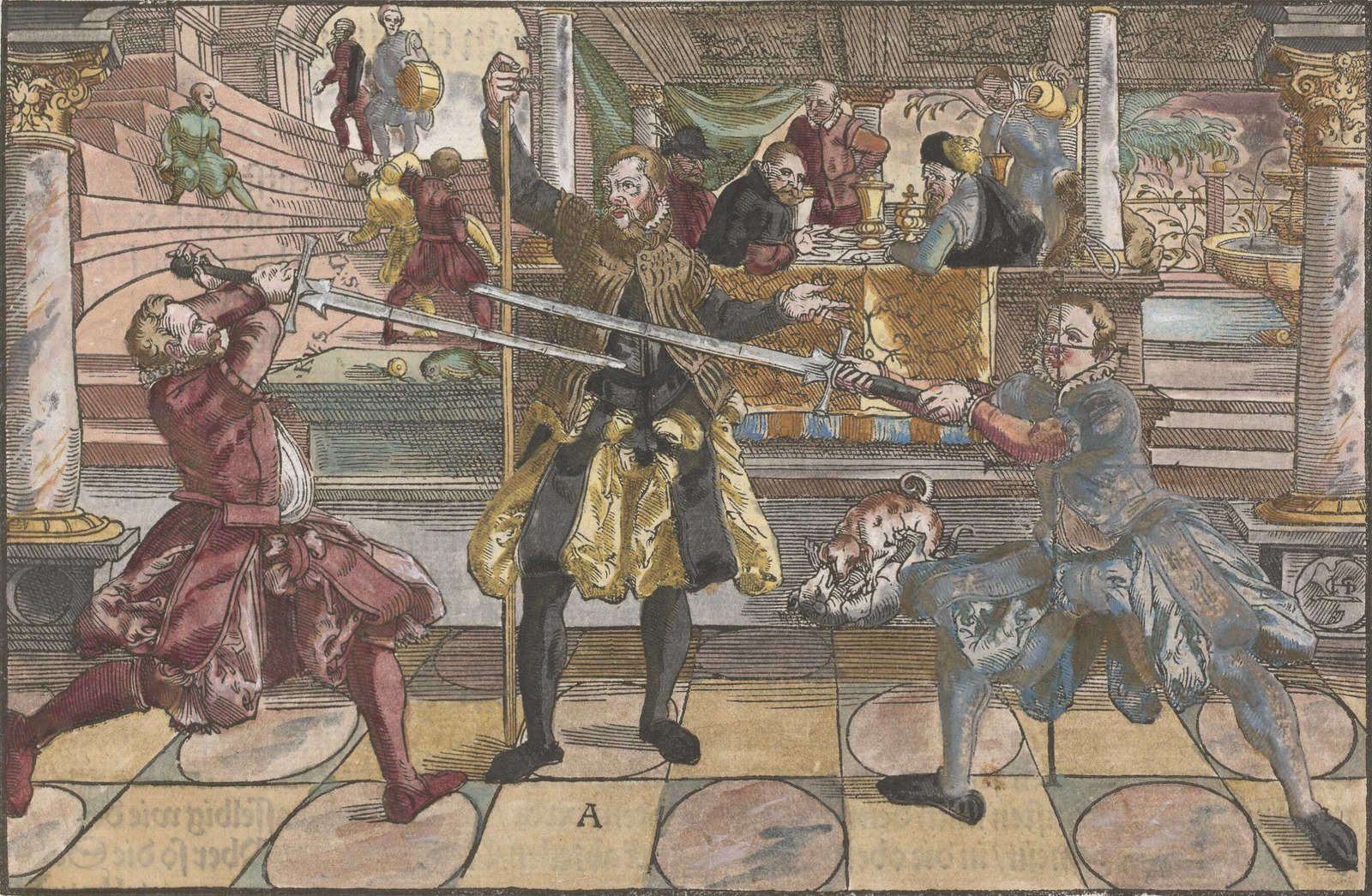
The guards or stances are a splendid (yet also necessary) positioning and comportment of the entire body with the sword, into which the fencer positions and guards themselves (if, as often occurs, the fencer arrives at the location [of combat] before their counterpart), so that the fencer is not unexpectedly overwhelmed and injured. Specifically, the fencer may pay attention and await their counterpart here, and as soon as the counterpart arrives, the fencer may attack and cut with advantage and a certain speed—and thus guard themselves against their counterpart so that the counterpart cannot cut at the fencer without injury. Instead, when the counterpart works at the fencer’s openings then the counterpart must expose themselves, and the fencer can remove the opening which the counterpart expected to have by advancing or stepping around. Or, at the very least, if the fencer is provoked from their advantage by this, they can take out the counterpart’s blade, hinder the counterpart, and spike the counterpart’s work.
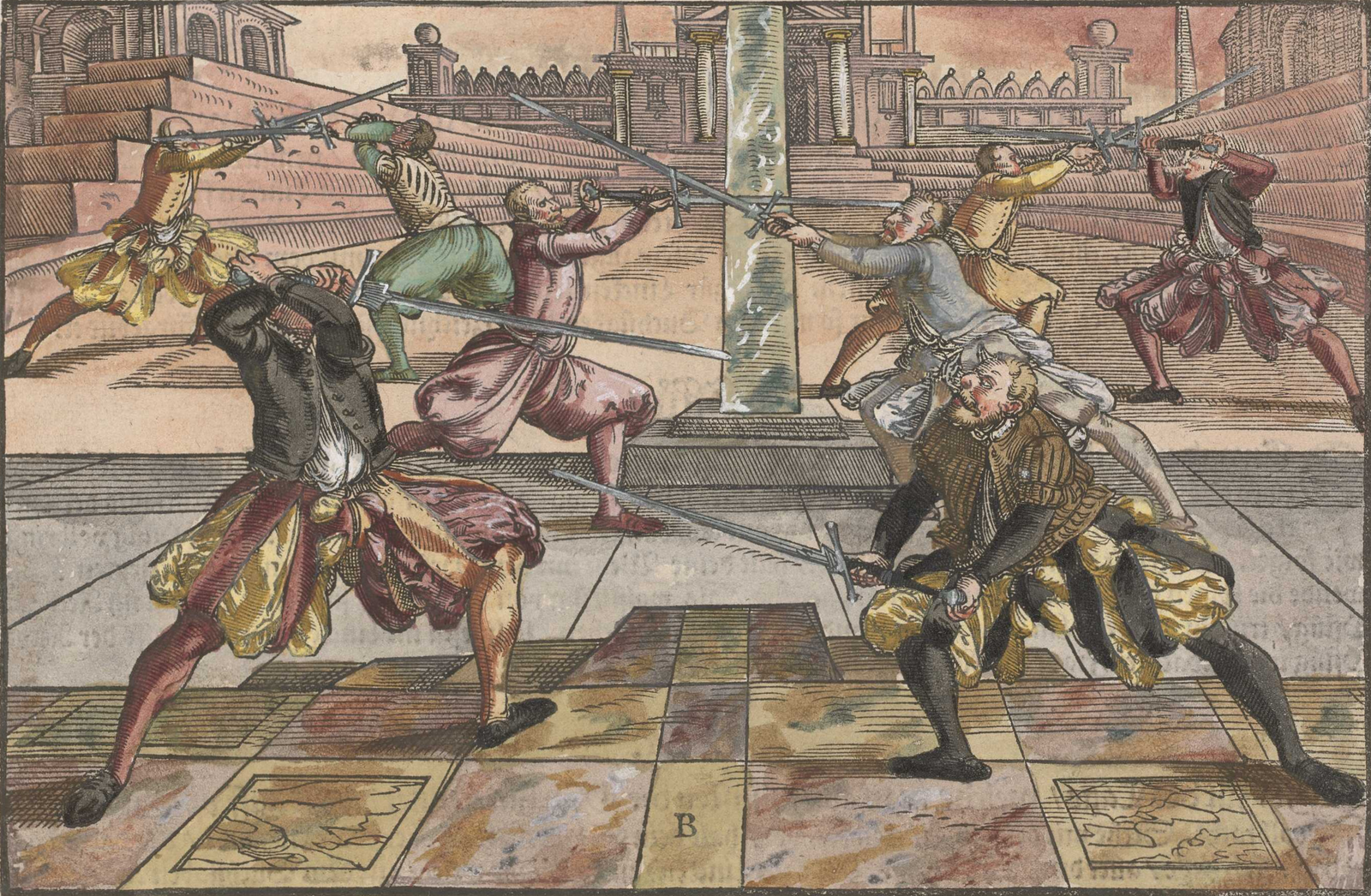
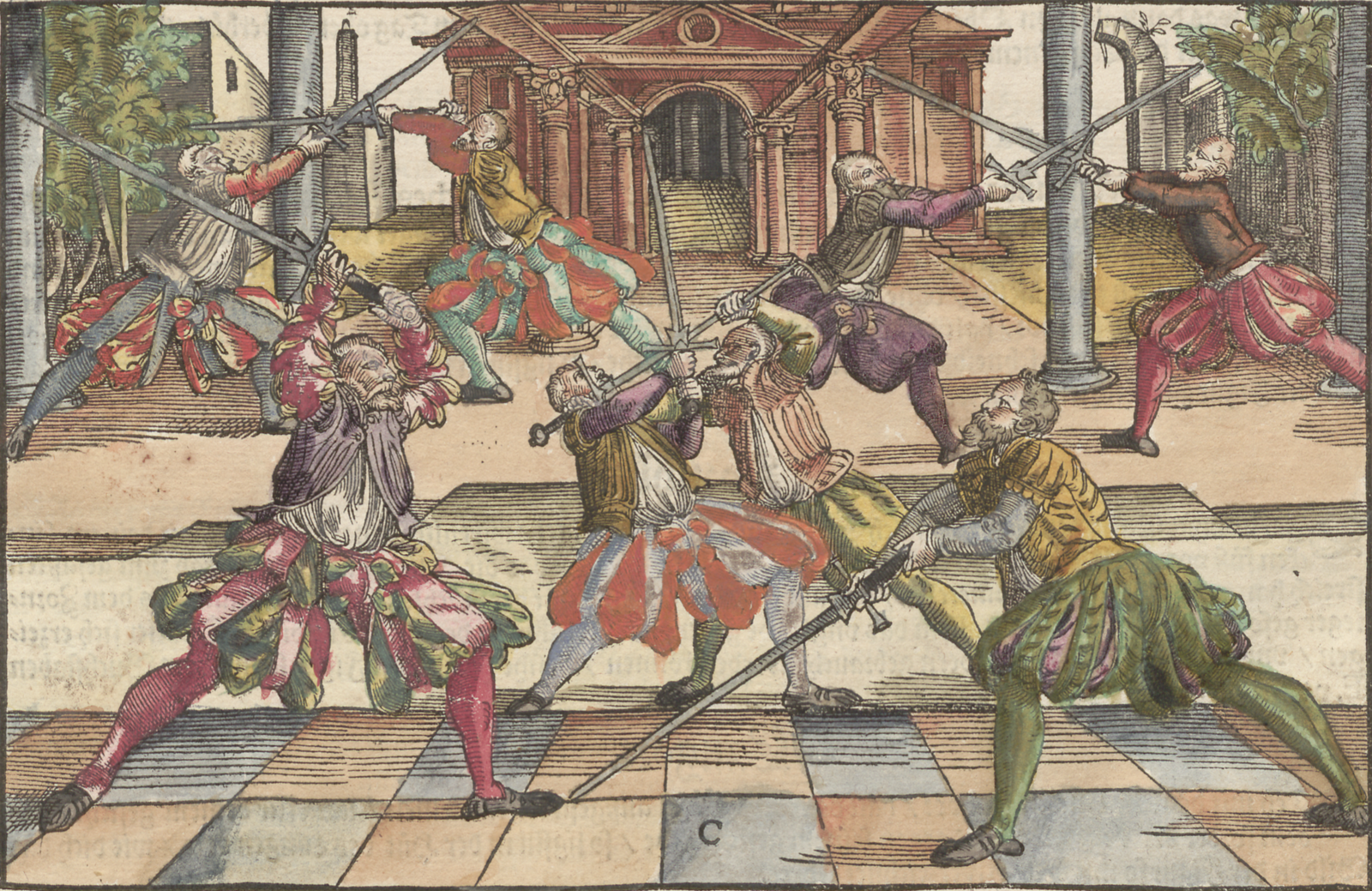
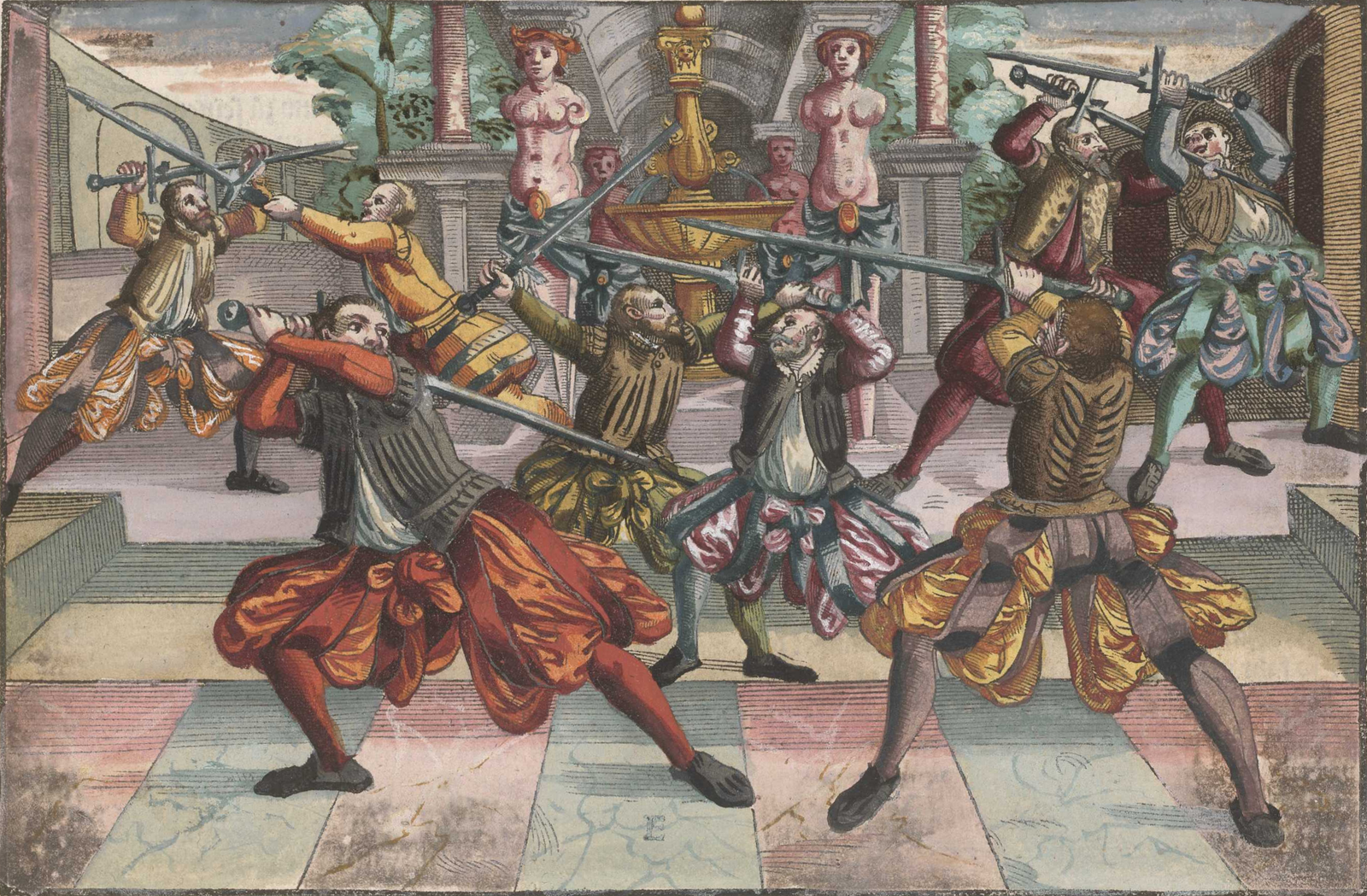
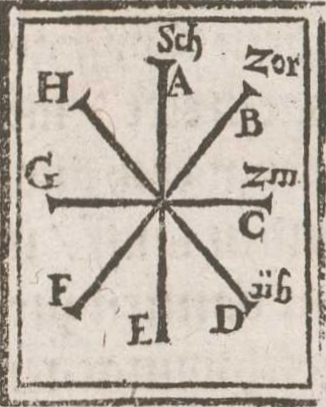
As mentioned above, the stances and guards have their origin in the division of the opponent. Because, just as the opponent is divided into four quarters (high, low, right, and left) so are there four openings where the counterfencer should properly be hit. And, like the four openings, there are also likewise four Primary Stances or guards from which the others arise from and originate: the Ox, Plow, Day, and Fool; the Secondary, or those that originate from these, are the Wrath Guard, Longpoint, Change [Guard], Side Guard, Iron Gate, Hanging Point, Key, Unicorn, which will be dealt with briefly and in order.
1570 Edition · fol. Ⅰ.5r.7
[Ⅰ.5r.7] Von den Legern oder Huten.
Cap. 3.
SIntemal in allem Fechten, umb mehrers nutz und verstands willen, deren so dise Ritterliche kunst zu lehrnen fürhabens, recht und billich drey fürneme stuck sollen in acht gehabt werden. Erstlich warumb es in dem Fechten zuthun, nemlich umb den Man, dann wamit solle [Ⅰ.5v] gefochten werden, als alhie mit dem Schwerdt, und aber bißher in den zweyen vorgehenden Capiteln, von beiden stucken gnugsamer bericht geschehen, so erfordert alhie ferner die ordnung, das auch von dem dritten theil und stuck erklerung gethan werde, welches ist auff was weiß alles Fechten soll volbracht werden, das denn fürnemlich beschicht durch drey stuck, den Anfang das Mittel und Endt wie oben angezeigt. Demnach aber der Anfang durch zweierley underschiedlich stuck soll und muß gemacht werden, nemlich aus und von den Legern, als aus dem die häuw ihren anfang nemen, sagen, wie vil seind erzehlen, unnd wie sie volnbracht sollen werden, erkleren. Die Hut oder Leger aber seind ein zierlich, aber doch nothwendig, stellung und geberd des gantzen leibs mit dem Schwerdt, in welche sich der Fechter so er, wie offt geschicht, ehe dend sein gegenpart zu ihm kompt auff den platz, stellet und Legert, damit er nit unversehens von ihm ubereilt und verletzt, sonder er in hieraus erwarten in acht haben, unnd als bald er zu ihm kompt, mit vortheil und gewisser geschwindigkeit angreiffen unnd zuhauwen, und sich also gegen seinem widerpart Legern, das er ohn schaden zu ihm nit einhauwen könne, sondern entweders, so er nach seiner Blösse arbeitte, sich blos geben müsse, und er ihm also die vermeinte zuhabne Blöß mit einem zu oder umbtritt entziehen, oder im auff das wenigst so er aus seinem vortheil hiedurch gereitzet, sein Kling ausnemen, in verhindern, und in in seiner arbeit stecken könne. Die Leger oder Huten aber, haben wie dan auch droben bemelt ihren ursprung aus der theilung des Mans, Dann wie der Mann in vier quatier Ober, Under, Recht un Linck getheilt, so seind der Blössen auch vier darauff der gegenfechter fürnemlich zutreffen, und wie vier Blösse, also seind auch gleichfals viererley Haubtleger oder Huten, daraus die andern alle herkommen und entspringen, als der Ochs, Pflug, Tag, und Olber, die andern aber so hieraus entstehn, seind Zornhut, Langort, Wechsel, Nebenhut, Eisenport, Hengetort, Schlüssel, Einhorn, davon denn ordenlich und kurtzlich soll gehandelt werden.
_1570_page30.jpg)
_1570_page31.jpg)
_1570_page33.jpg)
_1570_page35.jpg)
_1570_page36.jpg)
_1570_page38.jpg)
_1570_page39.jpg)
_1570_page40.jpg)