[1] About the Middle Guard, how and what one should fence from there
Chapter 14
I call this the Middle Guard because it arises from the Middle Cut. However, you can arrive in this guard at the end of three cuts:
When you cut a Crooked Cut from your right through the wrath line and allow it to flow back next to your left into the Middle Guard; then, using the Middle Cut itself; thirdly, when you cut a Crooked Cut from below through the upwardly slanted line from your right toward your left.
These three cuts always flow to the Middle Guard as the closest [stance], unless you wrench with effort into another.
1570 Edition · fol. Ⅱ.43r.2
[Ⅱ.43r.2] Von der Mittelhut, wie unnd was man
darauß Fechten soll.
Das viertzehend Capitel.
DIse Mittelhut heiß ich darumb also, dieweil solche auß dem Mittelhauw endtspringt, du
kanst aber nach ende dreyer häuwen in dise Hut kommen, als wann du von deiner Rechten ein krummen
hauw durch den Zorn Lini hauwest, unnd den neben deiner Lincken zu ruck verschwingen last biß in die Mittelhut,
darnach durch den Mittelhauw selber, Zum dritten, auch wann du ein Krumphauw von Unden durch
die ubersich steigent Lini von deiner Rechten gegen deiner Lincken hauwest, Solche drey häuw verschwingen sich
alwegen zu der Mittelhut am nechsten, du verziehest sie dann mit fleiß zu einer andern.
Ⅱ.43r.2
30.1linked passage
30.2
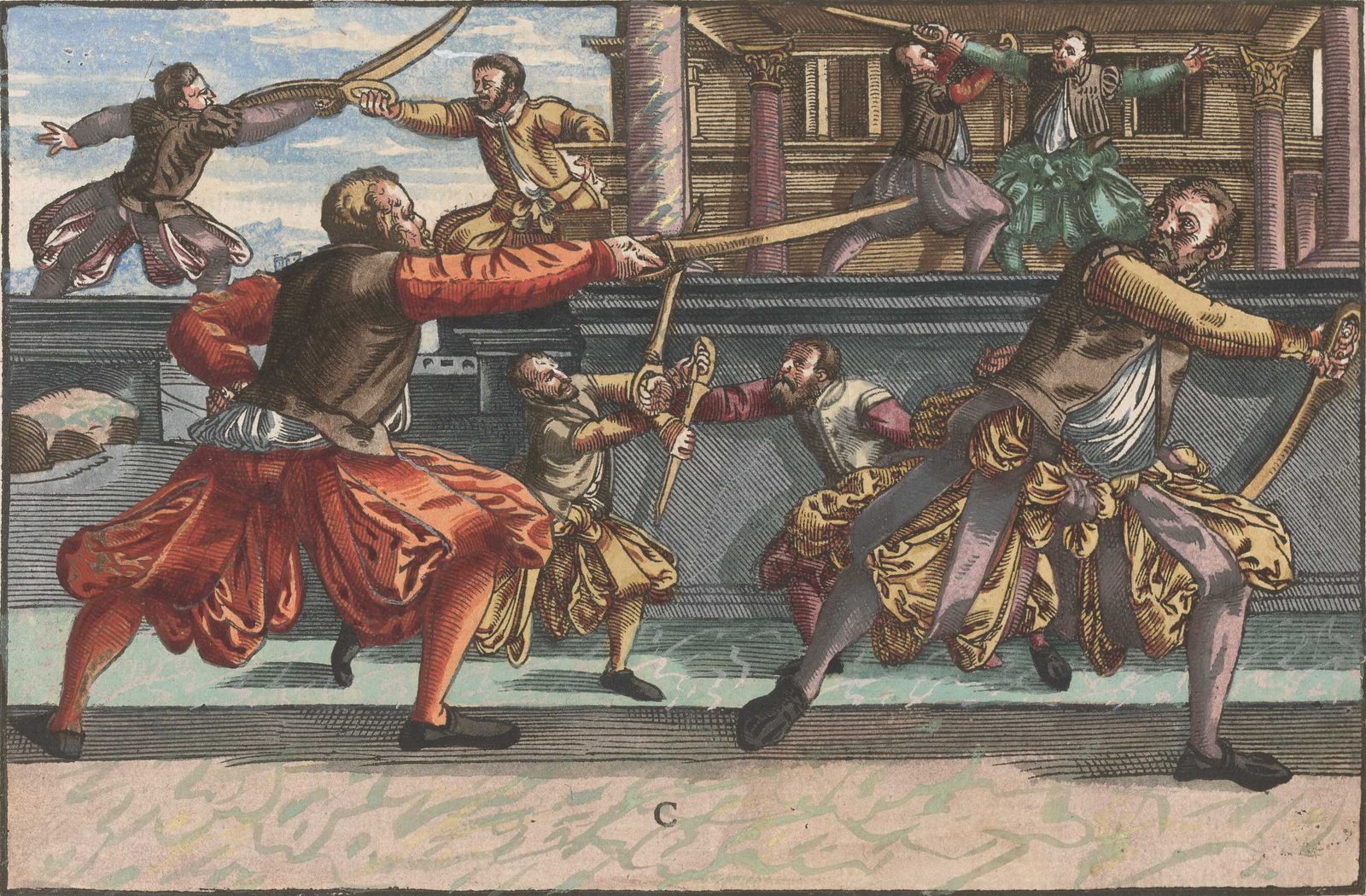
[2] Regarding it, position yourself as the portrait indicates on the right side in this Figure [C]. From this guard, you can also fence all sequences that were taught for left Wrath and Bull. Therefore, I only want to discuss a few sequences so that you are sufficiently taught the use of this guard.
1570 Edition · fol. Ⅱ.43r.3
[Ⅱ.43r.3] Zu deren schicke dich, wie das Bildt diser Figur gegen der Rechten handt außweiset, auß diser Hut kanstu
alle stuck so im Lincken Zorn und Stier gelehrt werden auch hierauß Fechten, Derenhalben wil ich dir auch nur
auff das kurtzest etliche stuck erzelen darauß du gnugsam den brauch diser Hutten lernen würst.
Ⅱ.43r.3
30.2linked passage
30.3
[3] How you should rebuff your counterpart’s cuts from the Middle Guard and cut in response
And firstly, when you arrive in the Middle Guard in the Onset in front of your opponent and they cut first at an opening, cut their in-coming strike away with the long edge (from your left toward their right, and from above through the slanted hanging line) so that you arrive on the right side with your dusack. Step with the left [foot] well out to their right side with this cut. As soon as this has occurred (before they have recovered again from their first committed strike), step with your right farther toward them and cut quickly from your right and above their dusack through their face (or over their right arm). If they are so quick after the first strike that you can’t arrive with your second strike over their arm, cut likewise through from your right at their arm or hand (while they are pulling upward). You then arrive back in the Middle Guard as before.
1570 Edition · fol. Ⅱ.44r.1
[Ⅱ.44r.1] Wie du deines widerparts häuw auß der Mittelhut, von
dir abweisen und nach hauwen solt.
UNd zum Ersten, so du im zufechten für den man in die Mitelhut kommest, und er hauwet
dir den nechsten zur Blöß, so Hauwe ihm seinen herkommenen streich mit Langer schneid von deiner Lincken
gegen seiner Rechten, von Oben durch die schlimme hanget Lini hinwegk, das du mit deinem Dusacken
zur Rechten seiten kommest, zu solchem hauw trit mit dem Lincken wol auß auff sein Rechte seiten, so bald
solches geschehen, so trit mit deinem Rechten auch ferner zu im, und Hauw von deiner Rechten behend, ehe dann
er sich von seinem erst genommenen streich wider erholet, oberhalb seinem Dusacken durch sein gesicht, oder uber
sein rechten Arm, ist er aber nach dem ersten streich so behende, das du im mit deinem andern streich nicht uber
sein Arm zukommen kanst, so Hauwe ihm gleichwol von deiner Rechten, dieweil er im auffziehen ist, oder ubersich
fehret, inwendig zu seinen Arm oder hand durch, so kompstu wider in die Mittelhut wie vor.
Ⅱ.44r.1
30.3linked passage
30.4
[4] How you, in the Middle Guard, should cut their strike away and upward from below and follow with Twisting Cuts
If they cut at you from above when you stand in the Middle Guard, ward off their in-coming strike upward from below with the long edge so strongly that your weapon flies around above your head to strike. Step quickly with double steps well to their right. Cut a powerful Twisting Cut from outside over their right arm or at the side ( wherever you can reach them in haste). These two cuts should be performed swiftly so that you hit with your second strike before they recover from their first committed strike. Or if they were so swift and were to rise upward before you had completed the Twisting Cut, ensure that you arrive at least simultaneously with them with the Twisting Cut (over their right arm from outside).
1570 Edition · fol. Ⅱ.44r.2
[Ⅱ.44r.2] Wie du ihm sein streich auß der Mittelhut, von Unden übersich
wegk hauwen solt, und mit Windthäuwen nachvolgen.
HAuwet er auff dich von Oben, wann du also in der Mittelhut stehest, so nim im seinen herfliegenden
streich von Unden ubersich auß mit Langer schneid, so starck das dein Wehr oberhalb deinem
Kopff wider umbflieg zum streich, trit behendiglich mit zwifachen tritten wol auff sein Rechte, und Hauw im
mit einem gewaltigen Windthauw außwendig uber sein rechten Arm, oder zur seiten, wo du ihn in solcher eil
erlangen kanst, dise zwen häuw sollen geschwindt zugohn, auff das du mit deinem anderen streich triffest, ehe dann
er sich von seinem ersten genomenen streich erholet, oder ob er geschwind were, und auff keme, ehe du den Windhauw
volbracht hettest, so schauw das du auff das wenigst mit ihm zugleich außwendig mit dem Windhauw uber
seinen rechten Arm kommest.
Ⅱ.44r.2
30.4linked passage
30.5
[5] How you should throw your dusack over their right arm from outside, and draw the long edge upward through their face
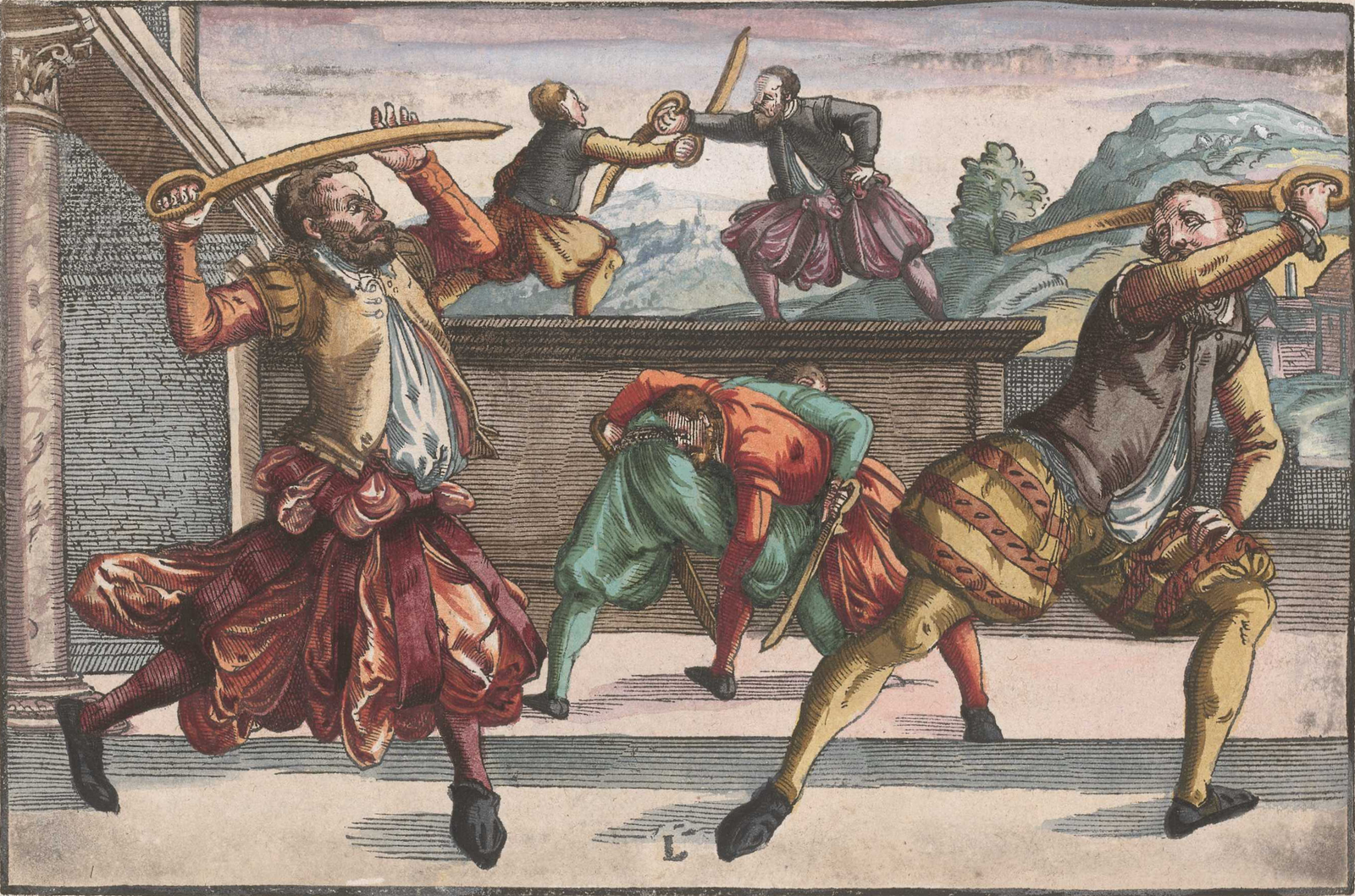
Or take note when you stand thus in the Middle Guard. In that moment in which they cut at you, step out of their cut and to their right. During this step, throw your curved edge toward their right from outside and over their right arm and in at their face. During this throw, duck your head well behind your dusack away from their strike. Take diligent note: if they don’t hold hard in the first hit, hastily push with the Strong of your dusack back downward and away from you. Draw your long edge upward through their face upward into the air (as the upper small tenants show in the Figure designated with L). In the air, pull your dusack forward into a Middle Cut toward their right (back on their dusack). When you have bound back on with a Middle Cut from your left toward their right, pay attention: as soon as they lift from the bind, cut in front at their face while they lift or cut inwardly at their arm with a step back (which is safer). Defend yourself with the Cross.
1570 Edition · fol. Ⅱ.44v.1
[Ⅱ.44v.1] Wie du dein Dusacken aussen über sein rechten Arm einwerffen,
und die Lang schneid übersich durch sein gesicht ziehen solt.
ODer wann du also in der Mittelhut stehest, so Merck in dem er auff dich hanwet, so trit
auß seinem hauw auff sein Rechte, in disem wirff ihm dein krumme schneid gegen seinem Rechten, aussen
uber seinen rechten Arm hinein zum gesicht, und in solchem einwerffen bucke deinen Kopff wol, von seinem
streich hinder dein Dusacken, und merck fleissig wo er im ersten antreffen nicht hart wider helt, so truck mit
der sterck deines Dusacken ruckens in der eil undersich von dir, als dann ziehe dein Lange schneid ubersich durch
sein gesicht (wie das die obern kleinern bossen in der Figur mit dem L. verzeichnet anzeigen) ubersich in die lufft,
und in der lufft verziehe dein Dusacken widerumb zu einem Mittelhauw, gegen seiner Rechten wider an sein Dusacken,
unnd wan du ihm also mit einem Mittelhauw von deiner Lincken gegen seiner Rechten wider anbunden
hast, so hab acht also bald er vom Bandt ubersich abgehet, so Hauwe im dieweil er auffgehet vornen zum gesicht,
oder welches sicherer ist, inwendig nach seinem Arm mit einem abtrit, als dann wehr dich durch das kreutz.
Ⅱ.44v.1
30.5linked passage
30.6
[6] If they had used their cut in a counteraction against your throw, pull your hilt back upward toward your left and let it fly around above your head in the air. Cut strongly from your right and upward from below with the curved edge, so that your dusack arrives back at your left, whether in the Wrath or Middle Guard. From there, quickly cut a Cross in response.
1570 Edition · fol. Ⅱ.44v.2
[Ⅱ.44v.2] Wo er aber sein hauw gegen deinem einwurff in ein versatzung verwenden wurde, so zuck dein gehültz wider ubersich
gegen deiner Lincken, und laß Oben in der lufft umb dein Kopff fliegen, Hauwe als dann von deiner Rechten
von Unden mit krummer schneid ubersich mit sterck durch, das dein Dusack wider zu deiner Lincken kom, es
sey in die Zorn oder Mittelhut, von dannen Hauw bald ein kreutz nach.
Ⅱ.44v.2
30.6linked passage
30.7
[7] How you should fence from the Middle Guard against your counterpart who does not want to cut
If your counterpart does not want to cut, fence from the Middle Guard against them as follows. Take note: as soon as you can reach them, cut a Cross through their face. If they have extended their dusack in the counterposture: fence a Cross at the hand in which they hold their weapon (in this case). Using these Cross Cuts, you will drive them backward or provoke them so that they will also cut. As soon as they do that, get ready quickly and cut two powerful Middle Cuts through from both sides and toward their in-flying strikes (opposite one another). By this means, you weaken not only their strikes but also tire their arm to a degree that you can arrive at the opening with other subsequent cuts.
1570 Edition · fol. Ⅱ.44v.3
[Ⅱ.44v.3] Wie du auß der Mittelhut gegen deinem widerpart
der nicht hauwen wil, Fechten solt.
WO dir aber dein gegenpart nicht will hauwen, so ficht auß der Mittelhut alo gegen im, wie
volget. Merck als bald du in erlangen kanst, so Hauwe ein kreutz durch sein gesicht, wo er aber sein Dusacken
außgestreckt hat zur versatzung, so ficht im solches kreutz zur hand darinnen er die wehr fuhret, mit solchem
kreutzhauw wirstu in treiben, oder reitzen, das er auch hauwen wirt, als bald er solches thut, so biß behend fertig [Ⅱ.45r.1] und Hauwe also mit zweyen Mittelhäuwen von beiden seiten, gegen seinem herfliegenden streichen, gegen einander
mit gewalt durch, damit schwechstu im nicht allein sein streich, sonder vermüdest im sein Arm dermassen
das du als dann wol mit andern nach häuwen zur Blöß kommen kanst.
Ⅱ.44v.3Ⅱ.45r.1
30.7linked passage
30.8
[8] Another, how you should attack from the Middle Guard against an opponent who doesn’t want to cut
Take note: when you find an opponent in Arch or else in Simple Brace and you have your weapon in the Middle Guard, step with the left foot well out to the side (toward their right) and cut across from outside at their arm simultaneously with this step. Pay attention Indesly. If they want to defend against this or counteract, don’t let your cut touch, but instead pull back around your head and cut inwardly through their face while you step back toward their left side.
1570 Edition · fol. Ⅱ.45r.2
[Ⅱ.45r.2] Ein anders wie du gegen dem, der nicht hauwen wil,
auß der Mittelhut angreiffen solt.
MErck wan du einem im Bogen oder sonst gerader versatzung findest, und du hast dein wehr
in der Mittelhut, so trit mit dem Lincken fuß wol gegen seiner Rechten, zur seiten auß, unnd gleich mit solchem
trit Hauwe uberzwerch aussen zu seinem Arm, in des hab acht, ob er solliches wehren oder Versetzen wil,
als dann laß dein hauw nicht rieren, sonder zuck den bald wider an dich umb den Kopff, und hauw ihm inwendig
durch sein gesicht mit einem abtrit gegen seiner Lincken seiten.
Ⅱ.45r.2
30.8linked passage
30.9
[9] Or, if they counter you with a Simple Brace: throw the curved edge out over their right arm at their face (as the upper small scene toward the left indicates in the Figure printed previously, designated with C). They must defend against that, which means that they will remove their face so that you can cut at that well while stepping backward.
1570 Edition · fol. Ⅱ.45r.3
[Ⅱ.45r.3] Oder wann er dir mit gerader versatzung begegnet, so würff ihm die krumbschneid aussen uber sein Rechten
Arm zum gesicht, wie die obern kleinern Bilder gegen der Lincken in hievor getruckter Figur mit dem C. verzeichnet
außweisen, das muß er weren, damit raumet er dir sein gesicht, das du mit abtretten wol darzu hauwen kanst.
Ⅱ.45r.3
30.9linked passage
30.10
[10] How you should flick from outside at their right arm from this guard
Another: if an opponent encounters you in Arch or in the Simple Brace, position yourself into the Middle Guard. From there, strike outwardly at their right arm in a flick (with the outward flat). Pull your hilt quickly upward (so that your blade hangs downward in this upward pull) simultaneously jerking your dusack around your head. With a step forward of your right foot, cut through once again with the curved edge (from below and from inside toward their right arm) so that after the end of the cut, you arrive with your dusack in the left Wrath Guard. From there, cut powerfully from below through their face. Afterwards, cut quickly through the cross in response. From this guard, you can also cut through the Roses, flick, and attack with other misleading attacks. The Rose Cuts move particularly well through misleading from this Middle Guard.
If you find an opponent in Arch who is smaller in stature than you, move the outward flat from your right and toward their right, over their hilt and outside of their right arm, and (in a single motion) below their dusack, back around, and upward toward your right, letting it fly over your head in the air while you lift your foot. Strike immediately in a flick (with the hanging dusack and inward flat) from outside at their right arm. Following that, pull upward and cut the Roaring Cut across through the middle line (as you have learned in the previous section on cuts). And this must be carried out in one motion, so that you raise your right foot in the first motion and set it down as a step forward when the Roaring Cut hits.
1570 Edition · fol. Ⅱ.45r.4
[Ⅱ.45r.4] Wie du auß diser Hut aussen zu seinem rechten
Arm schnellen solt.
EIn anders, begegnet dir einer im Bogen oder in gerader versatzung, so schicke dich in die
Mittelhut, von dannen schlag ihm außwendig zu seinem rechten Arm, mit außwendiger flech in eim schnall,
zuck dein gehültz behend ubersich, also das dein klingen in solchem ubersich zucken undersich hange, unnd ruck
dein Dusacken gleich mit umb dein Kopff, Hauwe also ferner mit einem zutrit deines rechten Fuß, mit krummer
schneid von Unden inwendig gegen seinem rechten Arm durch, das du nach ende des hauwes mit deinem Dusa= [Ⅱ.45v.1] cken in die Lincke Zornhut kommest, von dannen hauw krefftiglich von Unden durch sein gesicht, demnach hauwe
durchs kreutz behendiglichen nach, auch kanstu auß diser Hut durch die Rosen, mit schnell häuwen unnd andern
verführungen angreiffen, dann die Rosen häuw gehent sonderlichen wol, durch ein verführung auß diser Mittelhut
also. Findest du einen in dem Bogen, der von person kleiner ist denn du, so fahre mit der außwendigen flech
von deiner Rechten gegen seiner Rechten oberhalb seinem gehültz, ausserhalb seinem Rechten arm, in einem flug
under seinem Dusacken wider herumb ubersich gegen deiner Rechten, laß also oberhalb deinem Kopff in der lufft
mit erhebtem Fuß wider umbfliegen, und schlag im als dann mit hangendem Dusacken, und inwendiger flech in
einem schnall aussen zu seinem rechten Arm, auff das zucke ferner ubersich, unnd Hauwe den Brummer (wie du
den in häuwen hievor gelehrnet hast) uberzwerch durch die Mittel Lini, unnd solches muß in einem flug zugohn,
also das du im ersten anflug deinen Rechten fuß auffhebest, und im antreffen des Brummers wider mit einem fernern
fürtrit nidersetzest.
_1570_page236.jpg)
_1570_page238.jpg)
_1570_page239.jpg)
_1570_page240.jpg)
_1570_page241.jpg)