The stance from which the strongest cut (called the Father Strike) is brought forth is also used on both sides. However, there is no other difference between this stance and between the Bull—other than that the Bull presents the thrust and the Wrath presents the cut with wrathful body language. However, as relates to the sequences that are fenced from there, you can fence from one as from the other.
Although this Wrath Guard presents one side as completely open, you can still bring forth and fence many and various swift and strong sequences from there, about which I will explain and set down a few here.
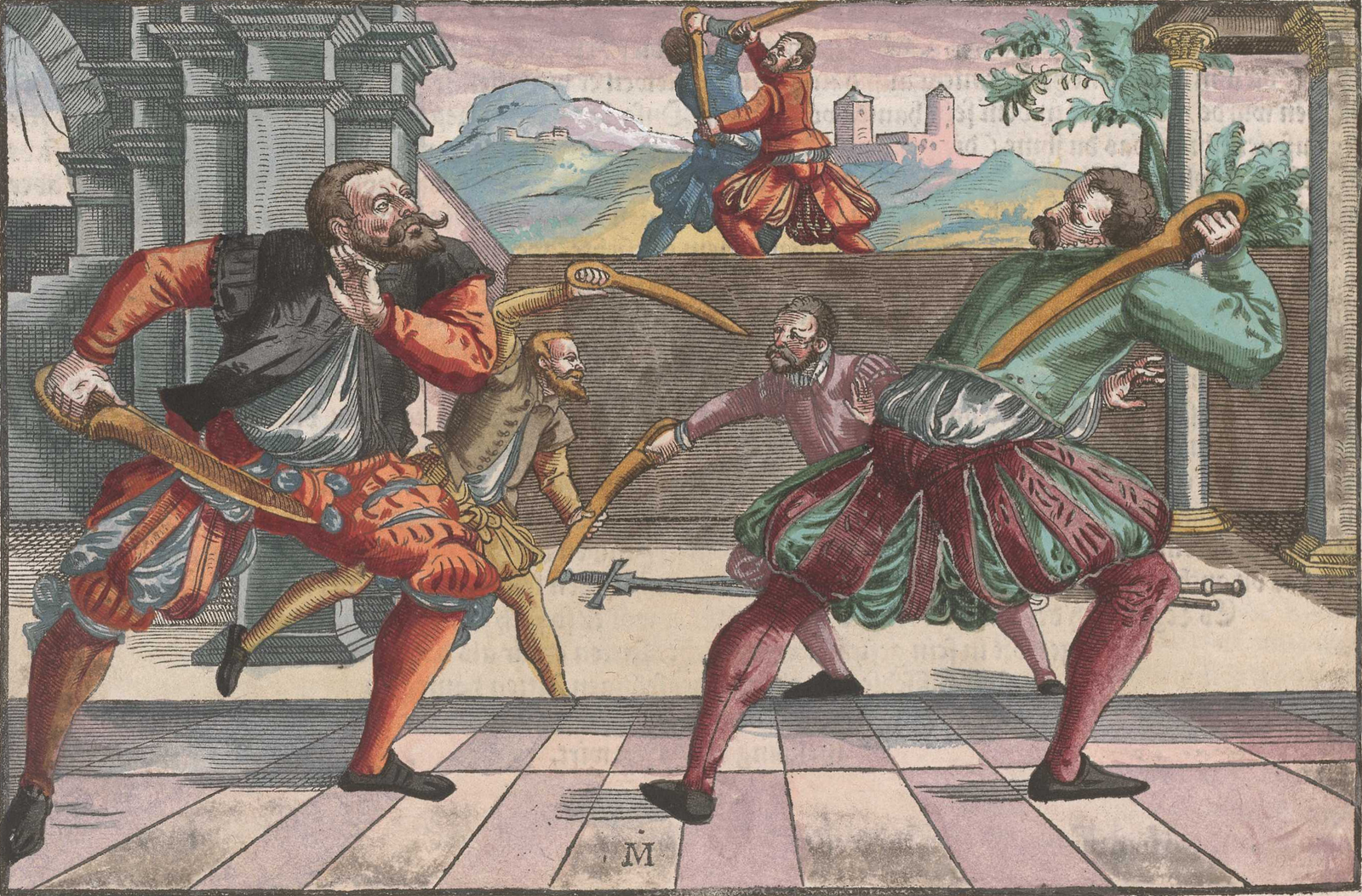
The portrait on the right side of the Figure [M] printed previously shows you how you should position yourself in this guard, from which stance you should then rebuff all strikes that are cut at you and cut in response.
DAs Leger wirt auch zu beiden seiten gebraucht, von welchem der streckeste Hauw (der Vater
streich genant) hergebracht wirt. Zwischen disem Leger aber, und zwischen dem Stier, ist kein anderer
underschneid, dann das der Stier den Stoß, und der Zorn den hauw mit zornigen geberden von sich erzieget,
So vil aber die stuck darauß zufechten belanget, kanstu auß einem Fechten wie auß dem andern, Auß diser
Zornhut aber, ob sie wol die eine seiten gantz bloß darstellet, so kanstu doch vil unnd mancherley geschwinde
und starcke stuck darauß herbringen und Fechten, deren ich dir alhie erliche erzelen und setzen wil. Wie du dich
aber in dise Hut schicken solt, das lehret dich dises bild zur rechten hand in hievor getruckter Figur, auß welchem
Leger du als dann alle streich, so auff dich gehauwen werden, von dir abweisen, und nachhauwen solt.
Ⅱ.29r.1
26.1linked passage
26.2
[2] The first sequence teaches you how you should take their cuts (from above and below) and cut in response to the same with Twisting Cuts
Take note: in the Onset, when you move into the right Wrath Guard (with which you expose the entire left side), your counterfencer is thereby caused to fence at the same with cuts.
Therefore, take diligent note as soon as they cut at you from above: during the same, step with your right foot well to their left side and toward them, close to their side and out away from their strike. Cut simultaneously with them at their head and the hand in which they hold the weapon (however, so that your dusack arrives above their dusack in this simultaneous cutting), so that your dusack arrives next to your left in the Change [Guard] at the end of the cut. From there (if they cut at your right opening), remove their in-flying strike with the long edge strongly and upwardly toward your right. Simultaneously with this removal, step with your right foot well toward their right side and let your dusack move completely around your head (in the removal mentioned previously). Cut Twisting Cuts outwardly over their right arm.
1570 Edition · fol. Ⅱ.29r.2
[Ⅱ.29r.2] Das erste stuck lehret dich, wie du ihm seine häuw von Oben
und Unden nemen, auff solches mit Windthäuwen
nach Hauwen solt.
MErck, wann du also im zufechten in die rechte Zornhut kommest, mit welcher du die gantze
Lincke seiten bloß dargibst, dardurch dann dein gegenfechter verursachet wirt, dieselbige mit häuwen an zu
fechten, Derhalben merck fleissig als bald er dir von Oben zuhauwet, so trit under des mit deinem Rechten
Fuß wol auff seine Lincke seitten zu ihm beseits auß seinem streiche, und Hauwe zugleich mit ihm (doch das dein
Dusacken in solchem gleich hauwen oberhalb seinem Dusacken komme) hinein seinem Kopff unnd der hand (darinnen
er die Wehr führet) zu, also das dein Dusacken nach ende des Hauwes neben deiner Lincken in Wechsel
komme, von dannen (wo er dir der rechten Blösse zuhauwet) nim ime sein herfliegenden streich, mit Langer Schneid
starck ubersich, gegen deiner Rechten auß, zugleich mit solchem außnemen, trit mit deinem rechten Fuß wol gegen
seiner Rechten seitten, und laß dein Dusacken in gemelten außnemen vollen umb dein Kopff fahren, Hauwe
ihm als dann mit Windthäuwen außwendig uber sein rechten Arm.
Ⅱ.29r.2
26.2linked passage
26.3
[3] The second sequence also teaches how you should take their cut again, and additionally how you should cut in response from the same side
If you stand in the right Wrath to wait for your opponent’s attack (as before), as soon as they cut at your presented opening (whether from above or below): step out toward their left and cut their in-coming strike away from you with a Wrath Cut toward their hand. Before they recover back from the removal of that strike: cut the second quickly before they rise (as stated) and also from your left at the opening, with another leap forward of your right foot. After these two cuts, you should soon arrive back into the counterposture by means of a Low Cut upward toward their right arm.
1570 Edition · fol. Ⅱ.29v.1
[Ⅱ.29v.1] Das ander stuck lehret abermals, wie dn ihm sein häuw ferner
nemen, und weiter von derselbigen seiten nach hauwen solt.
STehestu im rechten Zorn wie vor, zu warten auff des Mans angreiffen, als bald er dir dan
deiner gegebenen Blösse zuhauwet, es sey von Unden oder von Oben, so trit auß gegen seiner Lincken,
und Hauwe ihm seinen herkommenden streich mit einem Zornhauw gegen seiner Hand von dir hinweg, ehe
er sich als dann von solchem genommenen streich wider erholet, so hauwe den andern behend ehe er auffkompt, wie
gesagt, auch von deiner Lincken zur Blösse mit einem fernern zusprung deines rechten Fußes, Nach disen zweien
häuwen soltu bald wider von aussen ubersich gegen seinem rechten Arm, durch ein Underhauw in Versatzung kommen.
Ⅱ.29v.1
26.3linked passage
26.4
[4] An example and sequence, how you should turn the point into their face in all hits
Furthermore, if they cut at your body from outside of your right arm (whether from above or below): during this, step with your right foot well toward their right out of their strike. In that moment in which their cut flies in: cut across above the [cut] from outside over their right arm at their head. Or cut a Suppressing Cut from above at their hand. If they turn their counterposture toward your cut: take note in that moment in which the dusacks touch and hit together, and push your front end in front of you in at their face (on their dusack or on top of their right arm). They must defend against this thrust and guide or beat your dusack outward to the sides. From whichever side they have now removed your thrust: cut quickly in at that same side, whether to the left or right (as you were also taught previously with the counters). If they guide your dusack upwards in the removal: allow it to move above your head and cut across from below through their face with the curved edge facing upward (while they are still lifting their arm up in the removal).
1570 Edition · fol. Ⅱ.29v.2
[Ⅱ.29v.2] Ein Exempel und stuck, wie du in allen treffen den
Ort in sein gesicht wenden solt.
FErner hauwet er dir ausserhalb deines rechten Arms zum Leibe, es geschehe von Oben
oder Unden, so trit under deß mit dem rechten Fuß wol gegen seiner Rechten auß seinem streiche, unnd
Hauwe eben (in dem sein streich herfleugt) Oberhalb desselbigen von aussen über seinem rechten Arm zum
Kopffe, oder Hauwe einen Dempffhauw von Oben auff seine hand, wendet er aber seine Versatzunge gegen
deinem hauw, so mercke in dem die Dusacken zusamen rieren und treffen, so schiebe deinen vordern ort an seinem
Dusacken oder auff seinen rechten Arm vor dir hinein zu seinem gesichte, disem stoß muß er wehren, und
dir deinen Dusacken zur seitten außschlagen oder führen, von welcher seiten er dir nun deinen stoß außnimmet, zu
der selbigen hauwe behend hinein, es sey zur Lincken oder Rechten, wie hievor von Brüchen auch gelehret bist, führet
er dir aber dein Dusacken im außnemen übersich, so lasse bald oberhalb deinen Kopffe verfahren, unnd hauwe
uberzwerch von Unden mit krummer schneide (dieweil er noch seinen Arm mit dem außnemen) in der höhe führet, durch sein gesichte.
Ⅱ.29v.2
26.4linked passage
26.5
[5] Another: how you should turn your point in front of you, away, and into their face
In the Onset, position yourself into the Wrath Guard and take diligent note as soon as they cut at you: step and cut simultaneously with them with an extended arm towards their left at their head. As soon as the cuts touch or beat together, push your dusack straight forward with your point in front of you into their face. In this push forward, turn the long edge (including your hilt) upward toward their incoming weapon. As soon as their second strike beats on your long edge: lift your hilt up high and remain with the aforementioned hilt over your head. Indesly strike at their right arm from outside, with the inward flat and hanging dusack. As soon as they swipe in response to your hit: step backward and cut through their face from the front.
1570 Edition · fol. Ⅱ.30r.1
[Ⅱ.30r.1] Ein anders wie du ihm dein ort, vor dir hin
in sein gesicht wenden solt.
IM zufechten schicke dich in die Zornhut, und mercke fleissig, als bald er auff dich herhauwet
so trit unnd hauwe mit ihm zugleich, mit außgestrecktem Arme gegen seiner Lincken zu seinem Kopff, als
bald er aber die häuwe zusamen rieren oder bochen, so schiebe deinen Dusacken stracks mit deinem ort für dir
hin in sein gesichte, unnd in solchem fürtschieben wende die Lange schneide sampt deinem gehültz übersich gegen
seinem herfliegenden Wehr, als bald aber sein anderer streich auff deine Lange schneide bochet, so fahr mit deinem
gehültz hoch auff, unnd bleib also mit gemeltem gehültz uber deinem Kopff, unnd schlage in des gleichwol mit inwendiger
Fleche unnd hangendem Dusacken außwendig zu seinem rechten Arm, als bald er deinem schlag nach
wischet, so trit zu ruck, und Hauwe ihm vornen durchs gesichte.
Ⅱ.30r.1
26.5linked passage
26.6
[6] How you should catch your counterpart’s cuts from the Wrath Guard using a push forward and immediately cutting in response
Position yourself in the Onset into the Wrath Guard again, and take note as soon as your counterfencer cuts at you: lift your dusack over your head under their incoming strike and catch their cut with the long edge of your dusack, so that your dusack hangs down with the point downward at the ground and toward your left when you catch their cut. Afterwards, as soon as their cut glances on your dusack, cut two fast and strong strikes upward from both sides with the curved edge, through their face from below. After these Low Cuts, cut quickly back around across with a Middle Cut, together with a straight High Cut from your right (also through their face or wherever they are open) so that you arrive on your left in Change [Guard] at the end of the last cut. From there, raise the long edge back upward into the counterposture.
1570 Edition · fol. Ⅱ.30r.2
[Ⅱ.30r.2] Wie du des gegenparts häuwe aus Zornhut mit verschüben,
aufffangen und als dann nach hauwen solt.
SChicke dich im zufechten abermals in die Zornhut, und mercke als bald dein gegenfechter auff
dich hauwet, so fahre mit deinen Dusacken uber deinem kopff under seinen herkommenden streiche, unnd
fang im seinen hauwe mit der Langen schneide deines Dusackens auff, also das in solchem aufffangen seines
hauwes deinen Dusacken mit dem Ort undersich gegen deiner Lincken zu der erden abhange, Demnach so bald
sein hauwe auff deinen Dusacken glützt, so hauwe mit krummer Schneide von beiden seitten von Unden ubersich
durch sein gesicht, zwen geschwinder und starcker streich, nach solchen Underhäuwen hauwe behend herwiderumb
ein uberzwerchen Mittelhauw sampt einem geraden Oberhauw von deiner Rechten, auch durch sein gesicht, oder
wo er Bloß ist, also das du nach ende des letzten hauwes zu deiner Lincken in Wechsel kommest, von dannen fahr
mit Lan=ger[!] schneide wider ubersich zur Versatzung.
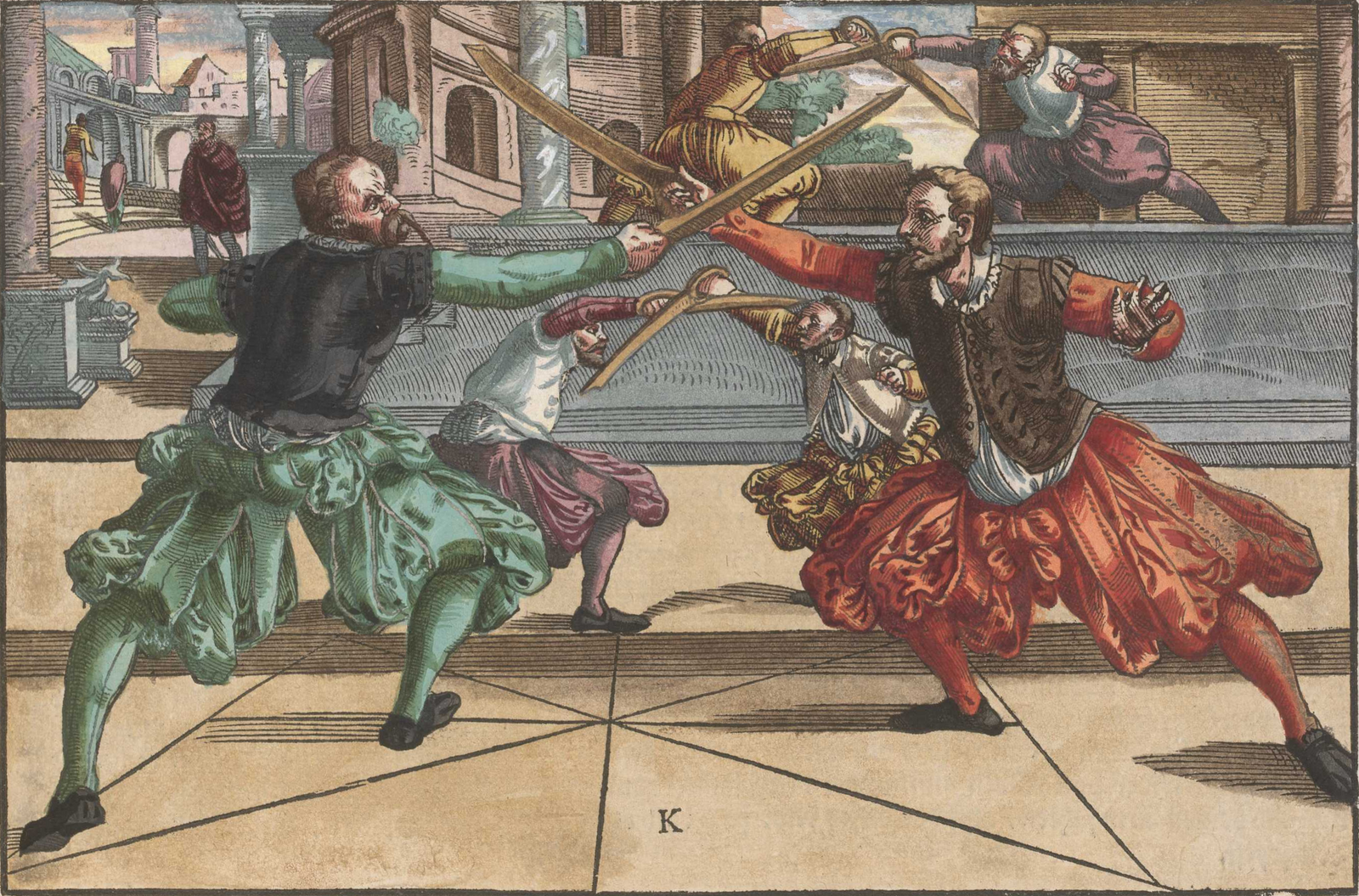
When you move into the aforementioned Wrath Guard in the Onset and you perceive that your counterpart does not want to cut first: guide a powerful High Strike toward their head with a step forward of your right foot. During this, take diligent note as soon as they lift their dusack into Arch to counteract: don’t let your cut hit their counterposture, but instead pull your dusack back around and upward toward you. Thrust away from you with your front end, beneath their dusack at their chest (as the upper small scene shows in the Figure designated with the letter K). If you want, you can also hit the first strongly from above and afterward let your dusack snap around in the air and similarly thrust in front of the chest. As soon as they drop down on your thrust, cut quickly upward, across to their hilt, through their face.
WAnn du also im zufechten in die gemelte Zornhut kommest, und wirst aldo gewahr das dein
widerpart zum ersten nicht hauwen wil, so führe mit einem zutrit deines Rechten Fusses einen gewaltigen
hohen streiche gegen seinem kopffe, under des merck fleissig, als bald er mit seinem Dusacken aufffehret in den
Bogen zu versetzen, so lasse deinen hauw auff seiner Versatzung nicht antreffen, sondern zucke deinen Dusacken wider
zu ruck ubersich gegen dir umb, und stoß ihn mit deinem Vordern Ort underhalb seinem Dusacken zu seiner
Brust (wie solches die obern kleinen Bilder in der Figur, so mit dem Buchstaben K. verzeichnet, anzeigen) von dir,
so du wilt magstu auch den ersten von oben starck antreffen, und demnach gleichwol deinen Dusacken in der lufft
umbschnappen lassen, und ihn vor dir Brust stossen, als bald er aber deinen stoß nach herab fellet, so hauwe behend
Oberhalb seinem gehültze uberzwerch durch sein gesichte.
Ⅱ.30v.1
26.7linked passage
26.8
[8] A good attack from the Wrath Cut with four cuts
In the Onset, take note when you move into the Wrath Guard, and as soon as you can reach them: lift your hand from the right shoulder and Indesly turn the point of your dusack toward their face. Threaten to thrust at them; however, pull your dusack quickly back around your head and cut the first Low Cut of your dusack upward through their face. Cut the second from your right upward through their face. Cut the third likewise through their face, slantwise from above back toward their left once again. Cut the fourth, however, from your left slantwise through toward their right arm.
Also take note: as many cuts as you cut from one side, you should step as many times with the right foot toward the same side. Step toward them according to your cuts, because you should always keep your right foot forward for stepping in these sequences.
1570 Edition · fol. Ⅱ.30v.2
[Ⅱ.30v.2] Ein guter angriff auß dem Zornhauw
mit vier häuwen.
MErcke, wann du im zufechten in die Zornhut kommest, als bald du ihn erlangen kanst, so erhebe
dein hand auß der rechten Achsel, unnd kehre Indes die spitz am Dusacken gegen seinem gesicht, trauwe
ihm also zustechen, zucke aber dein Dusacken behend wider an dich umb deinen Kopffe, und hauwe den
ersten Underhalb seines Dusackens übersich durch sein gesichte, den anderen hauwe von deiner Rechten überzwerch
auch durch sein gesichte, Deßgleichen hauwe den dritten Schlims von Oben wider gegen seiner Lincken,
abermal durch sein gesichte, Den vierdten aber, Hauwe als dann von deiner Lincken Schlims gegen seinem
rechten Arm durch, und mercke auch wie manchen hauwe du von einer seiten hauwest, so manchen trit soltu
auch mit dem rechten Fuß gegen derselbigen seiten, deinen häuwen nach zu ihm tretten, dann du solt in disen stucken
zum tretten, alwegen mit deinem rechten Fuß vor bleiben.
Because you have now briefly heard about these two stances on your right and what you should fence from there, it is easy to understand from this what you can safely fence from these reversed stances (without special instruction)—namely, by just reversing the sequences. However, in order that I provide a bit of instruction for this reversal, I do not want to omit setting some sequences here as examples. And, therefore, I will take these two stances together because with few exceptions, one can fence from the one as from the other.
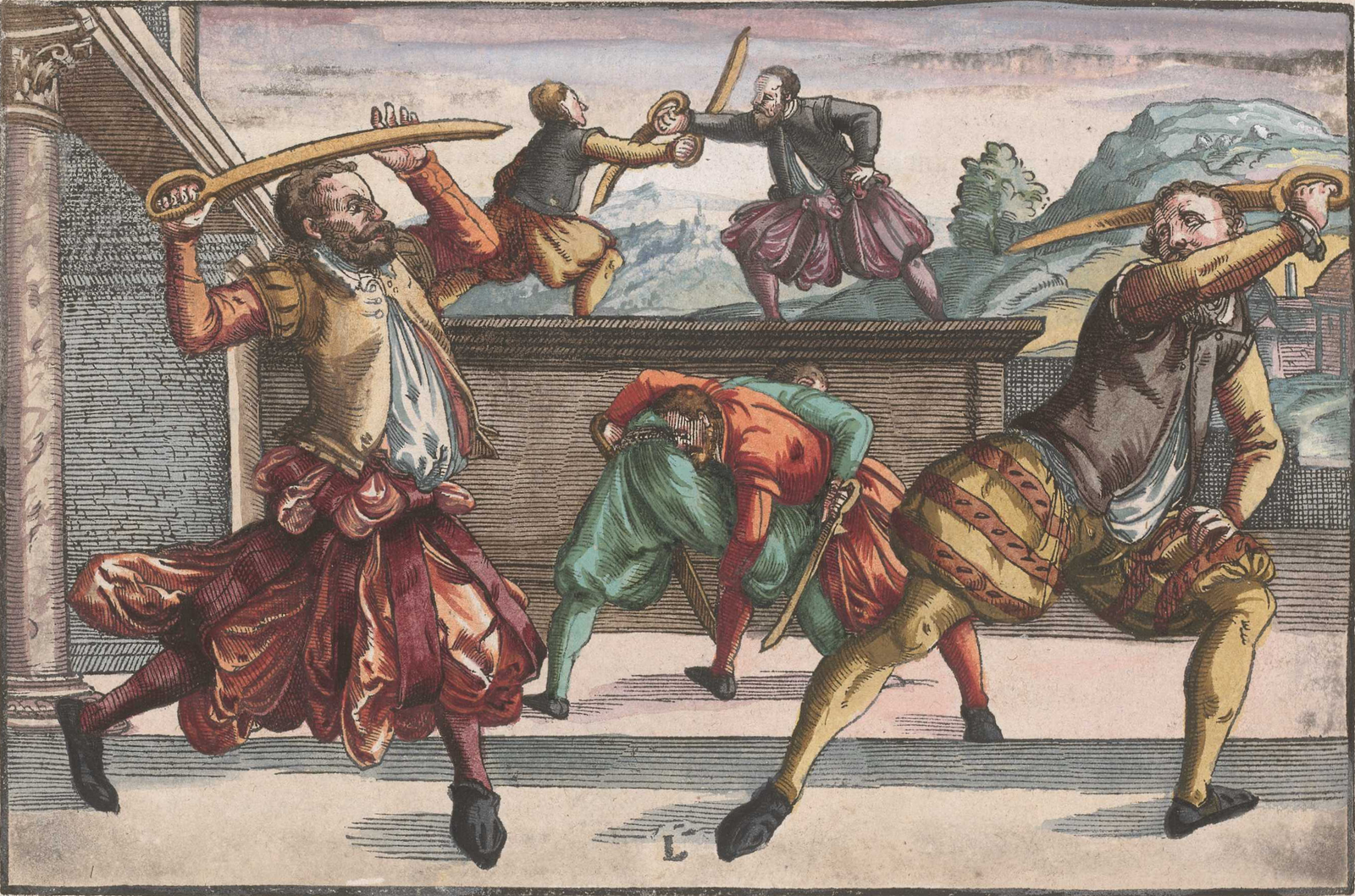
The portrait on the right side in the previously-printed Figure (designated with L) teaches you how you should position yourself in the left Wrath. Regarding left Bull, you should remember how you aligned the work to the right previously and then set that up on the left.
DIeweil du nun dise zwey Leger von deiner Rechten, und was du darauß Fechten solt, auff
das kürtzest gehöret, auß welchen leichtlich zu verstehn ist, was du ohngefehrlich auch auß disen umbgekerten
Legern Fechten sollest, nemlich die stuck nur umbkehren ohne sondern bericht, Aber damit ich dir zu sochem
umbkehren ein wenig anleitung gebe, hab ich nicht underlassen wöllen, etliche stuck Exempels weiß hieher zusetzen,
und darumb dise beide Leger zusamen genommen, dieweil auß deren einem jeden zufechten, wie auß dem
andern, wenig außgenommen, Wie du dich aber in den Lincken Zorn schicken solt, lehrt dich das Bildt in der hievor
getruckten Figur, gegen der rechten Hand, so mit dem L. verzeichnet ist, Vom Lincken Stier aber, merck wie
du in hievor zur Rechten in das werck gericht, also soltu ihn auch zur Lincken anschicken.
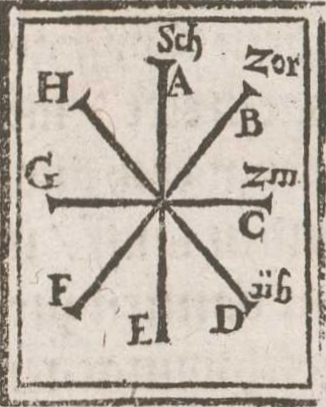
In the Onset, take note when you arrive in left Wrath and carry out one cut, three, or four in close series—from above from your left, and from below your right over your forward right thigh through their face, according to the slanted hanging lines which are designated with the two letters H and B—until you perceive an opening. Cut in at the same. Afterwards, cut quickly long again and through the cross so that you protect yourself further from their cuts.
MErck, wann du im zufechten in Lincken Zorn kommest, so treib von deiner Lincken von Oben,
und von deiner Rechten von Unden, starck zusamen, uber deinen fürgesetzten rechten Schenckel durch
sein gesicht, nach außweisung der schlimmen hangenden Lini, welche mit den beyden Buchstaben H.
unnd B. verzeichnet, ein hauw drey oder vier, so lang biß du ein Blöß ersihest, zu derselben hauw hinein, demnach
Hauwe behend wider lang nach durchs kreutz, damit du dich ferner vor seinen häuwen beschützest.
Ⅱ.31r.2
26.10linked passage
26.11
[11] A good sequence, how you should compel them down with their counterposture so that you can get to their face
Item: execute the slanted cuts over your right thigh as previously; however, guide all cuts underneath their dusack and at their arm or at their fingers. This will provoke and compel them so that they must lower their counterposture. As soon as they drop down with their cut, cut quickly and unexpectedly above their dusack, from your left toward their right and slantwise through their face. Or cut a Middle Cut from your left (above their hilt) and across toward their right and again through their face. After these, cut the second quickly through toward their left.
1570 Edition · fol. Ⅱ.31r.3
[Ⅱ.31r.3] Ein gut stuck wie du ihn mit seiner Versatzung herab zwingen
solt, auff das du ihm zum gesicht kommen mögest.
ITem treibe uber dein rechten Schenckel wie vor, doch führe alle häuwe underhalb seinem
Dusacken zu seinem Arm oder nach seinen Fingern, damit reitzest und zwingest ihn, das er mit seiner versatzung
herab fahren müß, als bald er mit seinen hauw herab fellet, o Hauwe ihm behend unnd unversehens [Ⅱ.31v.1] Oberhalb seinen Dusacken, von deiner Lincken gegen seiner Rechten Schlims durch sein gesicht, oder hauwe
von deiner Lincken ein Mittelhauw Oberhalb seinem gehültz uberzwerch gegen seiner Rechten, abermals
durch sein gesichte, auff disen hauwe den andern behend gegen seiner Lincken durch.
Ⅱ.31r.3Ⅱ.31v.1
26.11linked passage
26.12
[12] A quick and strong sequence to fence from the left Bull, which is completed with five cuts
In the Onset, position yourself into the guard of the left Bull and take note as soon as they cut at you from the outside and toward your right side: step with your left foot well out of their cut toward their right. Cut slantwise toward their right and through their face yet also simultaneously with them (so that your dusack arrives above theirs in the cut), so that you arrive with your dusack next to your right thigh and with the point on the ground at the end of this cut. Following this, turn the long edge back upward and pull a strong Low Cut from your right toward your left (with the long edge upward) so that your dusack arrives at your left shoulder at the end of this cut. From there, cut a Low Cut strongly upward through their right side so that your dusack shoots into the guard of the right Bull at the end of this cut. From here, cut a swift cut across through their face. For the last, cut a long, powerful High Cut (directly from above) through their face with another step forward, etc.
1570 Edition · fol. Ⅱ.31v.2
[Ⅱ.31v.2] Ein behend und starck stuck, welches mit fünff Häuwen
volbracht, auß dem Lincken Stier zu fechten.
IM zufechten schicke dich in die Hut des Lincken Stiers und merck als bald er dir außwendig
gegen deiner Rechten seitten zuhauwet, so tritt mit deinem Lincken Fuß wol auß seinem hauw gegen seiner
Rechten, Und hauwe mit ihm zu gleich (doch das du mit deinem Dusacken oberhalb des seinem im herhauwen
kommest) Schlims gegen seiner Rechten durch sein gesicht, also das du nach ende dises hauwes mit deinem Dusacken
neben deinen Rechten schenckel mit dem ort auff die erden kommest, neben der selbigen wende die Lange
schneide wider ubersich, und ziehe einen starcken Underhauw von deiner Rechten mit Langer schneid ubersich gegen
deiner Lincken, das dein Dusacken nach ende solches hauws zu deiner Lincken Achseln ankomme, von der selbigen
hauwe einen Underhauw starck ubersich durch sein Rechte seiten, also das dein Dusacken nach solchem hauw
in die Hut des Rechten Stiers verschiesse, aus dem selbigen hauwe ein geschwinden hauw uberzwerch
durch sein gesicht, Demnach zum letsten hauwe auch ein gewaltigen Oberhauw
Lang nach mit einem weiten zutrit auch gerad von Oben
durch sein gesicht, etc.
Ⅱ.31v.2
26.12linked passage
26.13
[13] A good sequence which is fenced from both the left and right Bull
Item, powerfully execute one or three strong cuts (from both below and above) obliquely over your right thigh through your opponent’s face, and take note: when you have arrived the third time at your left shoulder, cut two Low Cuts from there (one from your left and the second from your right), both strongly upwards through their face, so that you arrive back into the left Wrath Guard after the end of the second Low Cut. From there, cut with the short edge or beat with the flat across through their face (with extended arm), so strongly that your dusack shoots into the guard of right Bull after the end of the cut. From there, step again with your right foot farther toward them and thrust toward their face from above with extended arm. Afterwards, cut the last quickly after the thrust (also from above) through their face. And in all steps, remain with your right foot forward.
1570 Edition · fol. Ⅱ.32r.1
[Ⅱ.32r.1] Ein gut stuck welches auß dem Lincken und Rechten
Stier zusamen gefochten wirt.
ITem treib mit gewaltiger sterck, ubereck Schlims über deinen rechten Schenckel dem mann
durch sein gesichte, ein hauw oder drey, von Unden oder Oben zusamen, und mercke, wann du das dritte
mal zu deiner Lincken Achseln ankommen bist, so hauwe als dann zwen Underhäuw, ein von deiner Lincken
den andern von deiner Rechten, beide starck übersich durch sein gesichte, das du noch ende der zweyer Underhäw
wider in die Lincke Zornhut kommest, von dannen hauwe mit kurtzer schneide, oder schlag mit der fleche und mit
außgestrecktem Arm überzwerch durch sein gesicht, also starck das sich nach ende des hauwes dein Dusacken in
die Hut des Rechten Stiers verschiesse, Von dannen tritt abermals mit deinem rechten Fuß ferner zu ihm, unnd
stich ihm mit außgestreckten Arm von oben gegen seinem gesichte, demnach hauwe zum letsten behendiglich
dem stoß nach auch von Oben durch sein gesicht, und in allem tretten bleib mit deinem rechten Fuß vor.
Item, if an opponent cuts at you toward your right (when you stand in one of the left High Guards), step outward toward their right and cut a powerful Twisting Cut, from outside and over their right arm at their head. Because as often as you arrive into these two stances, you should endeavor that you always step out of their in-coming strike and simultaneously cut at their head and above their dusack with a long extension.
ITem hauwet dir einer gegen deiner Rechten (wan du also in der Lincken Oberhutten einer
stehest) so hauwe mit einem außtrit gegen seiner Rechten einnen gewaltigen Windthanwe, außwendig üBer[!]
seinem rechten Arm zum Kopff, Dann so offt du in diser zweyer Leger eines kommest, so soltu dich befleissen, das
du ihme alwegen auß seinem herkommenen streich trettest, unnd zugleich ihme oberhalb seinem Dusacken, mit
weitem zulangen zum Kopff hauwest.
Ⅱ.32r.2
26.14linked passage
26.15
[15] Counter to the Bull and Wrath [Guards] on the left
When you see them in the Onset and perceive that your counterfencer opposes you in the aforementioned left High Guards, position yourself quickly into the guard of the right Bull. From there, thrust from your right toward their face with a broad step forward. They must defend against that and beat your thrust outward. Let the [thrust] move around your head toward the side to which they have rebuffed you with their outward beat. Cut toward the other side at the opening. If you perceive that they also want to remove the same [cut] and counteract, let your dusack drop down in front on that same side as a miss. Cut at their other side.
1570 Edition · fol. Ⅱ.32v.1
[Ⅱ.32v.1] Bruch auff denn Stier und Zorn zur Lincken.
SO du im zufechten ersihest und gewar wirst, das dir dein gegenfechter in gemelten Lincken
oberen Hutten einer begenet, so schicke dich bald in die Hut des rechten Stiers, von dannen stich ihme mit
einem weiten zutrit von deiner Rechten gegen seinem gesicht, das muß er wehren, unnd dir den stich außschlagen,
so lasse den selbigen gegen der seiten, zu welcher er dir solchen mit seinem außschlagen abgewisen hat,
umb deinen Kopff fahren, unnd hauwe ihm als dann gegen der andern seiten zur Blöß, wirstu aber gewahr das
er dir den selbigen auch abtragen, und versetzen wil, so lasse deinen Dusacken vor derselbigen seiten fehl fürüber ablauffen,
un d[!] hauwe ihm zur andern seiten.
_1570_page208.jpg)
_1570_page209.jpg)
_1570_page210.jpg)
_1570_page211.jpg)
_1570_page212.jpg)
_1570_page213.jpg)
_1570_page214.jpg)
_1570_page215.jpg)