[1] About the four cuts, with four good rules about how one should learn and execute them correctly, including numerous appended examples
Chapter 3
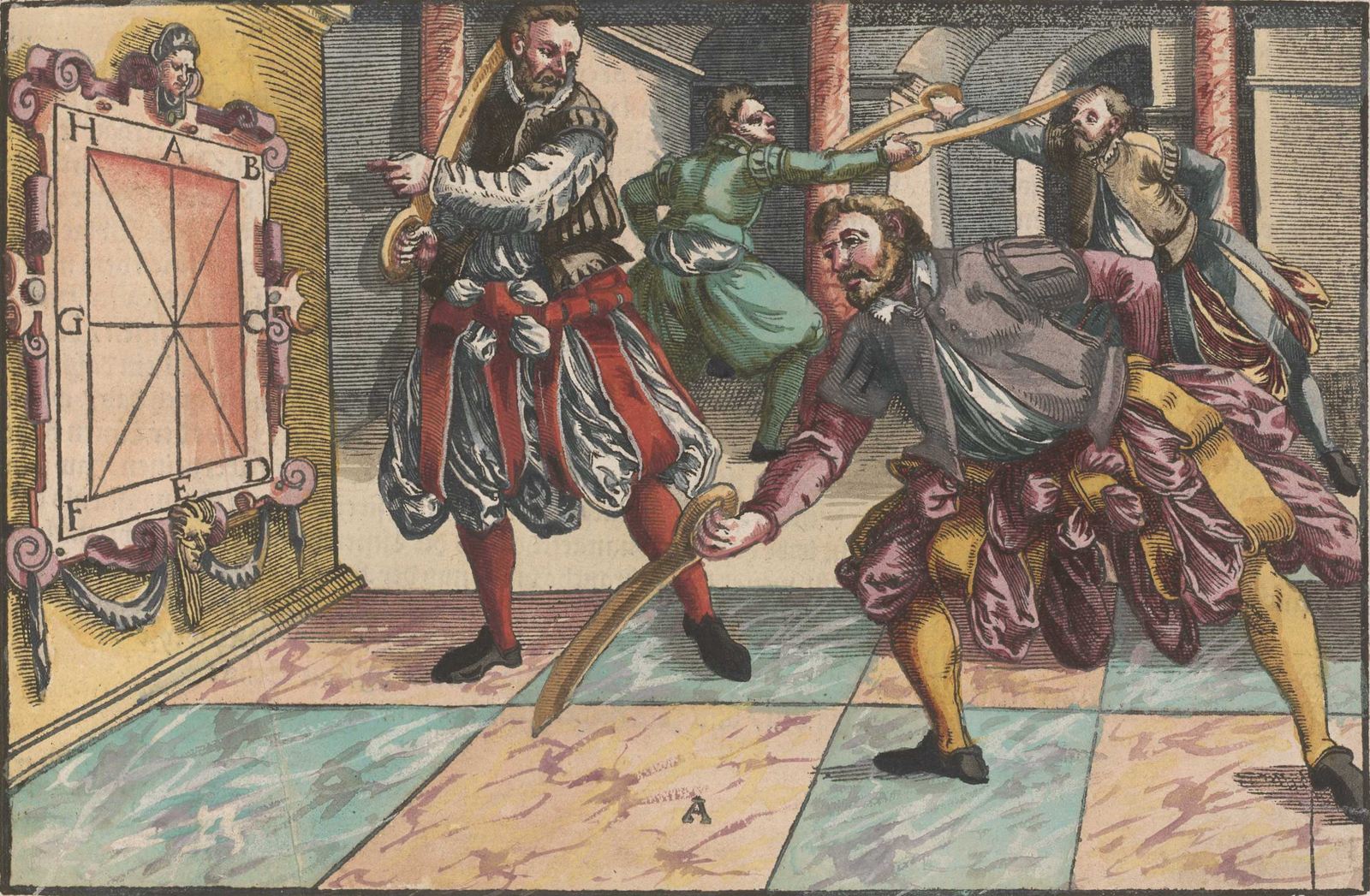
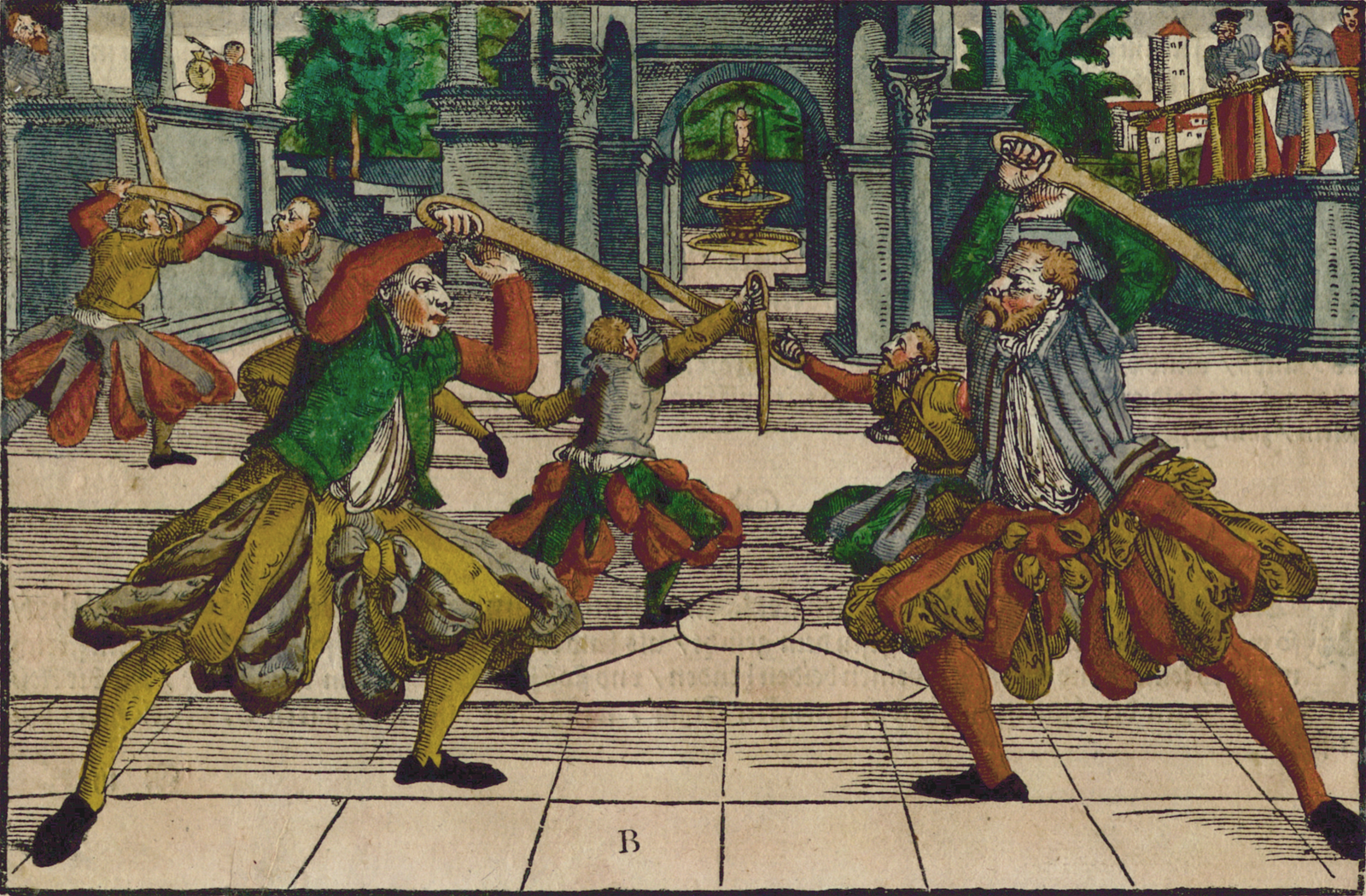
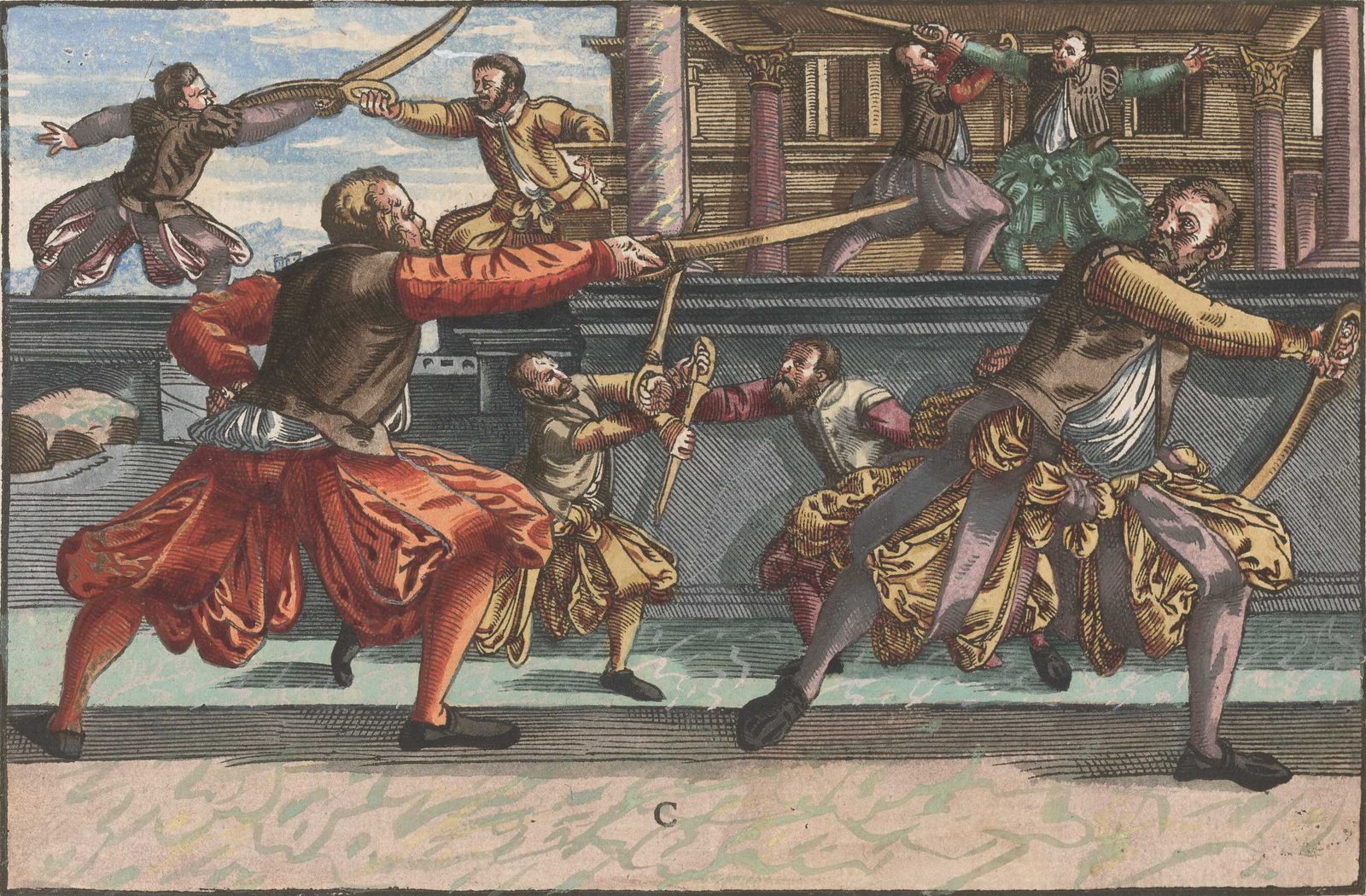
Following the previous explanation of the stances or guards and their respective uses, I now arrive at the major element of fencing and that is, indeed, the cuts, which arise from the stances. There are, however, no more than four [cuts] from which the others have their origin and provenance (as will be subsequently demonstrated). Because these four cuts form the correct foundation of all fencing, I want to explain the same in an organized fashion as a service to the good-natured reader—and not just merely how they are cut, in and of themselves, but also how they can be taught and executed in many useful ways. This is so that you can see and recognize how one technique always develops from another and how the originating one offers assistance to the other [or derivative] one. However, I have considered that the four cuts cannot actually and properly be taught—much less be understood by students—without prior know-ledge and understanding of a few lines which serve to assist in the instruction in the cuts. Therefore, it will necessarily follow that I will first teach those lines: their extent, their shapes, and their names. Since the cuts don’t number more than four, the routes or lines through which they are cut are also four.
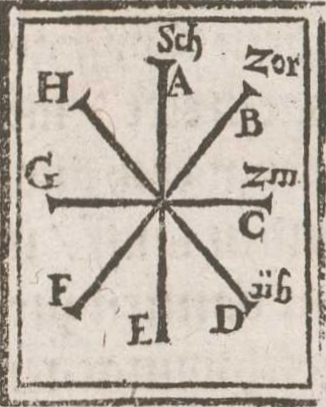
Thus, about the first [line], it is the upright line through which the High Cut is guided and cut and is therefore named the hair line, because the opponent is divided into left and right by this line. The second [line], the slanted or hanging line through which the Wrath Cut is guided, is called the wrath line (after the Wrath Cut), otherwise also called the strike line. The Middle Cut is completed through the third [line], the crosswise or middle line. The fourth, upwardly slanted line indicates the path for the Low Cut, just as it shows the path for the Wrath Cut from the other side from the top downward. Thus, the Low Cut is also guided upward through the same line through which the Wrath Cut is cut downward (slantwise from above).
That point where you imagine the four lines intersecting is the same as the chin. Thus, the crosswise or middle line crosses the opponent across both shoulders. This locates the intersection correctly, and you can then cut, not only the four major cuts, but you can also use this to direct the other cuts surely and well. However, you should not opine that you are not permitted to guide the cuts no lower or higher than the lines indicate, but instead you should understand that you merely learn to guide and cut the cuts this way [through the lines] in the beginning.
Secondly, you should also take note: when your counterpart cuts at you, and you want to cut equally at them, you must guide your cut exactly at the height of their line; otherwise, you don’t counteract nor are you guarded by your cuts. If you guide your cut toward your [counter]part in the Before and they are not ready to oppose your cut with any strike, you can then cut under or over their dusack at their body regardless of where the lines indicate (as will be sufficiently taught later in the sequences).
In the fourth chapter, after the lengthy discussion about several methods for learning to cut the cuts through the abovementioned lines, I will continue about the use and usefulness of the cuts, and how or which one counters another, as you will require no small measure of support in order to understand and correctly cut the sequences.
1570 Edition · fol. Ⅱ.2v.2
[Ⅱ.2v.2] Von den vier Häwen, mit vier guten Reglen, wie man die recht führen und lernen solle, sampt etlichen angehenckten exemplen.Das dritt Capitel.
NAch dem die Läger oder Hutten mit iren anhangenden Nützen hieuor erklärt, komme ich nun ferner zum Rechten Haubtstucke des Fechtens, und seind solches eben die Häwe, so auß den Legern endtstehn, Derselbigen aber seind an ihm selber nicht mehr dann vier, Auß welchen die andern alle ihren ursprung und herkommen haben, wie hernach soll angezeigt werden. Dieweil auch dise vier Häwe der rechte Grund alles Fechtens, will ich dem güthertzigen Leser zu dienste, dieselbigen nicht allein wie sie schlecht an sich selber geHawen[!], sondern auch, wie sie auff mancherley weise Nutzlich können gelehrt und getriben werden, ordentlich erkleren, Damit du sehen und erkennen mögest, wie immer ein stuck auß dem andern erwachse, unnd urspringlich eins dem andern die handbiete. Dieweil aber gedachte vier Häwe ohn vorwissen und kundtschafft etlicher Linien so zu underrichtung der Häwe dienstlich, nit artlich unnd eigentlich mögen gelert, vil weniger vom Lernenden verstanden werden, Will notwendiglich erfolgen, das ich dich zuvor solcher Linien, welcher massen die gestalt
unnd genennt werden, underrichte. Wie nun der Häwe nicht mehr denn vier, also seind der Strassen oder[Ⅱ.3v] Linien, durch welche sie gehawen werden, auch vier. Also zum Ersten, die auffrecht Lini, durch welche der Oberhaw geführt unnd gehawen, und darumb Scheittellini genandt wirde, dieweil durch solche der Mann in Linck und Recht underscheiden wirdt. Die andere Schlime oder hangende Lini, durch welche der Zorn Haw geführt, würdt von dem Zornhaw, die Zorn sonst auch strich Lini geheissen. Durch die dritte Zwerch oder mittel Lini, wirdt der Mittel haw volbracht. Die vierdte Schlime auffsteigende Lini, weisset den underhaw seinen weg, gleich wie sie dem Zornhauw, von der anderen seyten, von oben herab den weg zeigt. Also das durch die Lini, durch welche die Zorn häwe Schlims von oben gehawen, das durch dieselbigen auch die under häwe ubersich geführt werden. Wo du dir nun solche vier Linien, als ob sie mit dem Puncten in welchem sich dieselbige uber einander schrencken, dem künn gleich stünden, (fürbildest) Also das die Zwerch oder mittel Linien dem mann uber beyden Achseln ligend herstreiche, so steht das Kreutz recht, unnd kanst also dann nicht allein die vier Haubt häwe, sondern auch alle ander Häwe sicher und wol darnach richten. Du solst aber hie nicht meinen, das du die Häwe nicht auch niderer oder höher führen dörffest, denn die Linien außweisen, sondern ist allein dahin zuverstehn, das du die Häwe erstlich dardurch führen und hawen lernest. Züm andern so merck auch das, wann dein gegenpart auff dich Hawet, unnd du wilt mit ihm zu gleich hawen, so mustu deinen Hawe der Linien hühe gleich führen, anderst bist du mit deinem Hawen nicht versetzt noch verwardt. Wann du aber deinen Haw ihm Vor gegen deinem Part führest, unnd er deinem Hawe zubegegnen mit keinem streiche fertig ist, magstu als dann under oder oberhalb seinem Dusäcken zum leibe hawen, unangesehen wo die Linien hinweisen, wie hernacher, in stucken gnugsam gelehrt wirdt. Was nun weiter den gebrauche unnd nutz der Häwe, und welcher oder wie sie ander brechen belangt, davon will ich im vierden Capitel hernach nach der lenge handlen, derwegen alhie fortfahren, unnd die Häwe durch ihre obgemelt vier Linien, auff viererley weyse und art lernen Hawen, als die dir nicht eine geringe fürderung, die Stucke recht zu haweu[!], und zuverstehen sein werden.
_1570_page155.jpg)
_1570_page157.jpg)
_1570_page159.jpg)
_1570_page161.jpg)
_1570_page162.jpg)
_1570_page163.jpg)
_1570_page165.jpg)
_1570_page166.jpg)
_1570_page167.jpg)