Although much pertains to the stances, I do not want you to tarry long in any one of them because they were not invented nor provided for this reason, but instead so that you can know how—when you lift your sword upward to strike or you have been cut at (while you thus draw in your shoulders in the lifting)—you should quickly and immediately guide your sword toward them from that outermost point (to which you have arrived while lifting your sword), as is treated here in the Guard of the Day, which guard is created by the High Cut. Thus, when you rise for the High Cut (to execute it), the outermost point to which you arrive using this rising is called the Day. If you are not quickly attacked here (in that moment in which you are still rising to strike), then continue with your High Cut.
This is also the reason that experienced fencers also pause occasionally in the same: namely, that you do not undertake any cut or strike thoughtlessly. And also, after you have already lifted for the same previously-considered strike and have recovered there and should now release the strike, that you should tarry for a small while—and virtually only a blink of an eye at that same outermost point—to further consider whether it is useful to complete your previously-considered strike or whether a better opportunity might have occurred or become relevant to which you would convert to another cut (still from that outermost point), and that you complete the motion of lifting to the High Cut with a Crosswise Cut accordingly.
This is the most proper reason for the invention of the stances and is therefore the reason that it is permitted to fencers that they occasionally rest in a stance, to observe what the other [fencer] is undertaking (so that they will catch them in their own sequences more correctly). This type of waiting, merely to observe and to be aware of their [opponent’s] undertaking, requires skill and great experience, etc.
In order that you can have additional knowledge (how and in what way you should use your sword from the Day against strikes flying at you from your counterpart), I wanted to provide the following examples, both for when they cut or don’t want to cut.
SO vil nun aber die Leger belanget, so wil ich nicht das mann in deren einem lang verharre,
dann sie seind auch solcher ursach halben nicht erfunden noch außgetheilt worden, sonder
[Ⅰ.31r] darumb, auff das du wissen mögest, wann du dein Schwerdt zum streich auffzeuchst, unnd
dir dieweil du also im auffzucken die Bügen zu dir zeuchst) zu gehauwen würde, wie du als bald
von dem eussersten ort (dahin du mit dem auffziehen deines Schwerdts ankommen bist) herwiderumb
dein Schwerdt behendiglich gegen im herführen solt, als wie hie von der Hut des Tags
gehandelt wirt, welche Hut sich durch den Oberhauw verursacht, Also wann du zum Oberhauw
auffzeuchst (den zu thun) so wirt das eusserste ort dahin du mit solchem auffziehen kommest der
Tag genant, wirt nun dir nicht bald (in dem du noch auffzuckest zum streich) darin gehauwen,
so fahrestu mit deinen Oberhauw fürt, das aber auch von den erfahrnen biß weilen in deren einem
verharret wirt, ist dis die ursach, nemlich das du nit allein kein hauw noch streich unbedacht fürnimest,
sondern auch nach dem du schon zur selbigen vorbedachten streich auffgezogen und dich
erholet hast, und jetzt eben den streich her führen solt, das du an dem selbigen eussersten ort noch
ein kleine und schier nur ein augenbliche weil verharren solt, aldo noch ferner zubedencken, ob dein
fürgenomener streich zu volführen nützlich sey, oder ob dir under des ein bessere gelegenheit fürgefallen
oder zustendig worden were, auff das du denselbigen noch also am eussersten ort zu einem andern haw verwandeln, und das du demnoch den Oberhauw, zu welchem du auffgezogen hast,
mit einer Zwirch vollendest, Dises ist die fürnemste ursach der erfindung der Leger, unnd ist
darumb dem der sich bisweilen in ein Leger Hut legert, zu sehen was des andern fürnemen sei (auff
das er im dester füglicher wisse in seinen eigen stucken zufangen) solches nicht gewert, allein das
er zusehe und seines fürnemen gewiß sei, dann zu solchem warten gehöret kunst unnd grosse erfahrung
&c. Damit du nun ferner wisses haben mögest, wie und auff was weiß du dein Schwerdt
von Tag, gegen deines gegenparts herfliegenden streichen brauchen solt, hab ich die volgende
Exempel beide wann er hauwet, oder nicht hauwen will setzen wöllen.
First, when you approach an opponent and have raised your sword up high by striking up or otherwise lifting (into a High Cut), if they cut toward the left at your head while you are doing this: leap well out from their cut, somewhat forward and toward their left, and hit with the outward flat toward their in-flying strike, so that you hit their sword in the Strong. Execute this strongly so that the front part of your blade swings in above their sword at their head in this hit. This will certainly connect if you hit simultaneously with them and arrive above their sword with yours.
Whether this cut hits or not: pull your sword back upward and cut obliquely upward from below at their right arm (in contrast to the previous cut). During this cut, step with your left foot well out toward their right and duck your head far behind your sword’s blade. From there: pull quickly upward again and tilt your short edge at their left ear. If you perceive that they will swipe in response: don’t let it hit, but instead let it drop down as an intentional miss. Quickly cross your right hand over the left in the air and hit them with the short edge deeply at their right ear. Immediately cut a Crosswise Cut around and withdraw.
And take note here, if they could quickly follow your above-mentioned Low Cut and are so close on the Day that you can’t drop down, pay attention: in that moment in which they lift up from your sword, follow them with a slice at their arms. etc.
VNd erstlich wann du fur deinen Mann kommest, und aldo durch auffstreichen oder sonst mit auffziehen (zu einem
Oberhauw) mit deinem Schwerdt in die höhe kommen werest, und er Hauwet dir in dessen gegen deiner
Lincken zum Kopff, so spring wol auß seinem Hauw gegen seiner Lincken, etwas zu ihm umb, und schlag mit
außwendiger flech gegen seinem herfliegenden streich, das du sein Schwerdt in die sterck antreffest, unnd das also
starck, auff das sich dein vordertheil deiner klingen in solchem schlag, über seinem Schwerdt zu seinem Kopff einschwinge,
welche dann gewis triffst, wann du mit ihm zugleich schlechst, unnd doch mit deinem Schwerdt oberhalb
des seinen kommest, auff solchen Hauw er hab getroffen oder nit, so zuck dein Schwerdt wider übersich ab, und
Hauwe übereck dargegen über, von Unden zu seinem Rechten Arm, in solchem Hauw trit mit deinem Lincken
fuß wol aus gegen seiner Rechten, und bucke dich mit deinem Kopff wol hinder dein Schwerdts klingen, von dannen
zucke behend wider übersich, und wincke ihm mit kurtzer schneide zu seinem Lincken ohr, ersihestu das er ihm
nach wischet, so lasse nicht antreffen sonder fehl ablauffen, und verschrencke bald dein hend in der lufft (die Recht
über die Lincke) und schlag ihm mit kurtzer schneide dieff zu seinem Rechten ohr, als bald Zwirch umb und ziech ab,
unnd merck hie, wann er dir auff deinen obgelehrten Underhauw, so behend nach folgen, unnd so hart auff dem
tach sein würde, also das du zu dem ablauffen nicht kommen kanst, so hab acht in dem er von deinem Schwerdt abzuckt,
so folge ihm mit dem Schnit nach auff die arm, &c.
If they cut toward your left from below: step out toward their left once again and cut on top of the Strong of their sword with the long edge. As soon as your sword touches or glances on theirs, pull your sword back upward in the air and hit with the short edge in a downward flick deeply at their left ear, while stepping farther around toward their left. They will want to counteract that in haste and rise upward against it. Therefore, cut quickly with the long edge at their right ear in turn, stepping well toward their right (as before) during this strike around and simultaneously keeping the crossguard high over your head.
And take note: as soon as they strike around, drop on their arms with a slice once again. If they don’t want to suffer that but instead want to work free, follow them, remaining on their arms. When they mis-perceive in the slightest, then let fly at another opening and cut away from them.
HAuwet er dir aber von Unden gegen deiner Lincken, so trit abermal gegen seiner Lincken aus, und Hauwe mit
Langer schneide Oben auff die sterck seines Schwerdts, als bald dein Schwerdt auff das seine rührt oder glitzt,
so zuck dein Schwerdt wider übersich in die höh, und schlag mit kurtzer schneid in einem schnall wider nider, mit
fernerm umbtretten gegen seiner Lincken zu seinem Lincken ohr, dieff hinein, das wirt er in solcher eil versetzen wöllen,
und dargegen ubersich fahren, darumb Hauwe behend mit Langer schneid, widerumb zu seinem Rechten or,
in solchem umbschlagen trit wol gegen seiner Rechten wie vor, und bleib gleichwol mit dem kreutz hoch uber deinem [Ⅰ.32r.1] Kopff, und merck als bald er umbschlecht, so fall ihm mit dem Schnit abermal auff die Arm, will er den auch nit
leiden, sonder wil sich ledig arbeiten, so volg ihm (auff seinen Armen bleibent) nach, und wann ers am wenigsten
versihet, so laß abfliegen einer andern Blöß zu, und Hauw dich von ihm ab.
If they cut at your right after you have arrived in the High Guard: step quickly with your left foot toward their right out from their cut and simultaneously drop on top of the Strong of their sword with your long edge. In that moment in which you drop onto their sword, thrust your pommel through under your right arm so that you hit high with crossed hands and the short edge over or next to their sword at their head.
If they lift their sword upward and toward their right: let the half edge drop down next to the same. During that, step well out to the side and toward their left. Cut with the long edge straight from above at their head. Pull quickly back upward and hit with a Crosswise Cut from below at their left ear with a step backwards of your left foot. Cut away from them, etc.
HAuwet er dir aber zu deiner Rechten, wann du also in die Oberhut ankommen bist, so trit behende mit deinem
Lincken fuß gegen seiner Rechten auß seinem Hauw, und falle ihm zugleich mit Langer schneide, Oben auff
die sterck seines Schwerdts, und in dem du also auff sein Schwerdt fellest, so stoß dein knopff under deinem Rechten
arm durch, also das du ihm mit geschrenckten henden die kurtze schneid wol über oder neben seinem Schwerdt
zum Kopff schlagest, fehret er aber mit seinem Schwerdt übersich gegen seiner Rechten, so laß die halb schneide
neben derselbigen ablauffen, und trit under des wol gegen seiner Lincken, zur seiten aus, unnd Hauwe mit Langer
schneid gerad von Oben zu seinem Kopff, zuck aber behend wider übersich, und schlage mit einer Zwirch von
Unden zu seinem Lincken ohr mit einem abtrit deines Lincken fus, als dann Hauwe dich von ihm ab, &c.
Take note: when you arrive in the Onset with your sword high in the Guard of the Day and you perceive that they will not cut at you so hastily, such that you can begin your sequence well in the Before, cross your right hand over your left above your head so that it appears as if you wanted to thrust at their face. While doing this, step toward them with your right foot and simultaneously pull your sword around your head and toward your left, cutting powerfully through Crosswise (from your right) at their left ear with the short edge. Pull quickly back and threaten them with a Crosswise Cut long and toward their lower right opening. Don’t let it touch, but instead yank your sword upward in the same sweeping motion and let your short edge drop down deeply at their left ear for the third cut. Hit deeply at their right ear with the short edge and crossed hands. As soon as this hits, step back with your left foot and cut with the long edge from below toward their left arm. (You stand as shown by the portrait on the left in the small upper tenants on the right side in Figure G.)
Take note here: if, when you are stepping backwards, a Low Cut of this type is cut at your lower left opening, step toward them with your left foot and drop onto their sword with crossed hands and the short edge. This fixes their Low Cut in place, as this can be seen in the other portrait on the right in the above-mentioned tenants [Figure G].
And also take note: in that moment in which they pull their sword back upward, jerk your sword completely to your left with crossed hands. In that moment in which they hit in again, take out the in-flying cut with your outward flat (from your left and toward their right), strongly across so that your sword flies around above your head in one complete sweeping motion and your hands cross over one another again in the air while your sword flies around above. Step well toward their right, simultaneously keeping your hands high, and let the half edge drop down through a circle next to their right ear (regardless of whether the same hits or scratches). Cut long with a step backwards.
I have actually described this sequence in this way because many good sequences can be learned and fenced from this. Therefore, you should not merely learn it well, but also consider it diligently. In this way, I will set before you another sequence of this type with a different beginning.
MErck wann du also im zufechten mit deinem Schwerdt in die höhe kommest, in die Hut des Tags, und wirst aldo
gewahr das er dir nicht so eilends zuhauwet, also das du dein stuck im Vor wol anfangen kanst, so verschrencke
deine hend ob deinem Kopff, (die Recht uber die Linck) also das es scheinet als woltestu im zu seinem gesicht
stechen, trit under des mit deinem Rechten fus zu ihm, und zuck dein Schwerdt gleich mit, gegen deiner Lincken
umb deinen Kopff, und Hauwe ihm also von deiner Rechten mit kurtzer schneide durch ein Zwirch, krefftiglich zu
seinem Lincken ohr, zuck behend wider ab zu ruck, und trauwe ihm mit langer Zwirch gegen seiner Rechten undern
Blöß, laß aber nicht rühren, sonder verzuck in dem selbigen flug dein schwerdt wider ubersich, und laß zum dritten
die kurtze schneid dieff gegen seinem Lincken ohr ablauffen, und schlage ihm demnoch mit geschrenckten henden
die kurtz schneid zu seinem Rechten ohr dieff hinein, als bald solches trifft, so trit mit dem Lincken fuß zu ruck unnd [Ⅰ.33r.1] Hauwe mit Langer schneide von Unden gegen seinem Lincken arm, so stehestu wie das Bild zur Lincken an den
kleinern obern bossen gegen der Rechten handt, in der Figur G. anzeigt, hie mercke wann dir im abtretten ein solcher
Underhauw nach deiner Lincken undern Blösse gehauwen würde, so trit mit dem Lincken fuß zu ihm, unnd
fall im mit geschrenckten henden und kurtzer schneide auff sein Schwerdt, steck ihm also den Underhauw wie solchs
an dem andern Bild in obgedachten bossen gegen der Rechten handt zu sehen, Unnd merck weiter, in dem er als
dann sein Schwerdt wider zu ihm ubersich zeucht, so rucke dein Schwerdt also mit kreutzigten henden vollen gegen
deiner Lincken, und in dem er wider herschlecht, so nimme ihm denselbigen herfliegenden Hauw mit deiner auswendiger
flech, von deiner Lincken gegen seiner Rechten, überzwerch starck aus, also das dein Schwerdt oberhalb
dem Kopff in vollem flug wider umbfliege, und das sich deine hend in der lufft wider ubereinander schrencken
dieweil aber dein Schwerdt also Oben umbfleuget, so trit wol gegen seiner Rechten, bleib aber gleichwol mit den
henden hoch, und laß die halb schneide durch ein Zürck neben seinem Rechten or (doch das dieselbige treffen oder anschürpffe)
ablauffen, Hauwe als dann mit einem abtrit lang nach, Diß stuck hab ich darumb so eigentlich beschriben
dieweil sonst vil guter stuck hieraus genommen und gefochten können werden, derhalben magstu es nich allein
wol lernen, sonder dem auch ferner leissig nach dencken. Wie ich dir dan auff dise art noch ein stuck mit einem
andern anfang setzen wil, also.
In the Onset, when you arrive into the Day or High Guard, let the blade sink downward (as before) in front and toward your left side. Pull around your head, step, and cut a Middle Cut across with the long edge toward their left at their neck or temple. As soon as it touches, pull back around your head and cut the second (also a Middle Cut) across from your left toward their right, also at the neck. As soon as it glances off, cut the third: a High Strike with the long edge straight from above. These three cuts should move quickly in series in a single sweeping movement.
If you would like to create more space, then raise your pommel upward toward your left and pull around your head. Take [their blade] out by ripping upward next to your left with the flat or short edge and from below (through their right and toward your right) so that your blade flies around again in the air. Cut down from above with the half edge and with crossed hands, next to their right ear and past it as an intentional miss. In addition, if you can then reach them with the short edge while moving past, let it hit. Cut a strong Wrath Cut at their left side afterwards. Subsequently, cut away from them.
This is indeed a very serious and strong sequence which no one will be able to defend against as long as you have the Before.
IM zufechten so du in Tag oder Oberhut kommest, so laß die klingen vor dir undersich sincken wie vor, gegen
deiner Lincken seiten, und zuck umb dein Kopff, trit unnd Hauw einen uberzwerchen Mittelhauw, mit Langer
schneid gegen seiner Lincken, zu seinem halß oder schlaff, als bald er riert, so zuck wider umb den Kopff, und
Hauw den andern auch ein Mittelhauw uberzwerch von deiner Lincken gegen seiner Rechten, auch dem halß zu,
so bald es glützt so hauw den dritten ein hohen streich mit Langer schneid gerad von Oben, Dise drey häuw aber
sollen in einem flug bhendt auff einander gohn, Mag dir denn mehr blatz werden so erhebe dein Knopff gegen deiner
Lincken ubersich, zuck also umb den Kopff, und nim mit der flech oder kurtzer schneid, neben deiner Lincken von
unden durch sein Rechte, gegen deiner Rechten in einem riss ubersich aus, das dein kling in den lufft wider umbflie= [Ⅰ.33v.1] ge, und Hauwe mit halber schneid von Oben nider mit geschrenckten henden neben seinem Rechten ohr füruber
fehl, weiter kanstu ihn dann mit der kurtzen schneiden im füruber lauffen erreichen, so laß treffen, unnd Hauw
ein starcken Zornhauw zu seiner Lincken seiten nach, unnd Hauw dich folgend von ihm wegk, Diß ist zwar ein fast
ernsthafft und starck stuck, das dir keiner bald so du das Vor hast, wirt wehren können.
If you perceive that an opponent prefers to cut up into the Guard of the Day, after striking up over their head, move into the guard of the Key in the Onset. From there, raise your crossed hands over your head and simultaneously step toward them with your right foot. During the step, strike strongly and upwardly with the short edge next to your right thigh (through your opponent’s hair line from below) such that the sword flies above your head and back again from your left to their right as a Low Cut. After this, remain with your hands high in the counterposture. In that moment in which it touches, step quickly with your right foot toward their left and cut with the short edge deeply at their left ear in one sweeping movement. From there, cut two Low Cuts in one movement. Subsequently, hit at their right ear with a Crosswise Cut. Simultaneously, step Indesly backwards with your right foot behind your left. This allows the Crosswise to go deeper. When that has then occurred, you can quickly withdraw from them with cuts.
WIrstu gewar das einer gern nach dem auffstreichen uber dem Haupt, ein wenig pflegt in der Hut des Tags zu
verharren, so kom im zufechten in die Hut des Schlüssels, von dannen erhebe beide hend also kreutzweiß uber dein Haupt, und trit zugleich mit dem Rechten fuß zu ihm, und im trit streich mit kurtzer schneid neben deinem
Rechten schenckel durch des Mans scheidel Lini, starck von Unden auff übersich durch, also das das schwert
oberhalb deinem Haupt, widerumb von deiner Lincken zu seiner Rechten zu einem Underhauw verfliege, bleibe
demnach mit den henden hoch in der versatzung, in dem es rürt so trit behend mit dem Rechten fuß zu seiner Lincken,
und Hauw mit kurtzer schneid dieff zu seinem Lincken ohr in einem schwung hinein, von dannen Hauwe in
einem lauff zwen Underhäuw, folgends schlag mit einem Zwirchhauw zu seinem Rechten ohr, und trit In des zugleich
mit deinem Rechten fuß hinder deinen Lincken zuruck, so gehet die Zwirch desto dieffer, wann denn solches
beschehen, so kanstu dich als bald von ihm Hauwen.
Ⅰ.33v.2
14.7linked passage
14.8
[8] Or, if an opponent who approaches you rises up early, then pay attention: in that moment in which they rise from the lower guards, follow them quickly with two strong Low Cuts from both sides—cut quickly and immediately from below from whichever guards or stances you want. Alternately, [cut] quickly with the half edge from both sides (in one movement) deeply at their head. Afterwards, bind quickly on their blade.
If they rise up: follow.
If they remain: twist, rip out, and whatever work you can carry out most readily.
1570 Edition · fol. Ⅰ.33v.3
[Ⅰ.33v.3] Oder kompt dir einer für der bald hoch auffgehet, so hab acht in dem er aus der undern Huten auffgehet, so
folg ihm mit zweyen starcken Underhäuwen von beiden seiten behendt nach, aus was Huten oder Leger du wilst,
als bald Hauw behend von Unden. Zum andern mit halber schneid behend in einem lauff von beiden seiten dieff
zum Kopff, nach solchem binde ihm behend wider an sein klingen, geht er ab, so folge nach, bleibt er so Winde,
reiß auß, und was dir für arbeit am nechsten werden mag.
If you move into the Wrath Guard in the Onset, step as soon as you can reach them and cut a swift Wrath Cut at their left ear, which they will then have to defend against. Afterwards, quickly cut an opposite Low Cut (that is, at their lower right opening). You have now attacked. During this, before they have recovered to work and pulled their arms in to strike, drop down on their arm with your sword and prevent them in their movement so that they can’t work. Before they truly perceive this, thrust them away from you with an unexpected shove, so that they stagger as if they would fall. During this, hit at the closest opening that you are certain of.
If they recover and cut at you: you should respond with the set off or slice and drop on their blade and against their strike.
If they move away from your blade: slice on their arms once again.
If they remain on your sword: thrust their sword out to the side with your ricasso and let your sword fly quickly at their closest opening, and from there quickly back on their sword.
If they don’t want to allow their sword to be caught: follow with your sword on their arms so that you force them according to your will.
In all sequences, you should follow from the sword to the body, and from the body to the sword. If they want to pull or fly away, always use the slice to assist (because whoever can’t slice also can’t fence usefully). If you can carry it out correctly, then you will force them as you want unless they themselves can counter the slice. However, you will find few of them, and those who can’t guide the slice correctly, their slice is countered quickly.
KOmpstu im zugang in die Zornhut, so trit als bald du ihn erlangen kanst, unnd hauw zu seinem Lincken ohr,
ein geschwinden Zornhauw, welches er dann wehren mus, folgend hauw behend gegen uber zu seiner Rechten
undern Blöß ein Underhauw, also hastu nun angriffen, under des ehe und dann er sich erholt zu arbeiten, und
die Arm zum streich ansich zeucht, so fall ihm mit dem Schwerdt unden an sein arm, und hindere ihm also seinen
lauff das er nicht arbeiten kann, ehe denn er aber dis recht gewahr wirt, so stoß ihn mit einem unversehenen ruck
von dir, das er gleich dummelt als wolt er fallen, unnd schlag ihn dieweil zur nechsten Blös, die du denn gewiß
hast, erholt er sich aber und hauwet auff dich her, so sey du mit dem absatz oder Schnit wider da, und fall ihm gegen
seinem streich an die kling, gehet er wider von der klingen ab, so schneidestu ihm wider auff die arm, bleibt er
aber an deinem Schwerdt, so stoß ihm sein Schwerdt mit deinem schildt beyseits aus, und laß dein Schwerdt behendt
wider der nechsten Blös zufliegen, und von dannen behendt wider an sein Schwerdt, will er das Schwert
nicht fangen lassen, so volg mit deinem Schwerdt aber nach auff seine Arm, damit zwingstu ihn nach deinem gefallen,
Also soltu nun in allen stucken vom Schwerdt zum leib, und von dem leib zum Schwerdt, aber wo er dir
zucken oder verfliegen wolt, so nim den Schnit alweg zuhilff, denn wer den Schnit nit kann, wirt das auch mit
nutz nicht Fechten, wo du ihn aber recht machen kanst, so zwingestu ihn wie du wilt, es were dann das er den
Schnit selbst brechen könde, deren wirstu wenig finden, wer aber den Schnit nit recht führen kan dem ist er bald gebrochen.
Ⅰ.34v.1
14.9linked passage
14.10
[10] If you stand in the right Wrath Stance and your counterpart cuts at you from their right toward your left, move, with a step forward of your right foot, while you push [your sword] forward over your head and under their blade, catching their cut on your flat such that your thumb is below and the blade hangs down next to your left side somewhat toward the ground. In that moment in which it glances off, step with your left foot to their right side and twist the short edge under their sword inward at their head (as the small center tenants show in Figure L). As you have now twisted, hold your sword with the short [edge] on theirs and subsequently rip upward with toward your right your sword (as the central small scene teaches you in Figure F) so that at the end of this rip with crossed hands, your hands cross in the air. Hit at their lower right opening with the inward flat (while your hands remain up high). As soon as they swipe to counteract in response, don’t let it touch, but instead pull back upward and cut a Glancing Cut at their left ear. In this strike, let the blade swing in deeply over your hand and fence quickly away from them.
1570 Edition · fol. Ⅰ.34v.2
[Ⅰ.34v.2] Stehestu im rechten Zornleger, und Hauwet dein widerpart von seiner Rechten gegen deiner Lincken auff dich
zu, so fahr mit verschieben under sein kling uber dein Haupt, und fang sein Hauw auff dein flech, das dein Daumen
unden standt, unnd die kling neben deiner Lincken etwas gegen der erden undersich hang, mit einem zutrit
deines Rechten fuß, in dem es aber glützt, so trit mit dem Lincken fuß auff sein rechte seiten, unnd windt ihm die
kurtze schneid under sein Schwerdt einwerts zum Kopff, wie die kleinen mitlern bossen in der Figur L. anzeigen
wenn du nun gewunden, so behalt dein Schwerdt mit kurtzer an dem seinen, und reiß folgents mit dem Schwert
gegen deiner Rechten ubersich auß, wie dich solches die mitlern kleinen Bilder in der Figur F &c. lehren, also das[Ⅰ.35r.1] sich dein hend noch ende des risses in der lufft verschrecken, schlag in (doch das dein hendt in der höh bleiben) mit
inwendiger flech, zu seiner rechten undern Blös, als bald er ihm aber nachwischet zur versatzung, so laß nit rühren,
sonder zuck wider ubersich, und Hauw ein glützhauw zu seinem Lincken ohr, in solchem streich aber laß die
kling uber dein hand dieff ein schwingen, und ficht dich also mit geschwindigkeit von ihm wegk.
Ⅰ.34v.2Ⅰ.35r.1
14.10linked passage
14.11
1570 Edition
14.11linked passage
14.12
[11] If your counterpart cuts at you from above, step and cut a Middle Cut across from your right through their in-flying strike, and with the long edge away from you so that your blade flies around with the half edge toward their left ear. Let it drop down next to the same, and immediately pull from your right toward your left around your head. Step and hit them with the inverted flat from your left to their right ear across through the middle line (as can be seen in the large portrait on the [left] side in Figure A).
1570 Edition · fol. Ⅰ.35r.2
[Ⅰ.35r.2] Hauwet dein gegentheil von Oben auff dich, so trit und Hauw ihm von deiner Rechten, mit einem uberzwerchen
Mittelhauw seinen herfliegenden streich mit langer schneid von dir wegk auch durch, das dir dein klinge wider
umbfliege mit halber schneide gegen seinem lincken Ohr, neben demselbigen las abermals ablauffen, unnd
zuck als bald von deiner Rechten gegen deiner Lincken wider umb dein Haupt, trit unnd schlag ihm mit ebicher letzer
flech von deiner Lincken zu seinem Rechten ohr, uberzwerch durch die Mittel linien, wie solche an dem grossern
Bild in der Figur A. zur rechten Handt zu sehen.
Ⅰ.35r.2
14.12linked passage
14.13
[12] In case they don’t want to cut, position yourself in the right Wrath [Guard] and lean forward over your front thigh. Remain standing on your left foot and cut slantwise from your right over your left leg into the left Change [Guard]. From there, rip back upward and outward with the short edge (through the strike line through which you have cut from above) so that your sword returns to your right shoulder. Execute this once or three times and finally, when you observe your opportunity, lift your short edge in a jerk upwards into the air from your high left and let it snap around over your head in the air into a Low Cut at their lower right opening while advancing twice. Before this correctly touches, hit again over your hands deeply at their left ear with the short edge. (Let your pommel snap far upward during this; this will move it deeper.) Pull back around and threaten a cut on their right; however, quickly cut a Crosswise Cut again at their left, with a step backwards and withdraw yourself.
1570 Edition · fol. Ⅰ.35r.3
[Ⅰ.35r.3] Im fall er aber nit hauwen wolt, so stelle dich in rechten Zorn, treib uber dein fürgesetzten schenckel also, Bleib
mit deim lincken Fuß stehen, und Hauwe von deienr Rechten schlims uber dein Linck bein in den lincken Wechsel,
von dannen reiß mit kurtzer schneid wider ubersich durch die streich Linie, durch welche du von Oben her gehauwen
hast, das dein Schwerdt wider an dein rechte Achsel komme, das thu denn ein mal oder drey, unnd zum
letzten wann du dein gelegenheit ersehen, so fahr mit kurtzer schneid in einem riß von deiner Lincken Oben ubersich
in die lufft, und laß also uber dein Haupt in der lufft zu einem Underhauw nach seiner rechten undern Blös
umbschnappen mit einem zwifachen zutrit, und ehe dann solches recht griert, so schlag wider mit kurtzer schneid
uber dein handt zu seinem Lincken ohr dieff ein, laß in solchem dein Knopff wol ubersich schnappen, so gehet es
desto dieffer, zuck denn wider umb, und trauwe ihm zur Rechten ein Hauw, jedoch Zwirch bald wider mit einem
abtrit zu seiner Lincken, und ziehe denn ab.
Ⅰ.35r.3
14.13linked passage
14.14
[13] In the Onset, cut up into right Wrath [Guard] and, as soon as your counterfencer lifts up, raise your hands high over your head and let the front end shoot toward their face, as if you wanted to thrust; however, pull back and hit with inverted hands or the outward flat from your lower right at their left ear or arm, together with a step backwards.
If they cut in from above simultaneously with you, after the swords have contacted, pull quickly around and hit obliquely and deeply at their upper right opening with the inward flat (so that your hands cross). Immediately pull back as if you wanted to cut at their left, but don’t do that; instead, pull back without hitting. Cut with the short edge in a circle at their right ear so that the short edge scratches the skin on their ear and your hands remain high over your head during this. In that moment in which the circle moves around, step backwards and cut a straight Hairline Cut at their head. Pull quickly upward with the crossguard horizontal, that is, move with the Crown over your head. From there, cut a Crosswise Cut at both sides—the first at the right with the long edge, the second at the left with the short edge (such that your thumb always remains below on your ricasso)—and withdraw.
1570 Edition · fol. Ⅰ.35r.4
[Ⅰ.35r.4] Im zufechen verhauw dich in rechten Zorn, unnd so bald dein gegenfechter auffgehet, so erheb dein hend in
die höh uber dein Haupt, unnd las ihm den vordern ort gegen seinem gesicht schiessen, als woltestu stechen, zuck
aber wider an dich, und schlag mit ebichter handt oder auswendiger flech, sampt einem abtrit von deiner Rechten
unden auff zu seinem lincken ohr oder arm, Hauwet er dann zugleich von Oben mit dir ein, so zuck behend nach
dem die Scherdt getroffen wider umb, und schlag mit inwendiger flech, das dein hend kreutzweis kommen, ubereck
zu seiner Rechten obern Blös dieff hinein, als denn ziehe wider an dich, als wöllestu zu seiner Lincken hauwen,[Ⅰ.35v.1] thu es aber nit, sonder zuck ungetroffen wider ab, unnd hauw also mit kurtzer schneid in einem Zirckel zu seinem
rechten ohr, das die kurtze schneide an seinem ohr schurpffe, und dein hend under des hoch uber deinem Haupt bleiben,
aber in dem der Zirckel umblaufft, so trit zu ruck und Hauw ein geraden Scheidelhauw zu seinem Kopff, zuck
den behend wider ubersich mit uberzwerchem kreutz, das ist, komm mit der Kron uber dein Haupt, von dannen
Zwürch[!] zu beiden seiten, den ersten zur Rechten mit langer schneid, den andern zur Lincken mit kurtzer schneid,
das dein Daumen alweg unden auff deinem schildt bleib, und zeich ab.
When you stand in the right or left Wrath [Guard] and an opponent cuts at you from below at either your right or left opening: cut at that [cut] from above with the long edge and, in that moment in which the weapons meet, shoot the point on top of their sword at their face. Lift your hands Indesly and work at the closest opening using the sequences mentioned above or below.
WEnn du im Rechten oder Lincken Zorn stehest, vnd einer dir von unden eintweder zur rechten oder lincken Blöß
zuhauwet, so Hauw mit Langer schneid Oben darauff, und in dem es trifft so schieß ihm den ort auff seinem
Schwerdt hinein zum gesicht, fahr in des auff mit den henden, und arbeit zu der nechsten Blöß, mit vor oder nach
gehenden stucken.
If you move into the left Wrath Guard in the Onset, drive one cut, two, or three over your right thigh (as previously over the left). Step and cut strongly through from your lower left and up through their right, so that your sword flies around in the air back to a Low Cut toward their right. Immediately pull around your head and cut a strong Crosswise Cut at their left ear. Furthermore, flick cross-wise and across at all four openings: with the palm up (that is, with inverted or reversed palm) on their left, regardless of whether lower or upper; and with the inward flat on their right (that is, with the palm down).
KUmmestu im zugang in die Lincke Zornhut, so treib uber den rechten Schenckel, wie doben uber den Lincken,
ein Hauw zwen drey, als dann tritt und Hauw von deiner Lincken unden auff durch sein Rechte, starck ubersich
durch, das dein Schwerdt in der lufft wider zu einem Underhauw wider umbfliege, gegen seiner Rechten,
zuck als dann umb den Kopff, unnd Hauw ein starcken Zwirchhauw zu seinem Lincken ohr, schnell für der kreutzweis
unnd uberzwerch zu allen vier Blössen, auff seiner Lincken uber die hand, es sey Unden oder Oben, das ist
mit ebichter oder letzer handt, und auff sein Rechte mit inwendiger flech, das ist under der handt.
I hope that you have enough instruction from the sequences taught previously and have gained the information [as to] how you set up your cuts and sequences toward the opponent’s four openings, and how you should sometimes let fly with a twist, slice, likewise a drop downward, circle, or fly away. This should not be understood as occurring solely from those guards in which such things have been explained, but also for fencing in the majority of all other stances. Therefore, because the Ox is an especially good stance for attacking your counterpart, I want to provide a short teaching and rule here [about] how you should attack or overwhelm your opponent in the Before and force them to counteract you.
AUß disen bißher gelerten stucken, hoffe ich du habest genugsame anleitung, und bericht zu nemmen,
wie du deine häuw und stuck gegen des Manns vier Blössen anschicken, auch wie du bißweilen
ein winden, Schnit, Item ein Ablauffen, Zirckel und ein verfliegen damit lauffen lassen
solt, welches aber nicht allein auß disen in welchen solches erzelt, sonder sol auch von allen andern
Legern den mehrertheil zufechten verstanden werden. Derwegen dieweil der Ochs ein sonderlich
gut Leger dein widerpart anzugreiffen, wil ich in disem, wie du den Mann im Vor angreiffen,
ubereilen, und dir zuversetzen zwingen solt, ein kurtze lehr und regel geben.
Ⅰ.36r.1
14.17linked passage
14.18
[17] And first of all, take note: you have four primary attacks from each side according to the direction of the four main lines (as such was presented for you to see visually at the beginning of the chapter). These lines are the correct paths for all cuts which can be guided and cut by you toward your counterfencer.
1570 Edition · fol. Ⅰ.36r.2
[Ⅰ.36r.2] Und merck für das erste, das du von einer jeden seiten vier fürnemer angriff hast, nach außweisung der vier
Haupt linien, wie solches anfangs des Capitels augenscheinlich zusehen fürgestelt, welche Lini sein die rechten
strassen aller Häuw so von dir gegen deinem gegenfechter geführet und gehauwen werden.
Ⅰ.36r.2
14.18linked passage
14.19
[18] Therefore, when you approach with the Plummet Cut toward your opponent, if you hold and maintain the point toward your opponent, this Plummet is called the Ox (as taught above) because of the thrust that it indicates. You can attack out of this stance as soon as you can reach your counterfencer—both from below and above, slantwise or across, as the lines presently show. Regardless of whichever line you [follow to] attack from one side, you should also cut opposite to that same line—across or obliquely—whether with the long or short edge or with the flat.
Thus, if you complete it quickly and strongly in the Before, you force them to allow you other work against their will because, even if they are already working against this Onset, you are already at their throat, following this with pursuit, slicing, pressing, and the like. In this way, you do not allow them to complete any work. Therefore, sequences taught previously are also used for this reason, directed both at the attack and in the fencing afterwards. An example:
1570 Edition · fol. Ⅰ.36r.3
[Ⅰ.36r.3] Derhalben wann du mit dem Sturtzhauw gegen deinem Mann zugehtst, welcher Sturtz so du also den ort gegen
dem Mann haltest und still heltest der Ochs (wie oben gelehrt) von wegen seines zeigenden stoß genant wirt,
aus welchem du nun so bald dein gegen fechter erlangen, angreiffen kanst, es sey von Under oder Oben, schlims
oder uberzwerch, wie solches die Lini zugegen anzeigen, zu welcher Lini du nun von einer seiten angreiffest, gegen
derselbigen soltu auch uberzwerch oder ubereck dargegen Hauwen, es sey mit Langer oder halber schneide, oder
mit der flech, So du sie ihm Vor gewaltig und behend volbringest, zwingest du ihn das er dir andere arbeit ohn sein
danck auch zulassen mus, dann ob er schon dargegen zufechten sich arbeitet, so bistu ihm doch schon auff dem hals,
mit nachreisen, schneiden, trucken und dergleichen nach zufolgen, damit du ihn zu keiner volkommenen arbeit kommen
lassest, also seind auch bißher gelehrte stuck auff disen grund, beide im angreiffen und im nachfechten gerichtet,
Exempel.
Ⅰ.36r.3
14.19linked passage
14.20
[19] When you move in the Onset through the Plummet into the guard of the Ox, as soon as you can reach them, cut a powerful Wrath Cut slantwise from your right toward their left ear with a large step forward of your right foot. As soon as the cut touches or hits, immediately pull back around and cut opposite this at their [right] arm, also with the long edge. For this cut, step well toward their right with your left [foot], and remove your head well to the side behind your blade.
In that moment, they will perhaps be ready either to cut or otherwise to extend their sword in front to counteract. Therefore, let your blade hang down behind you and away from their right arm, and simultaneously pull your hilt around your head toward your right. If they do guide their blade to cut or extend it to counteract, take out their blade powerfully and strongly with your long edge or flat (across from your right toward their left) so that you completely break through with your blade. Let your blade fly (in this movement to take out their blade) with a Crosswise Cut in one sweeping motion back up high around your head toward their left ear. From there, pull your sword back around your head and cut a strong strike, sweeping in from outside at their right ear with the outward flat. (You see this flat strike in the above-mentioned Figure K in the larger portrait the right side.) Also, take diligent note: step with the left foot well outward to their right side in this strike. From this flat strike or Rebound Cut: pull your sword high over your head (maintaining your hands at this height) and let the blade fly around with the long edge at their right arm. Don’t let it touch, but instead, quickly cut a Crosswise Cut toward their left ear with a step backwards of your right foot and withdraw.
If this sequence has already been used against you, then you still have the slice in your repertoire (as taught above) with which you can create space again, to either complete the sequence or to undertake another sequence.
1570 Edition · fol. Ⅰ.36r.4
[Ⅰ.36r.4] Wann du im zufechten durch den Sturtz in die Hut des Ochsens kommest, so Hauwe (als bald du ihn erlangen
kanst) einen gewaltigen Zornhauw von deiner Rechten schlims gegen seinem Lincken ohr, mit einem weiten
zutrit deines Rechten fußes, als bald der Hauw immer rühret oder trifft, so bald zucke wider umb und Hauwe dar=[Ⅰ.36v.1] gegen uber zu seinem lincken Arm, auch mit Langer schneide, zu solchem Hauw aber trit wol mit deinem Lincken
gegen seiner Rechten, und nim dein Kopff wol mit beiseitzs aus, hinder dein klingen, in dem wirt er villeicht fertig
sein, eintweders zuhauwen oder sonst sein Schwerdt fürsich ausstrecken zu versetzen, Derhalben so laß dein
klingen von seinem rechten Arm hinder dir abhangen, und zucke dieweil gleichwol dein Hefft umb dein Kopff gegen
deiner Rechten, und nime ihm sein klingen (er führe die im herhauwen, oder zu versatzung ausgestreckt) mit
deiner Langen schneide oder flech, gewaltig und starck von deiner Rechten gegen seiner Lincken uberzwerch aus,
also das du mit deiner klingen gantz durch brechest, unnd laß also dein klingen in solchem außnehmenden lauff, in
einem flug mit einer Zwirch wider Oben umb deinen Kopff gegen seinem lincken ohr fliegen, von dannen zuck
dein Schwerdt wider umb dein Kopff, und Hauwe mit außwendiger fleche, einen starcken eingeschwungenen
streich, außwendig zu seinem rechten ohr, Wie du solchen flechstreich an dem grossern Bild zur Rechten hand in
der Figur K. fürgemalt sihest, auch merck fleissig das du mit dem lincken Fuß in solchem streich wol auß, auff sein
rechte seiten trettest, von solchen flechstreich oder Brellhauw zucke dein Schwerdt hoch über dein Kopff, behalt also
die hendt in solcher höhe, und laß die klingen umbfliegen mit Langerschneid zu seinem rechten Arm, und doch
nicht rühren, sonder Zwirch behendt mit einem abtrit deines rechten Fuß, gegen seinem lincken Ohr, und zeich
ab. Dises stuck wann es dir schon gesteckt würde, so hast du doch (wie oben gelehrt) den Schnit im vorraht, mit
welchem du dir wider blatz machen kanst, eintweder das stuck vollen auß zufechten, oder ein ander stuck für zu
nemen &c.
Ⅰ.36r.4Ⅰ.36v.1
14.20linked passage
14.21
[20] Item, when you can reach your opponent from the Ox in the Onset (as just taught), pull your sword around your head and hit strongly with the outward flat from your right (directed across at their left ear). From there, pull quickly around your head and hit them again with the outward flat from the other side (also across). After these two cuts, fence whatever appears good to you according to opportunity. Thus, you can always attack cross-wise and opposite, and also fence farther outward.
1570 Edition · fol. Ⅰ.36v.2
[Ⅰ.36v.2] Item wann du deinen gegenman auß dem Ochssen im zugang wie jetzt gelehrt, erlangen kanst, so zuck dein
Schwerdt umb dein Kopff, und schlage mit außwendiger flech von deiner Rechten, starck und gerichts uberzwerch
zu seinem Lincken ohr, von dannen zuck abermal behendiglich umb dein Kopff, und schlage mit außwendiger flech
von der andern seiten, auch uberzwerch her gegen, nach disen zweyen Häuwen ficht nach gelegenheit was dich
gut dunckt. Also kanstu alwegen kreutzweiß und gegen einander angreiffen, wie auch fürter auß fechten.
Ⅰ.36v.2
14.21linked passage
14.22
[21] In the meantime, and when the opportunity arises, you can also attack slantwise from one side, across from the other, and on one side perhaps with the long [edge] and from the other with the short [edge] or flat.
Finally, also take note of this: if an opponent can quickly overwhelm you in this guard, so that you cannot move in the Before with any sequence, shoot the front end into their face with a step forward into Longpoint. During this push forward, turn the long edge toward their in-flying cut. As soon as you have caught it, twist on their sword at the closest opening.
1570 Edition · fol. Ⅰ.36v.3
[Ⅰ.36v.3] Auch kanstu bißweilen wann es die gelegenheit gibt, von einer seiten schlims, von der andern uberzwerch angreiffen,
und das an einer seiten etwan mit langer, von der andern mit kurtzer oder flech dargegen. Zum letsten so
merck auch wo dich einer in diser Hut ubereilen würde, also das du zu keinem stuck im Vor kommen kanst, so schiesse
im den vordern ort in sein gesicht, mit einem zutrit in das Lang ort, und in solchem fürtschieben so wende die Lange
schneid gegen seinem herfliegenden haw, als bald du den entpfangen, so winde an sein schwert der nechsten Blöß zu.
Item, in the Onset, move with your left foot forward and strike with the short edge upward and through their face from your right—once, twice—and the third time, remain in Longpoint with your sword extended in front of you. Turn the long edge upward toward your right so that your pommel moves through under your right arm and your hands cross over one another. Lift your crossed hands and you stand in Unicorn (as described previously). From there, cut an additional two Low Cuts together (with your left foot remaining always in front); the first [cut] upward from your right, the second from your left, both equally close next to your body so that your hands arrive cross-wise again (as before) with the second Low Cut. Lift quickly back into Unicorn. Raise your left foot somewhat during this lifting but set it down again quickly. By using this body language and these formal, meaningless movements, you provoke them so that they prefer to cut at your left opening.
In that moment in which they cut in, let your blade drop down in front of you and simultaneously pull your sword around your head to cut across with the long edge (from your right toward their incoming strike), with a step forward of the same foot, so that you catch their strike horizontally on the strong of your blade. As soon as the blades glance together, leap with your right foot even farther around toward their left, and swiftly raise your sword slightly up from their blade. While you are lifting slightly (as mentioned), thrust your sword pommel through under your right arm so that your hands cross. Flick quickly (with the inner flat or short edge) behind their sword and at their head (during the step outward toward their left mentioned previously). This can be seen in Figure C (in the smaller tenants to the left). In this way, you expose your left side and they will rush to the same. You then do nothing more than pull your pommel back from under your right arm and turn your sword into Longpoint (so that the long edge is turned toward their blade). Thus you stand in the Simple Brace (as is taught by the other smaller scene to the right in the aforementioned Figure [C]).
ITem im zufechten komme mit deinem lincken Fus vor, und streich mit kurtzer schneide von deiner Rechtenubersicht,
ein mal zwey durch sein gesicht, unnd das dritemal bleib in dem Langenort, mit deinem Schwerdt vor
dir außgestreckt aldo, wende die Lange schneid ubersich gegen deiner Rechten, also das dein Knopff under deinem
rechten Arm durch, und dein hendt kreutzweis uber einander kommen, fahre also mit geschrenckten henden ubersich,
so stehestu wie hievor vom Einhorn gesagt, von dannen Hauwe ferner, doch das dein lincker Fuß alzeit vor
bleibe) zwen Underhäuw zusamen, den ersten von deiner Rechten, den andern von deiner Lincken alle beide hart
neben deinem leib ubersich, also das deine hend mit dem andern Underhauw wider kreutzsweis wie vor kommen,
Fahr also behend ubersich wider in das Einhorn, mit sochem auffliegen, erhebe deinen lincken Fus etwas ubersich,
doch setze den bald wider nider, mit solchen geberden und Ceremonien reitzestu in, das er dester ehe deiner lincken Blöß
zuhauwet, in dem er aber herhauwet, so laß dein klinge vor dir undersich sincken, und zuck gleich mit deinem schwert
umb dein Kopff, Hauwe also mit Langer schneid uberzwerch von deiner Rechten (mit einem zutrit desselben fus)
gegen seinem herkommenen streich, also das du ihm sein streich auff die sterck deiner klingen von uberzwerch aufffangest,
als bald die Schwerdter zusamen glützen, so spring mit deinem rechten Fuß noch ferner gegen seiner lincken
umb, und erhebe dein Schwerdt eilents ein wenig ubersich von seiner klingen, Dieweil du aber (wie gemelt)
ein wenig ubersich fahrest, so stoß under des dein Schwerdts knopff under deinem rechten Arm durch, das dein
hend kreutzweiß kommen, schnell aslo behendiglich mit der inwendigen flech oder kurtzer schneid, mit nechst gemeltem
austrit gegen seiner Lincken) hidner seinem Schwerdt auff seinem Kopff, wie an den kleinern bossen zur Lincken
hand in der Figur C. zusehen, damit Blössestu deine Lincke seiten, wil er derselbigen zu eilen, so thu nit mehr
dann ziehe deinen Knopff under deinem rechten Arm wider herfür, und verwende dein Schwerdt in das Langort
das die Lange schneid gegen seiner klingen gekehrt stand, so stehestu in gerader versatzung, wie solches die andern
kleinern Bilder zur Rechten in gedachter Figur außweisen,
Ⅰ.37v.1
14.23linked passage
14.24
[23] Or, if you have turned the half edge inward and toward their head with crossed hands so that you expose your left side, they will rush to fence toward the same (as mentioned above). Keep your hands crossed and remove your head well toward your right and shoot your blade well over theirs (the closer to their ricasso the better). Rip their blade out toward your left (as you see in the smaller scene on the right in the Figure designated with D). As you approach your left [side] during this outward rip, lift your hands and hit back with the half edge (deeply at their left ear) with your palms upward. After this, move quickly back on their sword with the long edge so that you stand in Longpoint. Afterwards, withdraw as you please.
1570 Edition · fol. Ⅰ.37v.2
[Ⅰ.37v.2] oder wann du ihn also mit geschrenckten henden
die halb schneide einwerts gegen seinem Kohff[!] geschrenckt hast, damit du dann dein lincke seiten bloß geben, ficht
er dann (wie vor gemelt) derselbigen eilents zu, so behalt deine hendt also kreutzweis, und entziehe ihm dein Kopff
wol gegen deiner Rechten, und schiesse ihm mit deiner klingen wol uber die seine, ihe neher bey seinem Schilt ihe[Ⅰ.38r.1] besser, reisse ihm also sein klingen gegen deiner Lincken auß, wie du in der Figur so mit dem D. verzeichnet, an
den kleinern Bilder zur Rechten hand sihest, und wann du mit solchem ausreissen nahet zu deiner Lincken kommest
so fahr mit den henden auff, und schlag mit halber schneide uber dein hand, wider zu seinem lincken ohr dieff hinein,
nach solchem komme ihm behend mit Langer schneid wider an sein Schwerdt, so stehestu im Langen ort demnach
ziehe ab nach deinem gefallen.
Ⅰ.37v.2Ⅰ.38r.1
14.24linked passage
14.25
[24] Or, as before, when you have moved into the Unicorn in front of your counterpart, then take note; in that moment in which they cut in from above: let your blade move around your head and bind on their sword across from your right toward their left. As soon as they lift up from the same, let your blade snap back around so that your right hand moves over the left with crossed hands and drop in front on their arms with the short edge while they are still lifting up (as you can see in the outermost small scene toward the right side in the Figure designated with I). Thrust with your ricasso powerfully away from you, toward their left and out to the side. While they stumble, cut quickly at the closest opening or hold them by following after until you can have the advantage.
1570 Edition · fol. Ⅰ.38r.2
[Ⅰ.38r.2] Oder wann du also vor deinem gegenman in das Einhorn kommen bist, so merck in dem er herhauwet von Oben,
so laß deine klingen umb deinen Kopff verfahren, und bind ihm von deiner Rechten uberzwerch gegen seiner
Lincken an sein Schwerdt, und als bald er von dem selbigen ubersich abgeht, so laß dein klingen wider umbschnappen,
also das dein Rechte hand uber die Lincke komme, und fall ihm mit kurtzer schneid und geschrenckden henden
dieweil er noch also im aufffahren ist, vornen für die Arm, wie an dem eussersten kleinen Bild in der Figur mit
dem I. verzeichnet gegen der Rechten hand sehen kanst, stoß in also mit deinem Schilt gewaltig von dir gegen deiner
Lincken zur seiten auß, und Hauwe behend dieweil er dummelt der nechsten Blöß zu, oder hal in also mit nach
folgen auff, biß du deinen vortheil haben kanst.
Ⅰ.38r.2
14.25linked passage
14.26
[25] Item, once you have winged out and up on both sides, and have arrived high in Unicorn, if they, your counterpart, then cut from their right toward your left at your head, step once again with your right foot toward their left (and well out from their strike). Drop on them from above with the short edge on the strong of their sword (keeping your hands crossed). This attack, together with the aforementioned outward step, should be completed simultaneously with one another and toward their in-flying blade. In that moment in which the swords glance off together in this way, immediately let the short edge snap back around (away from their sword) and hit with the same [edge] at their head with your palms up. Or break through by dropping downward and toward your left. Subsequently, pull your hilt back upward around your head and cut with the long edge and with a step outward, etc.
From this Unicorn, you can properly attack with both Low Cuts and the Crosswise Cut as well, and also fence many good sequences (as always), about which you yourself should contemplate further.
1570 Edition · fol. Ⅰ.38r.3
[Ⅰ.38r.3] Item wann du also zu beiden seiten auff geflüglet, unnd in die höh zum Einhorm[!] ankommen bist, Hauwet er dein widerpart als dann von seiner Rechten gegen deiner Lincken zum Kopff, so trit abermal mit deinem rechten Fuß gegen seiner Lincken wol auß seinem streich, und falle ihm also (doch das deine hend kreutzweiß bleiben) mit kurtzer schneide Oben auff die sterck seines Schwerdts, Diser aufffall sampt gemeltem außtrit, sollen mit einander zugleich gegen seiner herfliegenden klingen volbracht werden, und in dem die Schwerdter auff solche weiß zusamen glützen, als bald laß die kurtze schneide wider von seinem Schwerdt ab umbschnappen, und schlag in mit solcher uber die hand auff sein Kopff, oder brich mit solchem aufffallen, gegen deiner Lincken undersich durch, und zucke demnach dein hefft wider ubersich umb dein Kopff, Hauwe mit einem außtrit mit Langer schneide nach, &c. Auß disem Einhorn kanstu auch füglich und wol mit den Underhäuwen und der Zwürch[!] angreiffen und Fechten, wie auch sonst vil guter stuck, deren du selber weiter nach dencken solt.
This guard is therefore called the Key, because all other sequences and stances can be countered from this stance. Even though such can also occur from others, you must use more force for such purpose than in this one. And the same way a key—a small instrument—opens a large, strong lock without special effort (where you would otherwise have to have exert great force), all other sequences can be skillfully and artfully countered without special effort from this weak stance (as it is viewed). This occurs without risk in this way:
Position yourself into this guard in the Onset (and that even in the same way as you have fenced as mentioned previously in the Unicorn). If your counterpart rests to the right or left in the high or low guards, thrust from the Key straight in front of you at their face and into the Longpoint; they must defend against this thrust (if they don’t want to be hit). From whichever side they strike out at you, let your blade move deliberately along the path which they have indicated with their strike outward and around your head, to cut in at them at precisely the same side from which they have hit out at you. If they swipe after your cut so that you can’t hit, let it fly to another opening instead. Cut away from them toward another opening before they observe this.
DIse Hut wirt darumb Schlüssel genant, dieweil auß disem Leger alle ander stuck unnd Leger gebrochen werden
können, dann ob solches wol aus andern auch geschehen kan, so mustu doch mehr gewalts darzu brauchen,
dann in disem, und wie ein Schlüssel ein klein Instrument ohn sondere mühe, ein groß starck Schloß darzu man
sonst grossen gewalt haben müste, auff thut, also werden und können auch auß disem schwachen Leger (darfür es
angesehen wirt) alle andere stuck ohn sondere müh künstlich und zierlich gebrochen werden, und geschicht das ohngefehrlich
auff solche weiß, Im zufechten schicke dich in dise Hut, unnd das eben auff solche form wie du dich ins
Einhorn hievor gemelt gefochten hast, es legere sich dann dein gegenpart zur Rechten oder Lincken, in der obern
oder undern Huten eine, so stich ihm auß dem Schlüssel gerichts für dir hin zu seinem gesicht in das Langort, welchen
stich er dir (ob er nicht getroffen werden wil) wehren muß, von welcher seiten er dir den als dan außschlecht,
so laß dein klingen mit willen den weg dahin er die mit seinem außschlagen hin gewisen hat, umb deinen Kopff
fahren, und Hauwe ihm eben zu derselbigen seiten von welcher er dir außgeschlagen hat hinein, wischt er ihm aber
nach, so magstu nit antreffen, sonder verfliegen lassen zu einer andern Blös, und ehe er sich des versicht dich gegen
einer andern Blös von ihm wegk hauwen.
Ⅰ.38v.1
14.27linked passage
14.28
[27] Secondly, if your counterpart does not rest [in a stance] but instead crowds you with cuts—if they cut from above or from below, from the right or from the left, take note: in that moment in which they cut in, shoot the Longpoint in front of you toward their face once again, and simultaneously with this push forward, turn the long edge toward their in-flying cut. When you have received their cut on your long edge in the strong, remain hard on their blade and twist quickly inward or outward at their head. If they lift quickly up from your blade to cut toward the other side, cut or flick at their head or arms (while they are still moving their sword around). Afterwards, hurry quickly back with the bind on their sword. Consider pursuit, slicing, ripping outward, or misleading at all times.
1570 Edition · fol. Ⅰ.38v.2
[Ⅰ.38v.2] Zum andern legert sich aber dein widerpart nicht, sonder tringt auff dich mit häuwen, er Hauwe als dann von
Oben oder von Unden, von Rechter oder von Lincker, so mercke in dem er herhauwet, so schiesse den Langenort
für dir hin, abermal gegen seinem gesicht, und wende zugleich in solchem fürtschieben die Lang schneid gegen seinem
herfliegenden hauw, wann du nun seinen Hauw auff dein Lange schneide in die sterck empfangen hast, so
bleib hart an seiner klingen, und winde behendiglich hinein, und außwerts zu seinem Kopff, geht er aber behend
von deiner klingen ab, gegen der andern seiten zuhauwen, so Hauwe oder schnelle ihm (dieweil er sein Schwerdt
noch also herumb führt) zu seinem Kopff oder Armen, eile demnach bald wider mit dem Band an sein Schwerdt
und gedenck des Nachreises, Schneides, Ausreisses, Verführens alle zeit.
Ⅰ.38v.2
14.28linked passage
14.29
[28] From this sequence, which is mentioned previously as a counter from this Key [Guard] against the High Guard, you can gather how you should fence without risk from this guard in the Before and how you should use it to attack.
1570 Edition · fol. Ⅰ.38v.3
[Ⅰ.38v.3] Was du aber uhngefehrlich aus dieser Hut für stuck im Vor Fechten und dardurch angreiffen solt, das kanstu abnemen
an dem stuck welches hievor zu einem bruch auff die Oberhut, aus disem Schlüssel gesetzt ist.
In the Onset, strike powerfully upward and through, from your left toward their face—once, twice in a wheel, and a third time—always letting your sword sweep forward into the correct position in front of your face or turn into the Hanging Point (as the portrait teaches you on the right side in the Figure with the F on the opposite page). And execute that once or a few times, until you perceive your opportunity to attack with a sequence.
If they, your counterpart, cut at you during this (while you stand in Hanging Point) from above, across, from below, or even at your fingers, or toward the left at your head: step quickly with your left foot behind your right out toward their left and, in that moment in which they cut, simultaneously pull your hanging sword upward toward your right shoulder. From the same, cut simultaneously with them at their head (in the abovementioned step toward their left). In this cut, jerk your pommel very strongly to the tendons on your inward arm so that your blade swings at their head more powerfully. Keep your pommel firmly on your arm and rip out upward toward your left with an extended blade. In this outward rip, let it fly around your head and cut a Crosswise Cut strongly in toward their left.
IM zufechten so streich gewaltiglich von deiner Lincken übersich gegen seim gesicht durch, in einem raht ein mal
zwey, und das dritte mal aber laß alwegen dein Schwerdt vor deinem gesicht verschwingen, oder verwende
in das Hanget ort, wie dich das Bild zur Rechten hand in der Figur mit dem F. hie zu gegen lehrt, unnd das thu
ein mal etlich biß das du dein gelegenheit ersihest, mit einem stuck an zugreiffen, Hauwet er dein gegenpart aber
under des (dieweil du also in dem Hangeten ort stehest) auff dich von Oben, uberzwerch, oder von Unden oder
auch nach deinen Fingern, gegen deiner Lincken zum Kopff, so trit bald mit deinem Lincken fuß hinder deinem
Rechten, gegen seiner Lincken aus, und zucke zugleich in dem er hauwet, dein Schwerdt also hanget ubersich gegen
deiner rechten Achsel, von derselbigen Hauwe zugleich mit ihm, in obgelehrtem trit gegen seiner Lincken zum
Kopff, in solchem Hauw verzeihe dein knopff, starck zu deinem inwendigen Arm an die flechs, so schwingt sich
dein kling dester gewaltiger zu seinem Kopff, behalt also dein knopff hart an deinem Arm, und reiß also mit ausgestreckter
klingen gegen deiner Lincken ubersich aus, laß also in disem riß umb deinen Kopff fliegen, und Zwirch
gegen seiner Lincken starck hinein.
Ⅰ.39v.1
14.30linked passage
14.31
[30] If they cut toward your right from above: catch their strike on your flat blade and step out toward their right, or remain with your blade on theirs (in that moment in which the swords touch together) and twist the short edge inward at their head. Turn quickly with the sword out of the twist into Longpoint, so that in response you rebuff their work away from you with the long edge.
If they fence under your blade at your right ear, however that happens: turn your sword again into Longpoint (the long edge downward), so that you set their blade off. While you set off, step at the same time with your left foot quickly toward their right and thrust your pommel through under your right arm (during this step and in that moment in which the sword to be set off still touches). Lift your sword high up with crossed hands and hit quickly with the half edge back down at their right ear.
If they counteract this: let the blades drop down next to your right and step backwards with your left foot back, and while you are stepping backwards, cut a powerful Middle Cut across at their left ear or arm and subsequently withdraw.
It is easy to gather from this how to further fence from this [guard].
1570 Edition · fol. Ⅰ.39v.2
[Ⅰ.39v.2] Hauwet er aber gegen deiner Rechten von Oben, so fange sein streich auff dein flache klinge, unnd trit aus gegen
seiner Rechten, oder bleib mit deiner klingen (in dem die Schwerdter zusamen gerührt haben) an der seinen
und winde ihm die kurtze schneide einwerts zu seinem Kopff, verwende behend mit dem Schwerdt aus dem winden
in das Lang ort, also das du ihm sein nach arbeit mit Langer schneide von dir abweisest, ficht er dir aber under
deiner klingen hinein zu deinem Rechten ohr, auff was weg das geschehe, so verwende abermal dein Schwert
in das Lang ort, die Lang schneid undersich, so setztu ihm also sein kling ab, dieweil du aber also absetzest, dieselbige
weil trit auch mit deinem Lincken fus behendiglich gegen seiner Rechten, und stoß under des dein knopff in dem
der absatz gleich noch rührt) under deinen rechten Arm durch, erhebe also dein Schwerdt mit geschrenckten henden
in die höhe, und schlag behend mit halber schneid wider nider zu seinem rechten ohr, versetz er solches, so las die
klingen neben seiner Rechten ablauffen, und trit mit deinem Lincken fuß wider zu ruck, unnd Hauwe dieweil du
abtrits einen gewaltigen Mittelhauw, uberzwerch zu seinem Lincken ohr oder armen, demnoch zieh ab, was weiter
hieraus zufechten, ist aus disem leicht ab zunehmen.
This Iron Gate is actually the Crossed Guard (as mentioned above), which is fenced from like this: if an opponent cuts at you from above, lift your crossed hands and catch their cut on the strong of your blade. In that moment in which they remove their sword back from your blade (from the aforementioned cut), cut at their arms with powerful Low Cuts (while they pull their arms upward). As soon as they drop down, fence at their head.
DIse Eiseneport ist eigentlich (wie oben gemelt) die Schranck hut, aus welcher ficht also, Hauwet einer auff
dich von Oben, so fahre also mit gekreutzigten henden auff, und fang ihm sein hauw auff die sterck deiner klingen,
in dem er als dann sein Schwerdt von gemeltem Hauw von deiner klingen wider abnimpt, so Hauwe ihm
(dieweil er die Arm ubersich zeuhet) mit Underhäuwen gewaltiglich nach seinen Armen zu, so bald er herab fellet
so ficht ihm zum Kopff.
Ⅰ.40r.1
14.32linked passage
14.33
[32] Item: counteract their High Cut as before and, in that moment in which the swords glance on one another, quickly twist the short edge inward at their right ear. Afterwards, quickly twist your pommel back through from below up toward their left side and cut with a step backwards long toward their left at their head.
If they were to fence at you from below: drop from above with the long edge onto their sword in Longpoint.
This Iron Gate or Crossed guard is countered by the Key: namely, thrust toward their face so that you force them upward, and then fence at them from below (in that moment in which they rise).
1570 Edition · fol. Ⅰ.40r.2
[Ⅰ.40r.2] Item versetze ihm seinen Oberhauw wie vor, unnd in dem die Schwerdter auff einander glützen, so winde behendiglichen
die kurtze schneid einwerts zu seinem Rechten ohr, unnd winde demnach behende wider mit deinem
knopff unden durch, gegen seiner Lincken seiten ubersich, und Hauwe mit einem abtrit lang gegen seiner Lincken
zum Kopff. Wo er dir aber von Unden Fechten würde, so fall mit Langer schneid oben auff sein Schwerdt in
das Lang ort, Dise Eisenport oder Schranckbut[!] brich auß dem Schlüssel, nemlich stich ihm gegen seinem gesicht
damit zwingestu ihn ubersich, als dann ficht ihm von Unden (in dem er ubersich fehrt) nach.
You should principally fence from the Side Guard using the Crooked Cut. When you hold yourself in the right Side Guard and an opponent cuts at your opening, step with a leap with your right foot toward their left (well out from their cut) and cut with crossed hands above and behind their blade at their head. If you don’t want to rip out toward your left, pull quickly upward with crossed hands and hit strongly from below at their left ear with the outward flat.
If they don’t want to cut: then fence in the way you will subsequently be taught relating to the Middle Guard.
AUß diser Nebenhut soltu fürnemlich die Krumphäuw Fechten, als Hauwet dir einer der Blös zu, wann du
in der rechten Nebenhut dich verhaltest, so trit sprungs weiß mit deinem rechten Fus wol aus seinem hauw gegen
seiner Lincken, und Hauwe mit verschrenckten henden oberhalb hinder seiner klingen zum Kopff, zuck behend
(wo du gegen deiner Lincken nicht ausreissen wilt) mit geschrenckten henden ubersich, und schlag mit der auswendigen
flech starck umb, von Unden zu seinem Lincken ohr, wo er aber nicht Hauwen wolt, so ficht auff solche weiß
wie du in der Mittelhut folgends gelert wirst.
You will be instructed about this Middle Guard later in the Dusack [Section]. Therefore, as you will conduct yourself the same with one hand there, you should accustom yourself to using both hands here, because even though I was not initially inclined to place this here, I have not been able to avoid it (as there is no other guard from which the Roses can be properly taught).
Take note: when an opponent approaches you who holds their sword extended before them in Longpoint or otherwise in Simple Brace, move your blade from the Middle Guard around in a circle (completely around their [blade]) so that you arrive with your blade almost back into the first Middle Guard. From there, powerfully sweep the Weak out over their arms at their head.
Or, if they were to attack downward from above at your opening (in that moment in which you were moving around their blade using the Roses), ward off their blade with the half edge (namely, when you have arrived for the second time in the Middle Guard), because no matter how quickly they rush unexpectedly at your opening, you will arrive Indesly with the Roses so that you have sufficient time for the aforementioned removal. After you have warded them off, allow [your sword] to circulate in the air over your head (in order to mislead them) in a round through a circle at the closest opening.
VOn diser Mittelhut wirstu hernach im Dusacken bericht, derwegen wie du sie daselbs zu einer hand, also solt
du sie hie zu beiden henden anschicken, dann ob ich wol anfangs nit gesint wahr solche hie zu setzen, hab ich sie
doch (dieweil auß keiner andern Hut die Rosen füglicher gelehrt kan werden) nicht umbgehn können, und merck
wann dir einer fürkompt, der sein Schwerdt vor ihm außgestreckt im Langen ort oder sonst in gerader versatzung
führet, so fahr mit deiner klingen in einem Zürckel herumb, auß der Mittelhut umb die seinen kantz herumb, also
das du mit deiner klingen gar nahet wider zu der ersten Mittelhut ankommest, von dannen schwinge ihm die schwech
gewaltiglich aussen uber seinen Armen zum Kopff, oder so er dir (in dem du also durch die Rosen umb seine klingen
fahren wurdest) dieweil von Oben nider zur Blös einfallen wurde, so nime ihm sein kling mit halber schneide
auß, nemlich wann du zum andern mal in die Mittelhut ankomen bist, dan so geschwindt wirt er dir der Blöß
als unversehens nit zu eilen, du wirst in des mit der Rosen herumb komen, damit du zu gemeltem ausnemen noch
zeit gnug kommest, nach dem du ihm aber also aus genomen, so laß in der lufft ober deinem Kopff (ihn damit zu
verführen) umblauffen in einer rinde durch ein Zürckel, der nechsten Blös zu, &c.
Ⅰ.40v.1
14.35linked passage
14.36
[35] Or, if you have cut into the left Middle Guard in the Onset and they, your counterpart, cut from above during your cut, step well out and away from their cut toward their right side and throw your short edge upward or outside of their right arm at their head, and allow your blade to shoot well in with this throw (either at their head or over both their arms). Afterwards, pull your sword quickly back upward and cut strongly from your left (with the long edge upward toward their right arm). From there, fence further with them from the preceding and following sequences according to your desire.
And because the Roses can also be properly fenced in Longpoint, I will describe the remaining sequences that I wanted to set out in Longpoint.
1570 Edition · fol. Ⅰ.40v.2
[Ⅰ.40v.2] Oder so du im zufechten dich in die Mittelhut zu deiner Lincken verhauwen hast, unnd er dein gegen theil Hauwet
dir under des zu von Oben, so trit wol aus seinem hauw gegen seiner Rechten seiten, und wirffe ihm dein kurtze
schneid oberhalb oder ausserhalb seinem Rechten arm zum Kopff, und laß dein klingen in solchem einwurff wol
einschiessen, eintweders zu seinem Kopff oder uber seine beide Arm, demnoch zuck dein Schwerdt behendiglich
wider ubersich, und Hauwe ihm von deiner Lincken mit Langer schneid starck ubersich, gegen seinem rechten arm,
von dannen ficht ihm fürbaß zu auß Vor und Nachgehenden stucken, nach deinem gefallen, und dieweil im Langen
ort auch füglich die Rosen gefochten werden kan, wil ich die uberigen stuck die ich zu setzen willens, im Langen
ort vollens beschreiben, also.
Longpoint was actually called the Breaking Window by the Old Ones, because all other sequences can be countered from it. While it can be sufficiently gathered from sequences taught previously how you should fence from this stance (based on a similar one), I want to demonstrate something about this stance using examples because Longpoint is, after all, the end of all binds.
LAngort ist bey den Alten eigentlich das Brechfenster genant worden, darumb das alle andere stuck daraus gebrochen
werden können, dieweil aber (was man bey einem gleichen aus disem Leger Fechten sol) gnugsam aus
bisher gelehrten stucken abzunemen ist, wil ich (dieweil das Langort ohne das das ende aller Bandt ist) etwas von
demselbigen durch Exempel anzeigen.
Ⅰ.41r.1
14.37linked passage
14.38
[37] In the Onset, bind your opponent on their sword using the High Cut, and take note: as soon as they lift their sword back upward, cut at them from below at their chin (between both their arms) in that moment in which they lift their arms. Regarding this sequence, see the two small portraits on the upper left side in the Figure designated with the letter I.
1570 Edition · fol. Ⅰ.41r.2
[Ⅰ.41r.2] Im zufechten so binde deinem gegenman durch den Oberhauw an sein Schwerdt, unnd merck als bald er von
deinem Schwerdt wider ubersich fehrt so Hauwe ihm in dem er mit seinen Armen im aufffahren ist, von Unden
zwischen sein beiden Armen zum künn, von disem stuck besihe die zwey obern kleinern Bilder, zur Lincken hand in der Figur so mit dem Buchstaben I. gezeichnet.
Ⅰ.41r.2
14.38linked passage
14.39
[38] Item, bind on them as before. As soon as the swords touch together in the bind, break through from below using the Roses between you and them and throw the short edge in at their head at the other side. Or, after you have broken the bind using the Roses from below, rip their sword outward and to one side using the short edge from the other side (so that your hands cross over one another high in the air). Hit them with the short edge from above (deeply at the head).
1570 Edition · fol. Ⅰ.41r.3
[Ⅰ.41r.3] Item bind ihm an wie vor, unnd als bald die Schwerdter im Band zusamen ruhren, so brich mit er Rosen
zwischen dir und ihm unden durch, unnd wirff ihm die kurtz schneid auff der andern seiten hinein zum Kopff, oder
nach dem du vom Band mit der Rosen unden durch gebrochen hast, so reiss von der andern seiten mit der kurtzen
schneid sein Schwerdt beseits aus, also das sich deine hend in der lufft uber einander schrencken, schlage ihm mit
kurtzer schneid dieff uber zum Kopff.
Ⅰ.41r.3
14.39linked passage
14.40
[39] Item, bind on them toward their in-flying cut. As soon as the blades touch together, thrust your pommel through under your right arm (also stepping well out toward their left side during this) and rise upward using crossed hands. Cut through the Roses from below and from both sides with the long edge, behind their arms and at their head.
1570 Edition · fol. Ⅰ.41r.4
[Ⅰ.41r.4] Item bind ihme gegen seinem herfliegen Hauw ahn, und so bald die klingen zusamen rühren, so stoß dein knopf
under deinem rechten Arm durch (auch trit under des wol gegen seiner Lincken seiten aus) unnd fahr also mit geschrenckten
henden ubersich, und Hauwe ihm mit Langer schneid durch die Rosen von unden beseitz hinder seinem
Arm zum Kopff.
Ⅰ.41r.4
14.40linked passage
14.41
[40] Item, take note: in that moment in which you bind onto an opponent, release your left hand from the pommel and quickly grab their blade in the bind onto yours with [your left hand]. Afterwards, move your right hand (including the hilt) through below. Then beat upward toward your right to take their sword (as you can see in the two smaller tenants on the right side in Figure H).
1570 Edition · fol. Ⅰ.41r.5
[Ⅰ.41r.5] Item, merck in dem du dem Mann anbindest, so laß die Lincke hand vom Knopff, unnd begreiff damit sein
kling im Bandt zu der deinen, und das behend, demnach fahr mit deiner Rechten hand sampt dem Hefft, unden
durch und schlag also gegen deiner Rechten ubersich, wie du solches an den zweyen kleynern bossen zur Rechten
hand in der Figur H. sehen kanst, so nimstu ihm das Schwerdt.
Ⅰ.41r.5
14.41linked passage
14.42
[41] Item, if an opponent binds onto your sword with an extended sword, then take note: in that moment in which the bind touches together, change through quickly below and flick your Weak obliquely at their ear from the other side. You will learn to carry out many lovely techniques from this change through, so you should consider this diligently.
1570 Edition · fol. Ⅰ.42r.1
[Ⅰ.42r.1] Item bindet dir einer mit ausgestrecktem Schwerdt an das deine, so merck in dem die Band zusamen rühren,
so Wechseln behendiglich unden durch, und schnel im die schwech flechlingen von der ander seiten zu seinem ohr,
aus disem durchwechseln wirstu vil schöner stuck machen lernen, so du ihm fleissig nachtrachtest.
Ⅰ.42r.1
14.42linked passage
14.43
[42] Item, if you take note that an opponent wants to bind onto you or cut, guide your sword toward them as if you also wanted to bind on. Take note: in that moment in which the blades should just barely touch together, thrust your pommel quickly upward and turn the blade up through the Roses from below. Catch their cut in this way on your long edge (as the small scene on the right side in Figure N indicates). After you have received their cut in this way (as mentioned), you can complete the same sequence in two ways:
Firstly, in that moment in which the swords have touched together: move your blade through completely underneath. Rip their [blade] out toward your right side. Let your hands snap around in the air (or cross-wise over each other) and cut strongly at their head with the short edge. This is a masterful progression that will not fail you (even if they cut from above in a different way).
Secondly, if you have received their sword, then in that moment in which the swords clash together: step well to their left side and cut back with the long edge from outside over their left arm at their head. This last cut approaches unexpectedly, swiftly, safely, and strongly.
1570 Edition · fol. Ⅰ.42r.2
[Ⅰ.42r.2] Item so du merckest das einer auff dich binden oder Hauwen will, so führe dein Schwerdt gegen ihm her, als
woltest du auch anbinden, und merck aber in dem die klingen eben jetzt zusamen rühren sollen, so stoß behend dein
knopff ubersich, und wende die klingen durch die Rosen von unden auff, und fang ihm sein Hauw also auff dein
Lange schneid, wie solches das kleiner Bilde in der Figur N. gegen der Rechten hand anzeiget, nach dem du ihm
also sein Hauw (wie gemelt) entpfangen hast, kanstu das selbige stuck auff zwen weg vollenden, Erstlich also, in
dem die Schwerdter zusamen gerühret hand, so fahre vollen Unden mit deiner klingen durch, unnd reisse ihm die
seine gegen deiner Rechten auß, und laß die hend abermal in der lufft umbschnappen oder kreutzweis ubereinander
schrencken, und Hauwe ihm also mit kurtzer schneide starck zum Kopff, Dis ist ein Meisterlicher durchgang, der
dir (so er anders von oben Hauwet) nit fehlet, Zum andern wann du ihm sein Schwerdt also entpfangen hast, so
trit in dem die Schwerdter zusamen glützen wol auff sein Lincke seiten, und Hauw wider mit Langer schneid von
aussen uber seinem Lincken arm zum Kopff, Diser letste Hauw gehet unversehens sehr geschwindt, sicher unnd starck an.
Although it is not necessary to set down specifics for the Change [Guard] because all sequences fenced from another [stance] can be fenced properly from this [stance], I did not want to omit setting a few sequences in this, from which you can also observe some particularly quick and cunning points. Thus:
WIewol ohne not den Wechsel in sonderheit zu setzen, dieweil doch sonst alle stuck aus disem füglicher dann in
keinem andern können gefochten werden, hab ich doch nicht underlassen wöllen ein par stuck darinen zusetzen,
auß welchen du auch etliche sondere geschwindigkeit vermercken kanst, also.
Ⅰ.42r.3
14.44linked passage
14.45
[44] If you find an opponent in the Simple Brace or Longpoint (as stated before), strike strongly through and with the half edge from the right Change [Guard]—once, twice, a third time. Strike through under their sword and step toward them with your right foot. Hit powerfully and high with the flat or short edge at their left ear (as the small scene to the left in the Figure designated with F shows you). You thereby force them to move steeply upward. As soon as they do that, release your left hand from the pommel and let your blade snap around from below (in one hand) and upward toward their right. Set the front end on their chest and Indesly grab the pommel again (as you can see the same in the smaller scene on the right side [in the] previous [Figure] with the F). Thrust them away from you with inverted hands. Quickly release your pommel again. Guide your sword around your head and cut long in response while grabbing the pommel.
You should use this same sequence against those who like to run in.
1570 Edition · fol. Ⅰ.42r.4
[Ⅰ.42r.4] Findestu einen in gerader Versatzung, oder wie vor vom Langen ort gesagt, so streiche mit halber schneide aus
dem rechten Wechsel starck ubersich durch, ein mal zwey, das dritte mal aber streiche under seinem Schwert durch,
und trit mit deinem Rechten fuß zu ihm, und schlage ihn mit der fleche oder kurtzer schneide gewaltig und hoch ein,
zu seinem Lincken ohr, wie dir solches das kleiner Bild zur Lincken in der Figur mit dem F. verzeichnet anzeiget,[Ⅰ.42v.1] damit zwingestu ihn das er gehlingen ubersich fehrt, als bald er solch es thut, so lasse dein Lincke hand vom knopff
ab, und laß dein klingen gegen seiner Rechten von Unden auff in einer hand umb schnappen, unnd setze ihm den
vordern ort an sein Brust, greiff in des dein knopff wider an, wie du solches an den kleinern Bilder zur Rechten
hand mit dem F. hievor sehen kanst, stoß ihn also mit verkehrter hand von dir, laß als bald dein knopff wider
ab, und dein Schwerdt umb dein Kopff fahren, und Hauwe lang mit angreiffung des knopffs nach, dergleichen
stuck soltu gegen die welche gern einlauffen gebrauchen.
Ⅰ.42r.4Ⅰ.42v.1
14.45linked passage
14.46
[45] Item, if you have taken note that your counterfencer likes to and will soon lift up high: strike powerfully up in front of them. As soon as you perceive that they will lift upward, cut at them across from your right toward their left arm (while they are still lifting). As soon as this hits, immediately hit again in one sweeping motion with the inward flat (deeply at their right ear).
1570 Edition · fol. Ⅰ.42v.2
[Ⅰ.42v.2] Item vermerckestu das dein gegenfechter gern und bald hoch aufffehrt, so streich abermal gewaltig vor im auf,
unnd als bald du gewahr wirst das er ubersich fehrt, so Hauwe ihm dieweil er noch im auffziehen ist, uberzwerch
von deiner Rechten gegen seinem lincken Arm, so bald der antrifft, so bald schlage widerumb mit inwendiger
flech zu seinem Rechten ohr, in einem schwung gar dieff.
This is actually allocated to the high guards. It is only used in the bind after you have come under your opponent’s sword. You should refrain from moving into this guard for as long as you see your opponent’s point and blade still in front of you, as you will not be safe from anything [in front of you] in this [guard]. However, as soon as you come under their sword then this is one of the most exemplary guards, and you use it like this:
ISt eigendtlich der Oberhut zu getheilt, welche wirt allein im bundt (nach dem du dem Mann under sein
Schwerdt kommen bist) gebraucht, von der lenge aber dieweil du des Manns orthe und klingen noch für dir
sihest, solt du der Hut müssig gehen, dann du bist niergen sicher darinnen, aber so bald du dem Mann under sein
Schwerdt kommen bist, so ist es der fürnemsten Huten eine, der brauch dich also.
Ⅰ.42v.3
14.47linked passage
14.48
[47] When you have now come under your opponent’s sword, it means that you must guide your sword over your head in the aforementioned Breaking Window such that you expose both your arms and fingers. Therefore, as soon as they cut at your fingers from above, step to one side, well out and away from their strike (this applies regardless of which side it is). Cut a Crosswise Cut toward their in-flying strike. You will both catch their cut on the strong of your blade (close to your ricasso) and you will also simultaneously hit their head with the outer part of your blade if they otherwise complete their cut without pulling back.
If they cut at one of your arms: cut a Crosswise Cut upward from below toward their in-flying cut once again, and from the same side as the arm toward which they want to cut. Take diligent note: in that moment in which they pull their sword back up, during that moment, cut Crosswise Cuts upward or across into their arms. As soon as they drop back down, catch their blade on your horizontal blade or ricasso.
1570 Edition · fol. Ⅰ.42v.4
[Ⅰ.42v.4] Wann du nun under bes[!] Manns Schwerdt kommen, also das du dein Schwerdt uber deinem Kopff in gemeltem
Brechfenster führen must, damit du dann beide deine Arm unnd finger Blos dargibst, derhalben so bald er
von Oben dir zu den fingern hauwet, so trit wol aus seinem streich, einer seiten zu, gilt gleich zu welcher es sey,
und Hauwe mit einer Zwirch gegen seinem herfliegenden streich, also wirstu ihm nicht allein sein Hauw nach bey
deinem Schilt auff die sterck deiner klingen aufffangen, sondern (wo er anders sein Hauw unabgezuckt volführen
wil) triffest ihn auch mit dem eusseren theil deiner klingen zugleich sein Kopff, Hauwet er dir aber zu deiner
Armen einem, so Hauwe abermals von derselbigen seiten gegen welchem Arm er dir hauwen will, mit einer
Zwirch von Unden, ubersich gegen seinem herfliegenden Hauw, unnd merck fleissig in dem er sein Schwerdt[Ⅰ.43r.1] wider auffzeucht, so Hauwe ihm dieweil mit Zwirchhäuwen ubersich oder uberzwerch in sein Arm, als bald er wider
herab felt, so fang ihm sein klingen wider auff dein uberzwerche klingen, oder Schilt auff.
Ⅰ.42v.4Ⅰ.43r.1
14.48linked passage
14.49
[48] If, however, they cut a Crosswise Cut, or if they cut from below: cut at them from above and onto their blade. Or, observe, so that you cut a Crosswise Cut under their blade before they do.
If they were able to cut a Crosswise Cut under your weapon: let your blade hang well above theirs and press it downward away from you with your ricasso. You may thus reach their head behind their blade with the half edge.
Or, after you have pushed their blade downward and away from you, you can strike around, etc. Or you may grip past [your cross-guard onto your blade], like this.
1570 Edition · fol. Ⅰ.43r.2
[Ⅰ.43r.2] Zwircht er aber oder Hauwet von Unden, so hauwe ihm oben auff sein klingen, oder schauw das du ihm mit
der Zwirch zu voren under sein klingen kommest, wo er dir aber mit der Zwirch under die deine kommen wehre, so laß
dein klingen wol uber seiner abhangen, und truck die also mit deinem Schildt undersich von dir, magst ihn also
hinder seiner klingen mit halber schneid seinen Kopff erlangen, oder nach dem du ihm sein klingen undersich von
dir gestossen umbschlagen, &c. auch kanstu im ubergreiffen also.
Ⅰ.43r.2
14.49linked passage
14.50
[49] If an opponent cuts at you from above: cut opposite to the same from your lower left with the long edge. In that moment in which they remove their blade back up from yours (and thus lift upward with their arms), grip past your cross-guard with your fingers onto the blade during that moment and lift with your blade over both arms (as you see the same in the two lower portraits [to the left] in the Figure following in the text [M]). Rip out to your right side.
If you want, you can throw them like this: step with your right [foot] behind their right and grab them by the neck with your short edge. Indesly thrust your pommel toward your right and above your right arm and away from you. Throw them over your right leg toward your left and onto their back.
1570 Edition · fol. Ⅰ.43r.3
[Ⅰ.43r.3] Hauwet einer von Oben so Hauwe demselbigen von deiner Lincken von Unden entgegen mit Langer schneide, und in dem er sein Schwerdt wider von dem deinen abnimpt, und also mit seinen Armen ubersich fehrt, so
greiffe dieweil mit deinen fingern uber dein kreutz in die klingen, und fahr ihm mit deiner klingen uber beide arm,
wie du solches an den zweyen under Bildern in hienach getruckter Figur sihest, reiss also auff dein Rechte seiten
aus, wiltu so magst du ihn werffen also, Trit mit deinem Rechten hinder seinen Rechten, unnd faß ihn mit deiner
kurtzen schneide bey seinem hals, unnd stosse in des deinen knopff oberhalb deinem rechten Arm, gegen deiner
Rechten von dir, wirff ihn also gegen deiner Lincken uber dein recht bein an rucken.
Ⅰ.43r.3
14.50linked passage
14.51
[50] Item, if an opponent cuts Crosswise Cuts at your left ear, drop from above with the long edge onto the middle of their blade. In that moment in which you drop, grip past your crossguard onto your blade (with your fingers upward). Place your short edge behind their blade on their head (regarding this, view the larger scene in the Figure [M] mentioned previously). Thrust your pommel, on which you hold them, away from you so that they cannot get free before you have then wounded them.
If they jerk back out from under your blade: quickly follow them and grip [past your crossguard onto your blade] once again, and over both their arms as before.
Or in that moment in which they cut the Crosswise Cut: catch their Crosswise Cut on your hanging blade. Reach with your left hand onto their ricasso and crossguard. Twist them out away from you (as the smaller upper tenants also show you in the aforementioned Figure [M] on the [upper] right side).
1570 Edition · fol. Ⅰ.43r.4
[Ⅰ.43r.4] Item Zwircht dir einer zu deinem Lincken ohr, so fall ihm mit Langer schneid oben auff die mitte seiner klingen,
in dem du aber also darauff fellest, so greiff mit deinen fingern obermal uber deinem kreutz in die klingen, und leg
ihm die kurtz schneid hinder seiner klingen auff sein Kopff, davon besihe die grossern Bilder in jetzgedachter Figur,
stoß also dein knopff von dir, auff das du ihn haltest das er nicht ledig werde, du habest ihn dann gewundt, reist er
sich aber under deiner klingen herfür, so flog ihm behendiglich nach, und greiff ihm abermals uber sein beide arm
wie vor, Oder in dem er her Zwircht, so fang ihm sein Zwirch auff dein hangete klingen, unnd greiff mit deiner
Lincken hand in sein Schilt und kreutz, winde ihm die von dir aus, wie dir solches die kleinern obern bossen auch
in jetz gedachter Figur zur rechten Handt anzeigen.
Ⅰ.43r.4
14.51linked passage
14.52
[51] And finally, take note: as often as you bind on with a Crosswise Cut against a High Cut, twist the short edge inward at their head.
Conversely, if an opponent were to twist in at you, then take note indeed: in that moment in which they twist the short edge inward toward your left ear from the Crosswise Cut, twist the long edge upward toward their blade. You then stand in the old Squinter Cut (mentioned above) and you hit them on their head.
This works on both sides, like the other sequences, because if they twist in toward your right or left, they expose their other side; therefore, you can easily hit their head by counter twisting. When they twist inward, you twist outward; therefore, you hit and they miss.
Take note: when you twist in at an opponent and you enter into the potential danger that they will want to twist toward you (as recently taught), twist equally as far [as them], and in this twist, rip out with your half edge facing the side toward which you have twisted inward. Let your blade snap around. Or, fence another technique.
These twistings are eight-fold, which will be touched upon sufficiently now and again in techniques. More about the aforementioned twisting will be treated further at another point.
1570 Edition · fol. Ⅰ.43r.5
[Ⅰ.43r.5] Und letzlich so mercke, so offt du mit einer Zwirch gegen einem Oberhauw anbindest, so winde ihm die kurtz
schneid einwerts zum Kopff, her widerumb so dir aber einer also einwinden würde, so merck eben in dem er die
kurtz schneid aus der Zwirch einwerts wendet gegen deinem Lincken ohr, so wende die Lang schneid ubersich gegen
seiner klingen, so stehestu im alten Schilhauw davon oben gemelt, und triffestu ihn auff sein Kopff, das geht wie[Ⅰ.44r.1] die andern stuck all zu beiden seiten, dann er wende gegen deiner Rechten oder Lincken hinein, so blöst er sein ander
seiten, derhalben kanstu ihm den Kopff mit gegen winden leichtlich treffen, dann wan er einwerts windet, so
winde du auswerts, so triffestu und fehlet er, merck so du also einem einwindest, und wirst under des gewahr das
er dir wie nechst gelehrt gegen winden wil, so wende gleichwol furt, im winden aber reiss mit deiner halben schneide
auff die seiten gegen welcher du eingewunden hast aus, laß dein klingen umbschnappen, oder ficht ander stuck,
Diser winden seindt achterley, welche hin unnd wider in stucken gnugsam angeregt, was aber weiter von gemelten
winden an einem andern ort weiter gehandelt werden.
Ⅰ.43r.5Ⅰ.44r.1
14.52linked passage
14.53
[52] You have now been properly instructed in this first and second part of fencing with the sword. Both about the division of the opponent and also of the sword, followed by the Onset, Middle work, and Withdrawal, in addition to other necessary techniques and teaching including the examples in the second part drawn from the first part. Whatever else additionally concerns necessary techniques, you will find sufficient information in the following book about fencing with the sword, as much as I intend to write at this time.
1570 Edition · fol. Ⅰ.44r.2
[Ⅰ.44r.2] Also bistu nun bißher in disen ersten und andern theils disses Schwerdt fechtens, eigentlichen underrichtet worden,
beide von des Manns und denn auch von des Schwerdts theilung, folgents vom zufechten, Mittelarbeiten
und Abziehen, neben andern notwendigen stucken und lehren, sampt den Exempeln im andern theil
so aus dem ersten gezogen, was ferner andere hie zu notwendige stuck belanget, wirstu im folgenden
Buch vom Schwerdt fechten gnugsamen bescheidt finden, souil
ich dißmal zuschreiben für hab.
_1570_page81.jpg)
_1570_page82.jpg)
_1570_page83.jpg)
_1570_page84.jpg)
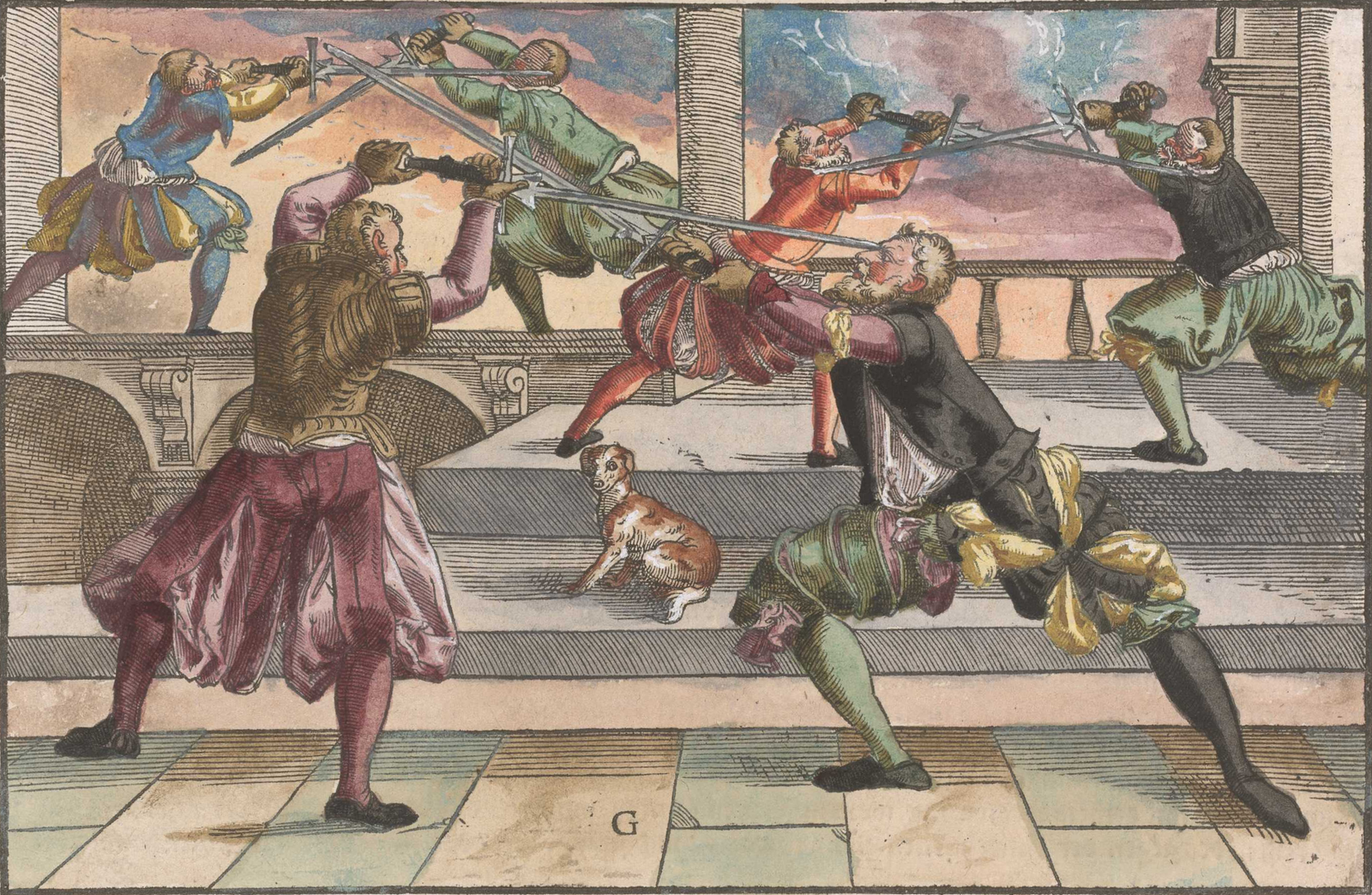
_1570_page86.jpg)
_1570_page87.jpg)
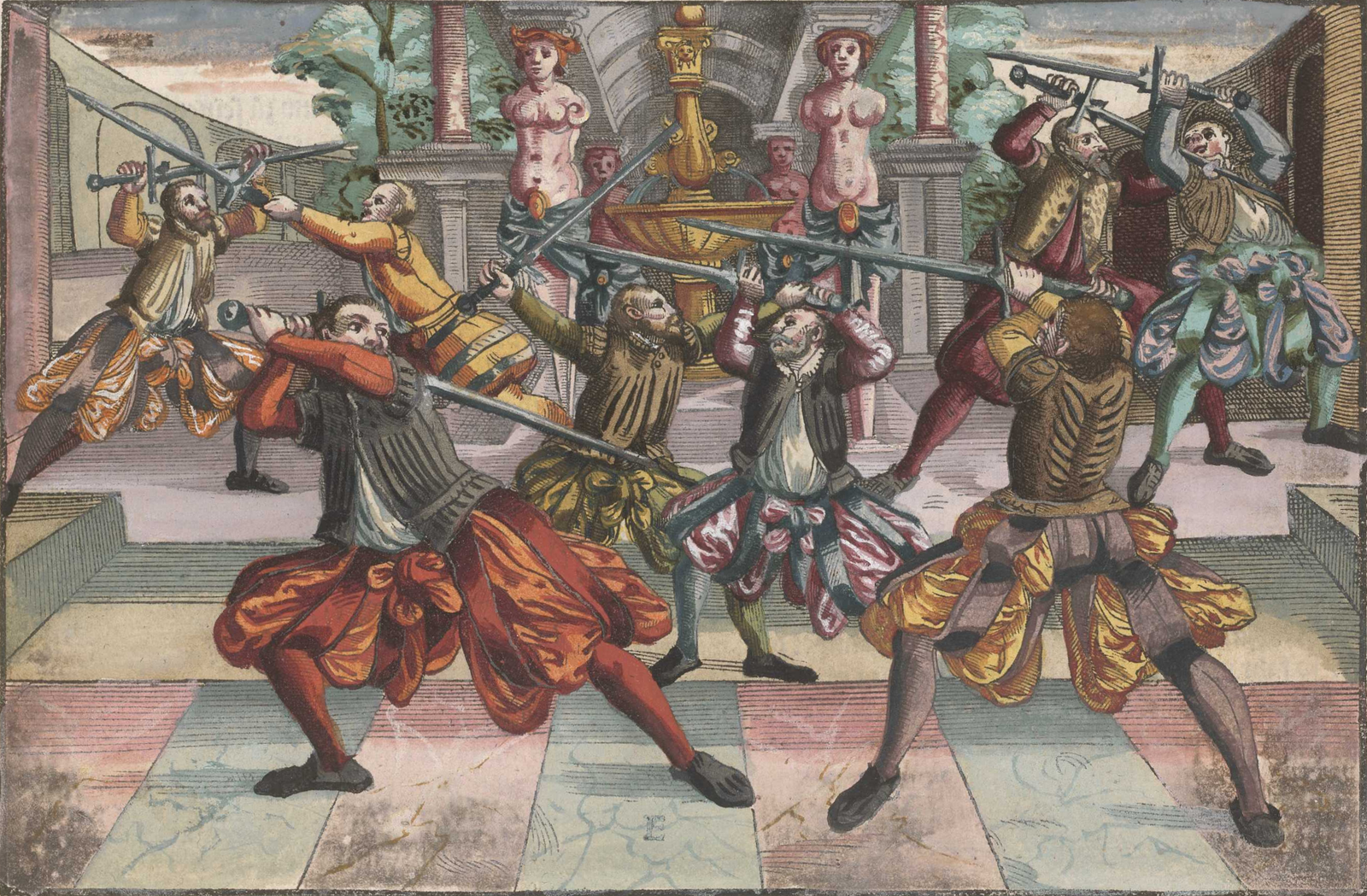
_1570_page89.jpg)
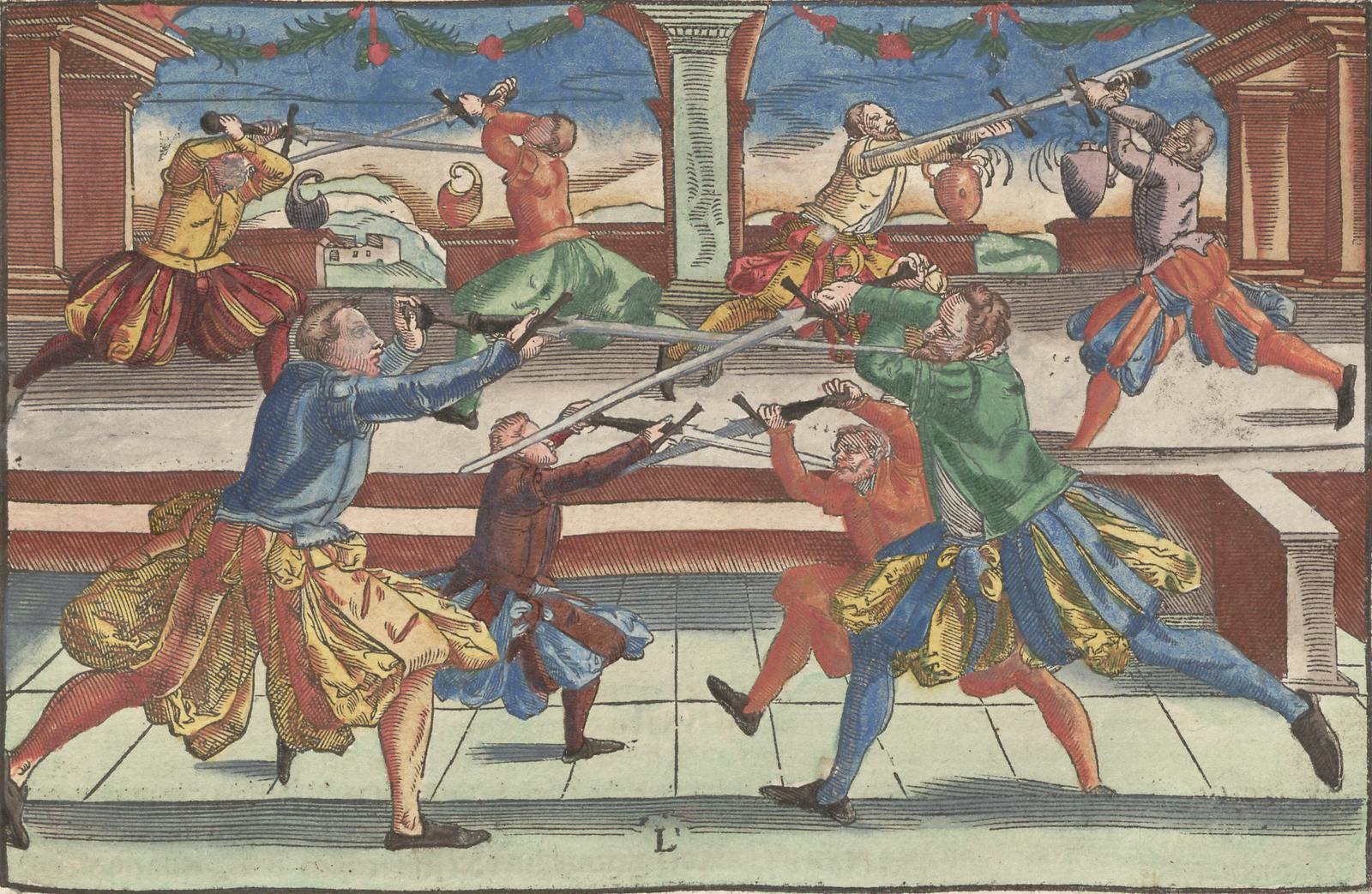
_1570_page90.jpg)
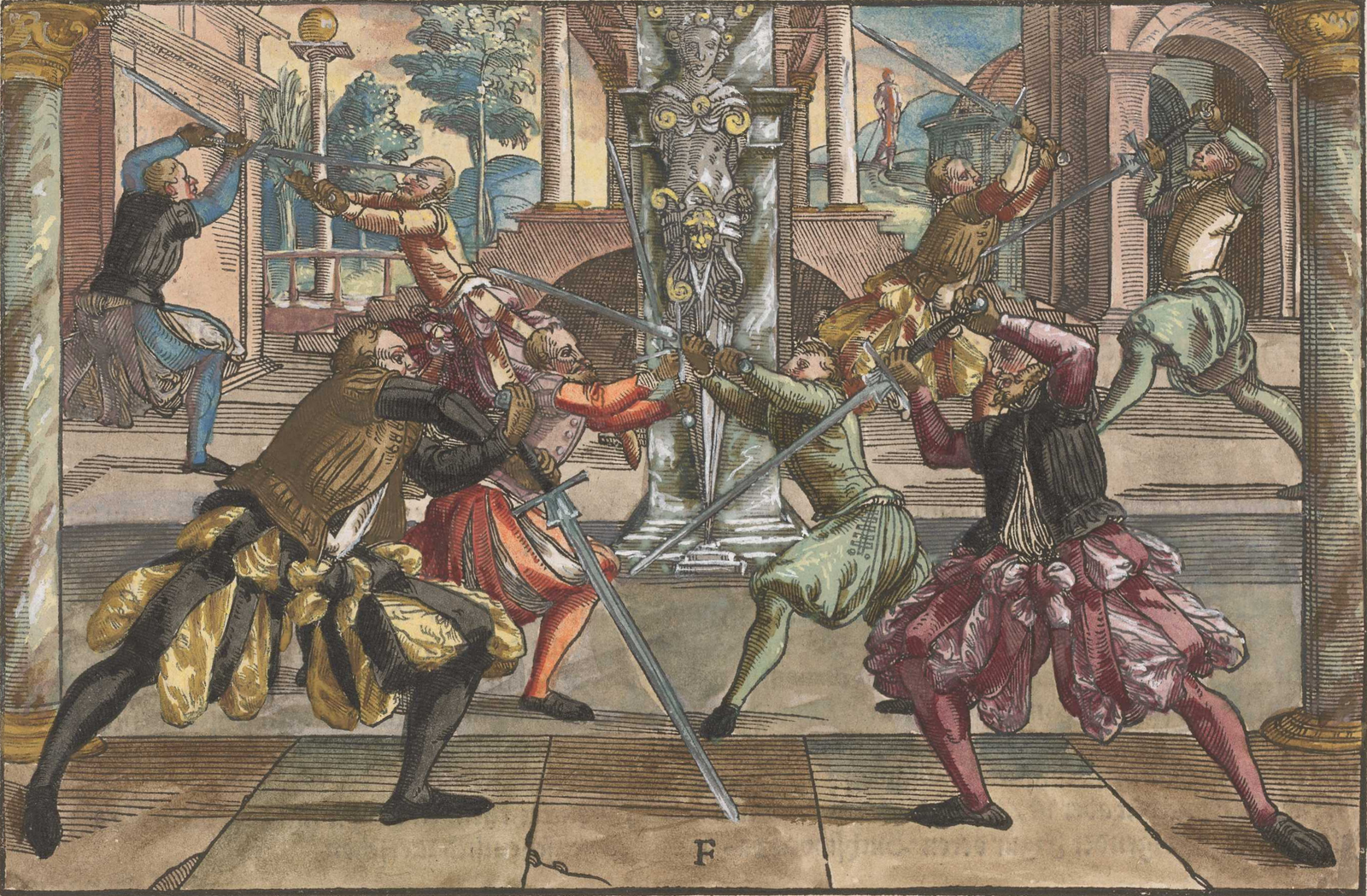
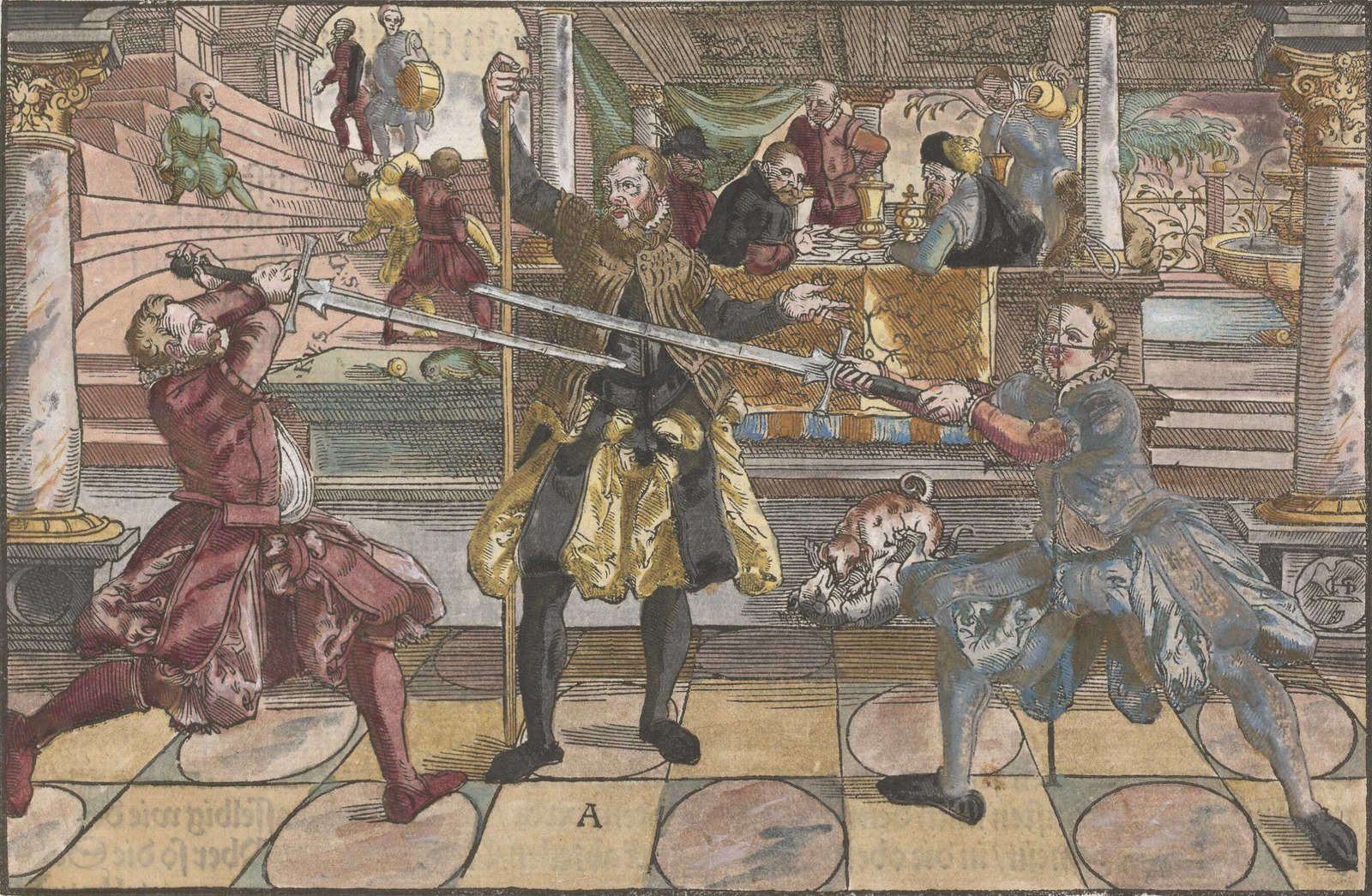
_1570_page91.jpg)
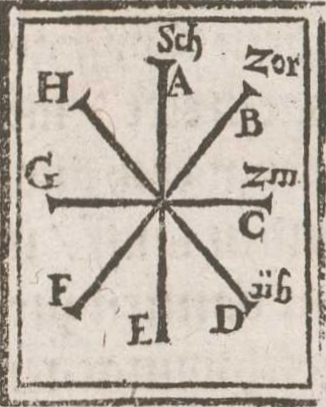
_1570_page92.jpg)
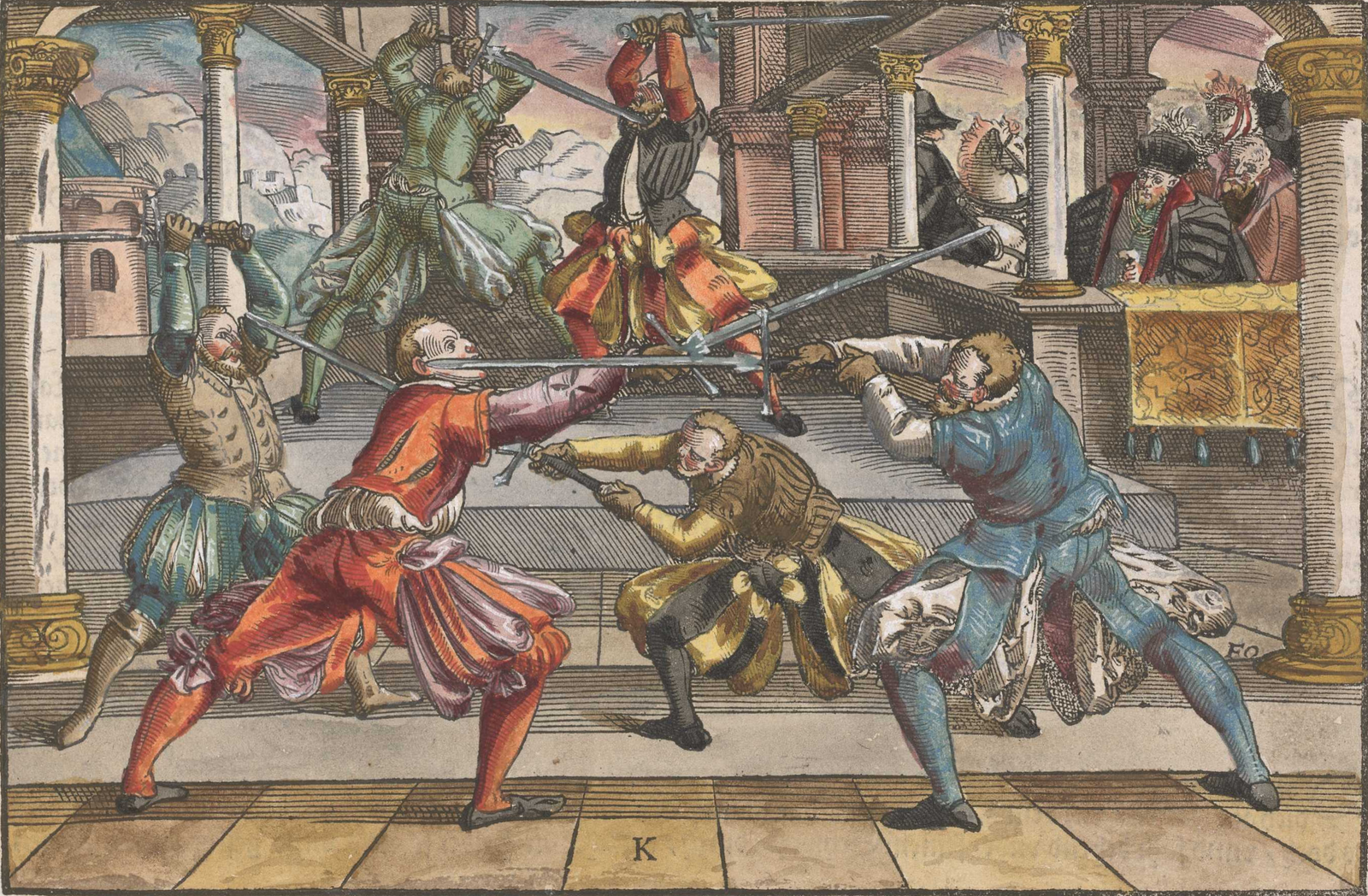
_1570_page93.jpg)
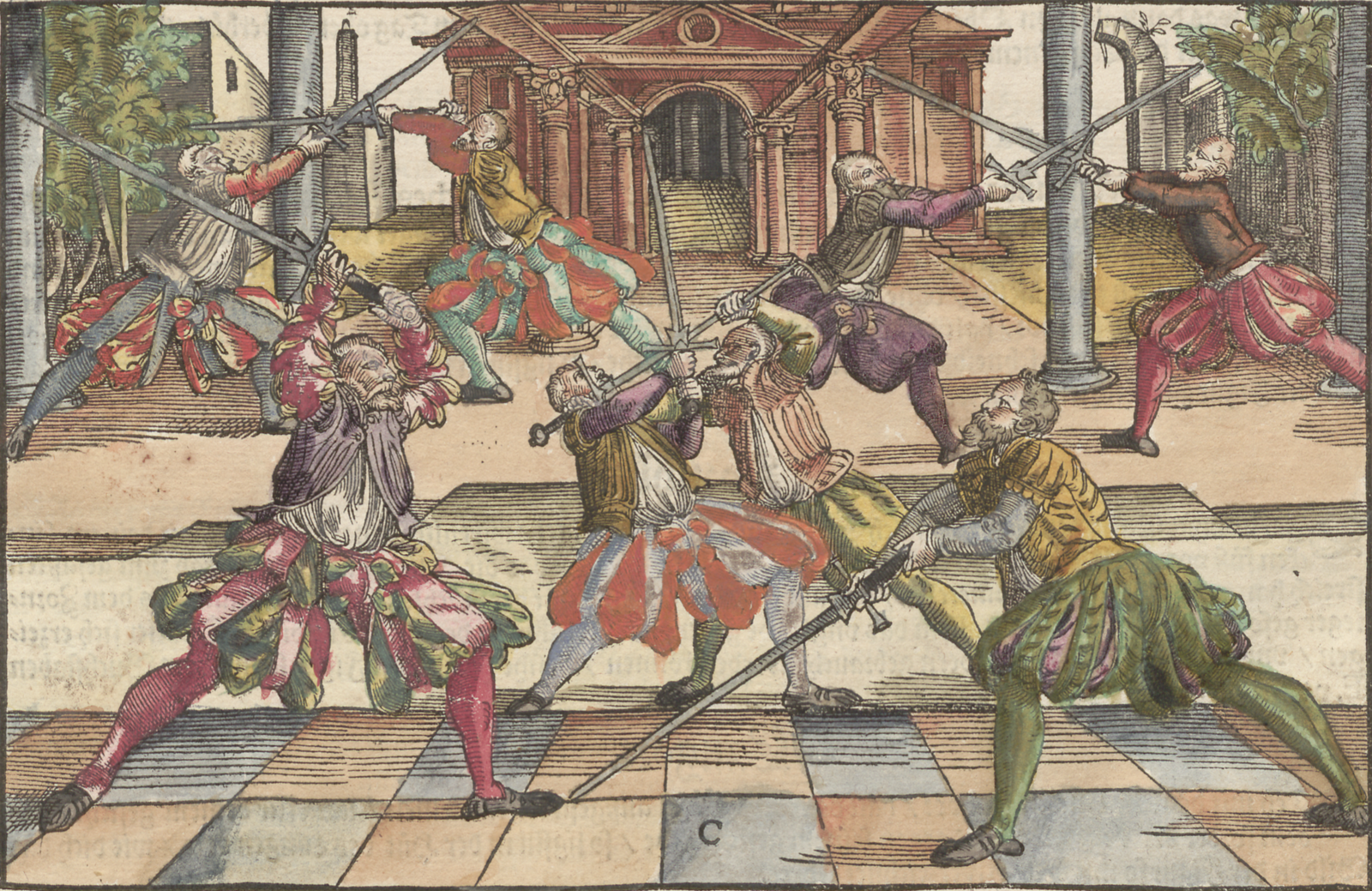
_1570_page95.jpg)
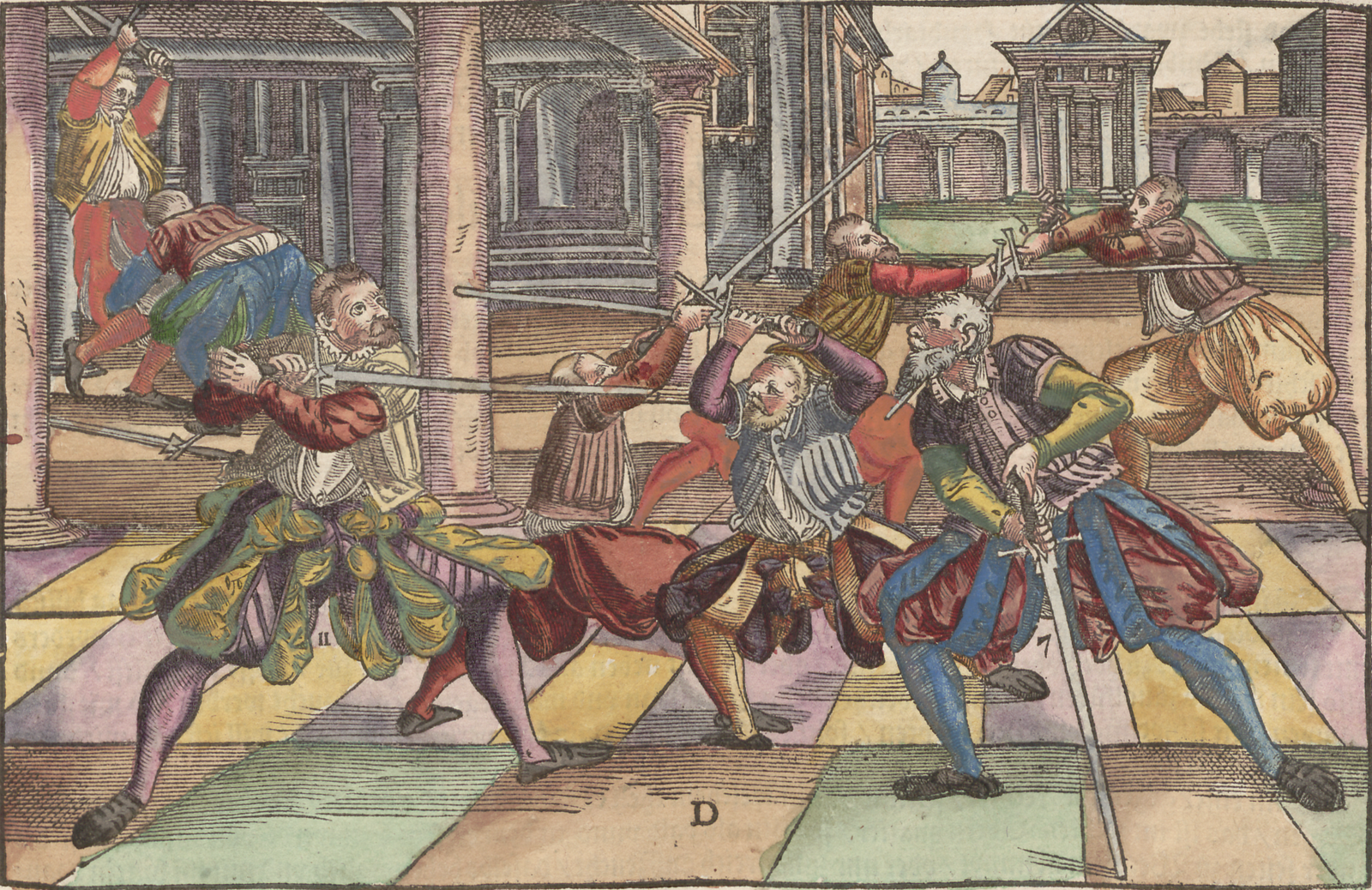
_1570_page96.jpg)
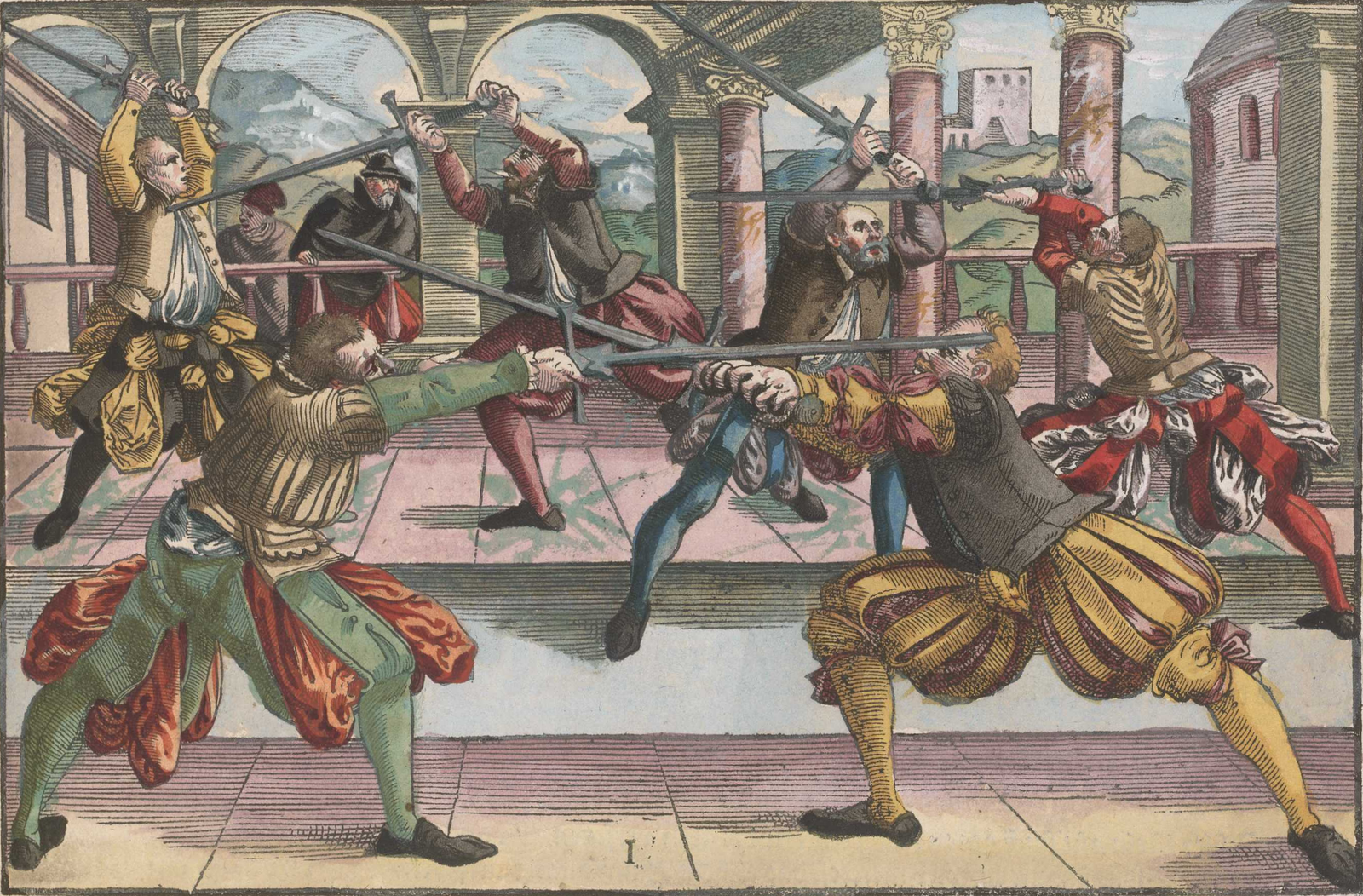
_1570_page97.jpg)
_1570_page99.jpg)
_1570_page100.jpg)
_1570_page101.jpg)
_1570_page102.jpg)
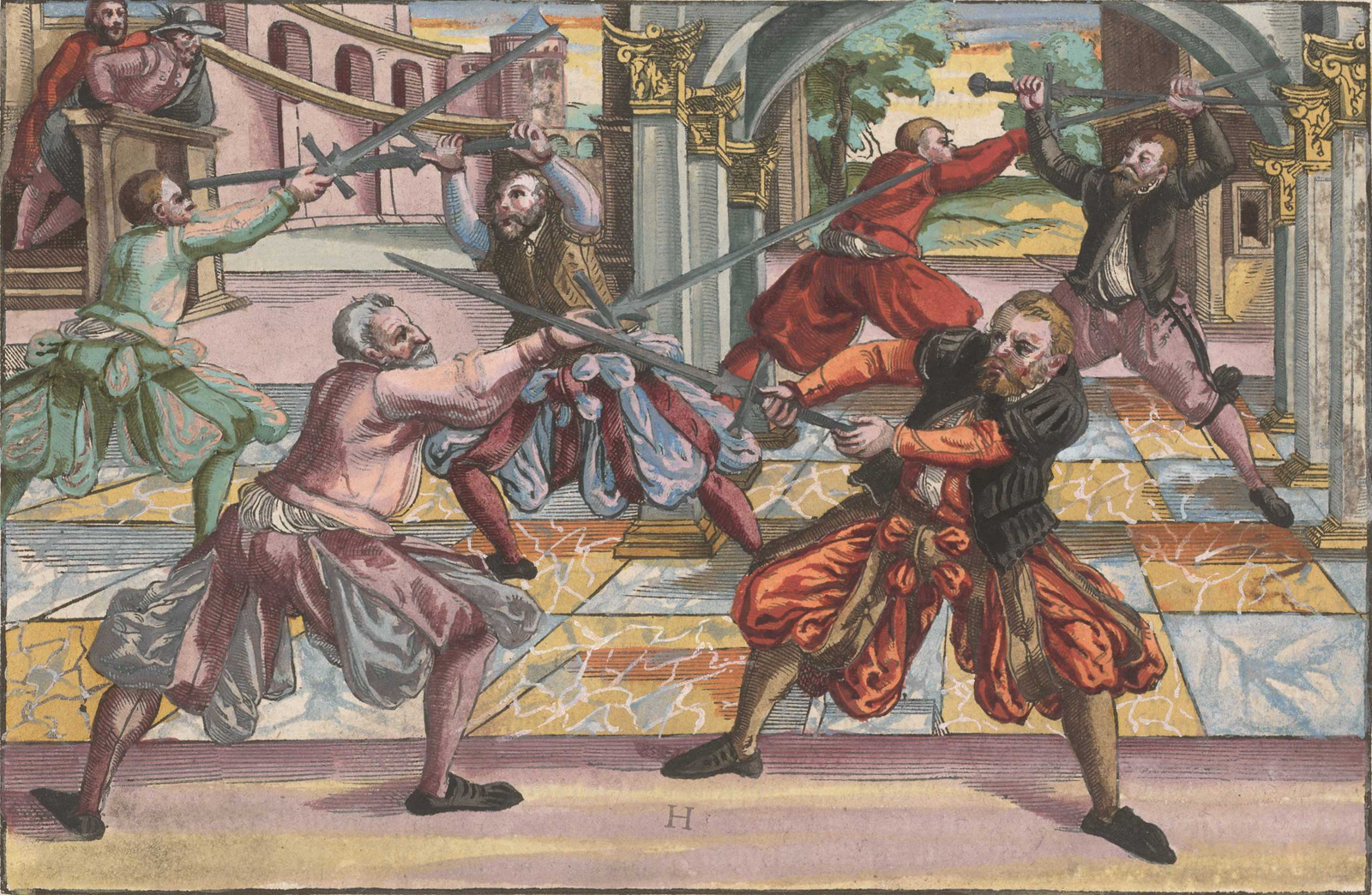
_1570_page104.jpg)
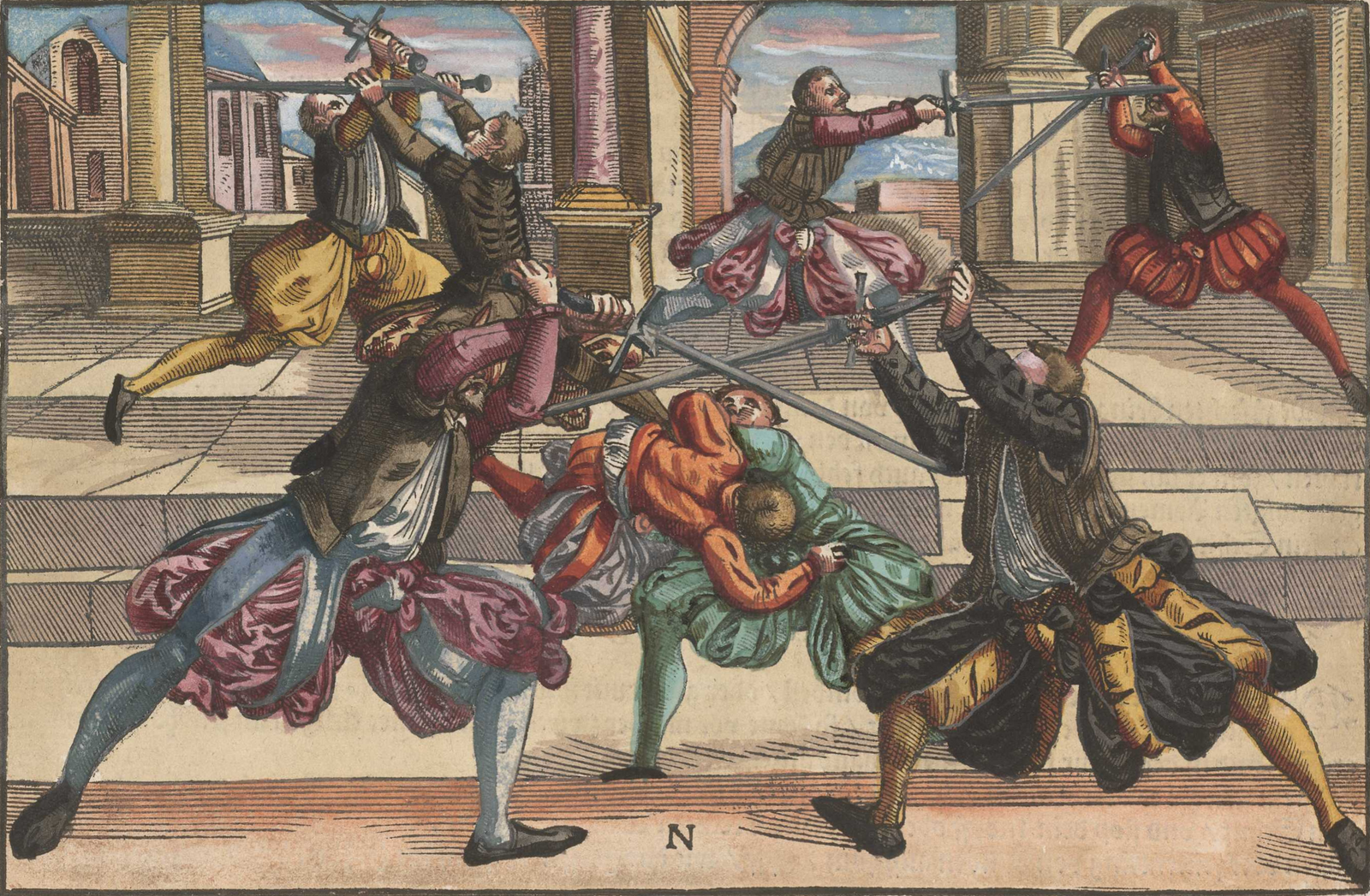
_1570_page105.jpg)
_1570_page106.jpg)
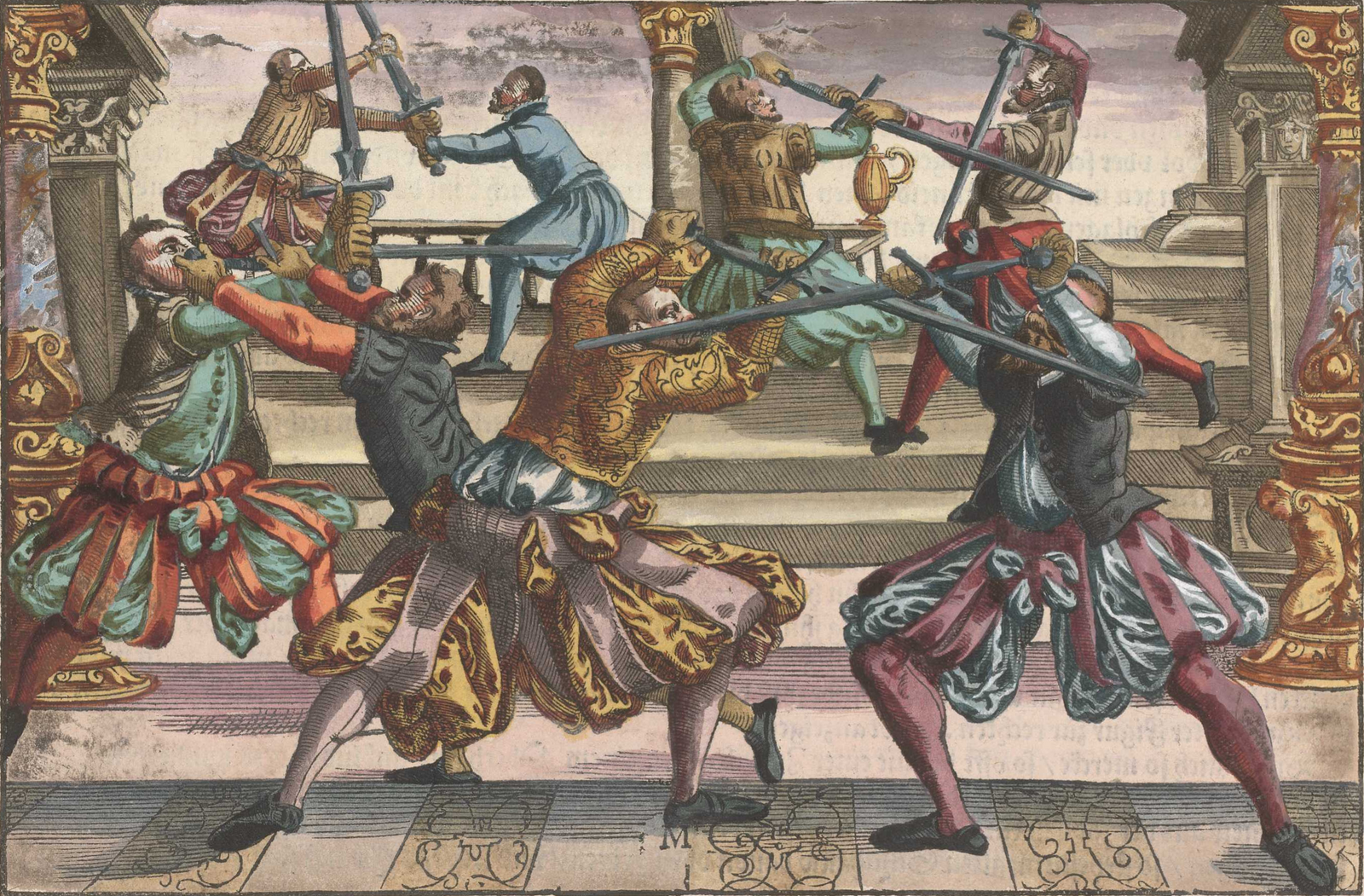
_1570_page108.jpg)