[1] Firstly will each one of the actions in Fencing be divided into three parts which are particularly good to note. Attacking, following after, withdrawal or ending, then to the first in the onset send your attacks through the guards and cuts like they follow afterwards here, however to the other parts and the middle work, this will be reprinted with the handworks, and a mixture of convenient cuts. And lastly to the ending, or the withdrawal, how orderly each one will hereafter be diligently written and taught.
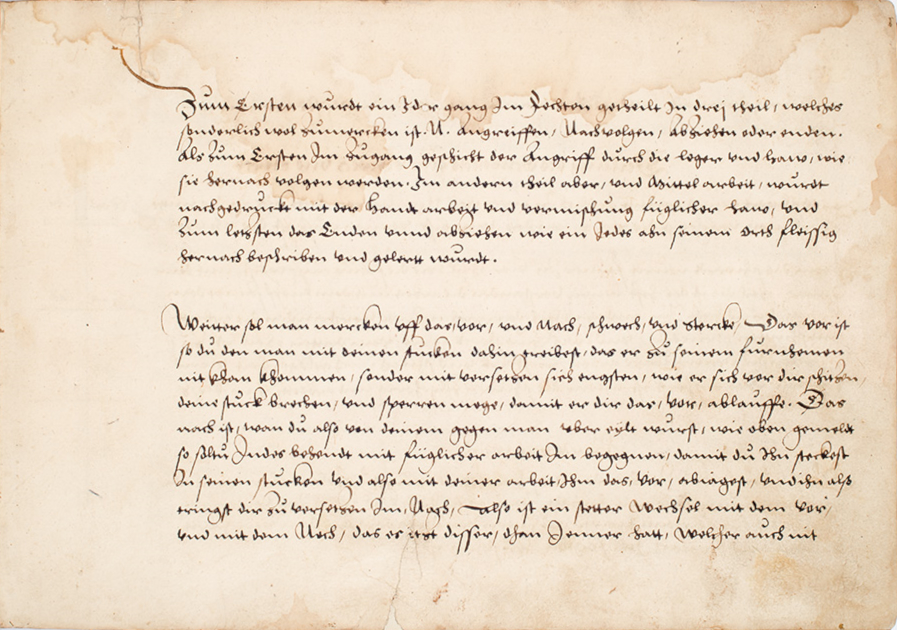
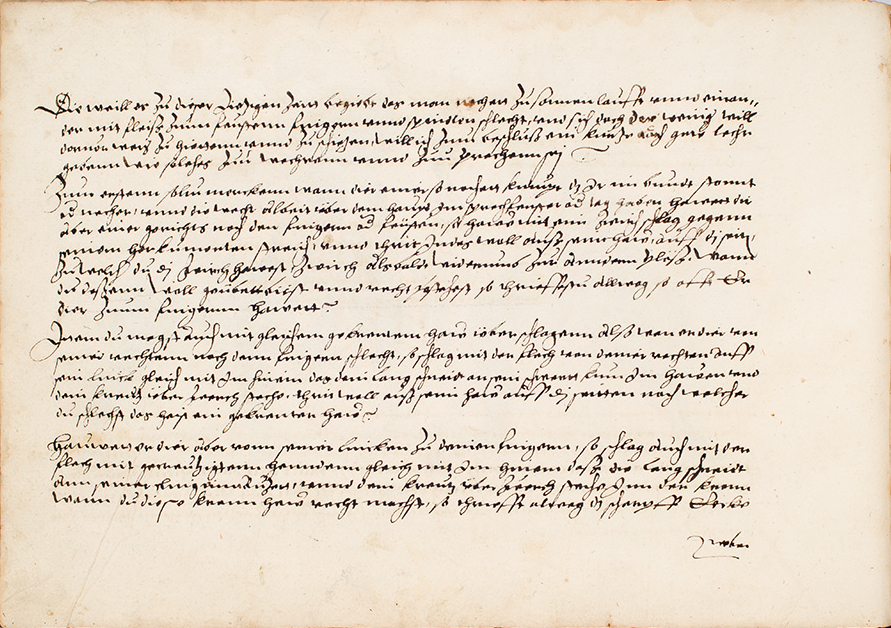
Munich Manuscript · fol. 1r.1
[1r.1] Zum Ersten wurdt ein Ider gang Im Fechten getheilt In drej theil, welches
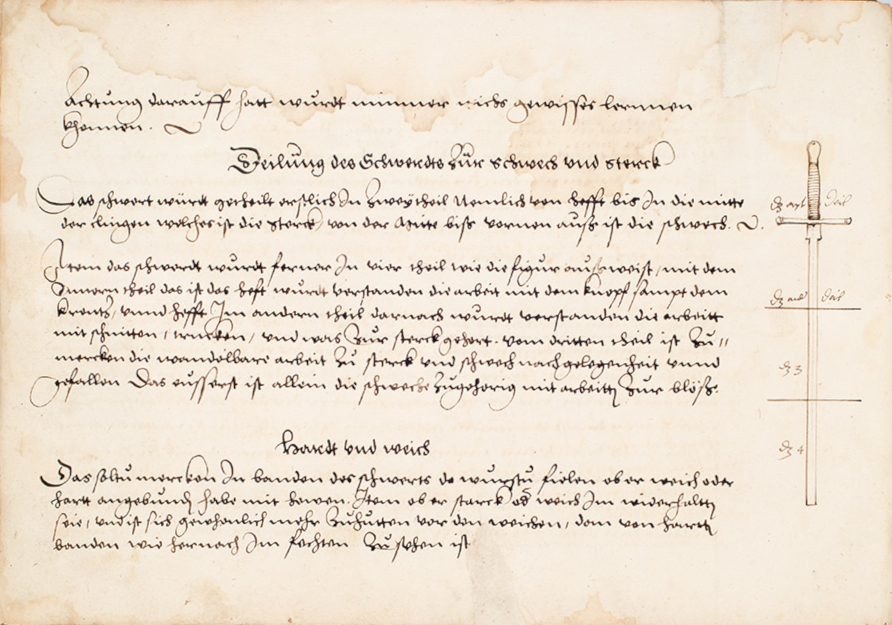
sonderlich wol zumercken ist Nemlich Angreiffen, Nachvolgen, Abziehen oder enden.
Als zum Ersten Im zugang geschicht der Angriff durch die leger vnd haw, wie
sie hernach volgen werden. Im andern theil aber, vnd Mittel arbeit, wurdt
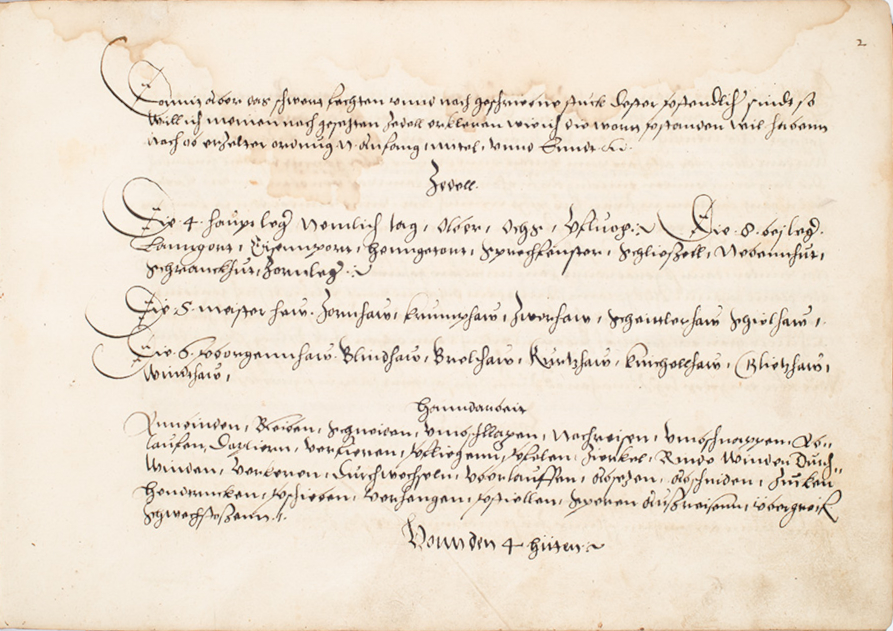
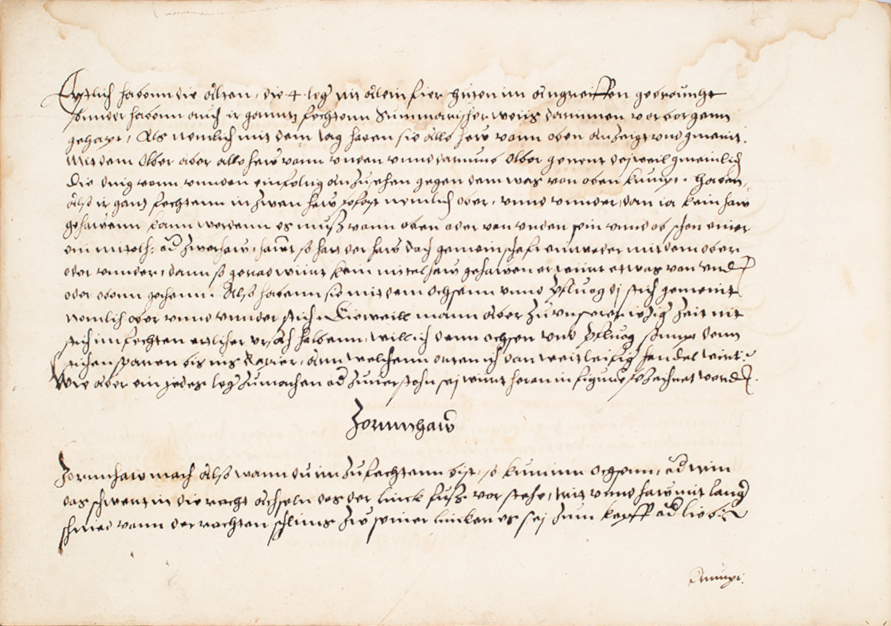
nachgedruckt mit der Handt arbeit vnd vermischung füglicher haw, vnd
zum letzsten das Enden vnnd abziehen wie ein Jedes ahn seinem Orth fleissig
hernach beschriben vnd gelertt wurdt.
1r.1
2.1linked passage
2.2
[2] Further, you should note the Before and After, Weak and Strong. The Before is when you drive with your Stücken so that he cannot come to his senses, especially by positioning yourself as close as he is, and how he defends before your Stücken and these same wants to break and bar, with this, he runs off the Before to you. The After is, when you have been rushed upon by your opponent how it is reported above. Thus you should respond Indes quickly with convenient work, with this, you are strongest on his Stücken, when you go on with your work in the Before, and in this you are crowded so that you must displace him After, thus is a constant changing with the Before and After, now you have it, then he does, but he who does not pay attention to it, he will never learn to fence.
Munich Manuscript · fol. 1r.2
[1r.2] Weitter sol man mercken vff das, vor, vnd Nach, schwech, vnd Stercke, Das vor ist
so du den man mit deinen stucken dahin treibest, das er zu seinem furnhemen
nit khan khommen, sonder mit versetzen sich engsten, wie er sich vor dir schitzen,
deine stuck brechen, vnd sperren moge, damit er dir das, vor, ablauffe. Das
nach ist, wan du also von deinem gegen man vber eylt wurst, wie oben gemeldt
so soltu Indes behendt mit füglicher arbeit Im begegnen, damit du Ihn steckest
In seinen stucken vnd also mit deiner arbeit, Ihm das, vor, abiagest, vnd ihn also
tringst dir zu versetzen Im, Nach, Also ist ein stetter Wechsel mit dem Vor,
vnd mit dem Nach, das es itst disser, dhan Jenner hatt, welcher auch nit[1v.1] Achtung darauff hatt wurdt nimmer nichs gewisses lernnen
khennen. ⁋
1r.21v.1
2.2linked passage
2.3
[3] Divisions of the sword to the Weak and Strong
The sword is firstly divided in two parts, namely from the grip to the middle of the blade which is known as the Strong, from the middle to the most forward, is the Weak.
Munich Manuscript · fol. 1v.2
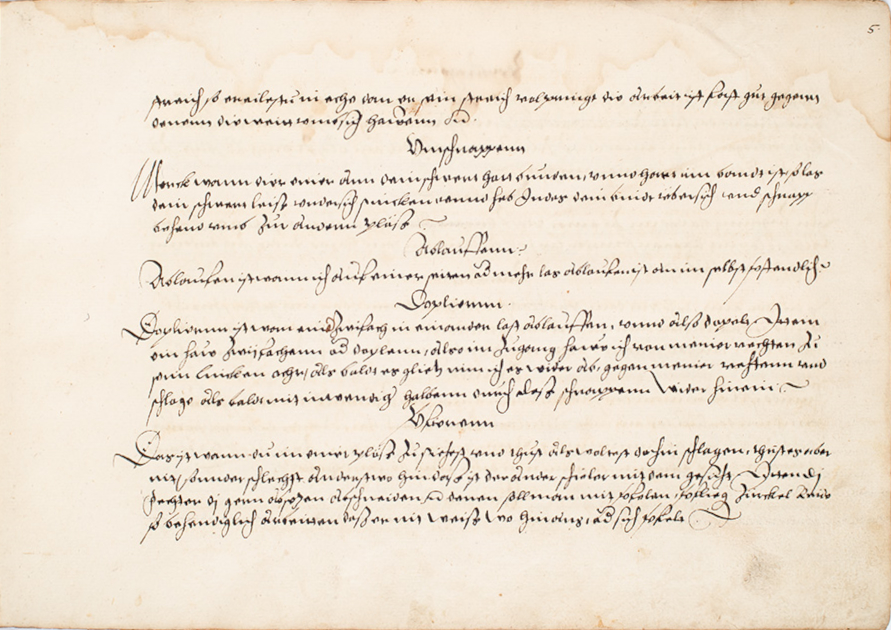
[1v.2] Teilung des schwerdts zur schwech und sterck
Das schwert würdt getheilt erstlich in zwey theil Nemlich von hefft bis In die mitte
der clingen welches ist die sterck, von der Mitte biß vornen auß ist die schwech. 
1v.2
2.3linked passage
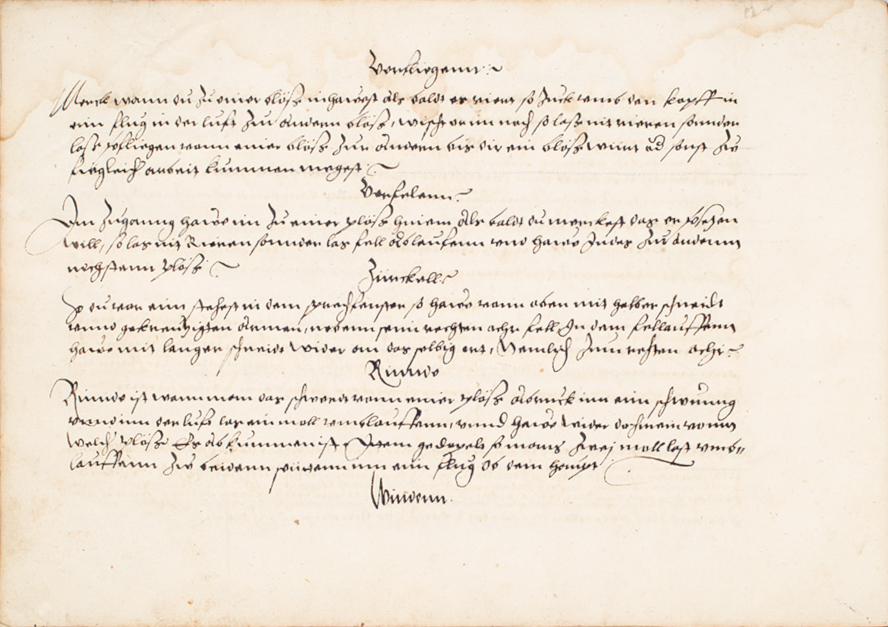
2.4
[4] Item: The sword is further divided in four parts how the figure shows. With the inward part, that is the haft, and (with it) the work with the pommel and cross and haft will be understood, in the next part, thereafter will the work with cutting and pushing and what belongs to the Strong be understood, to the third part of the sword should be noted the alterable work of the Weak and Strong after opportunity and liking. Which alone is extremely weak for you to work properly to the Openings.
Munich Manuscript · fol. 1v.3
[1v.3] Item das schwerdt wurdt ferner In vier theil wie die figur außweist, mit dem
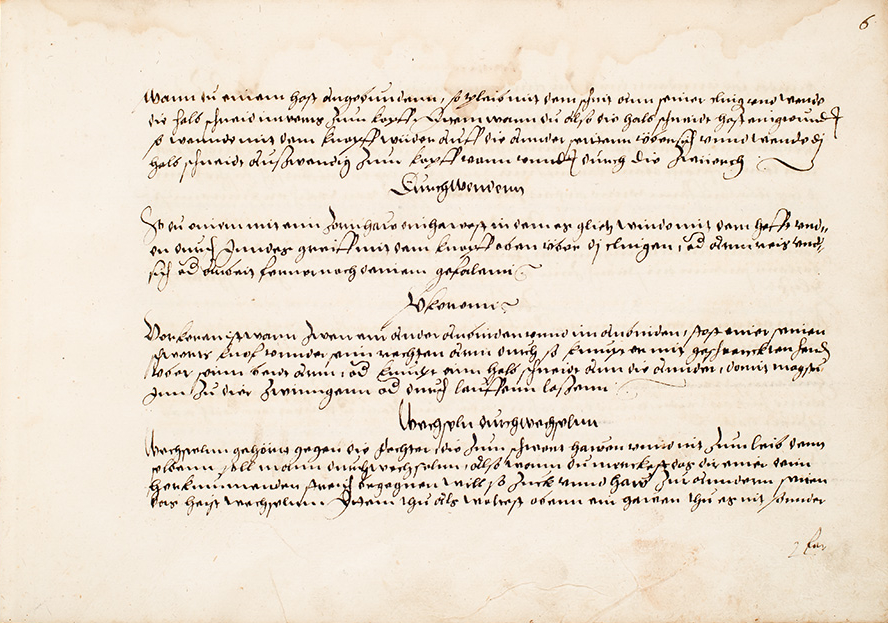
Innern theil das ist das heft wurdt verstanden die arbeit mit dem knopf sampt dem
kreutz, vnd hefft Im andern theil darnach wurdt verstanden die arbeitt
mit schnitten, trucken, vnd was zur sterck gehort. vom dritten theil ist zumercken
die wandelbare arbeit zu sterck vnd schwech nach gelegenheit vnnd
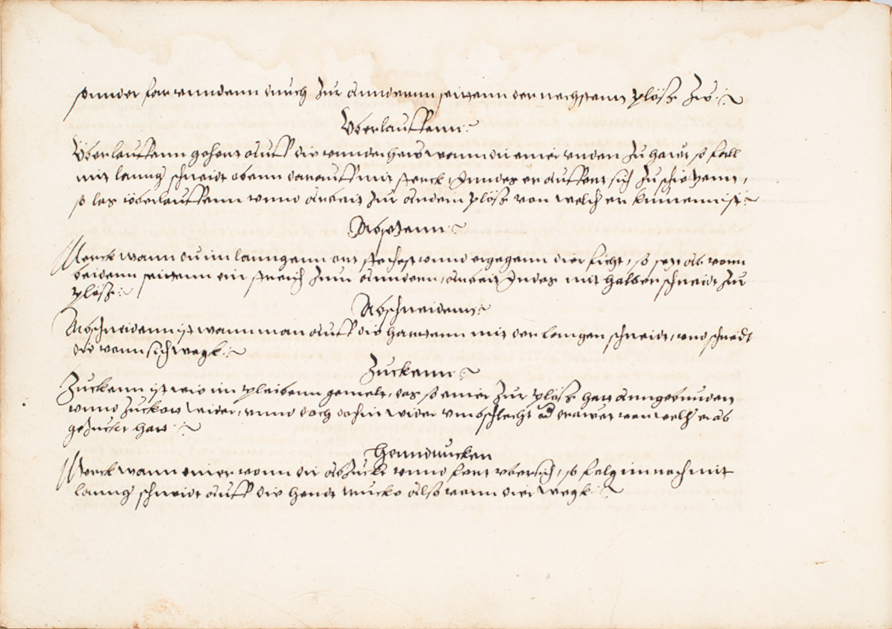
gefallen Das eusserst ist allein die schweche zugehorig mit arbeitten zur blöß.
1v.3
2.4linked passage
2.5
[5] Hard and Soft
Thus you shall mark in the binding of the swords, as you shall feel if he has become hard or soft in the bind, with the cut.
Item: If he is yet again, Strong or Weak, and is usually more watchful of the Weak binding before the Strong, how hereafter in the fencing it can be seen.
Das soltu mercken In banden des schwerts do wurstu fielen ob er weich oder
hartt angebunden habe mit hewen. Item ob er starck oder weich Im widerhaltten
seie, vnd ist sich gewhonlich mehr zuhutten vor den weichen, dan von dem hartten
banden wie hernach Im fechten zu stehen ist
1v.4
2.5linked passage
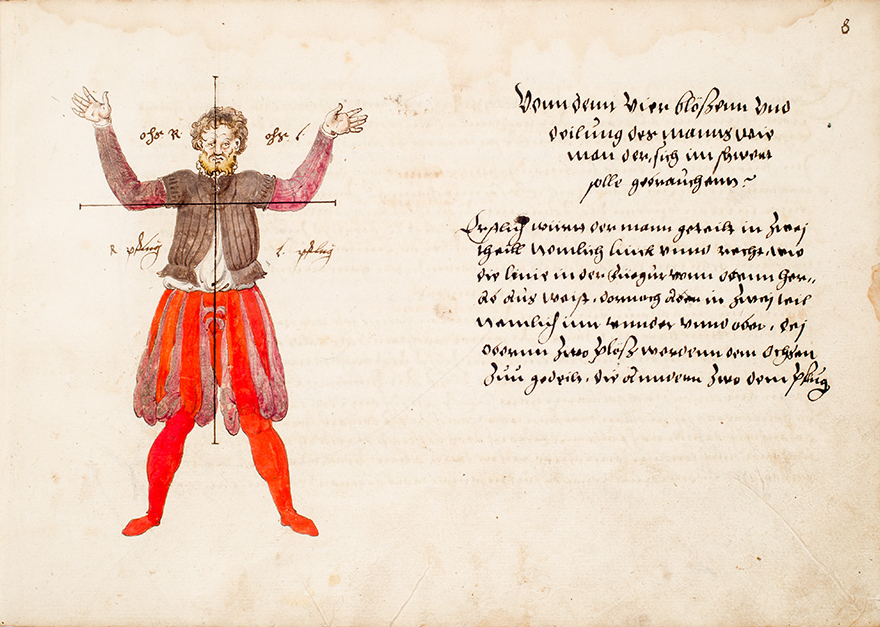
2.6
[6] In order that the sword fencing and the following Stuck are understandable, I will explain my following Zedel, how I want the words to have understanding, according to the order N (namely) beginning, middle and end.
Munich Manuscript · fol. 2r.1
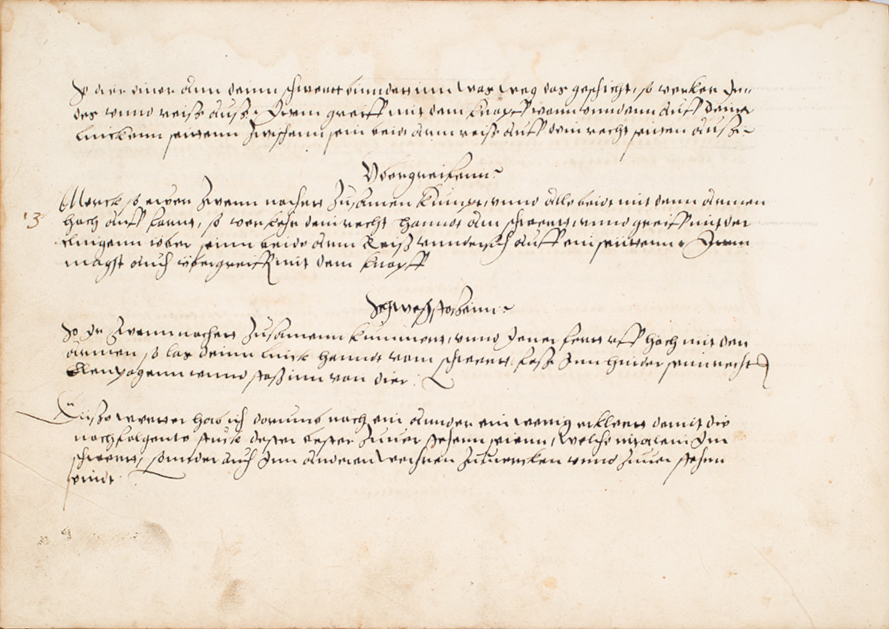
[2r.1] Damit aber das schwert fechten vnnd nach geschriebne stuck dester verstendlicher sindt so
will ich meinen noch gesezten zedell erkleren wie ich die wortt verstanden wil habenn
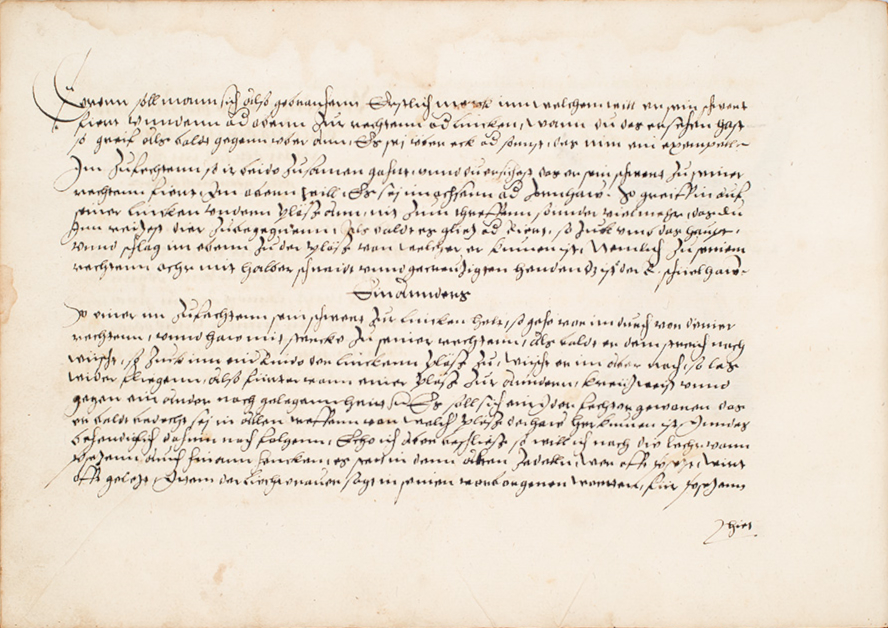
nach ob erzelter ordnung Nemlich Anfang, Mitel, vnnd Enndt. 
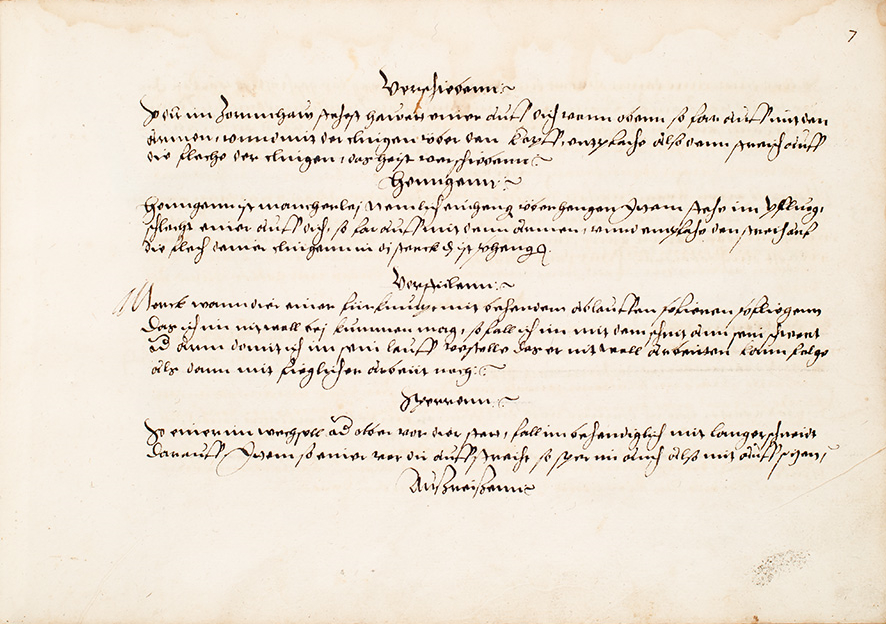
First of all, the ancients not only used the 4 guards for good in attacking, but also hid our so-called fencing summarily in them, that namely they had told and intended with all high guards the cuts from above. With the Fool, however, all cuts from below were therefore called Fool, because all things from below are to be regarded as contrary to what comes from above. They have therefore composed their whole fencing in two cuts namely from above and from below so that no cut can be thrown, for it must be from above or from below and even if one cuts a Middle or Thwart Strike, then that cut still has a common name with the High or Low Cut, then just as no Middle Cut can be made, unless it will go somewhat from below or above. So by the Ox and the Plow they intended the thrust, that is, the upper and lower thrust, which, however, in our present time is not in the fencing for several reasons, I will then save Oxen and Plow together with the thrusts until the rapier, where I will then extensively cover it.
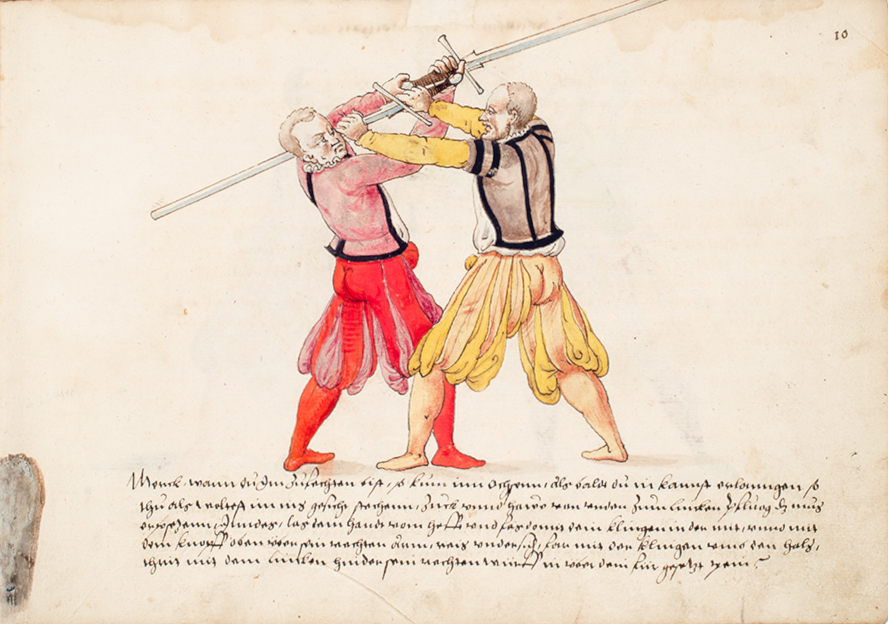
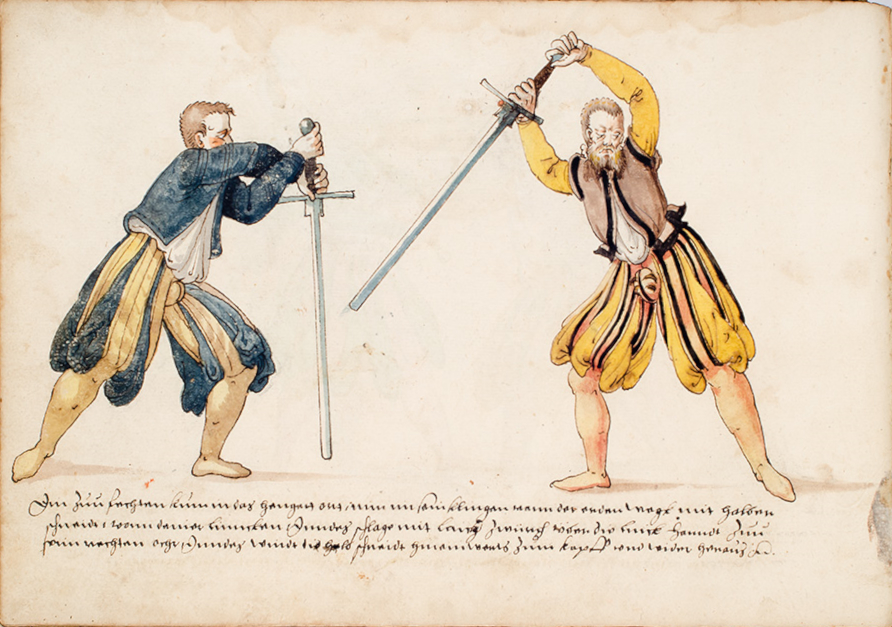
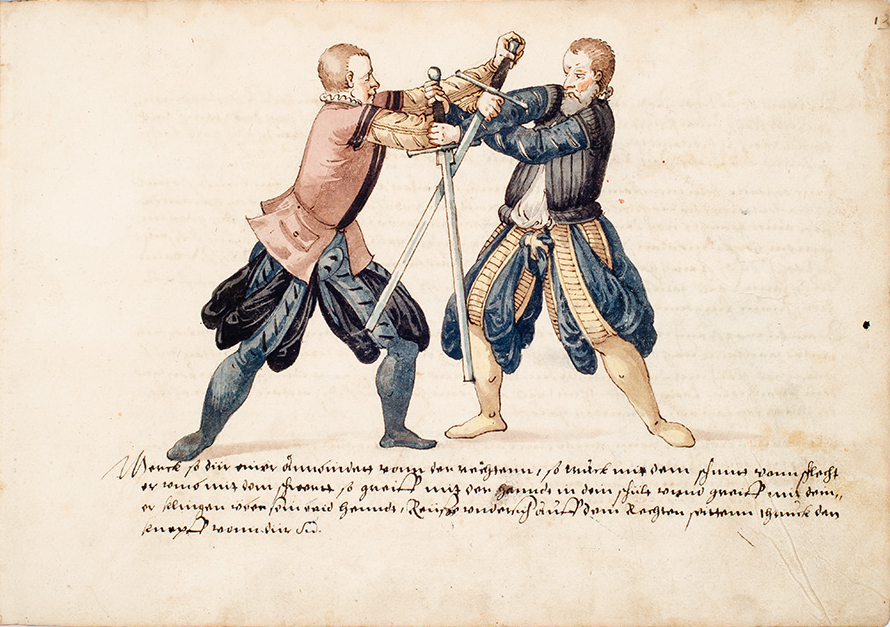
[2v.1] Erstlich habenn die alten, die 4 leger nit alein fier huten im angreiffen gebraucht
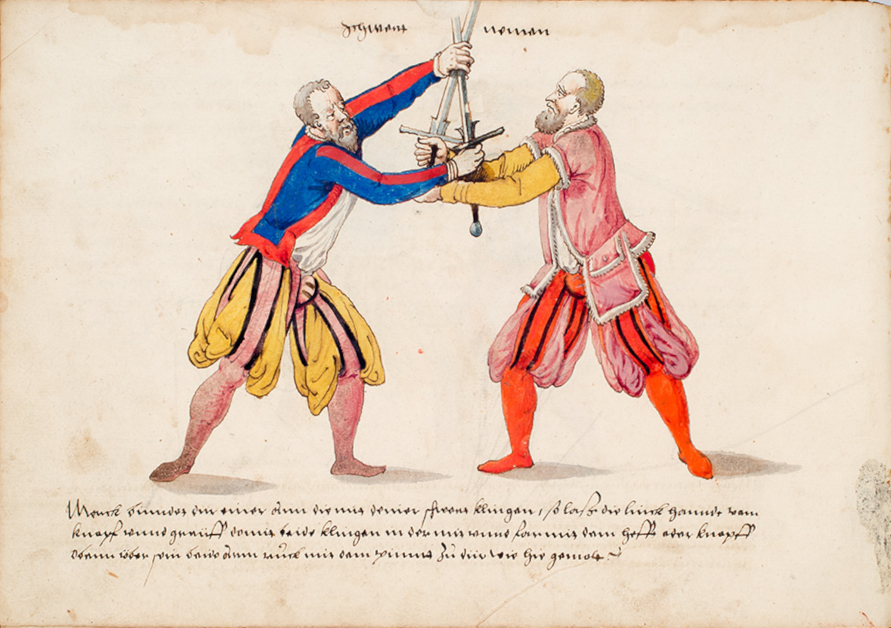
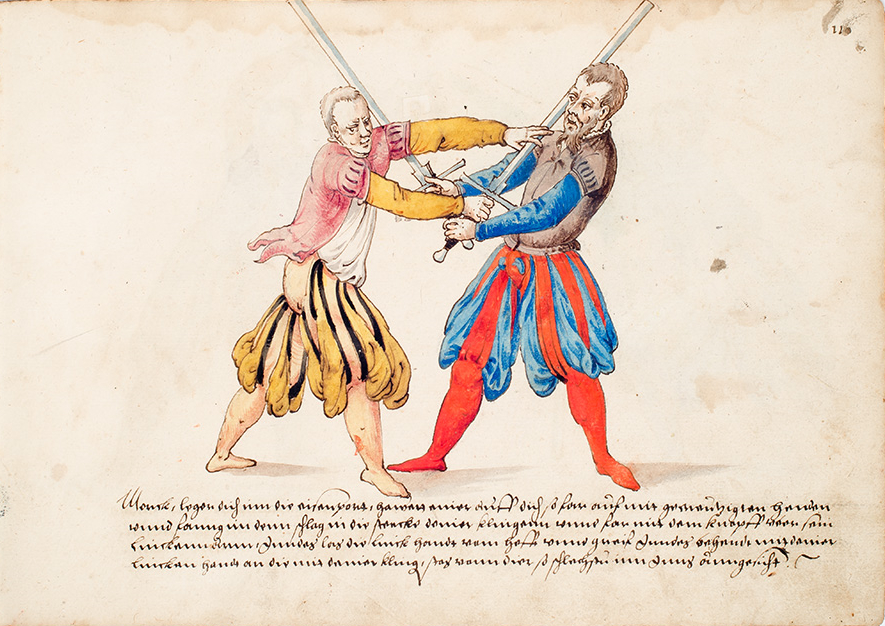
sonnder habenn auch ir ganntz fechtenn Summarischer weüs darinnen verborgenn
gehapt, Als nemlich mit dem tag hawn sie alle hew vonn oben anzeigt vnd gmeint.
Mit dem Olber aber alle hew vonn vnden vnnd darumb Olber genent dejweil gmeinlich
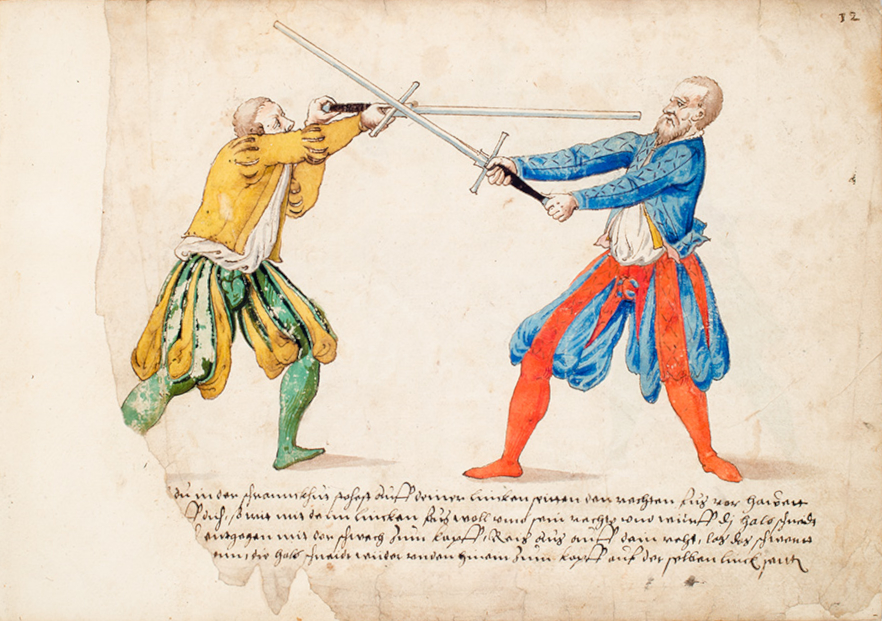
die ding vonn vnnden einfeltig anzusehen gegen dem was von obem kumpt. Haben
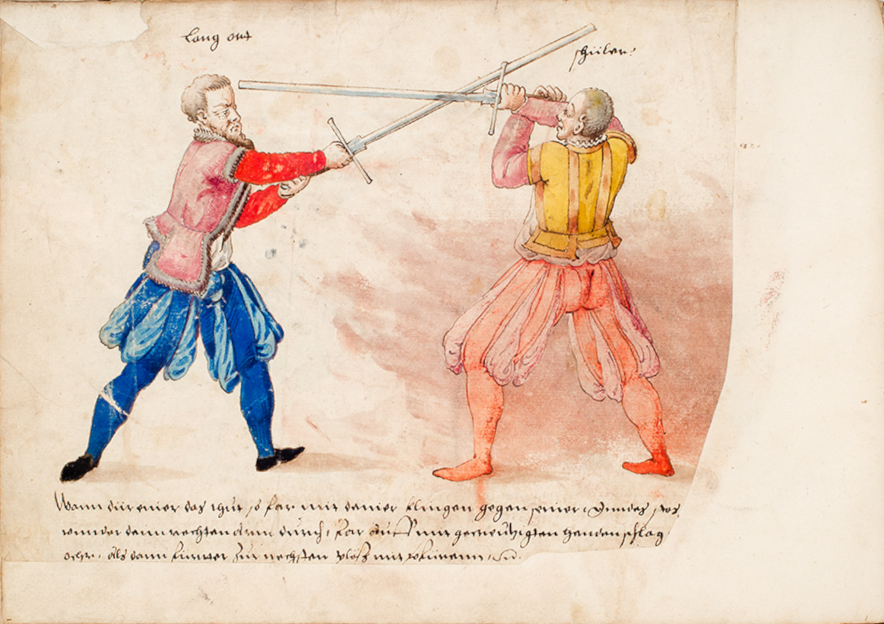
also ir ganz fechtenn in zwen hew verfast nemlich ober, vnnd vnnder, dan ir kein haw
gehawenn kann werdenn es muß vonn oben oder von vnden sein vnnd ob schon einer
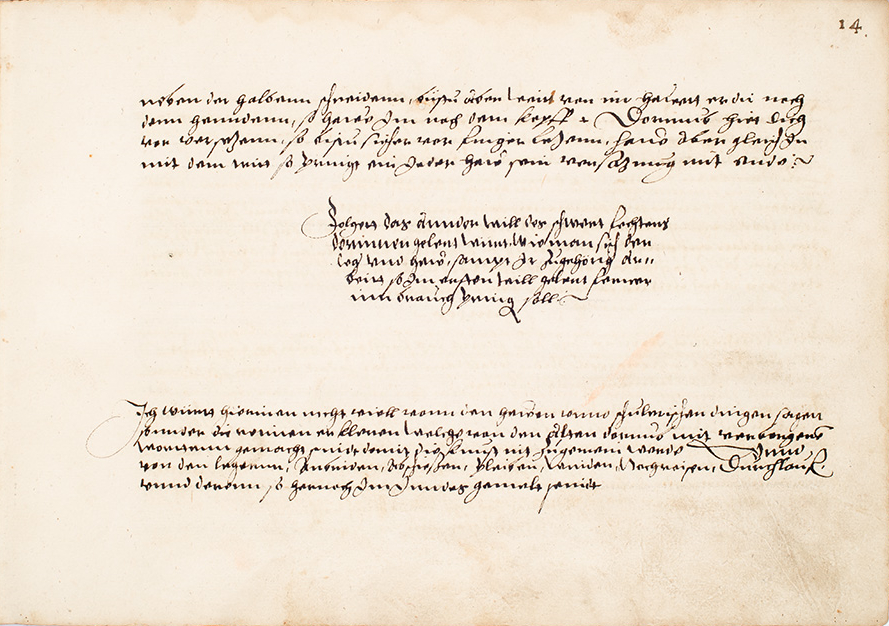
ein mitelhaw oder zwerhaw, hawt so hatt der haw doch gemeinschaft einweder mit dem ober
oder vnnder, dann so gerad würt kein mitelhaw gehawen er würt etwas von vnden
oder obenn gehenn. Also habenn sie mit dem Ochsenn vnnd Pflueg dj stich gemeint
nemlich ober vnnd vnnder stich. Dieweill mann aber zu vnserer irziger zeit nit
stich im fechten ettliher vrsah halbenn, will ich denn Ochsen vnd Pflueg sampt denn
stichen sparen bis ins Rapier, ann welchenn orten ich dan weitleifiger handel wirt 
2r.72v.1
2.12linked passage
2.13
[13] But how each guard is to be made or understood will be recorded in figures.
Munich Manuscript · fol. 2v.2
[2v.2] Wie aber ein jedes leger zumachen oder zuuerstehn sej würt heran in figuren verzeihnet
werden.
2v.2
2.13linked passage
2.14
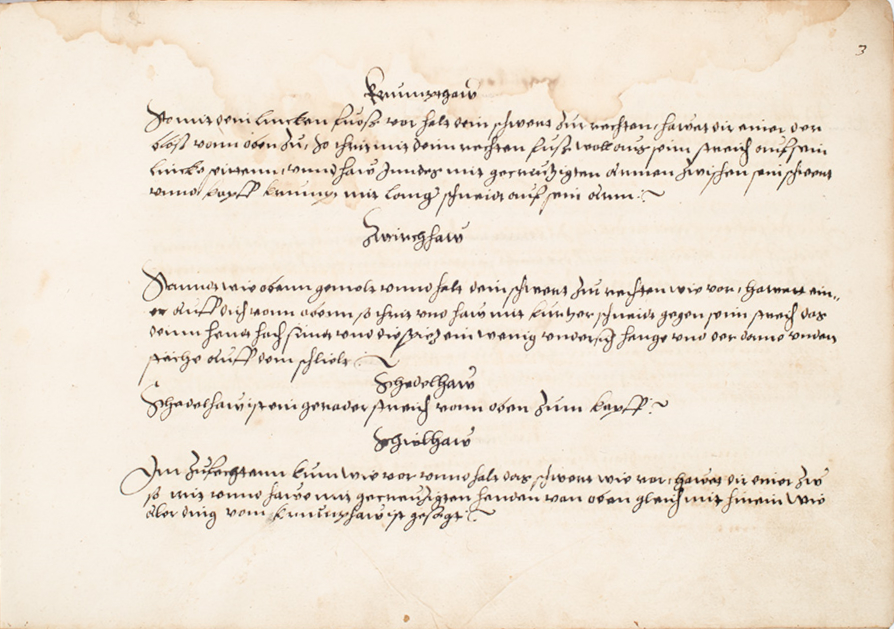
[14] Wrath Cut
Wrath Cut is done thus, when you are in Zufechten, then come in the Ox or take the sword onto the right shoulder so that the left foot stands forth, step and cut with the long edge from the right diagonally to his left whether to the head or body.
Zornnhaw mach also wann du im zufechtenn bist, so kum inn Ochsenn, oder nim
das schwert in die recht achseln das der linck fuß vor stehe, trit vnnd haw mit langer
schnied vonn der rechten schlims zw seiner lincken es sej zum kopff oder lieb 
2v.3
2.14linked passage
2.15
[15] Crooked Cut
Stand with the left foot forward, hold the sword to the right, if one cuts at your opening from above, then step with your right foot well out from his strike to his left side, and cut Crooked Indes with crossed arms between his sword and head with the long edge to his arm.
Ste mit dein lincken fueß vor halt dein schwert zur rechten, hawet dir einer der
blöß vonn oben zu, so thrit mit deim rechten fuß woll aus sein streich auf sein
lincke seittenn, vnnd haw Inndes mit gecreutzigten armen zwischen sein schwert
vnnd kopff krump, mit langer schneidt auf sein arm 
3r.1
2.15linked passage
2.16
[16] Thwart Cut
Stand how it is described above and hold the sword to the right like before, if one cuts at you from above then step and cut with the short edge to his strike so that the hands are high and point hangs slightly downwards and the thumb is placed under the shield.
Stanndt wie obenn gemelt vnnd halt dein schwert zur rechten wie vor, hawett einer
auff dich vonn obenn so thrit vnd haw mit kurtzer schneidt gegen seim streich das
deinn hendt hoch sindt vnd die spiez ein wenig vndersich henge vnd der dame vnden
stëche auff dem schlielt 
3r.2
2.16linked passage
2.17
[17] Scalp Cut
The Scalp Cut is a straight cut from above to the head.
Schedelhaw ist ein gerader streich vonn oben zum kopff 
3r.3
2.17linked passage
2.18
[18] Squinter Cut
In the Zufechten come as described before and hold the sword as described before, if one cuts at you then step and cut in with crossed hands from above simultaneously with him like all things from the Crooked Cut are told.
Im zufechtenn kum wie vor vnnd halt das schwert wie vor, hawet dir einer zw
so trit vnnd haw mit gecreuzigten handen von oben gleich mit hinein wie
aler ding vom krumphaw ist gesagt 
3r.4
2.18linked passage
2.19
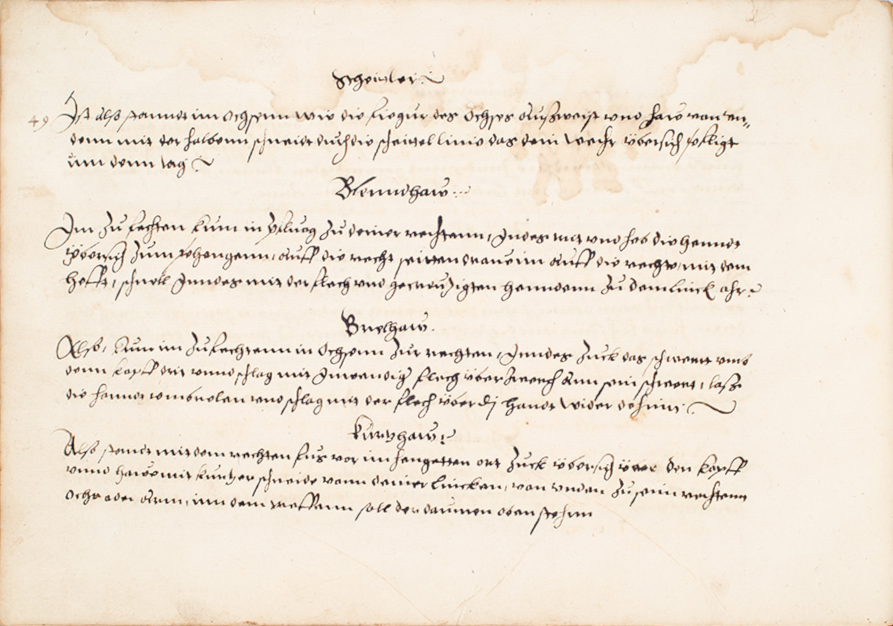
[19] Scalper
Is done thusly, stand in the Ox like the figure of the Ox shows and cut from below with the half edge through the scalp line so that the weapon flies upwards into the Roof Guard.
Ist also stanndt im Ochsenn wie die figur des Ochses außweist vnd haw von vndenn
mit der halbenn schneidt durch die scheittel linie das dein wechr übersich verfligt
inn denn tag 
3v.1
2.19linked passage
2.20
[20] Blind Cut
In Zufechten come into the right Plow, instantly step and heave the hands upwards to the hanging on the right side, threaten him to the right with the haft, instantly flick with the flat and crossed hands to his left ear.
Im zufechten kum in Pflueg zu deiner rechtenn, Indes trit vnd heb die henndt
übersich zum verhengenn, auff die recht seitten draue im auff die rechte, mit dem
hefft, schnell Inndes mit der flech vnd gecreuzigten henndenn zu dem Lincken ohr 
3v.2
2.20linked passage
2.21
[21] Rebound Cut
So, in the Zufechten come into the right Ox, instantly pull the sword around the head step and cut with the inside flat horizontally onto his sword, allow the hands to rebound and strike in again with the flat overhand.
Also, kum im zufechtenn in Ochsen zu rechten, Inndes zuck das schwertt vmb
denn kopff drit vnnd schlag mit Inwendiger flech überzwerch ann sein schwert, laß
die henndt vmbrelen vnd schlag mit der flech über dj handt wider dohinn 
3v.3
2.21linked passage
2.22
[22] Short Cut
So, stand with the right foot forward in Hanging Point, pull upwards and around your head and cut with the short edge from your lower left to his right ear or arm, in the strike your thumb shall face up.
Also standt mit dem rechten fus vor im hengetten ort zuck übersich über den kopff
vnnd hawe mit kurtzer schneide vonn deiner lincken, von vnden zu seim rechtenn
Orhr oder arm, inn dem treffenn soll der daumen oben stehnn
3v.4
2.22linked passage
2.23
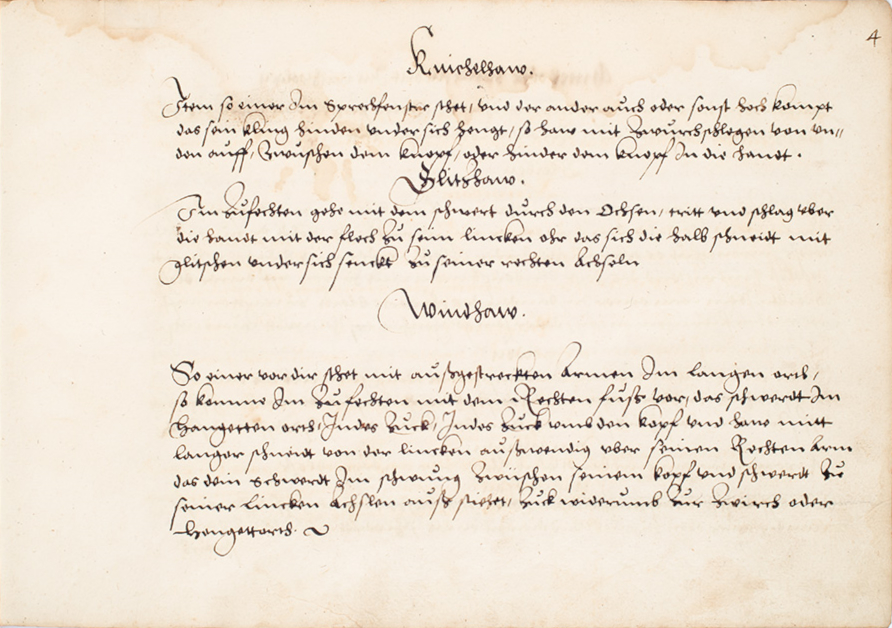
[23] Wrist Cut
Item: If one stands in Speak Window and the other is too, or otherwise comes high so that his blade hangs down to the lower left, then cut with a horizontal strike up from below between the pommel or behind the pommel to the hands.
Item so einer Im Sprechfenster sthet, vnd der ander auch oder sonst hoch kompt
das sein kling hinden vnder sich hengt, so haw mit zwurchschlegen von vnden
auff, zwuschen dem knopf, oder hinder dem knopf In die handt.
4r.1
2.23linked passage
2.24
[24] Clash Cut
In the Zufechten go with your sword through the Ox, step and strike overhand with the flat to his left ear so that your half edge slides downwards to his right shoulder.
Im zufechten gehe mit dein schwert durch den Ochsen, tritt vnd schlag vber
die handt mit der flech zu sein lincken ohr das sich die halb schneidt mit
glitschen vnder sich senckt zu seiner rechten achseln
4r.2
2.24linked passage
2.25
[25] Winding Cut
If one stands before you with outstretched arms in the Long Point, then come in the Zufechten with the right foot forward, the sword in Hanging Point. Instantly pull around the head and cut with the long edge from the left outside and over his right arm so that your sword appears to swing between his head and sword to his left shoulder, pull back around again to the horizontal cut or Long Point.
So einer vor dir sthet mit außgestreckten armen Im langen orth,
so komme Im zufechten mit dem Rechten fuß vor, das schwerdt Im
hangetten orth, Indes zuck, Indes zuck[!] vmb den kopf vnd haw mitt
langer schneidt von der lincken außwendig vber seinen Rechten Arm
das dein schwerdt Im schwung zwüschen seinem kopf vnd schwerdt zu
seiner Lincken achseln auß siehet, zuck widerumb zur zwirch oder
hengettorth 
4r.3
2.25linked passage
2.26
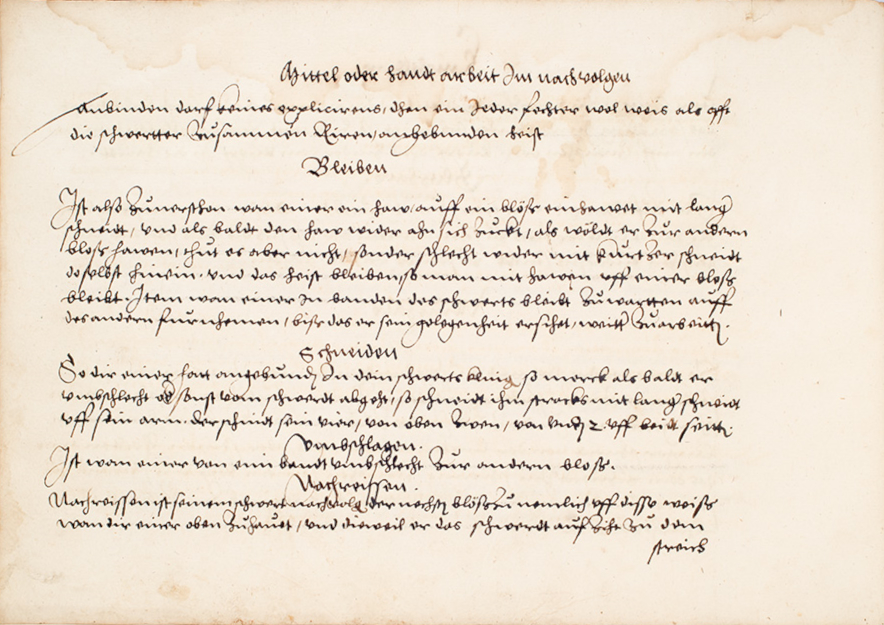
[26] Middle or handworks in the following after
Binding on may have no other explanation than that every fencer knows well when the swords come together and have bound.
Anbinden darf keines explicirens, dhan ein Jeder fechter wol weis als offt
die schwertter zusammen Riren, angebunden heist
4v.1
2.26linked passage
2.27
[27] Remaining
Is thus understood when one cuts into an opening with the long edge and at once would pull back to himself as if to cut to another opening, but does not, and instead cuts again with the short edge on the same line, that is called remaining, when one remains with cutting on one opening.
Item: One remains in the binding of the swords and waits on the next action until he gets his opportunity to work further.
Ist also zuuersthen wan einer ein haw, auff ein blöß einhawet mit langer
schneidt, vnd als baldt den haw wider ahn sich zuckt, als wöldt er zur andern
bloß hawen, thut es aber nicht, sonder schlecht wider mit kurtzer schneidt
doselbst hinein. vnd das heist bleiben, so man mit hawen vff einer bloß
bleibt. Item wann einer In banden des schwerts bleibt zuwartten auff
des andern furnhemen, biß das er sein gelegenheit ersihet, weitter zu arbeitten.
4v.2
2.27linked passage
2.28
[28] Slicing
If one has bound on to your sword’s blade, then note when he strikes around and goes away from your sword, then slice him strongly with the long edge to his arm, there are four slices; two from above, from below and to both sides.
So dir einer hatt angebunden In dein schwerts klingen so merck als baldt er
vmbschlecht oder sonst vom schwerdt abgeht, so schneidt ihm stracks mit langer schneidt
vff sein arm. der schnidt sein vier, von oben zwen, von vnden 2 vff beidt seitten.
4v.3
2.28linked passage
2.29
[29] Cutting around
Is when one cuts around to another opening from the bind.
Ist wan einer von eim bandt vmb schlecht zur andern bloß.
4v.4
2.29linked passage
2.30
[30] Chasing after
Chasing after is following after his sword to the next opening, so namely of this you should know, when one cuts from above at you, and in the meantime draws up his sword for the strike then you hurry in before he fully springs his stroke, the work is rather good against those who strike around widely.
Nachreissen ist seinem schwert nachvolgen der nechsten blöß zu nemlich vff disse weiß
wan dir einer oben zuhauet, vnd dieweil er das schwerdt aufziht zu dem [5r.1] streich so ereilestu in eche dan er sein streich volpringt die arbeit ist fast gut gegenn
denenn die weitt vmb sich hawenn ⁋
4v.55r.1
2.30linked passage
2.31
[31] Snapping around
Note: When one has bound on your sword, and is hard in the bind, then let your sword fall down below you, then instantly heave your bind upwards and snap around to another opening.
Merck wann dier einer ann dein schwert hatt bunden, vnnd hart im bandt ist so las
dein schwert leiß vndersich sincken vnnd heb Indes dein bindt übersich vnd schnapp
behend vmb zur andern plöß ⁋
5r.2
2.31linked passage
2.32
[32] Running off
Running off is when I allow it to run off to one side or another and is self explanatory.
Ablaufen ist wann ich auf einer seiten oder mehr las ablaufen ist an im selbst verstendlich ⁋
5r.3
2.32linked passage
2.33
[33] Doubling
Doubling is when you allow it once or twice to run off, and also to double.
Item: One cut done twice or doubled, thus in the approach I cut from my right to his left ear, once it clashes I take it away again, to my right and cut once again inside and halfway through, allowing it to snap in again.
Doplierenn ist wan einer zwifach in einander last ablauffen, vnnd also dopelt. Ittem
ein haw zwijfachenn oder doplenn, also im zugang hawe ich von meiner rechten zu
sein Lincken ochr, als baldt es glietz nim ich es wider ab, gegen meiner rehtenn vnd
schlage als baldt mit inwendiger halbenn durch deß schnappenn wider hinein ⁋
5r.4
2.33linked passage
2.34
[34] Deceiving
That is when you look at an opening and make as if you would cut there, but you don’t and instead cut somewhere else, this is the second Squinter with the face.
Item: The fencer who will willingly parry, or slice away, so there you should work quickly with failing, flying around, circling or looping, so he does not know where to go and gets lost.
Das ist wann du im einer plöß zu siehest vnd thust als woltest dachin schlagen, thust es aber
nit, sonnder schlechst anderst wo hin daß ist der ander schieler mit dem gesicht. Ittem dj
Fechter dj gern absezen abschneiden ⁋ denen soll man mit verfelen, verfliegen zürckel Rinde
so behendiglich arbeitten daß er nit weiß wo hinaus, oder sich verfelt ⁋
5r.5
2.34linked passage
2.35
[35] Flying
Note when you have cut in to an opening, once it touches then pull around your head in a flight in the air to the next opening, if he slips in after then do not allow it to touch but rather let it fly from one opening to another until you have an opening, or otherwise come to comparable work.
Merck wann du zu einer blöß inhawest als baldt er riert so zuck vmb den kopff in eim flug in der luft zur andern blöß, wischt er im nach so laß nit rieren sonnder laß verfliegen vonn einer blöß zur andern bis dir ein blöß würt oder sonst zw firgleicher arbeit kummen megest ⁋
5v.1
2.35linked passage
2.36
[36] Failing
In the approach cut him to an opening, once you note that he will parry, then do not allow it to touch, rather allow it to fail, run off and cut instantly to another opening.
Im zuganng hawe im zu einer plöß hinein als baldt du merkest das er versezen will, so las nit Rieren sonnder las fell ableufenn vnd hawe Indes zur anderm nechstenn plöß ⁋
5v.2
2.36linked passage
2.37
[37] Circling
Thus you stand before one in the Speak window, then cut from above with the half edge and crossed arms and fail (with it) beside his right ear, in the failing, cut again with the long edge to the same target, namely his right ear.
So du vor eim stehest in dem sprechfenster so hawe vonn oben mit halber schneidt vnnd gekreutzigten armen, nebenn seim rechten ochr fell In dem fellauffenn hawe mit langer schneide wider an das selbig ort, Nemlich zum rehten ochr ⁋
5v.3
2.37linked passage
2.38
[38] Looping
Looping is when one jerks back from an opening in a swing and in the air lets it run off one time, and from this running off cuts in there again to both sides with a flight above the head.
Rinnde ist wann man das schwerdt vonn einer plöß Abruck inn eim schwunng vnnd inn der luft las ein moll vmblauffenn, vnnd hawe wider dahin ein vonn welcher plöß Es abkummen ist. Ittem gedopelt so mans zwej molll last vmblauffenn zw beidenn seüttenn inn eim flug ob dem haupt ⁋
5v.4
2.38linked passage
2.39
[39] Winding
When you have bound with him, then remain with the edge on his blade, turn the half edge inwards to his head.
Item: When you have thus wound in with the half edge then turn with the pommel again out to the other side upwards and wind the half edge outwards to his head from below through the horizontal.
[6r.1] Wann du einem hast angebundenn, so pleib mit dem schnit ann seiner cling vnd wende
die halb schneid inwerts zum kopff. Ittem wann du also die halb schneidt hast eingwunden
so wenndt mit dem knopff wüder auff die annder seittenn übersich vnnd wende dj
halb schneidt außwendig zum kopff vonn vnnden durch die zwüerch ⁋
5v.56r.1
2.39linked passage
2.40
[40] Winding through
When you have cut at him with a Wrath Cut, and when it clashes wind with the hilt down through, instantly reach over with the pommel above his blade or arms and wrench downwards or work further to your favor.
Merck wann dier einer ann dein schwert hatt bunden, vnnd hart im bandt ist so las
dein schwert leiß vndersich sincken vnnd heb Indes dein bindt übersich vnd schnapp
behend vmb zur andern plöß ⁋
6r.2
2.40linked passage
2.41
[41] Reversing
Reversing is when two have bound together and in the bind, one thrusts his pommel through below his right arm, thus he comes with his hands crossed over both his arms, or one comes with the half edge on the other, so that you can constrain him or allow it to run through.
Verkeren ist wann zwen ein ander anbinden vnnd im anbinden, stost einer seinen
schwerts knof vnnder seim rechten arm durch so kumpt er mit geschrenckten henden
vber seim beidt arm, oder kumpt ann halb schneidt ann die annder, domit magstu
Inn zu dier zwinngenn oder durch lauffenn laßenn ⁋
6r.3
2.41linked passage
2.42
[42] Changing - Changing through
Change belongs to the fencers who cut to the sword and not to the body. the same, one should change through, so when you note that he wants to meet your oncoming strike, then jerk and cut to the other side, that is called Changing.
Item: Act as if you would cut at him from above, but don’t do it, instead... drive down through to the other side, to the next opening.
Wechselnn gehörtt gegen die Fechter, die zum schwert hawen vnnd nit zum leib denn
selbenn soll mann durchwechselnn, also wann du merckest das dir einer deim
herkummenden streich begegnen will so zuck vnnd haw zur anndern seiten
das heist wechselnn, Ittem thu als woltest obenn ein hawen thu es nit sonnder [6v.1] sonnder[!] far vnndenn durch zur anndernn seittenn der nechstenn plöß zw ⁋
6r.46v.1
2.42linked passage
2.43
[43] Running over
Running over works from the low cuts, when one will cut at you from below, then fall on it from above with the long edge, as soon as he drives out from you to defend, then let your cut run over and work to the next opening from which he came.
Überlauffenn gehert auff die vnnderhew wann dir einer vnden zu hawt so fall
mit lannger schneidt obenn darauff mit sterck, Inndes er auffert sich zuschietzenn,
so las überlauffenn vnnd arbeit zur andern plöß von welcher er kumenn ist ⁋
6v.2
2.43linked passage
2.44
[44] Setting off
Note when you stand in Long Point and he goes to fight you, then set him off from both sides one strike to another, work to him Indes with the half edge.
Merck wann du im lanngenn ort stechest, vnnd ergegenn dier ficht, so sezt ab vonn
beidenn seittenn ein streich zum anndern, arbeit Indes mit halber schneidt zur plöß ⁋
6v.3
2.44linked passage
2.45
[45] Cutting off
Cutting off is when one is hard on you with the long edge and you cut them away from you.
Abschneidenn ist wann man auff die harttenn mit der langen schneidt, vnd schneidt
die vonn sich wegk ⁋
6v.4
2.45linked passage
2.46
[46] Pulling
Pulling is like it’s reported in the Remaining, that if one has bound on you to an opening and pulls off again, and still strikes around again there, or threatens to where he has pulled away.
Zuckenn ist wie im pleibenn gemelt, das so einer zur plöß hatt anngebunden
vnnd zuckett wider, vnnd doch dahin wider vmbschlecht oder drawet wan welher er ab
gezuckt hatt ⁋
6v.5
2.46linked passage
2.47
[47] Hand pushing
Note when one pulls off from you and drives upwards, then follow after him with the long edge on his hands and push him away from you.
Merck wann einer vonn dir abzuckt vnnd fert vbersich, so folg im noch mit
lannger schneidt auff die hend trucke also vonn dier wegk ⁋
6v.6
2.47linked passage
2.48
[48] Sliding
If you stand in Wrath Guard and one cuts at you from above then drive out with the arms and raise the blade over your head and catch the strike on the flat of your blade. That is called Sliding.
So du im Zornnhaw stehest hawet einer auff dich vonn obenn so far auff mit den
armen, vnnd mit der clingen über den kopff, entpfache also denn streich auff
die fleche der clingen, das heist verschiebenn ⁋
7r.1
2.48linked passage
2.49
[49] Hanging
Hanging is various, namely to constrain while hanging over.
Item: Stand in Plow if one strikes at you, then drive up with the arms and catch the strike on the flat of your blade on the Strong, that is Hanging.
Henngenn ist mancherlej nemlich einhengen überhengen, Ittem stehe im pflueg,
schlecht einer auff dich, so far auff mit denn armen, vnnd empfahe den streich auf
die flech deiner clingen in dj sterck dz ist verhengen.
7r.2
2.49linked passage
2.50
[50] Blocking
Note when one comes forth at you with quick running off, deceiving, or flitting in order that I may prevent him from reaching me, thus I fall on him with the slice on his sword or arms, and I block his (sword) so that he cannot work well, and I follow after with convenient work.
Merck wann dier einer für kumpt mit behendem ablauffen verfieren verfliegenn
das ich im nit woll bej kummen mag, so fall ich im mit dem schnit ann sein schwert
oder arm domit ich im sein leuff vestelle das er nit woll Arbeitten kann folge
als dann mit fieglichen arbeüt nach ⁋
7r.3
2.50linked passage
2.51
[51] Barring
Then if one stands in Changer or the Fool before you, fall on him quickly thereafter with the long edge.
Item: If one strikes out before you, then bar him also with setting off.
So einer in wechsell oder alber vor dier stett, fall im behendiglich mit langer schneidt
darauff, Ittem so einer vor die auff streiht so sper in auch also mit auffsizen ⁋
7r.4
2.51linked passage
2.52
[52] Wrenching
If someone binds you on your sword in whatever way that happens, reverse it and wrench out.
Item: Wrench with the pommel between his two arms from below to your left side and yank out to your right side.
[7v.1] So dier einer ann dienn schwertt binndett inn was weg das geschicht, so verker Indes
vnnd reiß auß, Ittem greiff mit dem knopff vonn vnndenn auff deiner
Linckenn seitten zwischenn sein beidt arm reiß auff dein recht seitten auß ⁋
7r.57v.1
2.52linked passage
2.53
[53] Grabbing over
Note when two come close together and both have their arms up high, reverse your right hand on the sword and reach over both his arms with the blade and wrench downwards to one side. You may also reach over with the pommel.
Merck so wen zwenn nachett zusamen kumpt, vnnd Alle beidt mit denn armen
hoch auff fernt, so verkehr dein recht hanndt am schwertt, vnnd greiff mit der
clingenn über seinn beide arm Reiß vnndersich auff ein seüttenn, Ittem
magst auch übergreiffen mit dem knopff
7v.2
2.53linked passage
2.54
[54] Weak pushing
When two come close together and are once again high with the arms, then release your left hand from the sword and grab him behind his right elbow and push him away from you.
So Ir zwenn nachett zusamenn kumment, vnnd Jener fertt vff höch mit den
armen so las deinn Linck hanndt vom schwertt, faß Inn hinder seim rechten
Ellenpogenn vnnd stoß inn von dier ⁋
7v.3
2.54linked passage
2.55
[55] Therefore, I have for this reason slightly explained another, so that the following Stuck are better understood, which are not only in the sword, but rather also in other weapons to be noted and understood.
Munich Manuscript · fol. 7v.4
[7v.4] Düße wertter hab ich darumb nach ein annder ein wenig erklertt damit die
nachfolgente stucke dester bester zuuer stehenn seienn, welche nit alein Im
schwertt, sonnder auch Inn anderen wechren zumercken vnnd zuuer stehnn
seindt ⁋
7v.4
2.55linked passage
2.56
[56] Of the four openings and divisions of the man how one should use (them) in the Sword
First, the man is divided into two parts namely left and right as shown by the (vertical) line in the above figure from above to below but then into two parts namely in the lower and upper, which the two upper parts are divided in the Ox the other two to the Plow.
Munich Manuscript · fol. 8r
[8r] Vonn denn vier blößenn vnd
deilung des manns wie
man der, sich im schwert
solle gebrauchenn ⁋
Erstlich württ der mann geteilt in zwej
theill nemlich linck vnnd recht, wie
die linie in der Füegur vonn obenn herab
aus weist, dornach aber in zwej teil
nemlich inn vnnder vnnd ober, dej
obernn zwo Plöß werdenn dem Ochsen
zuu gedeilt, die anndern zwo dem Pflug
8r
2.56linked passage
2.57
[57] First, notice to which opening he leads his sword, lower or upper, to the right or to the left, and when you have seen that, then attack it as soon as possible, be it to an upper opening or elsewhere, of this, take an example.
Munich Manuscript · fol. 8v.1
[8v.1] Derenn soll mann sich also gebrauhenn Erstlich merck inn welchem will er sein schwert
fiert vnndenn oder obenn zur rechtenn oder lincken, wann du das ersehen hast
so greif als baldt gegenn vber ann, Es sej über eck oder sonnst, des nim ein exempell ⁋
8v.1
2.57linked passage
2.58
[58] In the Onset when you both come together and you see that he holds his sword to his upper right, whether it is in the Ox or Wrath Cut, then attack to his left lower opening, not with the intent to hit, but rather to incite him to meet you, as soon as it clashes or touches, then pull around your head and strike above to the opening from which he came, namely to his right ear with the half edge and crossed hands, that is the correct Squinting Cut.
Munich Manuscript · fol. 8v.2
[8v.2] Im zufechenn so ir beide zusamen gohnt, vnnd du ersichest das er sein schwert zu seiner
rechtenn fiert, Im obenn will, Es sej inn ochsenn oder zornhaw. So greiff in auf
seiner lincken vndern Plöß ann, nit zum threffenn, sonnder viel mehr, das du
Inn reizest dier zubegegnenn, als baldt es gliez oder Riert, so zuck vmb das haupt,
vnnd schlag im obenn zu der plöß von welcher er kumen ist, Nemlich zu seinem
rechtenn ochr mit halber schneidt vnnd gecreuzigten henden dz ist der Rechten schüelhaw ⁋
8v.2
2.58linked passage
2.59
[59] Another
In the Zufechten when the opponent holds his sword on the left, then go through before him from your right, and cut with strength to his right. As soon as he slips after the strike, then pull in a loop to the left opening, if he slips after it again, then let it fly back around, thus going from one opening to the other, crosswise and against each other according to opportunity. Every fighter should be accustomed to be promptly heedful in all hits, from whichever opening the cut has come, instantly to follow after there. And before I conclude I will add the teaching concerning parrying. It is written in the ancient Zedel, "Who often parries is often hit".
So einer im zufechtenn sein schwert zur Lincken helt, so gehe vor im durch von deiner
rechtenn, vnnd haw mit stercke zu seiner rechtenn, Als baldt er dem streich nach
wüscht, so zuck inn einer Rinde der linckenn Plöß zu, wüscht er im aber nach, so las
wider fliegenn, also fürter vonn einer Plöß zur anndern, kreüzweiß vnnd
gegen ein ander nach gelegennheitt ⁋ Es soll sich ein Ider fechter gewonen das
er beldt bedecht sej in allen treffenn von welcher Plöß der haw herkumen ist Jnndes
behendiglich dahinn nach folgenn, Eche ich aber beschließ so will ich nach die lechr vonn
versezenn auch hin ann hencken, es stett in denn alten Zedelln, wer offt versezt, wirt
offt gelezt,
8v.3
2.59linked passage
2.60
[60] Item: Liechtenauer says in his secret words "Guard yourself against parrying, if need befalls you it will hurt you". Therefore every fighter should be accustomed to be the first to attack and finish, then if every fighter is accustomed to watch and wait for another, this same rarely comes away without harm, or at the least does not achieve very much. A proper fighter however does not parry much unless he has a great advantage. And when the opponent strikes so he strikes too, if the opponent thrusts then he thrusts too, if the opponent steps, he steps also. For when two like strokes come together, they bring their parrying with them, and when someone cuts from above and you cut against it with a Thwart, then you parry and hit at the same time. Likewise you shall pay attention to simultaneous cutting and take good heed of your advantage in it. Therefore, every fencer should know that he should quickly consider, as mentioned above, when two good fencers come together, which I consider is the same as shown before.
Munich Manuscript · fol. 8v.4
[8v.4] Ittem der Liechtenauer sagt in seiner verborgenen wortten, für versezenn[9r.1] hiet dich, Geschicht es dier nott, es micht ⁋ dorumb soll sich ein Ider fechter gewönen das Er
den erst sej mit angreiffen vnnd volenden, dann ein Ider Fechter der sich gewont auf
ein anndern zusechenn vnnd warttenn, der selbig kumpt selten ochnn schadenn darumb
oder auff daß wenigst richt er nit viel auß, Ein rechten Fechter aber versezt nit viel
er habe dann großenn vorteill, So man aber schlecht so schlecht er auch, sticht mann so
sticht er auch, tritt mann so thrit er auh, dann wo zwen gleich streich zusamen kumen
so pringenn sie Ir versazung mit, wann aber einer obenn hawett, vnnd der annder
hawet dargegenn mit einer Zwierch so verseze er vnnd triefft mit ein ander. Also
vnnd dergleichenn soll mann ein auff sechenns habenns auff die gleiche hew, vnnd
seines vorteils darinen gut acht nemen ⁋ Deren halbenn soll sich Ider fechter gwonen
das er bald bedecht sej wie obenn auch gemelt, dann wo zwenn guther fechter zu
samen kummen welcher eche bedacht ist der selbig zeicht vor ⁋
8v.49r.1
2.60linked passage
2.61
[61] Thus I have briefly summarized and presented sword fencing and all needful techniques, and also explained the somewhat obscure words in part, and thereafter integrated them into an attack combination, dividing it into three parts, namely (as I said initially) the beginning or attack, the followup or middle-work, the last withdrawal or end. So that you may understand it better I will repeat briefly, as follows: for the attack I have presented the guards, in which you should not tarry and wait, but through which you should attack to the uttermost with one or two of the described cuts according to opportunity. Now when you have attacked and the Before has run off from you, then in the second part you shall follow up with all kinds of proper handworks, so you keep the Before, these handworks are also presented above. Thirdly you should crowd and confine him with handworks so that you can come to the withdrawal without harm.
Munich Manuscript · fol. 9r.2
[9r.2] Also hab ich das schwert fechtenn vnnd alle nottwendige stuck doch kurtz vnnd sumarischer
weis gesezt, vnnd auch die wertter, welche zum theill finster ettlicher maßen erklert
vnnd demnoch in eingang, vnnd denn ganng in drej teill, nemlich wie annfenglich
gemelt, Annfanng oder Anngreiffenn Nachtruckenn oder mittelarbeit, das leztst abziehen
oder enndenn, Domit mann es aber beßer verstande will ichs kurzlich widerholenn
Also zum anngrieff hab ich gesezt, die leger welchenn mann nit verhewen soll, vnnd
darinnen warttenn, sonnder dardurch, auff daß furdenlichst anngreiffenn mit dem
obgemeltenn hewenn einen oder zwenn nach gelegennheit, so er nun also angrifen
vnnd daß, vor Im abgeleffen ist, soll mann im ander will noch trucken mit[9v.1] mit allerlej fieglicher henndtarbeüt, dz vor, zubehaltten, welche handt arbeit auch Obenn
gesezt ist, zum drüttenn Inn mit der hanndtarbeit also betrenngen, vnnd engstenn,
das mann ann schadenn zum abzug moge kummenn ⁋
9r.29v.1
2.61linked passage
2.62
[62] Of this I will give an example:
When someone fights against you from the Roof Guard, then come in the Zufechten into the Side Guard, you shall not wait there longer than until he pulls up his sword for the stroke, as soon as he brings his sword up in the air, then meet him with a Thwart Strike, once it clashes, then cut quickly again back around with a long Thwart to the other side on his sword, that is the Attack. If he strikes around, then slice after, if he parries, then deceive him, if he escapes then chase him, if he is hard then you are soft, if he strikes then counter it, if he parries then strike. Thirdly, also pay attention instantly for your opportunity to withdraw.
Es ficht einer gegenn dür aus der hut vonn tag, so kumbstu Im zufechten in die nebenhut,
du solt aber nit lenger darin warttenn dann bis Er sein schwert auf zeicht zum
streicht, Als baldt er sein schwertt in die lufft pringt, so begegne im mit eim zwirhschlag
Inndes es glitz so hew behennd wider vmb mit der lanngen zwürch zur andern
seitenn ann sein schwertt Jezt ist Anngrieffenn, schlecht er vmb, so schneidstu nach,
versezt er so verfieretsu, weicht er so reistu du nach, Ist er hörtt so büstu weich, schlechst
er so brichstu, versezt er so schlechstu, zum 3 hab Inndes, auch acht vff dein gelegenheit
zum abziehen ⁋
9v.2
2.62linked passage
2.63
[63] Follow several Stücke which one otherwise cannot understand without using figures.
Note when you are in the Zufechten so come in the Ox, and as soon as you can reach him, then make like you would stab him in the face, but pull and cut from below to the left Plow, so that he must parry, then instantly release your hand from the grip and use it to grab your blade in the middle, and with the pommel above over his right arm, wrench downwards, drive with the blade around his neck, step with the left behind his right, throw him over your forward most leg.
Munich Manuscript · fol. 9v.3
[9v.3] Folgenn ettliche stuck welche mann sonst nit
woll versteen kann onn mit figuren ⁋
[010r] Merck wann du Im zufechten bist, so kum inn Ochsenn, als baldt du in kannst erlanngen so
thu als woltest im ins gesicht stechenn, zuck vnnd hawe von vnden zum Lincken Pfluog dz mus
er versezenn, Inndes, las dein handt vom hefft vnd fas domit dein klingen in der mit, vnnd mit
dem knopff oben über sein rechten arm, reis vndersich, far mit der klingen vmb den hals,
thrit mit dem Lincken hinder sein rechten würff in über dein fürgesetzt pein ⁋
9v.3010r
2.63linked passage
2.64
[64] Sword Taking
Note if he binds on the middle of your sword blade, then release your left hand from the pommel and grab the middle of both blades with it, then drive the grip or pommel above and over both his arms jerk with the bind to you, how it is shown here.</p.
Merck binndet dür einer ann die mit deiner schwert klingen, so laß die linck hanndt vonn
knopf vnnd greüff domit beide klingen in der mit vnnd far mit dem hefft oder knopff
Obenn über sein beide arm ruck mit dem pinntt zu dür wie hie gemolt ⁋
010v
2.64linked passage
2.65
[65] Note: Position yourself in the Iron Gate, if he cuts at you, then drive up with crossed hands and catch his strike on the Strong of your blade, and drive with the pommel over his left arm, instantly release your left hand from the hilt and grab Indes quickly with your left hand onto the middle of your blade, push it from you, thus you strike him Indes to the face.
Munich Manuscript · fol. 011r
[011r] Merck, leger dich inn die eisenport, hawett einer auff dich so far auf mit gecreutzigten henden
vnnd fanng im deim schlag in die stercke deiner klingenn vnnd far mit dem knopff vber sein
Linckenn arm, Inndes las die Linck handt vom hefft vnnd greif Inndes behendt mit deiner
Lincken handt an die mit deiner klingen, stos vonn dier so schlechstu inn dem anngesicht ⁋
011r
2.65linked passage
2.66
[66] In the Zufechten, come in the Hanging Point, take his blade away from the ground with the half edge from your left, Indes strike with the long (edge) horizontally over his hands to his right ear, Indes wind the half edge inwards to the head and again back out.
Munich Manuscript · fol. 011v
[011v] Im zuu fechten kum in das hengett ort, nim im sein klingen vonn der erden wegk mit halben
schneidt, vonn deiner Linncken, Inndes schlage mit Langer zwürch über die Linck hanndt zuu
sein rechten Ochr, Inndes windt die halb schneidt hinein werts zum kopff vnd wider heraus ⁋
011v
2.66linked passage
2.67
[67] [When] you are positioned in the Barrier Guard to the left side, the right foot forward, if one cuts at you then step with your left foot well around to his right and throw the half edge ??? against with the Weak to the head, wrench out to your right, allow the sword ????? the half edge again under and into the head at the same left side.
Munich Manuscript · fol. 012r
[012r] …du in der shrannckhut stehest auff deiner Lincken seitten den rechten fus vor hawett auff dich, so mit mit[!] deim Lincken fus woll vmb sein rechte vnd würff dj halb schneidt …entgegen mit der schwech zum kopff, Reis aus auff dein recht, las das schwertt …eim, die halb schneidt wüder vnden hinein zum kopff auf der selben lincken seitten
012r
2.67linked passage
2.68
[68] Lang ort Shieler
When someone does that to you, then drive with your blade against his, Indes push ???? through below your right arm, drive up with crossed hands, strike ???? ear, and then further to the next opening with deceiving.
Wann dür einer das thut so far mir deiner klingen gegen seiner, Inndes stos… vnnder denn rechten arm durch, far auff mit gecreutzigten handen schlag… Ochr, Als dann fürtter zur nechsten plöß mit verfürenn, ⁋
012v
2.68linked passage
2.69
[69] Note If one binds on you from the right, then push away with the sword, if he strikes around with his sword, then grab your shield with your hand and reach over both his hands with your sword, wrench downwards to your right side, push the pommel from you.
Munich Manuscript · fol. 013r
[013r] Merck so dür einer annbindett vonn der rechtenn, so truck mit dem schnitt, dann schlecht
er vmb mit dem schwertt so greiff mit der hanndt in dein schült vnnd greiff mit deiner
klingen vber sein beid henndt, Reüße vndersich auff dein Rechten seittenn thruck den
knopff vonn dür ⁋
013r
2.69linked passage
2.70
[70] Because it happens at the present time that people will run in together with each other, and strike deliberately at the fists, fingers and wrists, and yet only a few will know how to guard and protect themselves, therefore, I want to give a short and good lesson on how such things are to be changed and countered.
Munich Manuscript · fol. 13v.1
[13v.1] Die weill es zu dieser Jiezigen Zeitt begiebt das man nachett zusamen laufft vnnd einander
mit fleiß zum faustenn fingern vnnd spindlen schlecht, vnd sich doch der wenig will
daruon weis zu hiettenn vnnd zu schiezen, will ich zum beschluß ein kurze auch gute lechr
gebenn wie solches zuu wechrenn vnnd zuu prechenn sej ⁋
13v.1
2.70linked passage
2.71
[71] First of all, you should notice when someone comes near to you in such a way that you are in a bind or standing close, and you have the (sword) above the head in the speaking window or Roof, and one cuts directly at your fingers or fists, then cut against his incoming strike with a Thwart Cut, and step well out from his strike, to the side to which you have cut the Thwart, then Thwart again at once back around to the other opening. When you are well prepared for it and understand it well, then you can always hit him as often as he cuts at your fingers.
Munich Manuscript · fol. 13v.2
[13v.2] Zum erstenn soltu merckenn wann dir einer so nachett kumpt dz Ir im bundt stannt
oder nacher, vnnd die wechr albeit über dem haupt Im sprechfenster oder tag haben hewett dir
aber einer gerichts nach den fingenn oder faüsten, so hawe mit eim Zwirchschlag gegenn
seinem herkumenten streich, vnnd thrit Indes woll auß seim haw, auff dj seiten
zu welcher du dj zwirch hawest, zwirch alsbald widerumb zur anndern Plöß. Wann
du deßenn woll geübett biist vnnd recht verstehest so thrieffestu allweg so offt Er
dier zuum fingernn hawett ⁋
13v.2
2.71linked passage
2.72
[72] Item: You may also strike over with the same Crown Cut when he strikes after from his right at your fingers, then strike in with the flat from your right to his left simultaneously with him so that your long edge comes onto his sword, and your cross is put horizontally, step well out from his cut to the side to which you have cut, that is call the Crown Cut.
Munich Manuscript · fol. 13v.3
[13v.3] Ittem du magst auch mit gleichem gekrontem haw überschlagenn also wan er dier von
seiner rechtenn nach deim fingern schlecht, so schlag mit der flech von deiner rechten auff
sein linck gleich mit Im hinein das dein lang schneidt an sein schwertt kum Im hawen vnd
dein kreuz über zwerch steche, thrit woll auß seim haw auff dj seitten noch welcher
du schlechst das heist ein gekronten haw ⁋
13v.3
2.72linked passage
2.73
[73] But if he cuts at you from his left to your fingers, then also cut in simultaneously with the flat and crossed hands, so that the long edge of the blade clashes in on his blade, and your cross is put horizontally in the Crown, when you make this Crown Cut correctly, then always hit with the sharp edge by the half edge, however if you are too far from him and he cuts after at your hands, then cut him to the head, and with that you protect yourself in parrying, thus you have defended your fingers from damage, but if he cuts in simultaneously with a step, then spring with every cut to his parrying with closing.
Munich Manuscript · fol. 13v.4
[13v.4] Hauwett er dier aber vonn seiner lincken zu deinen fingern, so schlag auch mit der
flech mit gecreutzigtenn henndenn gleich mit Im hinein daß die Lang schneidt
ann seiner cling eim Ruzett, vnnd dein kreutz überzwerch steche Inn der kronn
wann du diese kronn haw recht machst, so thriefft alweg dj scharpff Eecke[14r.1] neben der halbenn schneidenn, büstu aber weitt von im hawett er dir nach
denn henndenn, so hewe Im nach dem kopff, Dorumb hiet dich
vor versezenn, so bistu sicher vor finger lezenn, haw aber gleich In
mit dem mitt so pringt ein Jeder haw sein versazung mit ende ⁋