[1] Of Battling and Fencing in Armour on Foot, Shortly Described
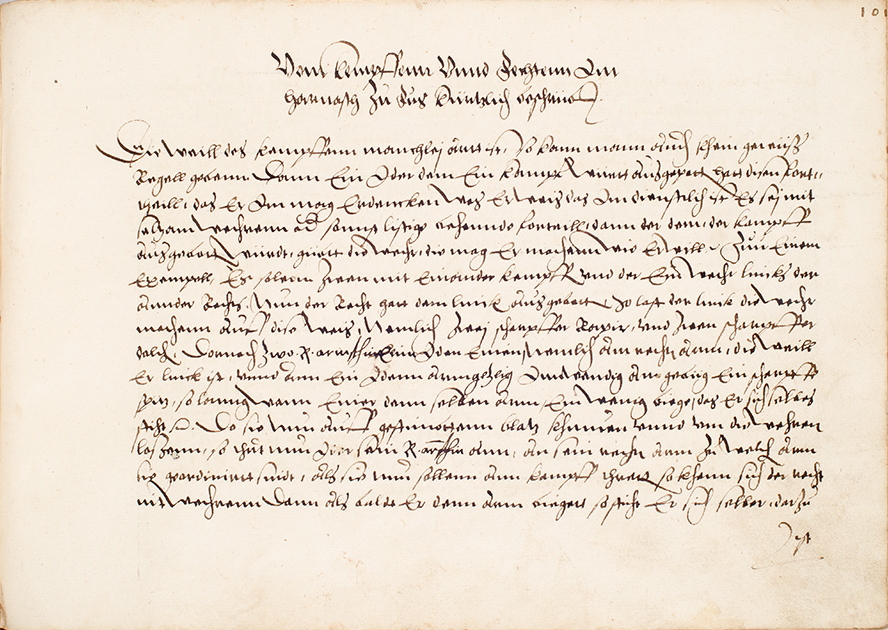
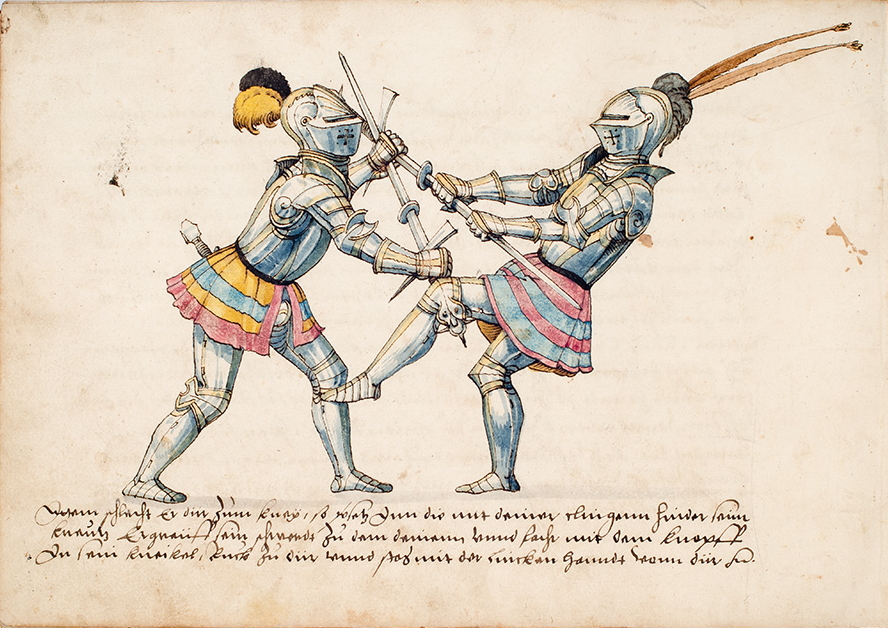
Because fighting is of various kinds, thus one can also give no fixed rule, then anyone who has been offered a fight had this advantage: that he can devise what he knows is in his service, be it with rare weapons or together with nimble advantage. Therefore, the one who is offered the fight gives the weapon and he may choose as he wants.
Munich Manuscript · fol. 101r.1
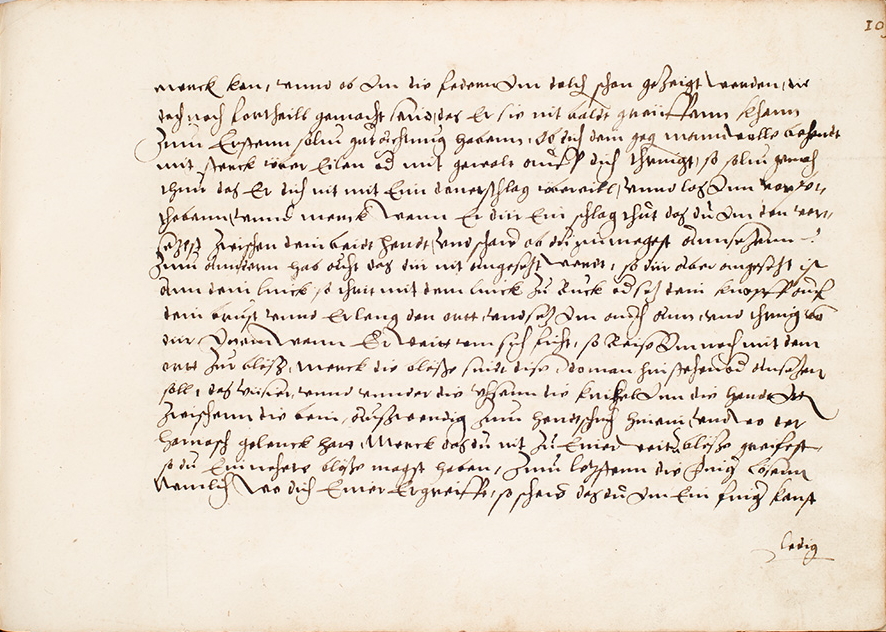
[101r.1] Vom Kempff enn Vnnd Fechtenn Im harnasch zu Fus kürtzlich beschrüben
Die weil des kempff enn manchlej Artt ist, so kann mann Auch khein gewüß
Regell gebenn Dann Ein Ider dem Ein kampf württ ausgepotten hatt disen forttheill,
das Er Im mag Erdencken was Er weis das Im diensttlich ist Es sej mit
seltzam wechrenn oder sampt listige behennde forteill, dann der dem, der kampff
Ausgebotten würdt, gübtt die wechr, die mag Er machenn wie Er will
101r.1
11.1linked passage
11.2
[2] For example, should two fight with each other and the one has a weapon on the left and the other on the right. Now the Right goes to offer the Left. So this lets the Left choose the weapon in this way. Namely, two sharp rapiers and two sharp daggers. After that, two right arm scissors - namely on the right arm because he is left[-handed] - and a sharp spike pointed inside at the bend of each arm, such that when one bends the same arm a little, he stabs himself.
Munich Manuscript · fol. 101r.2
[101r.2] ¶ Zuu Einem
Exempell, Es solenn zwen mit Einander kempff en vnd der Ein Wechr lincks der
Annder Rechts. Nun der Recht gett dem lincken Aůsgebotten, So last der linck die Wechr
machenn auff dise Weis, Nemlich zwej scharpff er Rapir, vnd zwen scharpffer
dolchen, Dornach zwo R. armschirleinn Iden Einen, nemlich Am rechten arm, die weill
Er linck ist, vnnd Arm Ein Jdenn Armgezeig Imwendig am gebüg Ein scherpffe
spitz, so lanng wann Einer denn selben Arm, Ein wenig biege, das Er sich selbes
sticht
101r.2
11.2linked passage
11.3
[3] If they now come to the agreed place and permit the weapons, so each puts on his right arm rail on his right arm to which arm they were assigned. When they should now step into the fight then they can’t defend the right. As soon as one bends his arm, he will stab himself, therefore his left arm is open, in which he prepares to use the dagger to shoot. However, the Left holds his right arm with the dagger for displacing and defends himself with the left hand. Thus, the Right would be more damaged from him than from the point/front.
Munich Manuscript · fol. 101r.3
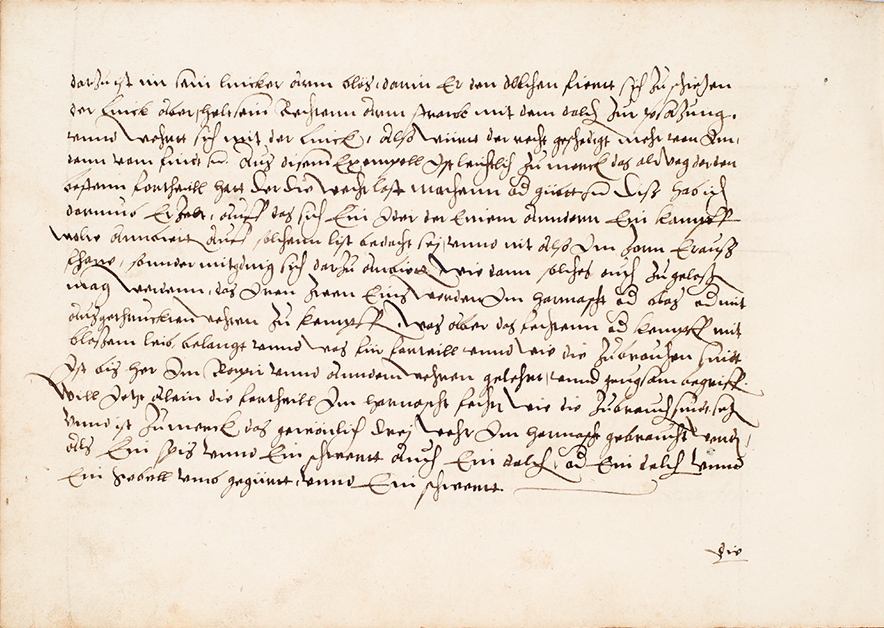
[101r.3] ¶ Do sie nun Auff gestimbttenn blatz khumen vnnd vm die Wehren
laßenn, so thut nun Jder sein R. armschin Ann, An sein rechten Arm zu welchen Arm
sie geordinirtt sindt, Als sie nun sollenn Ann kampff thretten so khann sich der recht
nit wechrenn dann Als baldt Er denn Arm biegett so sticht Er sich selber, darzu[101v.1] darzu [!] ist im sein lincker arm blös, darin Er den dolchen fiertt sich zu schießen der Linck aber, helt sein Rechtenn arm stranke mit dem dolchen zur versatzung, vnnd wehrtt sich mit der Lincken, also württ der recht geschedigt mehr von Im, denn vom findt
101r.3101v.1
11.3linked passage
11.4
[4] From this example it is easy to note that the one who has the best advantage is the one who always chooses or gives the weapon.
Munich Manuscript · fol. 101v.2
[101v.2] ¶ Aus disem Exempell Ist leichtlich zu mercken das alweg der den bestenn fortheill hatt der die wechr last machenn oder gübtt
101v.2
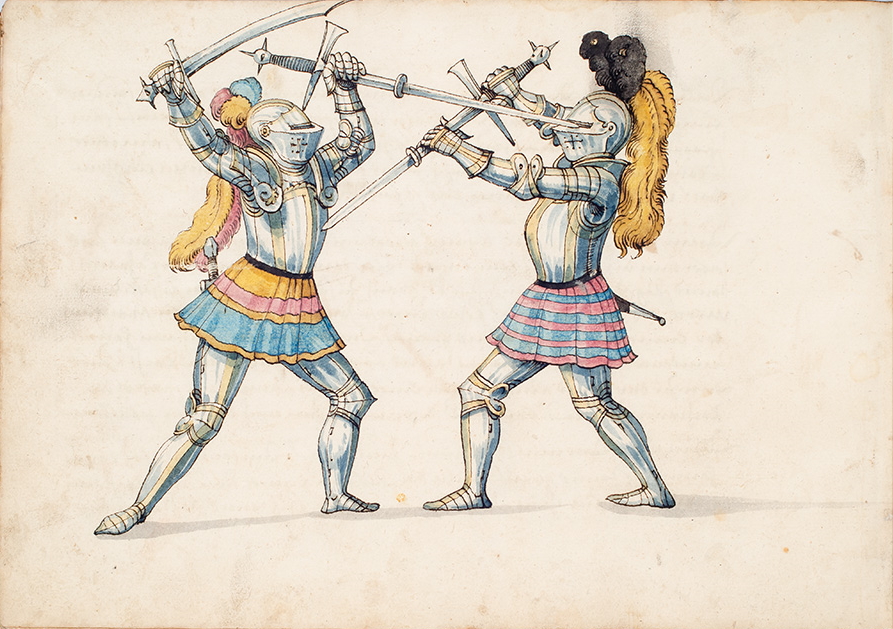
11.4linked passage
11.5
[5] This, therefore, have I said so that everyone who wants to offer someone else a fight should be mindful of such a trick, and doesn't rashly show himself, but rather offers themselves graciously as such a thing may also happen in a calm manner, for both of them to fight in armour or to fight naked or with drawn weapons. But what concerns the fencing or battling with a bare body and what is advantageous and how they are to be used has been taught up to now in Rapier and other weapons and sufficiently understood now. I want to speak of only the advantage in armoured fighting such as you need it. Note that, generally, three weapons are used in armour: a spear and a sword also a dagger, or a dagger and a sabre belted around and a sword.
Munich Manuscript · fol. 101v.3
[101v.3] ¶ Diß hab ich dorumb Erzelt, Auff das sich Ein Jder der Einem Anndern Ein kampff wolte annbietten Auff solchenn list bedacht sej, vnnd nit Also Im zorn Erauß schawe, sonnder mit gdnig sich darzů anbietten, wie dann solches auch zu gelaßen mag werdenn, das Jren zwen Eins werden Im harnascht oder blos oder mit ausgethruckten wehren zu kempffen. Was Aber das fechtenn oder kempffen mit bloßenn leib, belangt vnnd was für forteill vnnd wie die zu brauhen sindt Ist bis her Im Rapir vnnd Anndern wehren gelehrt, vnnd gnugsam begriffen will jetzt alein die fortheill Im harnascht fechten wie die zu brauchen sindt, sezen vnnd ist zu mercken das gewönlich drej wehr Im harnasch bebraucht werden, Als Ein spis vnnd Ein schwertt Auch Ein dolchen, oder Ein dolchen unnd Ein sebell vmb gegürtt, vnnd Ein schwertt
101v.3
11.5linked passage
11.6
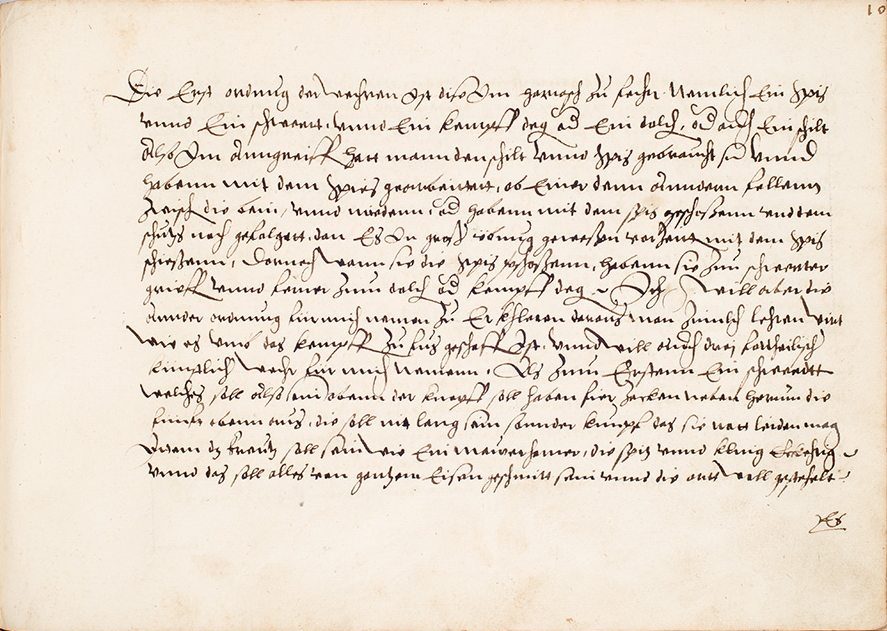
[6] The first order of defence is to fight in armour. Namely, a spear and a sword; and a combat sword or a dagger, or also a shield so when attacking/grappling you used the shield and spear and have worked with the spear. If someone misses the other between the legs and avoided, or have shot with the spear and followed after the guard - because shooting with the spear was in great use in the olden days - afterwards when they shot with the spear, they grabbed the sword and further the dagger or combat sword. But I want to take the other order for myself to explain, from which one will reasonably learn how it is to fight on foot, and I also want to take three advantageous, artificial weapons for myself: firstly, a sword which should be thus: above the pommel it should have four tacks next to the fifth at the top. They shouldn’t be long, rather short, so that it can cause harm in an emergency.
Munich Manuscript · fol. 102r.1
[102r.1] Die Erst ordnug der wechren Ist dise Im harnasch zu fechten. Nemlich Ein Spis vnnd Ein schwertt, vnnd Ein kempff degen oder Ein dolchen, oder auch Ein schilt Also Im Anngreiffen hatt mann den schilt vnnd spis gebraucht ¶ vnnd habenn mit dem Spies gearbteittett, ob Einer denn Anndern fellenn zwischen die bein, vnnd miedenn, oder habenn mit dem spis geschoßenn vnd dem schutzs nach gefolgett, dan Es In groß übung geweßen vor zeitten mit dem Spis schießenn, dornach wann sie die Spis verschoßenn, habenn sie zum schwerter grieffen vnnd ferner zum dolchen oder kampff degen ¶ Ich will aber die Annder ordnung für mich nemen zu Erkhleren daraus man zimlich lehren wirt wie es vmb das kempffen zu fus gescheffen Ist, vnnd will Auch drej fordheilischer künstlicher wechr für mich nemenn, Als zum Erstenn Ein schwerdtt welches soll Also sein obenn der knopff soll haben fier zecken neben herum die fünft obenn aus, die soll nit lang sein sonnder kunpf das sie nott leiden mag
102r.1
11.6linked passage
11.7
[7] Ittem the cross should be like a mason’s hammer, the point and blade angular and that should all be cast from solid iron and the point should be steeled.
Munich Manuscript · fol. 102r.2
[102r.2] Ittem dz kreutz soll sein wie Ein maurerhamer, die spitz vnnd kling Eckehtig ¶ vnnd das soll alles von gantzem Eisen geschmitt sein vnnd die ortt woll gestehelt
102r.2
11.7linked passage
11.8
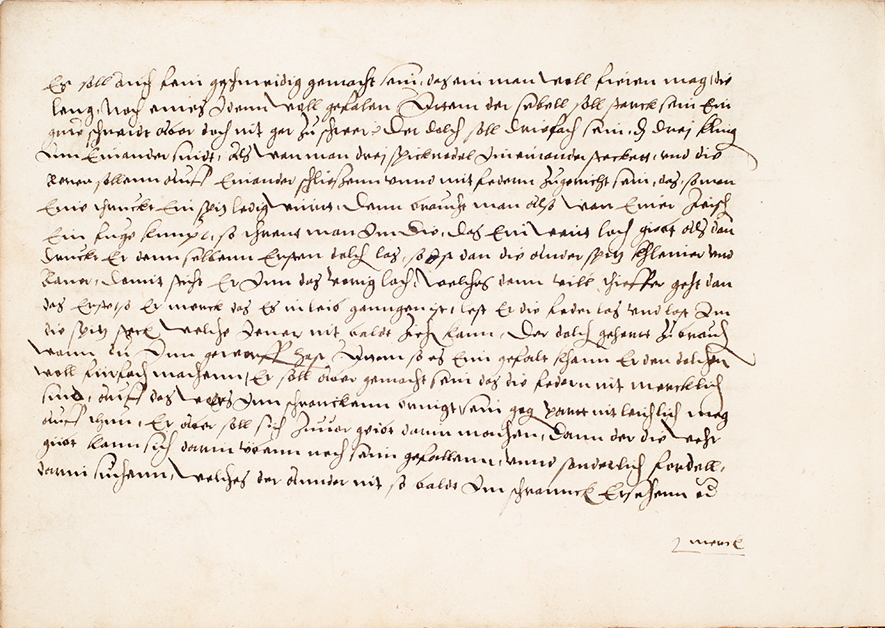
[8] It should also be made finely supple so that one may fully choose the length at his pleasure(?).
Munich Manuscript · fol. 102r.3
[102r.3] [102v.1] Es soll Auch fein geschmeidig gemacht sein, das ein man woll freien mag, die leng, noch eines Idenn woll gefalen
102r.3102v.1
11.8linked passage
11.9
[9] Ittem the sabre should be strong. A good edge but not too heavy.
Munich Manuscript · fol. 102v.2
[102v.2] ¶ Ittem der sebell soll starck sein Ein gute schneidt Aber doch nit gar zu schwer
102v.2
11.9linked passage
11.10
[10] The dagger should be triple, such that three blades are in each other as if one stuck three larding needles in each other, and the tubes/pipes close on each other and be bound with springs so that if you push with one, a point would come free [and remain inside]. Then one would need it when one comes between a gap, thus one separates it, which gives a wide gap so when he presses the same first dagger, then the other point is smaller and skinnier, so he stabs the previous hole, which then wants to go deeper than the first so that he notices that he has gone into the body. He releases the spring and lets him have the sharp point strongly, which he can’t soon pull out. The dagger is used when you have thrown him.
Munich Manuscript · fol. 102v.3
[102v.3] ¶ Der dolch soll driefach sein, dz drej klingen Inn Einander sindt, Als wan man drej spicknadel Im einander steckett, vnd die Reren sollenn Auff Einander schließenn vnnd mit federn zugericht sein, das, so man Eine thruckt Ein spis ledig württ, denn braucht man Also wan Einer zwischen Ein fuge kumpt, so thrent man Im sie, das Ein weitt loch giebt Als dan druckt Er denn selbenn Ersten dolchen las, so Ist dan die Ander spitz khleiner vnd Raner, domit sticht Er Inn das vorig loch, welches denn will thieffer geht dan das Erste, so Er merck das Es in leib ganngen ist, lest Er die feder las vnd last Im die spitz sterk welche jener nit baldt ziehen kann, der dolchen gehertt zu brauchen wann du Inn geworffen hast
102v.3
11.10linked passage
11.11
[11]
Ittem if it pleases, he can want to make the daggers fourfold, but it should be made so that the springs are not noticeable if you bring the weapon in the lists. His opponent may not do the same. However, one should make himself used to it, then the one who gives the weapon can practise it at his pleasure and particularly look for an advantage in it which the other cannot soon see or notice in the lists. And even if the springs in the dagger are already shown, they are still made advantageous to you, that he can’t soon soon grip you. You should first of all pay good attention to whether your opponent wants to nimbly rush over you with strength or drive you [away] with force. So you should do gladly that he doesn’t rush over you with a Thunderbolt, and let him forward above, and note when he strikes you that you displace it between both your hands and see if you can pin.
Munich Manuscript · fol. 102v.4
[102v.4] ¶ Ittem so es Ein gefalt khann Er den dolchen woll fürfach machenn, Er soll Aber gemacht sein das die federn nit mercklich sind, Auff das wehrs Inn schranckenn bringt, sein gegen partt nit leichlich mag Auff thun, Er aber soll sich zuuor geibt darin machen, dann der die wehr gübt kann sich darin übenn nach seim gefallenn, vnnd sonderlich fordell, darin suchenn, welches der Annder nit so baldt Im schrancken Ersehenn oder[103r.1] mercken kan, vnnd ob Im die federn Im dolchen schon gezeigt werden, dir doch noch fortheill gemacht send, das Er sie nit baldt greüffenn khann zum Erstenn soltu gut Achtung habenn, Ob dich dein gegen mann wolle behendt mit sterck über Eilen oder mit gewalt auff dich thringt, so soltu gernh thun das Er dich nit mit Ein donerschlag übereill, vnnd las Inn vorverthobenn, vnnd merck wenn Er dür Ein schlag thut das du Im den versezest zwischen dein beidt hendt, vnd schaw ob du im megest Annsetzenn
102v.4103r.1
11.11linked passage
11.12
[12] On the other hand, be careful that you are not pinned, but if you are pinned on your left, thusly step with your left back or put your pommel on your breast and gain/reach the point, and pin him also, and drive him from you.
Munich Manuscript · fol. 103r.2
[103r.2] ¶ Zum anndern hab Acht das dür nit angesezt weret, so dür Aber angesezt ist Ann dein linck so thrit mit dem lincken zu Ruck oder sez dein knopff auf dein brust vnnd Erlang der ortt, vnd sez Im auch ann, vnd thring von dür,
103r.2
11.12linked passage
11.13
[13] Ittem if he fights wide around you, thusly travel after him with the point to an opening. Note the openings are these, where you should initiate or pin: the visor, under the armpit, the knuckles in the hands. Likewise between the legs, from the outside in to the gloves, and where the armour has a joint. Note that you don’t attack another opening, if you may have a nearer opening. Lastly, loosen the finger, namely: where someone grabs you see that you can free his finger, then break him upward, Ittem break on, stab their genitals, break their leg or stab their knee.
Munich Manuscript · fol. 103r.3
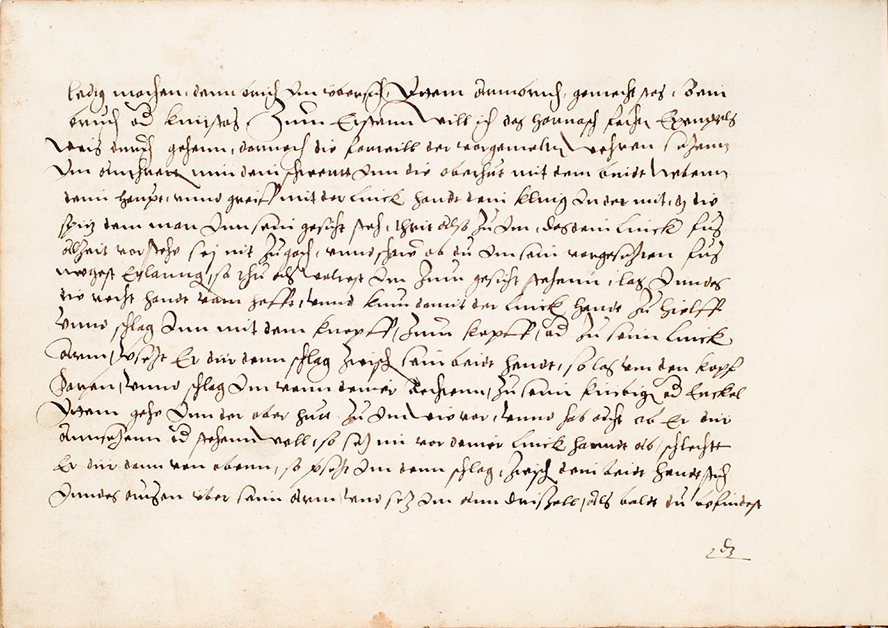
[103r.3] Ittem wenn Er weitt vm sich ficht, so Reise Im nach mit dem ortt zur blöß, merck die blöße sindt dise, do man hin stehen oder Ansezen soll, das vüsier, vnnd vnnder die vhsen die knikel Inn die handt Ittem zwischenn die bein, Außwendig zum handtschuch hinein, vnd wo der harnasch gelenck hatt, Merck das du nit zu Einer weitern blöße greifest, so du Ein nahere blöße magst haben, zum letzstenn die finger Lösenn nemlich wo dich Einer Ergreiffe, so schaw das du Im Ein finger kanst[103v.1] ledig machen, denn brich Im übersich, Ittem Annbrich, gemecht stos, Bein
bruch oder knüstos,
103r.3103v.1
11.13linked passage
11.14
[14] First I want to go through the armour fencing by way of examples, then explain the advantage of the aforementioned weapons. In the approach, take your sword in the Oberhut with both of [your hands] next to your head, and grip your blade with your left hand in the middle, so that the point stands in the man’s face. Step thusly in, so that your left foot stands in front at all times. Don't be too hasty, and see if you can reach his frontmost foot, make as if you want to initiatein his face, immediately let go of the haft with your right hand, and come to help with your left hand and strike him with the pommel to the head or to his left arm. If he displaces your blow between both his hands, let it drive around the head, and strike him from your right to his knee bone or ankle.
Munich Manuscript · fol. 103v.2
[103v.2] Zum Erstenn will ich das harnasch fechten Exempels
weis durch gehenn, darnach die forteill der vorgemelten wehren sezenn
Im Anthretten nim dein schwertt Inn die oberhut mit dem beidt nebenn
deim haupt, vnnd greiff mit der Lincken handt dein kling In der mit, dz die
spitz dem man Inn sein gesicht steh, thrit Also zu Im, das dein Lincker fus
Alzeit vorstehe sej nit zu goch, vnnd schaw ob du Im sein vorgesezten fus
megest Erlanngen, so thu als weltest Im zum gesicht stehenn, las Inn des
die recht handt vom hefft, vnndt kum domit der Lincken handt zu hielff
vnnd schlag Inn mit dem knopff, zum kopff, oder zu seim Lincken
arm, versezt Er dür denn schlag zwischen sein beidt hendt, so las vm den kopf
Faren, vnnd schlag Im vonn deiner Rechtenn, zu seim knibien oder Enckel
103v.2
11.14linked passage
11.15
[15] Ittem, go in the Oberhut as before, and pay attention to if he wants to pin or initiate. Thusly set off in front your left hand. If he then strikes you from above, displace the blow between both your hands and thrust immediately outside over his arm, and pin the throat. As soon as you find that your point sticks [in place, in the armour] thus put both your hands under your right shoulder and don’t let him get away. Rather, drive forth.
Munich Manuscript · fol. 103v.3
[103v.3] Ittem gehe Inn der ober hutt zu Im wie vor, vnnd hab Acht ob Er dür
Annsezenn oder stehenn woll, so sez im vor deiner Lincken hanndt ab, schlechtt
Er dür dann von obenn, so versezt Im denn schlag, zwischen dein beidt handt stich
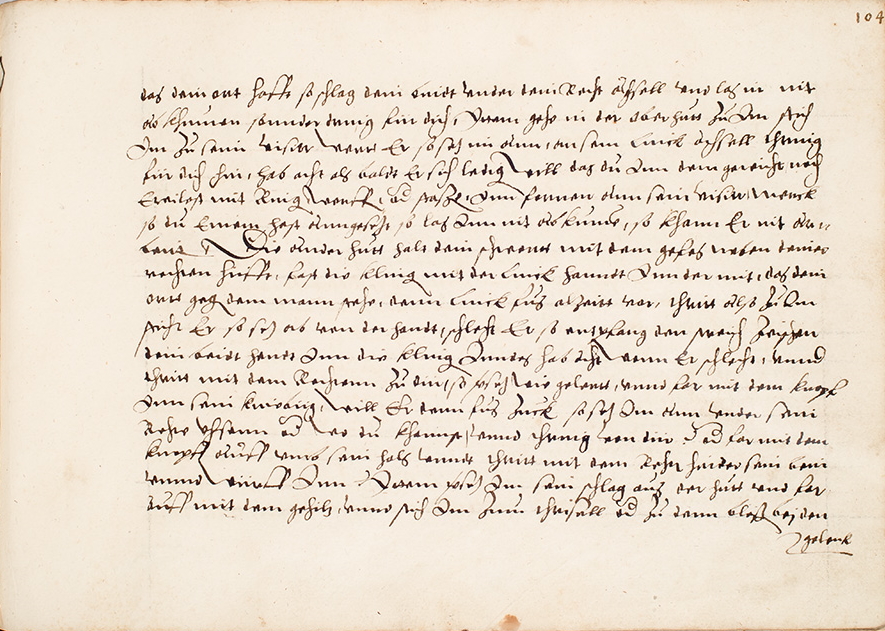
Inndes ausen über seinn arm, vnd sez Im Ann drißell, als baltt du befindest[104r.1] das dein ort hafft so schlag dein beidt vnder dein Recht ahsell vnd las in nit
ab khumen sonnder dring für dich,
103v.3104r.1
11.15linked passage
11.16
[16] Ittem go into the Oberhut, thrust in his visor. If he defends, pin him in his left shoulder drive forth. Pay attention as soon as he wants to free himself that you rush after him with your weight with wrestling, throwing, or stabbing in the front on his visor. Note if you have pinned someone don’t let him come away, then he can’t work. In the other guard, hold your sword with the grip beside your right hip. Grasp the blade with the left hand in the middle, so that your point stands against the man, the left foot at all times forward. Approach. If he thrusts, set off from the hand. If he strikes, then receive the stroke between both your hands in the blades. Simultaneously watch out when he strikes, and step with your right, thus displace as you learnt and drive with the pommel into his knee bend. He will then want to pull his foot, so pin him under his right armpit or wherever you can, and drive him from you or drive with the pommel on his neck and step with the right behind his leg and throw him.
Munich Manuscript · fol. 104r.2
[104r.2] Ittem gehe in der ober hutt zu Im stich
Im zu seinn visir wertt Er so sez im ann, an sein Linck Achsell thring
für dich hin, hab acht als baldt Er sich ledig[en] will das du Inn dein gewicht nach
Ereilest mit Ringen, werffen, oder stoßen, Inn fornen ann sein visir, merck
so du Einem, hast Anngesezt so las Inn nit ab kumen, so khann Er nit Arbeitten,
Die ander hutt halt dein schwertt mit dem gefes neben deiner
rechten hüfft, fast die klingen mit der Lincken hanndt Inn der mit, das dein
ortt gegen dem mann stehe, denn Linck fus alzeitt vor, thritt also zu Im
sticht Er so sez ab von der handt, schlecht Er so entpfang den streich zwischen
dein beidt hendt Inn die klingen Inndes hab acht wenn Er schlecht, vnnd
thritt mit dem Rechtenn zu dür, so versez wie gelertt, vnnd far mit dem knopf
Inn sein kniebüg, will Er denn fus zucken so sez Im ann vnder sein
Rehte vhsenn oder wo du khannst, vnnd thring von dür ¶ oder far mit dem
knopff auff vmb sein hals vnndt thritt mit dem Rehten hinder sein bein
vnnd würff Inn
104r.2
11.16linked passage
11.17
[17] Ittem, displace his blow out of the guard and drive up with the hilt, and thrust at the throat or to the openings by the joints. Likewise, set the thrust off, and you do the same, and as soon as you have pinned him, strike your pommel under the armpit so you secure your advantage.
Munich Manuscript · fol. 104r.3
[104r.3] ¶ Ittem v[er]sez Im sein schlag aus der hutt vnd far
auff mit dem gehilz, vnnd stich Im zum thrisell oder zu denn blößen bej den[104v.1] gelennckenn. Ittem sez im denn stich ab, vnnd du desgleichen, vnnd so offt du Im angesezt hast, so schlag dein knopff vnnder die vchsenn so du dein forteil Ersichest,
104r.3104v.1
11.17linked passage
11.18
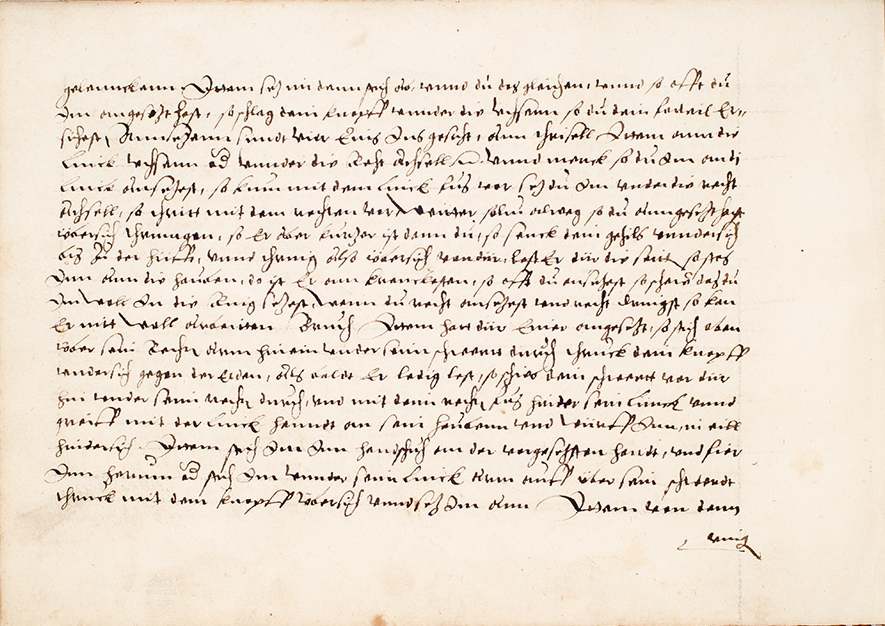
[18] The pinnings are four: one in the face, [one] to the throat. Likewise on the left armpit or under the right shoulder and note when you pin him on the left, come with your left foot forward and place it under the right shoulder, then step forward with the right foot. Furthermore, when you have pinned you should always drive them upward. If he is shorter than you, sink your hilt under yourself to the hips and drive them upward. If he moves to the sides, stab into the helmet. That’s where he’s most wounded. As soon as you pin, ensure that you are placed fully in the [armour's] mail. When you pin right and drive right, thus can he not fully work.
Munich Manuscript · fol. 104v.2
[104v.2] Annsezenn sündt vier Eins Ins gesicht, ann thrisell Ittem ann die Linck vchsenn oder vnnder die Reht achtsell ¶ vnnd merck so du Im an dj Linck ansezest, so kum mit dem Lincken fus vor sez du Im vnder die recht Achsell, so thritt mit dem rechten vor, weitter soltu alweg so du anngesezt hast übersich thrinngen, so Er Aber kurczer ist dann du, so senck dein gehils vnndersich bis zu der hüfft, vnnd thring Also übersich von dür, last Er dür die seitten so stos Inn ann die hauben, do ist Er am krenckesten, so offt du ansezest so schaw das du Im woll In die Ring sezest, wenn du recht ansezest vnd recht dringst so kan Er nitt woll arbeitten
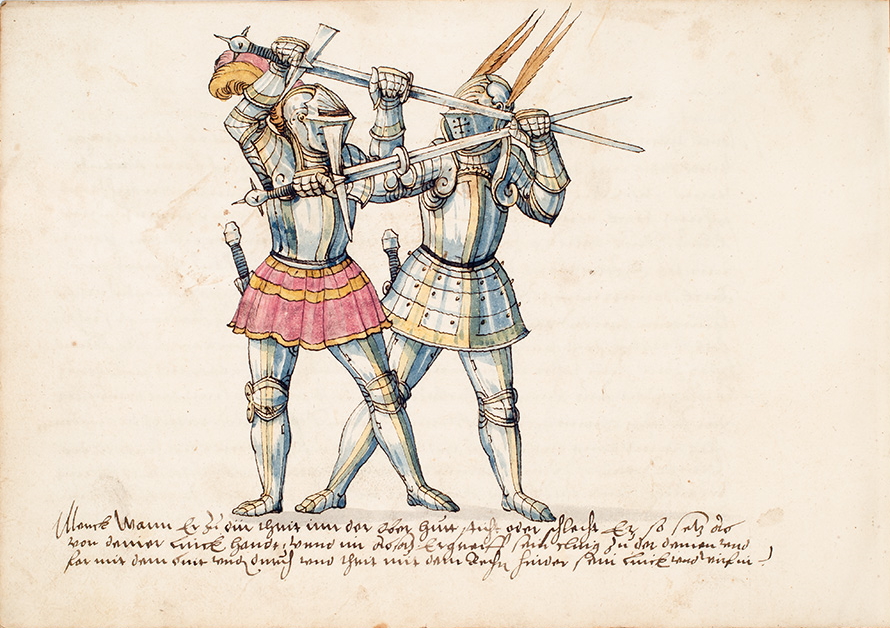
Ittem, if you are pinned, thusly thrust up over his right arm inwards under his sword and push your pommel through underneath towards the ground. As soon as it comes free, thusly shoot your sword through forwards under his right, and with your right foot behind his left, and grip with your left hand on his helmet and throw him.
Ittem hatt dür Einer angesezt, so stich oben über sein Rechten arm hinein vnder seim schwertt durch thruck dein knopff vndersich gegen der Erden, als baldt Er ledig lest, so schies dein schwertt vor dür hin vnder seim rechten durch, vnd mit deinn rechten fus hinder sein Lincken vnnd greiff mit der Lincken hanndt an sein haubenn vnd würff Inn, in eill hindersich.
104v.3
11.19linked passage
11.20
[20] Ittem, thrust him in the glove on the frontmost hand, and lead him around or thrust him under his left arm up over his sword. Push with the pommel upward and pin him.
Munich Manuscript · fol. 104v.4
[104v.4] Ittem stich Im Inn handschuh am der vergesezsten handt, vnd fier Inn herum oder stich Im vnnder seim Lincken Arm auff über sein schwerdt thruck mit dem knopff übersich vnnd sez Im Ann
104v.4
11.20linked passage
11.21
[21] Ittem, from the wrestling, take note of which side he has pinned you. Grip his blade with your left hand, drive it from you, immediately snatch it back and pull in to you and catch him with the right hand, his right hand, and pull in to yourself and grab his body and lift upward. He will lift. Strike the foot and out and throw him from yourself.
Munich Manuscript · fol. 104v.5
[104v.5] Ittem von denn[105r.1] Ringenn merck Ann welcher seitten Er dür hatt Anngesezt, so greiff sein kling mit teiner Lüncken hendt thring Also von dür Inndes zuck ab, vnnd Ruck Inn zu dür vnnd Erwische in mit der rechten hanndt, sein rechte handt, vnd Ruck In zu dür vnd begreif sein leib vnnd heb übersich, vnnd Er heb In vnd schlag Im die fies vndenn Aus vnd würff In von dür,
104v.5105r.1
11.21linked passage
11.22
[22] Ittem, if he thrusts at you, thrust with him simultaneously in at his left side, and in the thrust catch his blade with yours and drive with your pommel under through both arms and strike upward so he must release.
Munich Manuscript · fol. 105r.2
[105r.2] Ittem sticht Einer auff dich, so stich mit Im gleich hinein auff sein linck seitten, vnnd ÿm stich fang sein kling zu deiner vnnd fahr mit deim knopff vnnden durch beidt Arm, vnnd schlag übersich so mus Er laßenn
105r.2
11.22linked passage
11.23
[23] Ittem, pay attention to which hand you can catch him with and jerk back to yourself, and with the other hand grip his elbow(s), and Him the weight, and with all steps until not too hasty, so that you have a full stance.
Munich Manuscript · fol. 105r.3
[105r.3] Ittem hab Acht welche henndt du Im Erwischen megest die Ruck zu dür, vnnd mit der Anndern hanndt greiff Im seinen Elenpogenn, vnnd Him Im das gewicht, vnnd Inn Allen thrits bis nit zu goch, Auff das du Ein sattenn stanndt habest,
105r.3
11.23linked passage
11.24
[24] Ittem, if you have thrown someone and he falls, fall down with him to his right and with your right knee between both his legs and with the left hand around his neck, if you have surely secured him, then draw your dagger. If he grabs at the dagger, thrust him in the hand and pull back with another, until you have better spotted your advantage.
Munich Manuscript · fol. 105r.4
[105r.4] Ittem so du einen geworffenn hast, fellt Er so fall mit zu seiner Rechtenn vnnd müt dem Rechtten Knie zwischenn sein beidt bein, vnd mit der lincken handt vm sein hals, so du Inn gewis gefast hast, so Ruck dein dolchen, greift Er zu dem dolchen, so stich Im zur handt vnd Ruck mit wüder, bis du dein forteil beßer Ersehen hast
105r.4
11.24linked passage
11.25
[25] Ittem, another: take his right arm between the leg and lie down on top of him horizontally/diagonally and hold your legs almost together and stretch yourself. Grasp his left arm with with your left hand and hold it fast and work with the combat sword that will follow hereafter.
Munich Manuscript · fol. 105r.5
[105r.5] Ittem Ein Anders nim sein rechten Arm zwischen dem bein, vnnd leg dich Auff Inn zwerchs vnd haltt dein bein fast zu[105v.1] zusamen vnnd streck dich fast vnnd greüff mit deiner lüncken handt An sin lincken Arm, vnnd helt denn fast, vnnd Arbeitt mit dem degen wie hernach folgen wirtt
105r.5105v.1
11.25linked passage
11.26
[26] How One Should Use the Three Aforementioned Weapons
Note: in the first Approach go into the Oberhut and introduce yourself with whatever gestures you will as if you want to initiate in his face. Don’t do it, rather strike or hew from above to below to his knee buckles. Whether you hit or not thus drive nimbly with the hands upward and strike him with the pickaxe to the head outside over his right arm, or strike him in the nearest joint that you can. Pull nimbly around your head and let the right hand drive in front of the left hand and grasp then under your left in the blade and strike with a Mittelschlag from your right to his helmet, be it with the pickaxe or a hew, or with the pommel. If he grasps your grip, [do] again with your right hands and step back again so that you can recover again, and diligently watch out that he doesn't give you a stroke. Also, don’t let yourself be pinned, rather evade in a circle as much as you can bear.
Munich Manuscript · fol. 105v.2
[105v.2] ¶ Wie mann die drey vorgemelten wechr brauchen soll 
Merck Im Erstenn Anthritt gehe In der oberhutt zu Im vnnd stell dich mit geberdenn Als woltest In zum gesicht stehen thu es nit sonder schlag od[er] haw vonn oben nider nach sein knie bucklen thriffest oder nit so far behendt mit denn henden übersich vnnd schlag Inn mit dem bickell, zum kopff, Außen über seinen Rechtenn Arm, oder schlag In auff sein gelenck des nechst das dir werden mag, zuck bechenndt vmb dein kopff vnnd las die Reht fahren vor der lincken hanndt vnnd greüff domit hünder deiner lincken Inn die klingen vnnd schlag vonn deiner Rechten Ein mittelschlag nach sein helm, Es sej mit dem bickell oder hawer, oder mit dem klos, Er greüff dein bindt wüder mitt deiner Rechttenn hanndt vnnd thritt wüder zu Ruck daß du dich wüder Erhalest, vnnd hab fleißig Acht das Er dür khein streich geb Auch las dür mitt Annsezenn sonder weich Im kreis so viel es leiden will
Note: approach him in the Oberhut. Take hold of your grip near the pommel and grip with the left hand in the blade by the cross and thrust him powerfully to his visor. Pull again to yourself and thrust with strength from under to his genitals so that he can’t come near you. Pull your weapon back again and grip with the left hand in the first part of your blade. If he drives on you, evade backwards, so that you make him step in and soon strike [you]. So don’t let him reach you, rather evade. If he has struck, pay attention that he may feint you, so let go with the right hand and come thereafter to help the left and strike him in the helm or to the next gelüdt. However, if he has not struck then strike him to his knee or ankle. If he displaces it then drive up with your arms, strike him to the upper joint, and grip your both again. If you, however, can’t enter into the blow, displace the upper between both your hands in the blade. Throw the pommel simultaneously over your left shoulder and drive up with the left hand and come with the right to help the left. Thus you come to strike before he recovers.
Merck thritt Inn der ober hutt zu Im, fas dein bündt nahett bej dem knopfvnnd greif mit der linncken hanndt In die klingen beim kreutzvnnd stich Im krefftiglich zu seim visier, zuck wüder An dich vnndstich mit sterck, vonn vnnden zu seim gemecht, domit Er dür nit zu nahekhum, Ruck dein wehr wüder ab, vnnd greüff mit der Lincken hanndtInn das Erßette theill deiner klingen dringt Er auff dich so weich zuuRuck, domit machestu Inn Endthrist vnnd württ baldt schlagen, so las dich nit Erlanngenn sonnder weich aus, hatt Er geschlagen so hab Achtung In dem Er sich verfelt so las die Recht hanndt Ab, vnnd khum domit der lincken zu hilff vnndschlag Inn zum helm oder zum nechstenn gelüdt, hatt Er Aber nit geschlagennso schlag Inn zum knüe oder Enckell versezt Er so fahr Auff mit den Armen, schlagIm zu dem obernn gelennck, vnnd Ergreüff dein beidt wüder, so du aber demschlag Ja nit kanst entgehenn so versez den obenn zwischen dein beidt hendt in dieklingen, würff Inndes denn knopff über dein Lincke Achsell, vnd far mitder Lincken handt Auff vnd kum mit der Rechten der Lincken zu hilff so kummestu zu schlagen Ehe Er sich Erhalt 
106r
11.27linked passage
11.28
[28] Note: when he approaches you in the Oberhut, if he thrusts or strikes thus set off from your left hand, and in the setting-off grip his blade to yours and drive with the grip under through and step with the right behind his left and throw him.
Munich Manuscript · fol. 106v
[106v] Merck Wann Er zu dür thrit inn der Ober hutt sticht oder schlecht Er so setz Ab
von deiner Lincken handt, vnnd im Absaz Ergreiff sein cling zu der deinen vnd
far mit dem bint vnden durch vnd thrit mit dem Rechten hinder sein Lincken vnd wirf in
106v
11.28linked passage
11.29
[29] Ittem if he strikes under, sink your pommel under yourself against the ground and displace between both your hands. When he draws up again, drive up with your pommel from under to the genitals, and simultaneously wind the left hand upward against his incoming stroke and set him off and drive up with the hilt and thrust him over his right arm to the face and pin him.
Munich Manuscript · fol. 107r.1
[107r.1] Ittem schlecht Er vnnden so sennck denn knopff vnndersich gegenn der Erdenn
vnnd versez zwischenn dein beidt henndt, Inn dem Er wüder Auff zeicht so
fahr mit deim knopff vonn vnnden Auff zum gemecht, vnd wend Inndes
die Linck henndt übersich gegenn seinn herkhumenden streich vnd sez im den Ab
vnn fahr Auff mit dem gehils vnnd stich Im über sein Rechten Arm Ein zum
gesicht vnnd sez im Ann 
107r.1
11.29linked passage
11.30
[30] Ittem go to the man in the Underhut and thrust him from under to the face. If he simultaneously strikes or thrusts, set it off, and let go of the grip with your right hand and throw it behind you. Come with the right to help the left and strike from under up with the pickaxe between his legs to the groin. Pull as soon as you can with both hands upward around the head and strike to the upper openings.
Munich Manuscript · fol. 107r.2
[107r.2] Ittem gehe zum mann Inn der vnder hutt, vnnd stich im von vndenn zum gesicht,
schecht oder sticht Er vnndes, so sez ab, vnnd las die Recht hanndt vom binndt
vnnd würff das hinder dich, khum mit der Rechten der Lincken zu hilff vnnd
schlag vonn vnnden Auff mit dem bickell zwischenn sein bein zum gerecht
Ruck Als baldt mit beiden henden übersich vm den kopff vnnd schlag zu
denn obern blößenn 
107r.2
11.30linked passage
11.31
[31] Ittem approach him in the Underhut, pull and threaten the thrust. Simultaneously let your grip run and step around his left, grip with both hands in your blade and throw the pickaxe at him in the hip under his Burckenn forged with strength in the chainmail
Munich Manuscript · fol. 107r.3
[107r.3] Ittem thritt zu Im In der vnnder hutt zuck vnnd thraw Im denn stich, Indes
las dein binndt fahrenn, vnnd thrit vm sein Linck greüff mit bejdenn
hennden Inn dein khleing, vnnd würff Im denn bürkell
Inn die hüfft vnder seim Burckenn geschmeidt mit sterck In die Ring
107r.3
11.31linked passage
11.32
[32] Ittem thrust at him out of the Underhut to his genitals. Pull again and let your grip run out of the right hand and grip thereafter in the blade. If he strikes, thusly intercept with your hilt from the right against his left. In the intercept let your hilt drive around the head and strike him to his frontmost knee bend. Take a nimble step behind yourself, thereafter you recover and grip your grip again.
Munich Manuscript · fol. 107v.1
[107v.1] Ittem stich Im auß der vnnder hutt, zum gemecht, zuck wüder vnnd las dein
binnd fachrenn aus der Rechten hanndt vnnd greüff domit Inn die klingen
schlecht Er, so nim mit deinem gehils Aus von der Rechten gegen seiner lincken
Im außnemen las dein gehils, vmb den kopff fahren, vnd schlag Im zu
seim für gesezten kniebüg, thritt behenndt Ein thrit hinder sich, domitt
du dich Erhalst vnd dein bindt wüder Ergreüffest 
107v.1
11.32linked passage
11.33
[33] From these devices which have been written up to now, it is hopefully understood enough how one can bring the blows to work, and is to be noted that one should guard as much as he can against pinning and wrestling. He has then firstly extremely weakened him with Thunderbolts to the ankle, the knee bend, to the joints, on the arm bend and other openings. When he is midett and weakened with blows then grapple with pinning. You will not initiate him, rather, generally evade and delay him, unless however you see an advantage, which you must not allow to be fruitlessly wasted.
Munich Manuscript · fol. 107v.2
[107v.2] Aus düsenn bis hieher geschrübenn stuckenn ist hoffich gnug v[er]stendig wie
mann die schleg soll zu werck brinngen, vnnd ist zu mercken das sich
Einer hüetten soll so viel Er kann vor Annsezenn oder Rinngenn er
habe Inn dann zum Erstenn sehr geschwecht mit donerschlegenn als
zum Enckell, zur knibüg, zu denn gelennckenn Ann Armbüg vnd
Annderen blößenn, wann Er Also Er midett ist vnnd mit schlegenn
geschwecht, Als dann greüff ann mit annsezenn ¶ zuuor soltu Im nit
sthenn, sonder Imer algemechlich weichen vnd In verzoblen laßenn, doch
Aber wo du Ein fortheill Ersehest das der nit vnfrucht barlich versaumett
werde 
107v.2
11.33linked passage
11.34
[34] Ittem step now to him with pinning with initiating out of the upper guard and thrust with power in his visor, if he guards over himself/upwards and wants to set off then pull off to the side and thrust him under his left arm. See that you stand firmly and don't overload the weight. Note that as soon as your point sticks on the mail, place your hilt under your right armpit, drive him from you or pin him under the right armpit and place the pommel under your left armpit and push from you and don't let him come away and draw the sabre with the right [hand] and work at his joints, or with lower hews.
Munich Manuscript · fol. 108r.1
[108r.1] Ittem jetz thritt zu Im mit Annsetzenn mit stehen aus der obenn hutt vnnd stich mit krafft Inn sein visier, heutt Er übersich vnd will Absetzen so zuck nebenn Ab, vnnd stich Inn vnder sein Lincken Arm, schaw daß du satt stenndest vnnd dich nit überwegest dem gewicht noch, merck als baldt dein ortt hefft Ann Rüngen so schlag dein gehüls vnder dein Rechte ühsenn dring Inn vor dür hin oder sez im vnder den Rechten vchsen vnnd schlag den knopff vnder dein linck vhsenn an, vnnd dring von dir vnd las in nit abkumen vnnd zeich mit der Rehten den sebell vnnd arbeitt Im zum gelencken, oder mit vnnder hewenn 
108r.1
11.34linked passage
11.35
[35] Ittem do as if you want to strike the visor with the pommel. As soon as you notice that he defends outwards between both his hands, thus pull off nimbly and [pin] him under the right armpit, and note if you grab one with pinning under the right armpit and also with yours together under your left armpit as taught before, thrust the face with such skill/a trick. Thus he may not draw his sabre - that is also the advantage with the sabre.
Munich Manuscript · fol. 108r.2
[108r.2] Ittem thu als woltestu Inn mit dem klos, für das visier schlagenn als baldt du merckest das Er aussentt zuuer sezenn zwischenn sein beidt henndt so zuck bechenndt Ab, vnnd sez Im vnder die Recht vhsenn, vnnd merck wenn du Einer Also Ergreiffest mit ansezen vnnder die Reht vhsenn vnnd auch mit deinem sampff vnder dein Linck vhsen wüe vor gelertt, mit was listen dz gesichticht ¶ so mag er sein Sebell nit geziehenn das ist auch der fortheill mit dem Sebell 
108r.2
11.35linked passage
11.36
[36] Ittem if he strikes you to the knee, thusly displace it with your blades behind his crossguard. Grip his sword to yours and drive with the pommel in his knee. Jerk towards yourself and shove with the left hand from yourself.
Munich Manuscript · fol. 108v
[108v] Ittem schlecht Er dür zum kneÿ, so versetz Inn die mit deiner clingenn hinder seim kreutz Ergreüff sein schwerdt zu dem deinem vnnd fachr mit dem knopff In sein kneikel, Rucke zu dür vnnd stos mit der Lincken hanndt vonn dür
108v
11.36linked passage
11.37
[37] Ittem thrust with him simultaneously in from your right against his left with your point fully over his sword and grip his sword to yours. Let go with the right hand and grab his left elbow. Jerk it over yourself/upwards on yours left side, step forward with your left foot - thus, he falls.
Munich Manuscript · fol. 109r.1
[109r.1] Ittem stich mit Im gleich hinein vonn deiner Rechten gegenn seinner Linncken mit deim ortt woll über seinn schwerdt, vnnd Ergreüff sein schwerdt zu dem deinen, las die Recht hanndt Ab vnnd greiff sein Lincken Elenpogenn Ruck denn übersich zu dür Auff dein Linck seitten für thritt Inn mit deim Linckenn fus so felt Er 
109r.1
11.37linked passage
11.38
[38] Ittem approach him, conduct yourself with an attitude as if you want to initiate. However, pull to yourself and let your grip run over your left arm and strike him with a Gripstrike or strike to his right shoulder and note as soon as he drives/throws to displace fully then stroke with the left hand and grip immediately with the right hand under through your sword and grip with it his right. Pull him towards you and come with the left hand together with the sword to help the right break or throw him at your pleasure.
Munich Manuscript · fol. 109r.2
[109r.2] Ittem Im zu thritt stell dich mit geberdenn Als woltest Im stehenn zuck Aber Ann dich vnnd las dein binndt über dein Lincken Arm fahrenn, vnnd schlag Im Ein Bundtschlag oder streich zu seiner Rechtenn Achsell, vnnd merck Als baldt Er Auff fertt zuuersezenn so volfüer denn streich mit der Linncken hanndt vnnd greiff Inndes mit der Rechtenn hanndt vnndenn durch dein schwertt vnnd begreüff domit sein Recht, zuck Inn zu dür vnnd kum mit der lincken hanndt sampt dem schwerdt der Rechtenn zu hilff brüch oder würff Inn noch deinem gefallem 
109r.2
11.38linked passage
11.39
[39] Ittem strike him with the grip to the head. In the blow, let go with your hand and grip his right elbow with the same hand, step forward with the left foot and shove him from yourself.
Munich Manuscript · fol. 109r.3
[109r.3] Ittem schlag Inn mitt dem binndt zum kopff Inn dem schlag las deinn hanndt ab vnnd greüff mitt der selbenn hanndt Ann sein Rechtenn Elenpogen für thritt Inn mitt dem Lincken fus vnnd stos vonn dür 
109r.3
11.39linked passage
11.40
[40] Ittem when you have weakened him with Thunderbolts, as taught above, grasp your sword like next/nearest in the Oberhut and thrust in above. In the thrust, let go of the grip [of the sword] with the right hand and draw the sabre. As soon as he also draws his, hew at his hand and follow soon to him with the sabre from under up at his arm and step with the right foot behind his left and stab with the pommel to his neck or at his shoulder or but foot face - thus, he falls.
Munich Manuscript · fol. 110r.1
[110r.1] Ittem wann du Inn geschwecht hast mit donerschlegenn wie obenn gelertt so fas dein schwerdt wie nechst Inn die ober hutt vnnd stich Im oben Ein Im stich las die Recht hanndt vom binndt vnnd zeich denn Sebell, Als baldt Er seinen auch zeicht so hawe Im zur hanndt vnnd folg baldt zu Im mit dem Sebell vonn vnnden Auff Ann seine Arm vnnd thritt mitt dem Rechten fus hinder sein lincken vnnd stos mit dem knopff für sein hals oder Ann sein Achsell oder Aber fus gesicht so felt Er 
110r.1
11.40linked passage
11.41
[41] Ittem if you have drawn both your weapons, step fowards with the right foot and the sabre held in the right hand, your sword in the left to thrust, step and thrust in above to the face and drive with the sabre from under up between yourself and him. To the displacement pull the sword simultaneously around above and thrust at the genitals. If he grabs at the sword with the left hand, let it drive and grab his left hand with your left. Jerk it to and stab his joint with the sabre and step with the right to his left. Pivot to your left side and throw him over your right leg, or break his arm. However, if he lets go with the right hand and grabs at his sabre or at your sword, then grasp his right hand with your left. Jerk it towards you. Twist the underside around and stab with the sabre at his elbow joint and break his arm.
Munich Manuscript · fol. 110r.2
[110r.2] Ittem hastu dein beüdt wecht gezogenn, so thritt zu Im mit dem Rechten fus vor vnnd denn Sebell halt in der Rehten hanndt dein schwerdt Inn der lincken zum stich thritt vnnd stich Im Obenn hinein zum gesicht vnnd fachr mit dem Sebell vonn vnnden auff zwischenn dür vnnd Im zur vorsazung zucke Inndes daß schwerdt obenn vm, vnnd stich Im zum gemecht, greüfft Er mit der lincken hanndt nach dem schwerdt, so las fachren vnnd greiff mit deiner Lüncken sein lünnck hanndt Ruck die zur vnnd stos mit dem Sebell auff sein gelenck vnnd thrit mit dem Rechtenn für sein Lincken, wendt dich auff dein Linck seitten vnd würff In über dein Recht bein, oder brüch Im sein arm, last Er aber die Recht handt ab vnd[110v.1] greifft nach seim Sebell oder nach deim schwerdt, so Ergreüff Im sein Rechten hanndt mit deiner Linckenn Ruck die zu dür Reüb Im die vndersich vmb vnnd stos mit dem Sebell auff sein gelennck am Elenpogenn vnd brüch Im denn arm 
110r.2110v.1
11.41linked passage
11.42
[42] Ittem if you would come from your sword, then go under with your sabre and grip his sword's blades with your left hand, which will be under your left armpit, or hold it firmly from you and hew at his hand. If he releases the sword and grabs at the sabre, then thrust him with the sabre outwards in the glove. Don't jerk/pull it again, rather stab/shove at his face and step behind him - thus, he falls.
Munich Manuscript · fol. 110v.2
[110v.2] Ittem so du vonn deim schwerdt werest kumen so vnnder gehen Inn mit deim Sebel vnnd Ergreüff mit deiner lincken hanndt sein schwerts klüngen würdt die vnnder dein Linck vchsenn, oder halt die fest vonn dür vnnd haw Im zur hanndt lest Er dz schwerdt vnnd greüfft zum Sebell so stich Im mit dem Sebell außen In den hendtschuch Ruck nit wüder sonnder stos mit dem gehils Inn sein gesicht vnnd hinder thritt Inn so felt Er 
110v.2
11.42linked passage
11.43
[43] Ittem if you have grabbed his sword and he wants to draw the sabre, then hew at his hand or release his sword and grip his right hand. Jerk it towards you and thrust or stab his joint with the sabre's pommel.
Munich Manuscript · fol. 110v.3
[110v.3] Ittem hest Im sein schwerdt Ergrüffenn vnnd Er will denn Sebell ziehenn so hawe Im zur hanndt oder las sein schwerdt vnnd Ergreiff sein Recht hannd Ruck die zu dür vnnd stich oder stos In mit dem sebels knopff auff sein gelennck 
110v.3
11.43linked passage
11.44
[44] In summary, with the sword you shall sever his armour(?) with the pickaxe, or hew the knee bend or gaps, and disable with the pommel, and break and beat the joint and penis. Ittem pin with it, if however you have taken your sword or have come from it, you should work with the sabre and with wrestling to counterattack and stab under the eyes with the pommel and see that you can lock his leg or step behind.
Munich Manuscript · fol. 110v.4
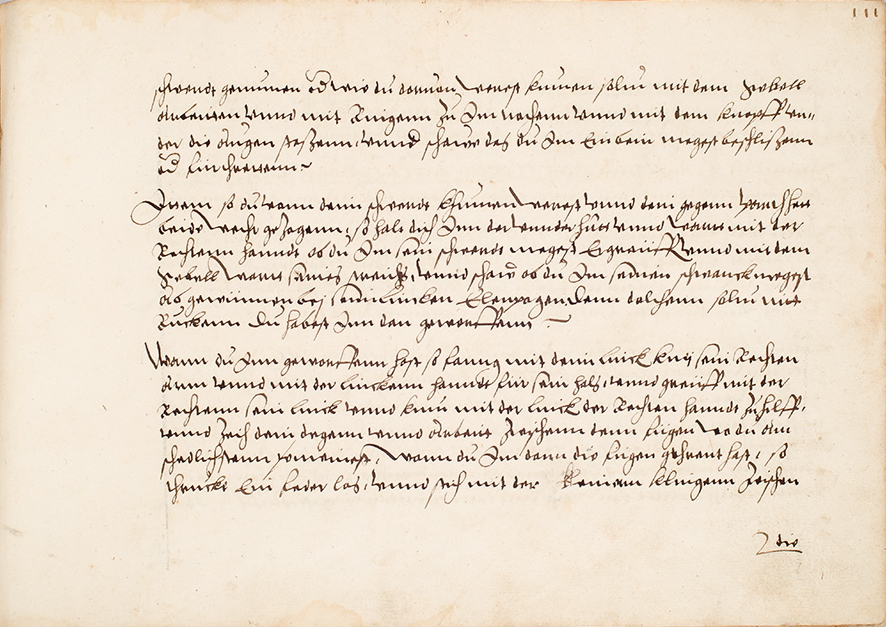
[110v.4] Summa mit dem schwerdt soltu Im thrennen sein geschmidt, mitt dem Bückell oder hawer die knübüg oder fügenn, vnnd müt dem klos lemen, vnnd die gelenck vnnd glüder brechenn vnd bochen, Ittem domit annsetzen, So dür aber deinn[111r.1] schwerdt genumen oder wie du daruon werest kumen soltu mit dem Sebell arbeitten vnnd mit Ringenn zu Im nachenn vnnd mit dem knopff vnder, die augen steßenn, vnnd schawe das du Im Ein bein megest beschlißenn oder für threttenn 
110v.4111r.1
11.44linked passage
11.45
[45] Ittem if you would come from your sword and your opponent has drawn both weapons, then hold yourself in the Underhut and wait [to see] whether you can grab his sword and, with the sabre, wait [for] his strokes and see if you can win his balance/swivel by his left elbow. You shall not jerk/draw the dagger, unless you have thrown him.
Munich Manuscript · fol. 111r.2
[111r.2] Ittem so du vonn deim schwerdt khumen werest vnnd dein gegenn parth hett beide wechr gezogenn, so halt dich Inn der vnnder hutt vnnd wartt mit der Rechtenn hanndt ob du Im sein schwerdt megest Ergreüffen vnnd mit dem Sebell wartt seines streichs, vnnd schaw ob du Im seinen schwanck megest ab gewünnen bej seim Lincken Elenpogen denn dolchenn soltu nitt Ruckenn du habest Inn dan geworffenn 
111r.2
11.45linked passage
11.46
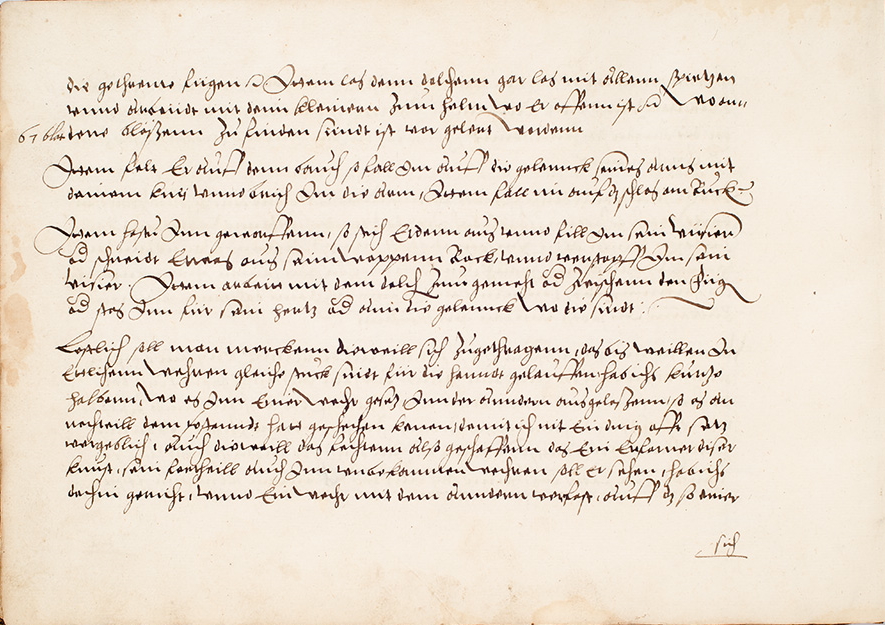
[46] When you have thrown him, catch his right arm with your left knee and with the left hand for his neck, and grab his left with the right and come to help the right hand with the left, and draw your combat sword and work between the gaps where you think it would be the most harmful. When you have severed his gaps, push a spring loose and thrust with the smaller blade(s) between the severed gaps. Ittem let the dagger completely release with all spikes/points and work with [the] small ones to the helmet where he is open. Where other openings are to be found has been taught before.
Munich Manuscript · fol. 111r.3
[111r.3] Wann du Inn geworffenn hast so fanng mit deim Lincken kny sein Rechten arm vnnd mit der Linckenn hanndt für sein hals, vnnd greüff mit der Rechtenn sein Linck vnnd kum mit der Lincken der Rechten hanndt zu hilff, vnnd zeih dein degenn vnnd arbeitt zwischenn denn fügen wo du am schedlichstenn vermeinest, wann du Im dann die fügen gthrent hast, so thrucke Ein feder las, vnnd stich mit der kleinern klingenn zwischen[111v.1] die gethrente fügen ¶ Ittem las denn dolchenn gar las mit allenn spietzen vnnd Arbeüdt mit deim kleinern zum helm wo Er offenn ist ¶ Wo andene blößenn zu finden sündt ist vor gelert wordenn
111r.3111v.1
11.46linked passage
11.47
[47] Ittem if he falls on the belly, thusly fall on the joint of his arms with your knee and break his arm.
Munich Manuscript · fol. 111v.2
[111v.2] Ittem felt Er auff denn bauch so fall Im auff die gelennck seines arms mit deinem knÿ vnnd brich Im die arm,
[49] Ittem if you have thrown him, then dig up some dirt and fill in his visor or cut out a piece of his surcoat and plug his visor with it.
Munich Manuscript · fol. 111v.4
[111v.4] Ittem hastu Inn geworffenn, so stich Erdenn aus vnnd fill Im sein vüsier oder schneidt Etwas aus seim wappenn Rock, vnnd verstopff Im sein visier.
111v.4
11.49linked passage
11.50
[50] Ittem work at his genitals with the dagger or between the gaps or stab it in for his heart or to the joint where it is.
Munich Manuscript · fol. 111v.5
[111v.5] Ittem arbeitt mit dem dolchen zum gemecht oder zwischenn den Fügen oder stos Inn für sein hertz oder ann die gelennck wo die sindt 
111v.5
11.50linked passage
11.51
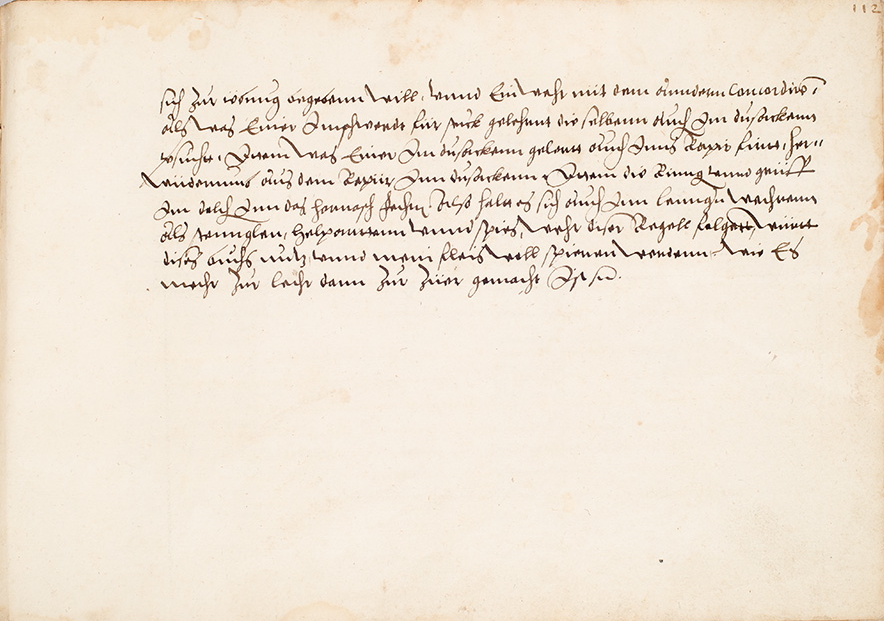
[51] Lastly, one should note, since it has happened that, so far, in several weapons comparable devices have been used for the hand, I have omitted the short half, which has been set down in one weapon, from the other. So it can happen at the disadvantage to understanding, whereby I often don't set [down] a thing in vain. Also, since fencing was established in such a way that a seasoned practitioner of this art should also see his advantage in unknown weapons, I have arranged it in this way, and written one weapon with the other so that if one wants to embark on his training and unify one weapon with another, as what devices one has learned in the sword can also be attempted in the dussack; also in rapier, and then back again from the rapier into the dussack. In armoured fencing, as well as in longer weapons such as poles, halberds, and spears, this book will become useful for those who follow this rule and my efforts will thrive. As it has done more for learning than before.
Munich Manuscript · fol. 111v.6
[111v.6] Lastlich soll man merckenn dieweill sich zugethragenn, das bis weillen In Ettlichenn wehren gleiche stuck sindt für die hanndt gelauffen, hab ichs kurze halbenn, wo es Inn Einer Wechr gesez, Inn der anndern ausgelaßenn, so es an nachteill dem verstenndt hett geschechen kenen, domit ich nit Ein ding offt setz wergeblich, auch dieweill das fechtenn also geschaffenn das Ein Erfarner diser kunst, sein fortheill auch Inn vnbekannten wechren soll Er sehen, hab ichs dachin gericht, vnnd Ein wechr mit dem anndern verfast, auff dz so einer[112r] sich zur übung begebenn will, vnnd Ein wehr mit dem anndern Concordiren, als was Einer Im schwerdt für stuck gelehrnt die selbenn auch Im dusackenn versuchtt, Ittem was Einer Im dusackenn gelertt auch Inns Rapir firtt, herwüderumb aus dem Rapür Inn dusackenn, Ittem die Rinngen vnnd grüff Im dolchen Inn das harnasch Fechtten, Also haltt es sich auch Inn lenngern wechrenn als stennglen, helparttenn vnnd spies, wehr diser Regell folgett, württ dises buchs nutz, vnnd mein fleis woll spienen werdenn ¶ Wie Es mechr zur lechr dann zur züer gemacht Ist