[1] In this second part follow the hews together with their explanation, and uses and customary Stucken, and a number of running in (techniques) and wrestling.
Munich Manuscript · fol. 36v.1
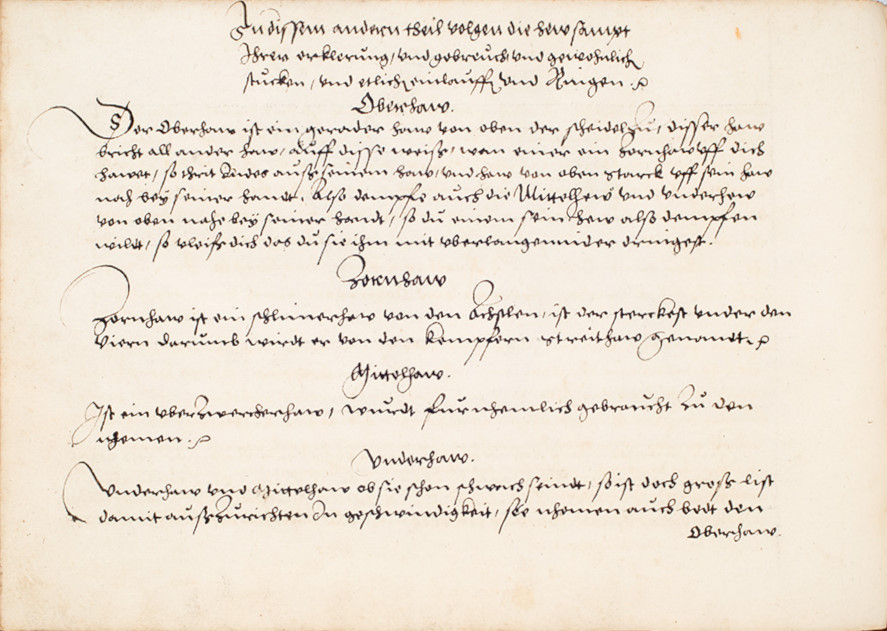
[36v.1] In dissem andern theil volgen die hew sampt Ihrer erklerung, vnd gebreuch, vnd gewohnlichen stucken, vnd etlichen einlauffen vnd Ringen. ⁋
36v.1
5.1linked passage
5.2
[2] High Cut
The High Cut is a straight cut from above to the scalp, this cut breaks all other cuts. In this way, if he cuts a Wrath Strike against you, then step Indes out from his cut and cut from above strongly on his cut close by his hand, then also suppress the Middle Cuts and Low Cuts from above close to his hand, so if you want to suppress his cuts, make sure you reach them excessively long.
Der Oberhaw ist ein gerader haw von oben der scheidel zu, disser haw brichtt all ander haw, auff disse weiß, wan einer ein zornhaw vff dich hawet, so thrit Indes auß seinem haw, vnd haw von oben starck vff sein haw noch bey seiner handt, Also dempfe auch die Mittelhew vnd vnderhew von oben nahe bey seiner handt, so du einem sein hew also dempfen wildt, so vleiß dich das du sie ihm mit vberlangennider dringest.
36v.2
5.2linked passage
5.3
[3] Wrath Cut
Wrath Cut is a diagonal cut from the shoulder, it is the strongest of all four cuts. For this reason, it is called a Battle Cut by the fighters.
Vnderhaw vnd Mittelhaw ob sie schon schwech seindt, so ist doch groß list damit außzurichten In geschwindigkeit, sie nhemen auch bedt den [37r.1] Oberhaw,
36v.537r.1
5.5linked passage
5.6
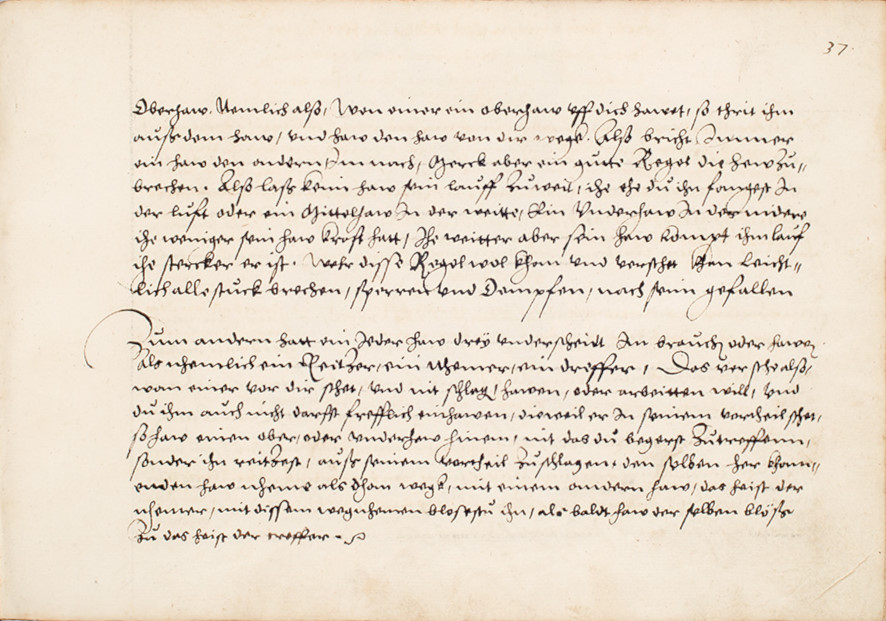
[6] Firstly, when someone cuts a High Cut at you, then step out from his cut and cut it away from you. Then always break his strike with another cut in the After. Note however, a good rule to break the cuts, do not allow a cut to go too wide. The sooner you catch him in the air, or a Middle Cut in the distance, or an Low Cut down low, the less strength his cut has, but the further his hand gets with the cut, the stronger he is. Whoever can well understand this rule can easily break, bar and suppress all Stucken, according to his pleasure.
Munich Manuscript · fol. 37r.2
[37r.2] Nemlich also, Wen einer ein oberhaw vff dich hawett, so thrit ihm auß dem haw, vnd haw den haw von dir wegk. Also bricht Immer ein haw den andern, Im nach, Merck aber ein gutte Regel die hew zubrechen, Also laß keim haw sein lauff zu weit, ihe ehe du ihn fangest In der luft oder ein Mittelhaw In der weitte, Ein Vnderhaw In der nidere ihe weniger sein haw kraft hatt, Ihe weitter aber sein hew kompt ihm lauf ihe stercker er ist. Wehr disse Regel wol khan vnd versthet khan Leichtlich alle stuck brechen, sperren vnd Dempfen, nach sein gefallen
37r.2
5.6linked passage
5.7
[7] Secondly, every cut has three distinctions in use or in cutting, namely, a Provoker, a Taker and a Hitter, understand it like this: if he stays before you and will not strike, cut or otherwise work, and you are unable to hit him freely either, because he remains in his advantage, so then strike in with a High or Low Cut, not that you desire to hit him, but rather to Provoke him out from his advantage to counter strike at you, take this incoming strike away with another cut, that is called the Taker, and with the taking out you cause him to become open, cut at once to this opening, that is called the Hitter.
Munich Manuscript · fol. 37r.3
[37r.3] Zum andern hatt ein Jeder haw drey vnderscheidt Im brauchen oder hawen Als nhemlich ein Reitzer, ein Nhemer, ein dreffer, Das versthe also, wan einer vor dir sthet, vnd nit schlagen, hawen, oder arbeitten will, vnd du ihm auch nicht darfst frefflich einhawen, dieweil er In seinem vortheil sthet, so haw einen ober, oder vnderhew hinein, nit das du begerst zutreffenn, sonder ihn reitzest, auß seinem vortheil zuschlagen, den selben her khamenden haw nheme als dhan wegk, mit einem andern haw, das heist der nhemer, mit dissem wegnhemen blosestu ihn, als baldt haw der selben blöß zu das heist der treffer. ⁋
37r.3
5.7linked passage
5.8
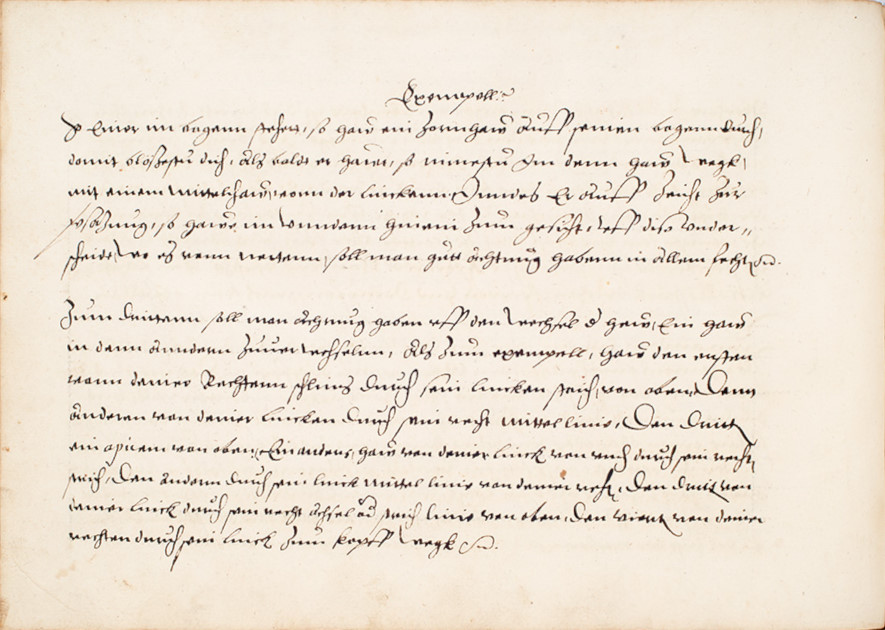
[8] Example
If someone stands in the Bow, then cut through with a Wrath Strike on his Bow, so that you have made yourself open, as soon as he cuts in at you, then take away his strike with a Middle Cut from the left, and when he pulls up to parry, then cut in from under to the face, on this Low Cut, where it is from afar, shall one pay good attention to in all fighting.
So Einer im bogenn stehett, so haw ein Zornhaw auff seinen bogenn durh, domit blößestu dich, als baldt er hawt, so nimestu Im denn haw wegk, mit einem mittelchaw, vonn der linckenn, Inndes Er auff zeicht zur versazung, so hawe im vnndenn hinein zum gesicht, vff dise vnderscheidt, wo es renn nettenn, soll man gutt achtung habenn in allem fechten ⁋
37v.1
5.8linked passage
5.9
[9] The third you should pay attention to the Changers or cuts, to change up one cut into another. As an example, cut the first from your right diagonal through his left, strike the next from above and from your left through his right middle line, the third an Apex Cut from above, another, cut from your left from below through his right strike line, the next through his left Middle line from your right, the third from above and from your left through his right shoulder or strike line, the fourth from your right through his left away to the head.
Munich Manuscript · fol. 37v.2
[37v.2] Zum drittenn soll man achtung haben vff den Wechsel der hew, Ein haw in denn anndern zuuer wehselnn, Als zum exempell, haw den ersten vonn deiner Rechtenn schlims durch sein lincken strich, von oben, Denn anderen von deiner lincken durch sein recht mittel linie, Den dritten ein apicem von oben, Ein anders, haw von deiner lincken von vnden durch sein rechten strich, Den andern durch sein linck mittel linie von deiner rehten, den dritten von deiner lincken durch sein recht achsel oder strich linie von oben, den vierten von deiner rechten durch sein lincken zum kopff wegk. ⁋
37v.2
5.9linked passage
5.10
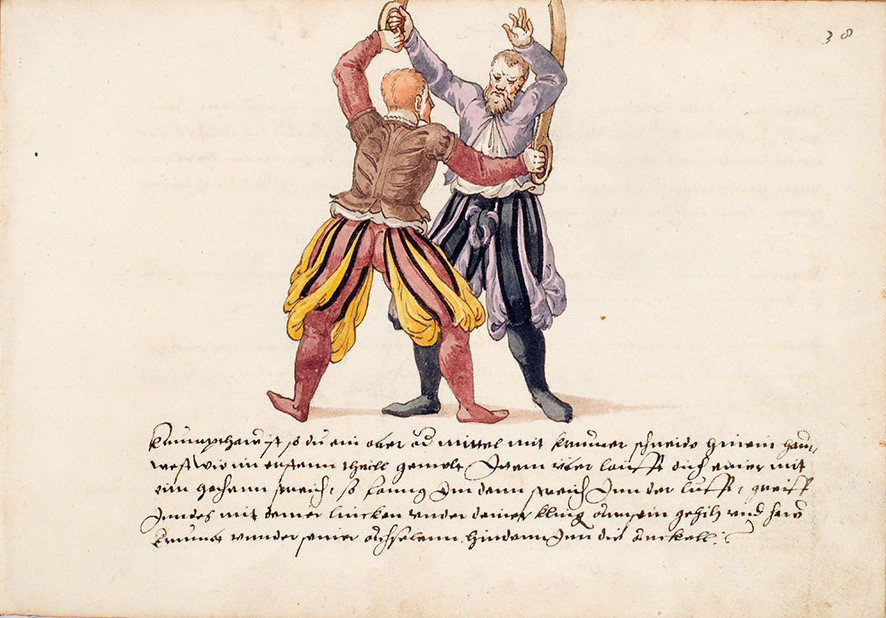
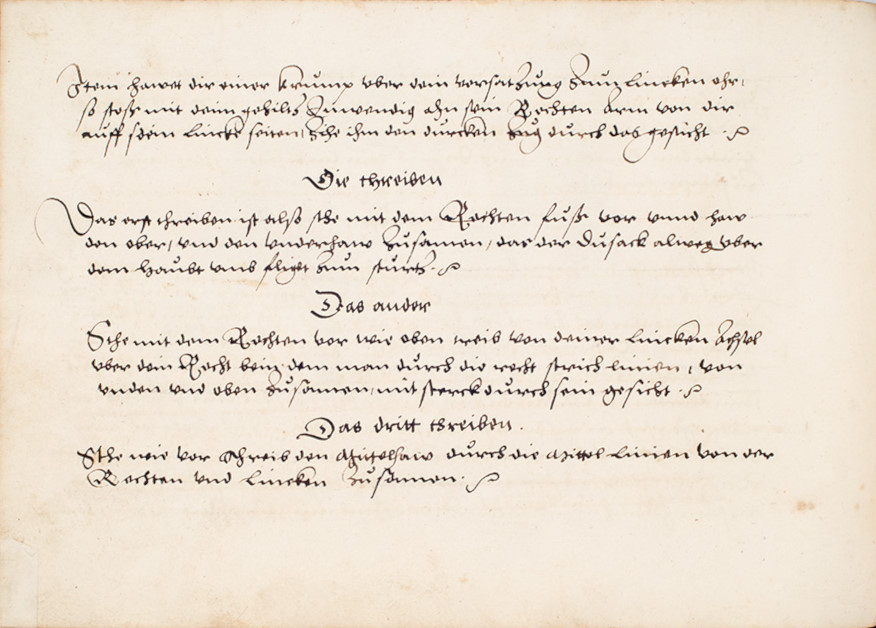
[10] Crooked Cut is when you cut in with a High or Middle with the short edge, as depicted in the first part.
Item: If one overruns you with High Strikes, then capture his strike in the air, Indes grab with your left hand under your blade onto his hilt and cut Crooked under and behind his shoulder to the back of his head.
Munich Manuscript · fol. 38r
[38r] Krumpthaw ist so du ein ober oder mittel mit krumer schneide hinein hauwest wie im erstenn theill gemelt, Ittem über laufft dich einer mit ein hochenn streich, so fanng Im denn streich Inn der lufft, greiff Indes mit deiner lincken vnder deiner klingen arm sein gehilz vnd haw krumbt vnnder seiner achselenn hindenn Inn die anckell ⁋
38r
5.10linked passage
5.11
[11] Item: In the approach, grip the Dussack crooked and thrust the first from above to the face, pull the thrust back to you and cut Crooked through the middle line from your right through his left and let it to fade into a Double Round, then next cut a Roarer from your right, the third is a long Cross Cut from above.
Munich Manuscript · fol. 38v.1
[38v.1] Ittem im zuganng fas denn dusacken krumpt, vnnd stich im obenn ein zum gesicht zuck denn stich wüder ann dich vnnd haw krumpt durch die mittel linie vonn deiner rechtenn durch sein Lincken, vnnd las verfliegen in ein dopel rinde vnnd haw im den andern ein brummer vonn deiner Rechten, den dritten lanng vonn obenn durch kreütz wegk ⁋
38v.1
5.11linked passage
5.12
[12] Then the Whacker is:
When you cut in at his opening and in striking you wind the cut into a thrust as the figure for the Winding Cut shows.
Wann du zu einer blöß einhawest, vnnd im threffenn verwennd denn haw zu einem stich, wie die fiegür Im winndgaw anzeügt
38v.2
5.12linked passage
5.13
[13] Item: When you cut in with a High Cut at him and when it clashes then thrust in on his weapon, as soon as he wards off your thrust, then drive with the hilt under his parry into his head.
Munich Manuscript · fol. 38v.3
[38v.3] Ittem wann du ein ober haw auff einenn hinein hawest, als baldt es glitz so stich im auff seiner wehr hinein, als baldt er den stich auch wehrt, so far mit dem hefft vnnder seiner versazung hinein zum kopff ⁋
38v.3
5.13linked passage
5.14
[14] Item: In Zufechten allow yourself to bind on with him from below, then thrust in quickly on his bind, then immediately grab low on his Dussack together with yours and wind it from his hand out to your left side.
Note: In grabbing, the open hand should be towards you.
Munich Manuscript · fol. 38v.4
[38v.4] Ittem im zuu fechtenn last dich einer annbinnden von vnden, so stich behend an sein bandt hinein, als baldt begreiff sein dusacken nider mit vnd windt im den aus seiner hanndt auff dein linck seüttenn ⁋ merck im greifen sol dj ofen h. gegen dir standen ⁋
38v.4
5.14linked passage
5.15
[15] Roarer, this cut gets its name from the fast-rushing wind (sound) that in part, is made by the flat running through the air.
Munich Manuscript · fol. 38v.5
[38v.5] Brumer, diser haw hatt den namen von der geschwinde dz zum theil dj flech mit leufft vnnd ein windt hüebt ⁋
38v.5
5.15linked passage
5.16
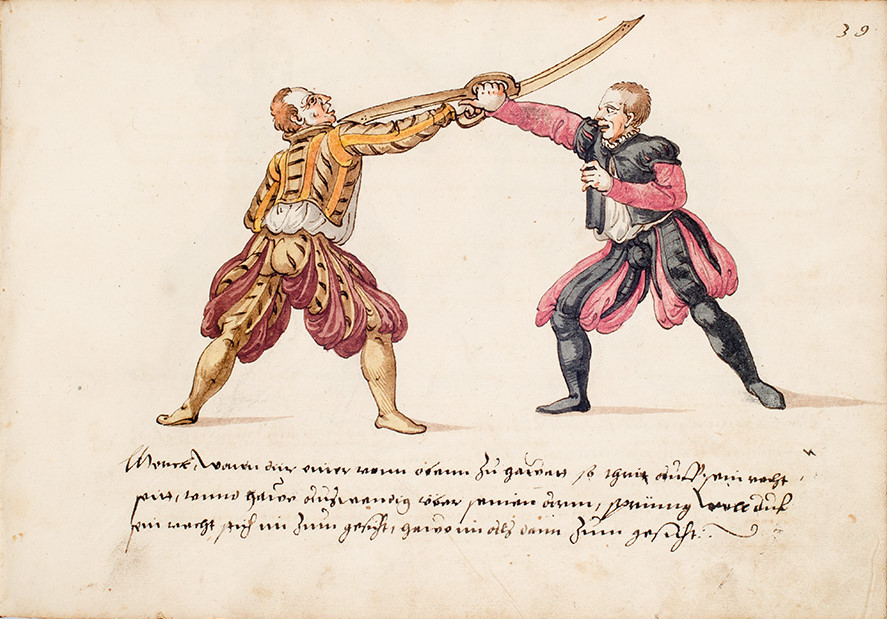
[16] Note: When one cuts at you from above, then step out to his right side and cut outside and over his arm, spring well into his right, thrust in at his face, then cut him at once to the face.
Munich Manuscript · fol. 39r
[39r] Merck, wann dür einer vonn obenn zu hawett so thrit auff sein recht seitt, vnnd hawe auswendig über seinen arm, sprïnng woll auf sein recht stich im zum gesicht, hewe im als dann zum gesicht ⁋
39r
5.16linked passage
5.17
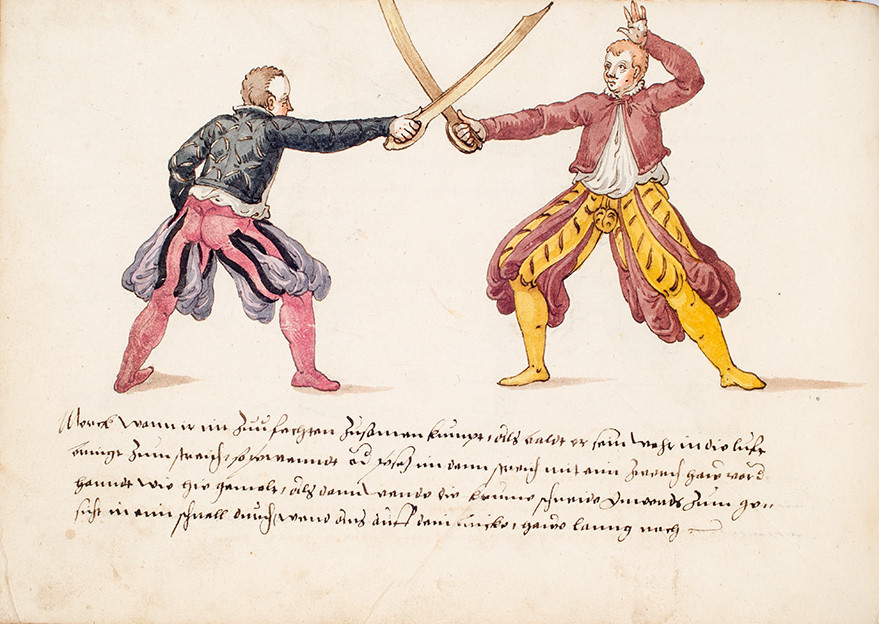
[17] Note: When you both come together in the Zufechten, as soon as he brings his weapon in the air to strike, then wind off or parry his strike with a Thwart Cut in front of the hand, how it is shown here. Then wind the crooked edge inwards to the face in a flick, wind through out to your left, and cut long after.
Munich Manuscript · fol. 39v
[39v] Merck wann ir im zuufechten zusamen kumpt, Als baldt er sein wehr in die luft bringt zum streich, so verwenndt oder versez im denn streich mit eim zwerch haw von der hanndt wie hie gemolt, Als denn wende die krume schneide Inwends zum gesicht in ein schnell durch, wend aus auff dein Lincke, hawe lanng nach ⁋
39v
5.17linked passage
5.18
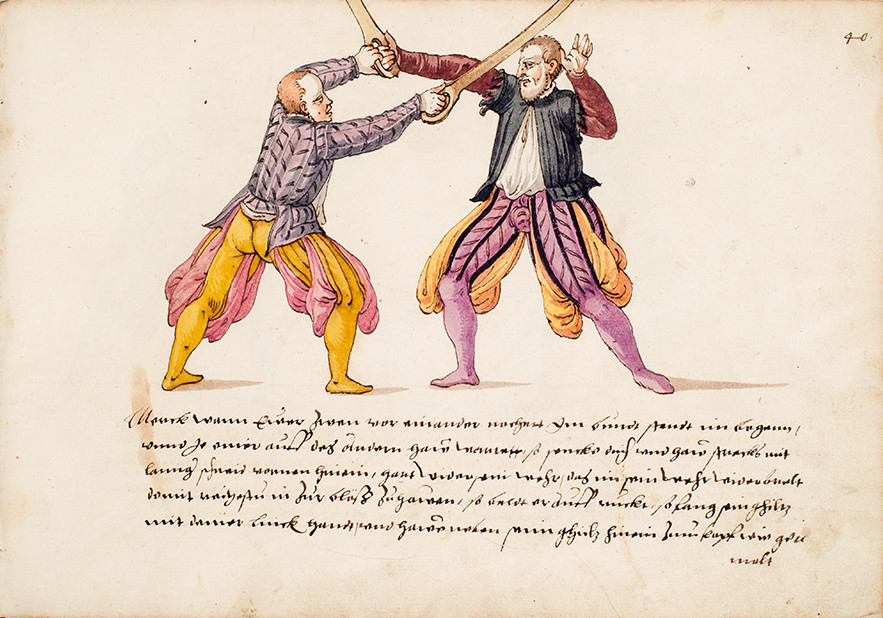
[18] Note: When two stand in front of each other in a bind in the bow and each one of them waits on the other's cut, then sink yourself and cut in with the long edge straight forth, hard against his Dussack, so that it bounces against his weapon, with this you provoke him to cut to your opening, as soon as he moves up then capture his hilt with your left hand and cut beside his hilt to his head as depicted.
Munich Manuscript · fol. 40r
[40r] Merck wann Einer zwen vor einander nachent Im bundt standt im bogenn, vnnd Je einer auff des andern haw wartett, so sencke dich vnd haw stracks mit lannger schneid vornen hinein, hart wider sein wehr, das im sein wehr widerbrelt domit reitzestu in zur blöß zuhawen, so baldt er auff ruckt, so fang sein ghiltz mit deiner Lincken handt, vnd hawe neben seim ghülz hinein zum kopf wie gemolt
40r
5.18linked passage
5.19
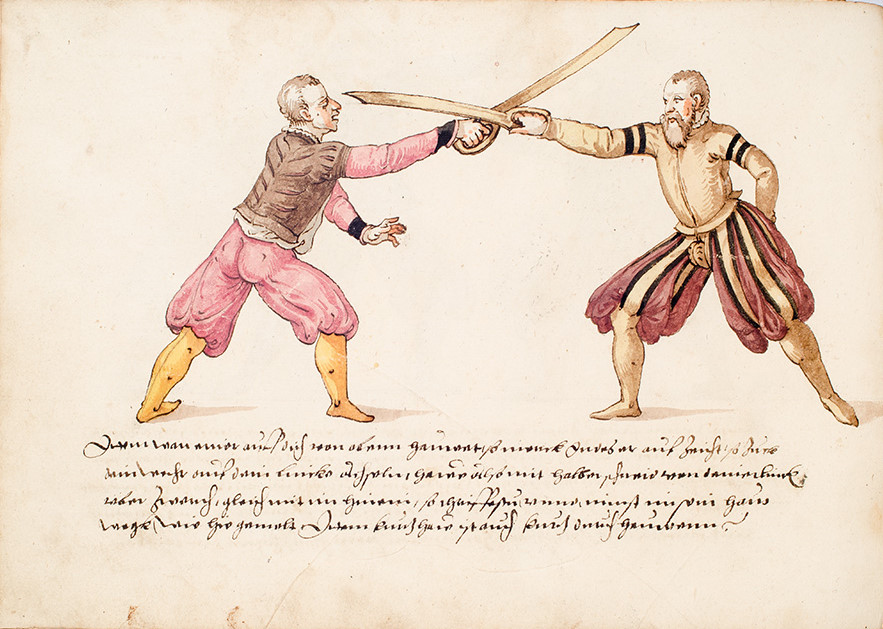
[19] Item: When one cuts at you from above, note instantly when he draws up, then pull your weapon to your left shoulder and cut in with the half edge from your left horizontally at the same time as him, thus you meet and take his cut away how it is shown here.
Item: Short Cut, is also cutting through short.
Munich Manuscript · fol. 40v
[40v] Ittem wan einer auff dich von obenn hauwet, so merck Indes er auf zeicht, so zuck dein wechr auf dein lincke achseln, hawe also mit halber schneid von deiner lincken vber zwerch, gleich mit im hinein, so thriffestu, vnnd nimst im sein haw wegk, wie hie gemolt, Ittem kurzhaw ist auch kurz durch hauwenn ⁋
40v
5.19linked passage
5.20
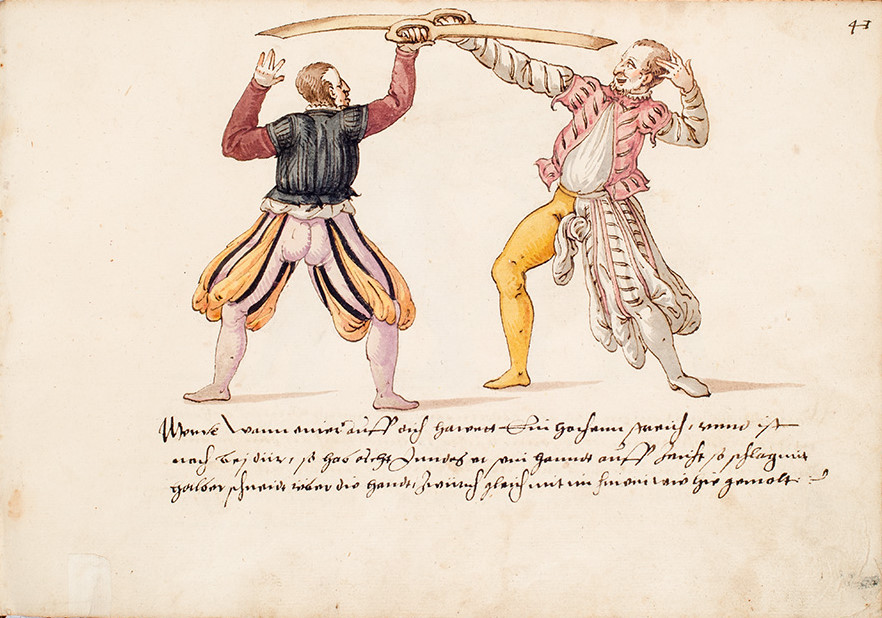
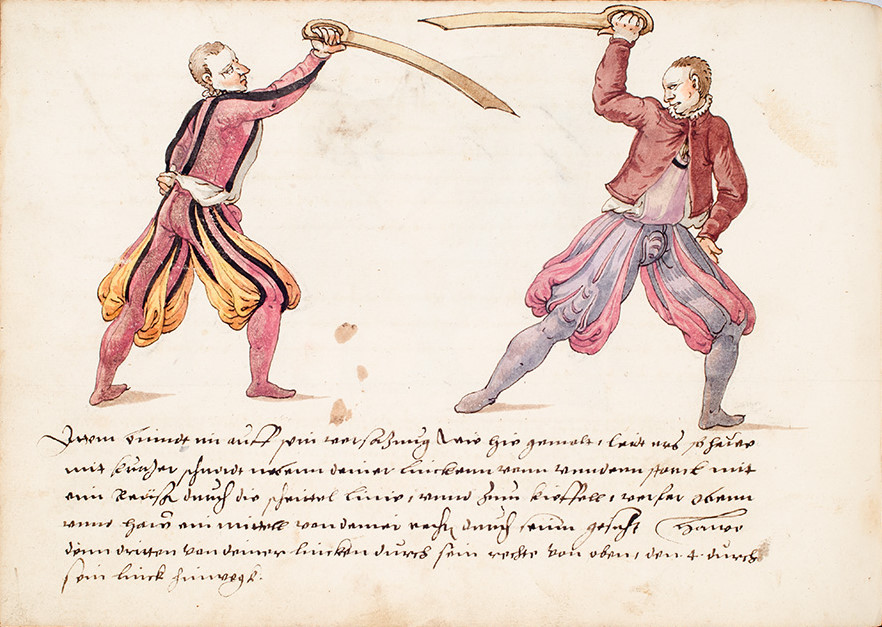
[20] Note: When one cuts a High Strike at you, and is still close to you, so pay attention to when he draws his hand up, then strike in with him with the half edge overhand, how it is depicted here.
Munich Manuscript · fol. 41r
[41r] Merck wann einer auff dich hawett Ein hochenn streich, vnnd ist noch bej dür, so hab acht Inndes er sein hanndt auff zeicht so schlag mit halber schneidt über die handt, zwürch gleich mit im hinein wie hie gemolt. ⁋
41r
5.20linked passage
5.21
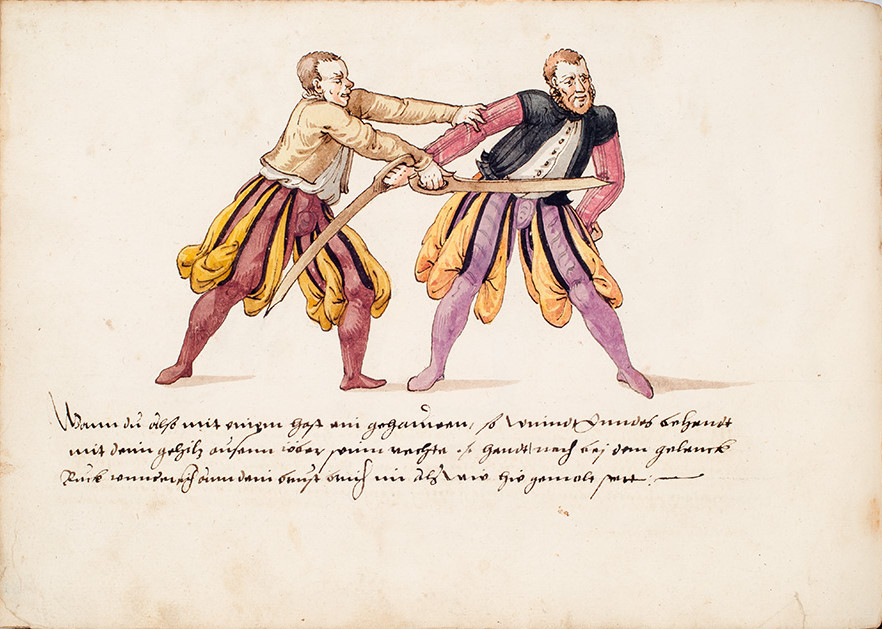
[21] When you have hit simultaneously with one, then wind Indes quickly with your hilt outside and over his right hand onto his wrist joint, jerk downwards towards your breast and break him like you see depicted here.
Munich Manuscript · fol. 41v
[41v] Wann du also mit einem hast ein gehauwen, so winndt Inndes behendt mit deim gehilz ausenn über seinn rechte ·/· handt, nach bej dem gelenck Ruck vnndersich ann dein brust brich im als wie hie gemolt stett ⁋
41v
5.21linked passage
5.22
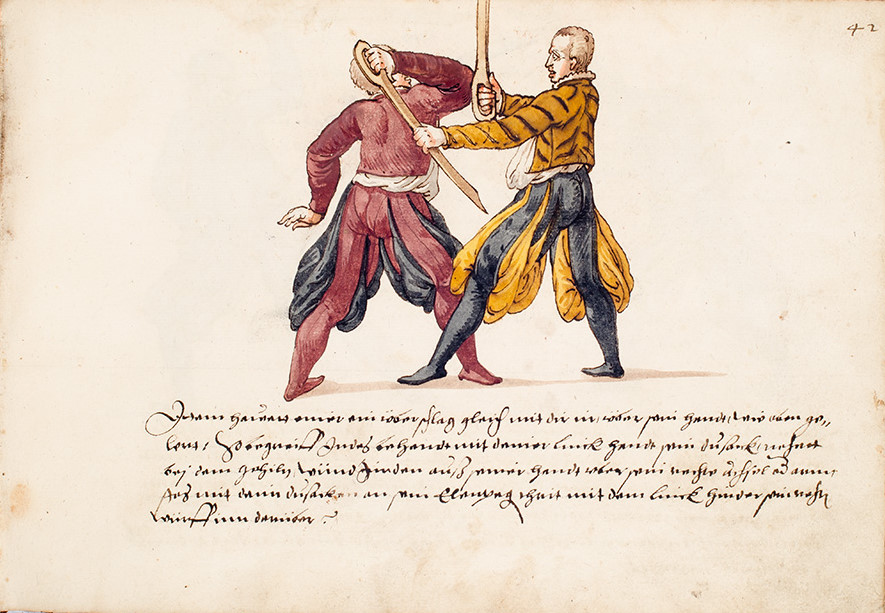
[22] Item: If one cuts in with an High Cut at the same time as you, overhand, how it is taught above, then Indes and quickly grab with your left hand onto his Dussack near by his hilt wind down from his hand over his right shoulder or arm, thrust with your dussack on his elbow, step with your left behind his right and throw him over.
Munich Manuscript · fol. 42r
[42r] Ittem hawett einer ein überschlag gleich mit dir in, über sein hendt, wie oben gelert, So begreiff Indes behendt mit deiner Lincken handt sein dusacken, nohett bej dem gehiltz, wünd Im den auß seiner handt vber sein rechte achsel oder arm, stos mit deim dusacken an sein Elenpegen thrit mit dem Lincken hinder sein rehten würff inn darüber ⁋
42r
5.22linked passage
5.23
[23] Item: Bind him on his parrying, how it is shown here, if he permits then cut with the short edge beside your left up from below strongly with a rush up through the scalp line, and to the jaw, then proceed above and cut a Middle from your right through his face, cut the third from your left above and through his right, the fourth cut away through his left.
Munich Manuscript · fol. 42v
[42v] Ittem binndt im auff sein versazung wie hie gemolt, leidt ers so hawe mit kurzer schneidt nebenn deiner Linckenn vonn vnndenn starck mit eim Reüß durch die scheittel Linie, vnnd zum kieffell, verfer obenn vnnd haw ein mittell von deiner rechten durch seinn gesicht Hawe denn dritten von deiner lincken durch sein rechte von oben, den vierten durch sein linck hinwegk.
42v
5.23linked passage
5.24
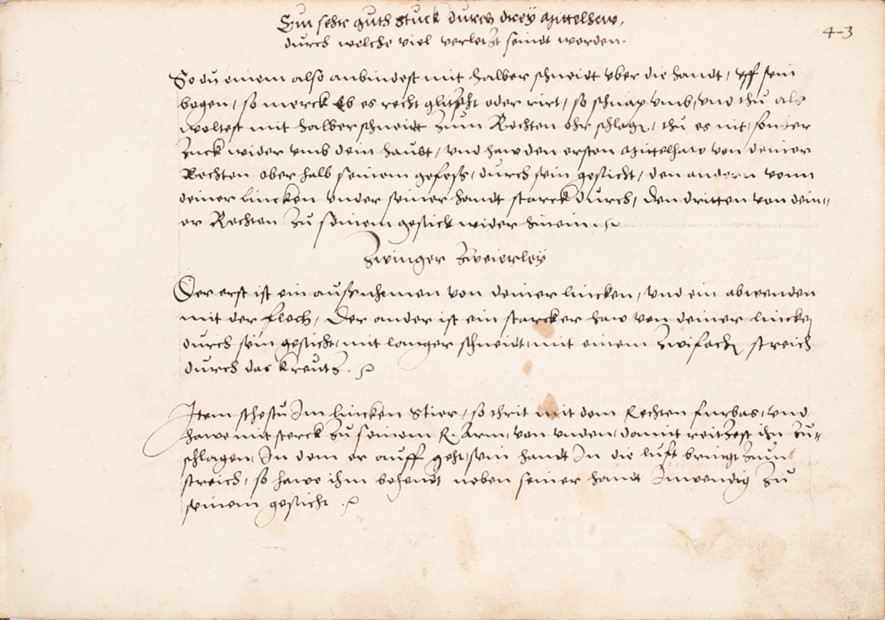
[24] A very good Stuck using three Middle Cuts by which many will be hurt
When you have bound on to him with the half edge over hand, then note whether it fairly glances or will, then snap around and do as if you would cut to his right ear with the half edge, but don't do this, rather pull your hand back around and cut the first Middle Cut from your right above his hilt through his face, the second from your left below his hand strongly through, the third from your right again in to his face.
Munich Manuscript · fol. 43r.1
[43r.1] Ein sehr guth stuck durch drey Mittelhew, durch welche viel verletzt seindt worden.
So du einem also anbindest mit halber schneidt vber die handt, vff sein bogen, so merck ob es recht glitscht oder rirt, so schnap vmb, vnd thu als woltest mit halber schneidt zum Rechten ohr schlagen, thu es nit, sonder zuck wider vmb dein haubt, vnd haw den ersten Mittelhaw von deiner Rechten ober halb seinem gefeß durch sein gesicht, den andern vonn deiner Lincken vnder seiner handt starck durch, den dritten von deiner Rechten zu seinem gesicht wider hinein. ⁋
43r.1
5.24linked passage
5.25
[25] Two types of Constrainers
The first is a taking out from your left and a turning away with the flat. The second is a strong cut from your left through his face with the long edge with a double stroke through the Cross.
Der erst ist ein außnhemen von deiner lincken, vnd ein abwenden mit der flech, Der ander ist ein starcker haw von deiner lincke durch sein gesicht mit langer schneidt, mit einem zwifachen streich durch das kreutz. ⁋
43r.2
5.25linked passage
5.26
[26] Item: If you are positioned in left steer then continue stepping with the right foot, and cut strongly to his right arm, from below, with this it provokes him to cut, when he goes to cut and brings his hand into the air, then cut quickly to his face from the inside beside his hand.
Munich Manuscript · fol. 43r.3
[43r.3] Item sthestu Im lincken Stier, so thrit mit dem Rechten furbas, vnd hawe mit sterck zu seinem Rechten arm von vnden, damit reitzest ihn zuschlagen, In dem er auff geht, sein handt In die luft bringt zum streich, so hawe ihm behendt neben seiner handt Inwendig zu seinem gesicht. ⁋
43r.3
5.26linked passage
5.27
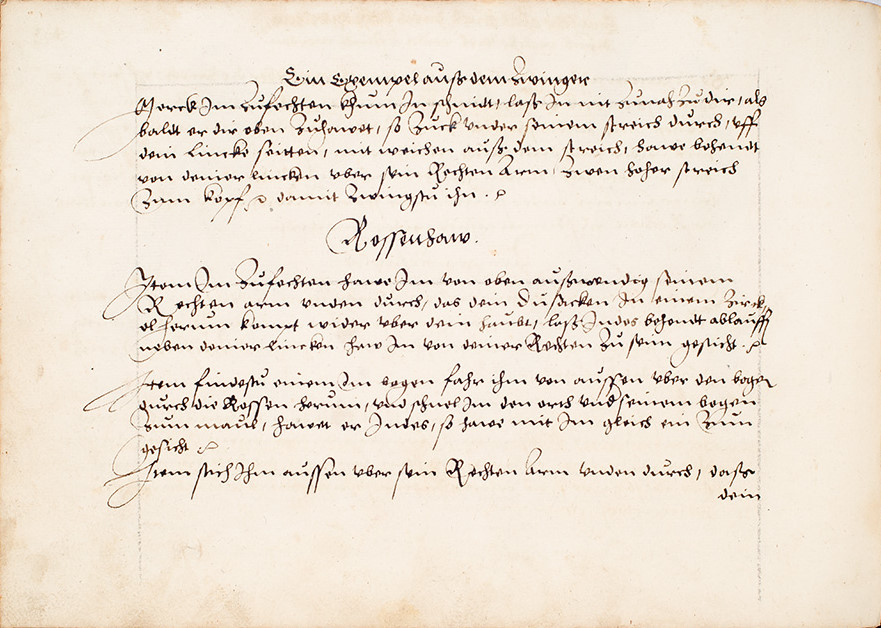
[27] An example from the Constrainer Cut
Note: In Zufechten come into the Slice, do not let him too close to you, as soon as he cuts from above at you, then pull through under his strike to your left side giving way out from his strike, cut quickly from your left over his right arm with two High Strokes to his head, thus you constrain him.
Merck Im zufechten khum In schnidt, laß In nit zunah zu dir, als baldt er dir oben zuhawet, so Zuck vnder seinem streich durch, vff dein Lincke seitten, mit weichen auß dem streich, hawe behendt von deiner lincken vber sein Rechten Arm, zwen hoher streich zum kopf ⁋ damit zwingstu ihn. ⁋
43v.1
5.27linked passage
5.28
[28] Rose Cut
Item: In the Zufechten cut from above to go through below outside his right arm, so that your Dussack comes back around in a circle over your head, Indes let it quickly run off beside your left; cut him from your right to his face.
Item Im Zufechten hawe Im von oben außwendig seinem Rechten arm vnden durch, das dein Dusacken In einem zirckel herum kompt wider vber dein haubt, laß Indes behendt ablauffen neben deiner lincken hew Im von deiner Rechten zu sein gesicht. ⁋
43v.2
5.28linked passage
5.29
[29] Item: If you find one in the Bow, drive him from outside over the bow back around through the rose, and flick your point under his Bow at his mouth, if he cuts Indes, then cut simultaneously with him to the face.
Munich Manuscript · fol. 43v.3
[43v.3] Item findestu einem Im bogen fahr ihm von aussen vber den bogen durch die Rossen herum, vnd schnel Im den orth vnder seinem bogen zum maul, hawet er Indes, so hawe mit Im gleich ein zum gesicht ⁋
43v.3
5.29linked passage
5.30
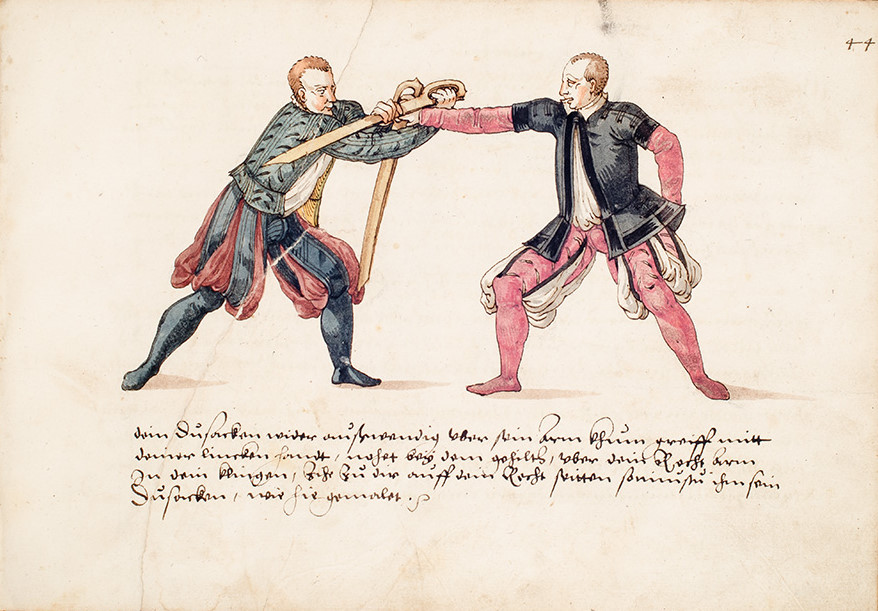
[30] Item: Stab him outside over his right arm and through so that your Dussack comes outside and over his arm, then with your left hand over your right arm, grab your blade close by the hilt, pull to your right side, thus you take his Dussack, how it is depicted here.
Munich Manuscript · fol. 43v.4
[43v.4] Item stich Ihm aussen vber sein Rechten Arm vnden durch, daß[44r] dein dusacken wider außwendig vber sein Arm khum greiff mitt deiner lincken handt, nohet bey dem gehiltz, vber dein Recht Arm In dein Klingen, zihe zu dir auff dein Recht seitten so nimstu ihm sein Dusacken, wie hie gemalet. ⁋
43v.444r
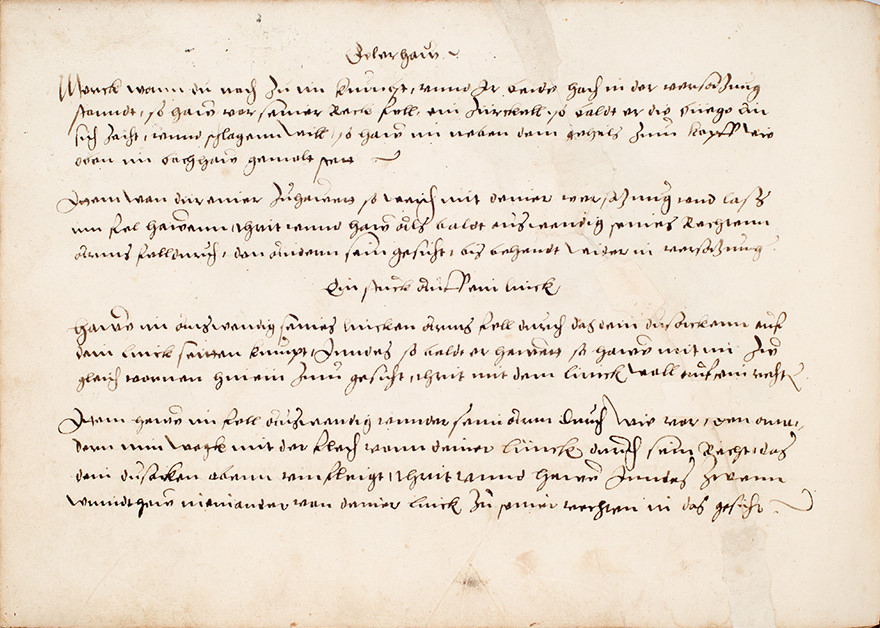
5.30linked passage
5.31
[31] Failer Cut
Note when you come near to him, and both of you are high in the parrying, then cut before his weapon falls, in a Circle, as soon as he pulls his shoulders around and means to strike, then cut beside his hilt to his head.
Merck wann du noch zu im kumbst, vnnd Ir beide hoch in der versazung stanndt, so haw vor seiner Recle fell, ein Zürkell, so baldt er die büege an sich zeiht, vnnd schlagenn will, so haw im neben dem gehils zum kopff wie oben im bochhaw gemolt stett ⁋
44v.1
5.31linked passage
5.32
[32] Item: When someone cuts at you, then evade with your parrying and let him cut and miss; step and cut through at once outside his right arm without hitting, the second through his face; be quick again with the parrying.
Munich Manuscript · fol. 44v.2
[44v.2] Ittem wan dür einer zuhawett so weich mit deiner versazung vnd laß inn fel hawenn, thrit vnnd haw als baldt auswendig seines Rechtenn arms fell durch, den andern sein gesicht, bis behendt wider in versazung ⁋
44v.2
5.32linked passage
5.33
[33] A Stuck against a lefty
Cut through from outside to his left arm without hitting so that your Dussack comes on your left side, Indes, as soon as he cuts, then cut forth at the same time as him in at his face, step with your left well on his right.
hawe im auswendig seines lincken arms fell durch das dein dusackenn auf dein Linck seitten kumpt, Inndes so baldt er hawett so hawe mit im zw gleich vornen hinein zum gesicht, thrit mit dem lincken woll auf sein rehten ⁋
44v.3
5.33linked passage
5.34
[34] Item: Cut through without hitting outside under his arm as before; next take away with the flat from your left through his right so that your Dussack flies around above, step and cut instantly two Winding Cuts together from your left to his right at his face.
Munich Manuscript · fol. 44v.4
[44v.4] Item hewe im fell auswendig vnnder seim arm durch wie vor, den anndern nim wegk mit der flech vonn deiner Lüncken durch sein Recht, das dein dusacken obenn vmfleigt, thrit vnnd Hewe Inndes zwenn winndthew in einander von deiner Lincken zu seiner rechten in das gesicht ⁋
44v.4
5.34linked passage
5.35
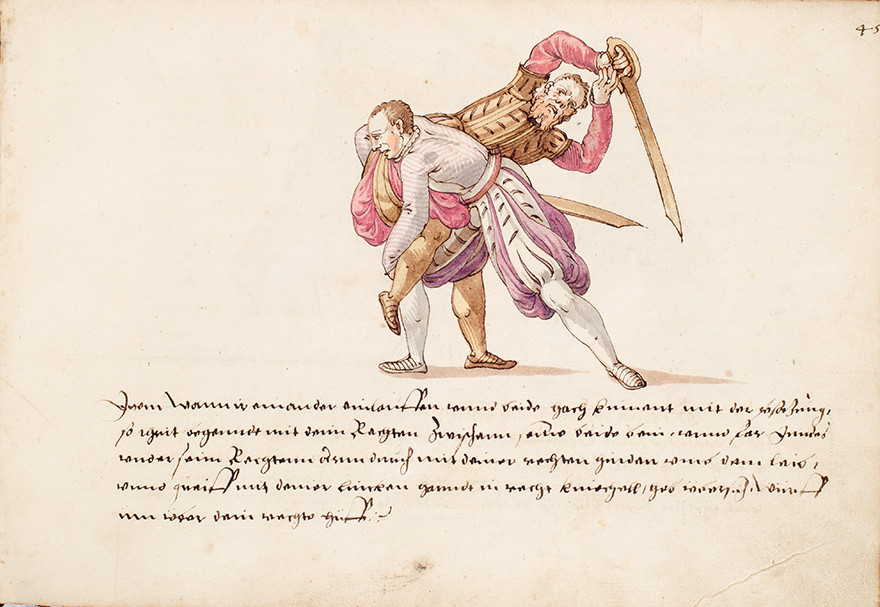
[35] Item: When each other have run in together and both of you have come in high in the parrying, then step quickly with your right foot between both his legs and instantly drive down below his right arm with your right behind and around his body, grab with your left hand the (crook of his right knee) heave upwards and throw him over your right hip.
Munich Manuscript · fol. 45r
[45r] Ittem wann ir einander einlauffen vnnd beide hoch kument mit der versazung, so thrit behenndt mit deim Rechten zwischenn seine beide bein, vnnd far Inndes vnder seim Rechtenn arm durch mit deiner rechten hinden vmb dem leib, vnnd greiff mit deiner lincken hanndt in recht kniechell, heb übersich würff im über dein rechte hüfft ⁋
45r
5.35linked passage
5.36
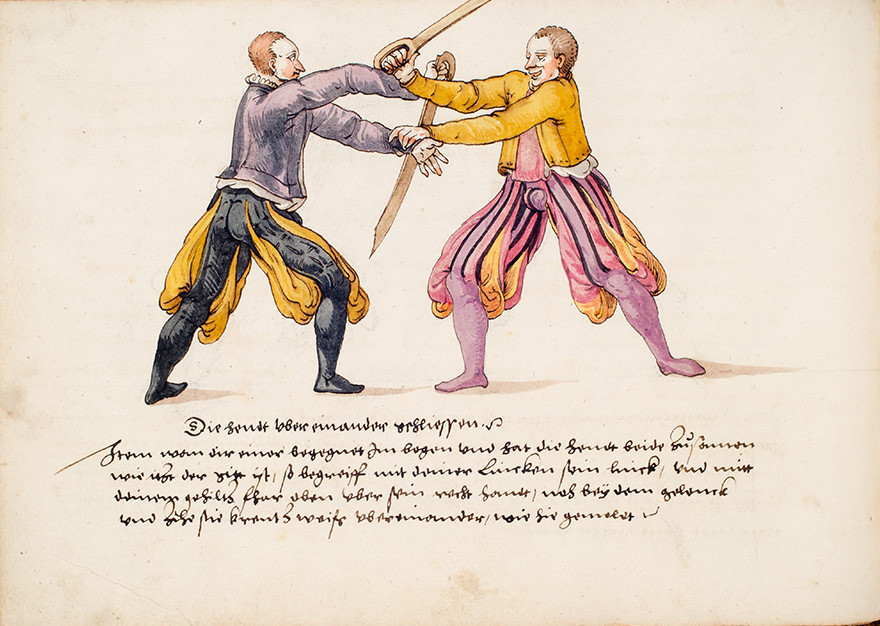
[36] Clasping the hands over each other
Item: When one approaches you in the Bow and has both hands together as is the custom now, grasp his left with your left hand, and with your hilt drive over and above his right hand, well by the wrist joint and pull them (his arms/hands) crosswise over each other as shown here.
Item wan dir einer begegnet Im bogen vnd hat die hendt beide zusamen wie itzt der zitt ist, so begreiff mit deiner Lincken sein linck, vnd mitt deinen gehiltz fhar oben vber sein recht handt, noh bey dem gelenck vnd zihe sie kreutzweiß vbereinander, wie hie gemeldt ⁋
45v
5.36linked passage
5.37
[37] Item: If you both run in with one another with both arms high, then grasp his left with your left, it is by the hand or behind the hand, or behind the elbow, jerk him to your left side, cut long after to his left ear.
Munich Manuscript · fol. 46r.1
[46r.1] Item sein ihr beidt einander eingelauffen, mit beiden armen hoch, so begreiff mit deiner lincken sein lincke, es sey bey der handt oder hinder der handt, oder hinder dem Elenbogen Ruck In auff dein lincke seiten, schlag langk nach, zu seinem lincken ohr. ⁋
46r.1
5.37linked passage
5.38
[38] Work in the Running In
Note: When you come near together, then work on him above over his parrying, firstly with a Crooked Cut over his parrying to the left ear.
Merck so ihr nhe zusamen khommen, so arbeit Im oben vber sein versatzung Erstlich mit einem krumphaw vber sein versatzung zum lincken ohr,
46r.2
5.38linked passage
5.39
[39] Item: If he displaces that, then strike a Crooked Cut outside over his right arm to his right ear; if he parries that again, then cut Crooked under his right arm to his face. The fourth strike is a Thwart Cut to his left ear from below with the long edge so that your grip is well reversed. In these four strikes you should always be high with the hilt over your head to the displacing.
Munich Manuscript · fol. 46r.3
[46r.3] Item versetzt er das so hawe ein krumphaw auswendig vber sein Rechten Arm, zum Rechten ohr, versetzt er das abermals, so haw krump vnder sein Rechten zum gesicht, Der vierdte streich ist ein Zwirch schlag zu seim lincken ohr von vnden mit langer schneidt, das dein handt hab wol vmbgriffen sey In dissen vier streichen soltu mit dem gehiltz alweg hoch sein vber dem haubt zur versatzung
46r.3
5.39linked passage
5.40
[40] Item: When one will cut Crooked to your right ear, then grab with your hilt outside and over his right hand near his wrist joint, jerk downwards and then flick in with the half edge to his head.
Munich Manuscript · fol. 46r.4
[46r.4] Item wan dir einer krump zu deine Rechten ohr schlecht so greiff mit dem gehiltz aussen vber sein Recht handt bey seim gelenck Ruck vndersich, vnd schnel mit halber schneidt zum kopf. ⁋
46r.4
5.40linked passage
5.41
[41] Item: If one cuts Crooked at you over your displacement to the left ear, then push him from you with your hilt inside on his right arm to his left side, then Draw the Turkish Cut to the face.
Munich Manuscript · fol. 46v.1
[46v.1] Item hawet dir einer krump vber dein versatzung zum Lincken ohr, so stoß mit deim gehiltz Inwendig ahn sein Rechten Arm von dir auff s dein Lincke seiten, Zihe ihm den durcken, Zug durch das gesicht. ⁋
46v.1
5.41linked passage
5.42
[42] The Driving
The first driving is as follows: stand with your right foot forward and do the High Cut and the Low Cut together so that your Dussack always flies around over your head to the Plunge.
Das erst threiben ist also sthe mit dem Rechten fuß vor vnnd haw den ober, vnd den vnderhaw zusamen, das der dusack alwegen vber dem haubt vmb fliget zum sturtz. ⁋
46v.2
5.42linked passage
5.43
[43] The Second
Stand with your right forward as above, drive from your left shoulder over your right leg through the opponent’s right Stroke Line, from below and above together with strength through his face.
Sthe mit dem Rechten vor wie oben treib von deiner Lincken Achsel vber dein Recht bein dem man durch die recht streich linien, von vnden vnd oben zusamen, mit sterck durch sein gesicht. ⁋
46v.3
5.43linked passage
5.44
[44] The Third Driving
Stand as before, drive the Middle Cut through the Middle Line from the right and left together.
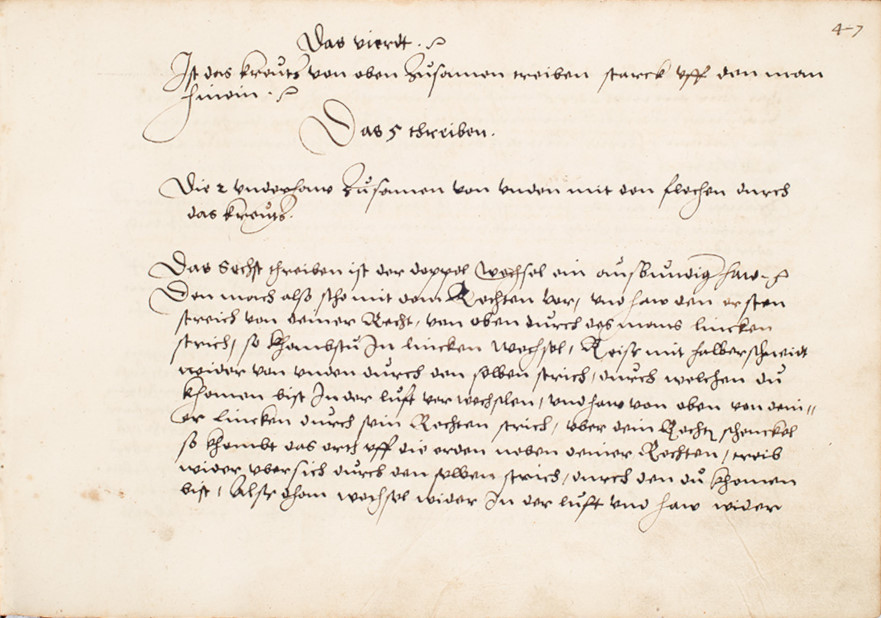
Die 2 vnderhaw Zusamen von vnder mit den flechen durch das kreutz.
47r.2
5.46linked passage
5.47
[47] The Sixth Driving is the Double Changer, an excellent cut.
Do it as follows: Stand with your right foot forward and strike the first cut from your right from above through the opponent’s left Strike Line, thus you come into the left Change, slash with the half edge back from below through the same Strike through which you have come, change in the air, and cut from above from your left through his right Strike line over your right thigh, thus the point comes to the ground beside your right; drive back upwards through the same Strike through which you have come, then change back in the air and cut back from your right through the opponent’s left Strike Line.
Munich Manuscript · fol. 47r.3
[47r.3] Das sechst threiben ist der doppel wechsel ein ausbundiger haw. ⁋
Den mach also sthe mit dem Rechten vor, vnd haw den ersten streich von deiner Recht, von oben durch des mans lincken strich, so khombstu In lincken wechsel, Reiß mit halber schneidt wider von vnden durch den selben strich, durch welchen du khomen bist In der luft verwechslen, vnd haw von oben von deiner Lincken durch sein Rechten strich, vber dein Rechten schenckel so khombt das orth vff die erden neben deiner Rechten, treib wider vber sich durch den selben strich, durch den du khomen bist, Alss dhan wechsel wider In der luft vnd haw wider [47v.1] von deiner Rechten durch des mans Lincken strich ⁋
47r.347v.1
5.47linked passage
5.48
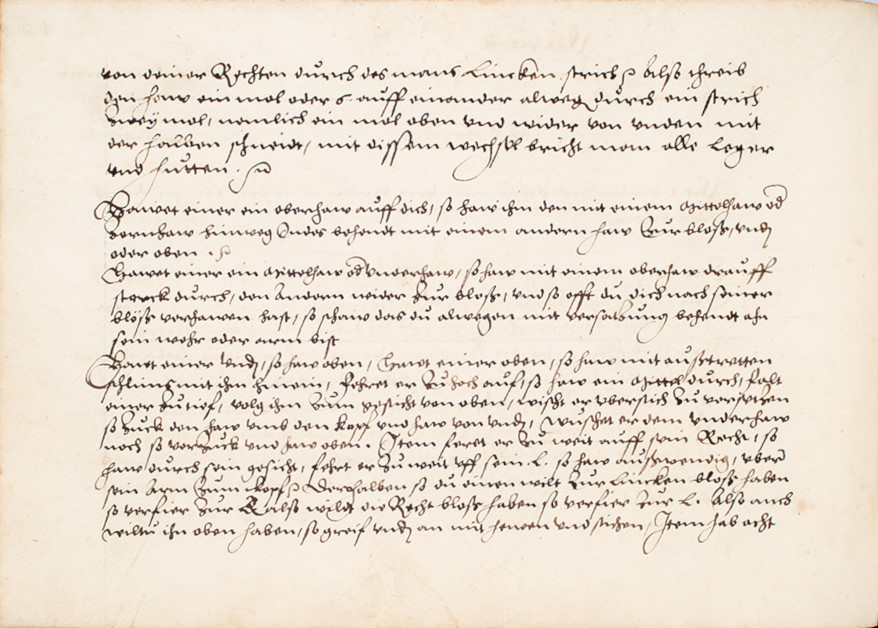
[48] Thus drive the cut one to six times one after another, always twice through one Strike, namely once from above and back from below with the half edge. With this Change one breaks all postures and cuts.
Munich Manuscript · fol. 47v.2
[47v.2] Also threib den haw ein mol oder 6 auff einander alwegen durch ein strich zwey mol, nemlich ein mol oben vnd wider von vnden mit der halben schneidt, mit dissem wechsel bricht man alle Leger vnd hutten. ⁋
47v.2
5.48linked passage
5.49
[49] If one cuts a High Cut at you, so cut it away with a Middle Cut or a Wrath Cut, Indes quickly with another cut to the opening below or above.
Munich Manuscript · fol. 47v.3
[47v.3] Hawet einer ein oberhaw auff dich, so haw ihm den mit einem Mittelhaw oder Zornhaw hinweg Indes behendt mit einem andern haw zur bloß, vnden oder oben. ⁋
47v.3
5.49linked passage
5.50
[50] If one cuts a Middle Cut or a Low Cut, then cut with a High Cut strongly through from above the next again to the opening, and as often as you have cut to his opening, then see that you are always quick to the parrying on his weapon or arm.
Munich Manuscript · fol. 47v.4
[47v.4] Hawet einer ein Mittelhaw oder vnderhau, so haw mit einem oberhaw drauff starck durch, den Andern wider zur bloß, vnd so offt du dich nach seiner blöß verhawen hast, so schaw das du alwegen mit versatzung behendt ahn sein wehr oder arm bist
47v.4
5.50linked passage
5.51
[51] If one cuts low, then you cut high, if he cuts high, then cut in with him diagonally while stepping out (voiding), if he drives you high, then cut through the middle, if one fails in too deep, then follow him to the face from above, if he wishes to displace upwards, then pull the cut around your head and cut from below, if he swipes after your Low Cut, then pull away and cut from above.
Munich Manuscript · fol. 47v.5
[47v.5] Hawt einer vnden, so hew oben, hawt einer oben, so haw mit außtretten schlims mit ihm hinein, Fehret er zu hoch auf, so haw ein Mittel durch, folt einer zu tief, volg ihm zum gesicht von oben, wischt er vbersich zu versetzen so zuck den haw vmb den kopf vnd haw von vnden, wuschet er dem vnderhaw noch so vorzuck vnd haw oben.
47v.5
5.51linked passage
5.52
[52] Item: If he drives too wide to his left, then cut outside over his right arm to the head so that you, if you want one to have the left opening, then deceive to the right, thus if you want to have the right opening, then deceive to the left, also if you will have him open above, then attack low with cuts and thrusts.
Munich Manuscript · fol. 47v.6
[47v.6] Item feret er zu weit auff sein Recht, so haw durch sein gesicht, fehrt er zu weit vff sein Lincken so haw außwendig, vber sein arm zum kopf ⁋ Derohalben so in einen wilt zur Lincken bloß haben so verfier zur Rechten also wildt die Recht bloß haben so verfier zur Lincken Also auch wiltu ihn oben haben, so greif vnden an mit hewen vnd stichen,
47v.6
5.52linked passage
5.53
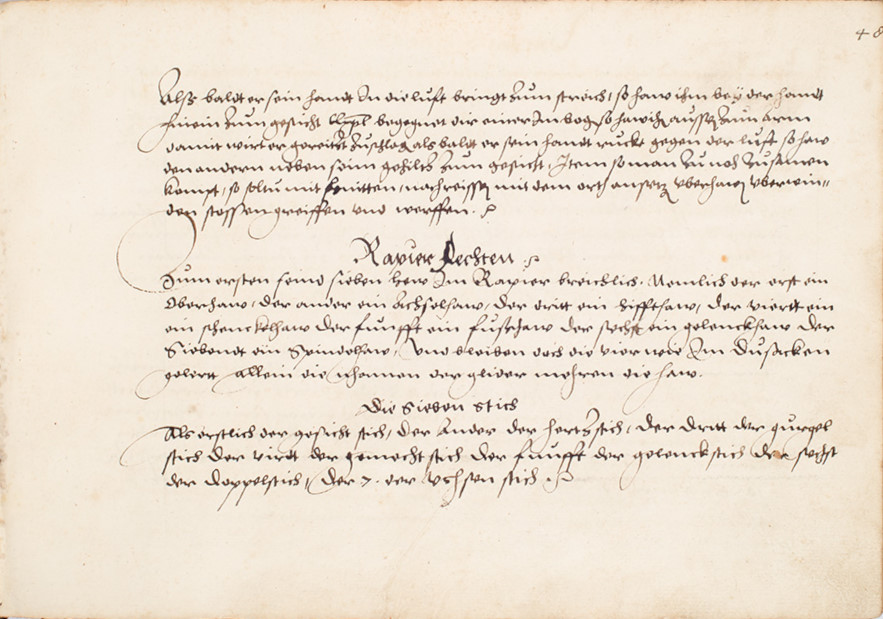
[53] Item: Pay attention as soon as he brings his hand in the air to strike, then cut in by his hand to the face. If one approaches you in bow then cut him outside to the arm with this he will be provoked to cut, as soon as he pull his hand in the air then cut the next beside his hilt to the face.
Munich Manuscript · fol. 47v.7
[47v.7] Item hab acht[48r.1] Alß bald er sein handt In die luft bringt zum streich, so haw ihm bey der handt hinein zum gesicht Exempel begegnet dir einer Im bogen so haw ihm aussen zum arm damit wirt er gereitzt zuschlagen als baldt er sein handtruckt gegen der luft so haw den andern neben seim gehiltz zum gesicht,
47v.748r.1
5.53linked passage
5.54
[54] Item: If you get too close to him, thus you should use slicing, traveling after with the point, setting on, cutting over, winding over, pushing, grabbing and throwing.
Munich Manuscript · fol. 48r.2
[48r.2] Item so man zu noh zusamen kompt, so soltu mit feintten, nachreissen mit dem orth ansetzen vberhawen vberwinden stossen greiffen vnd werffen. ⁋