[1] Now I give the halberd. I will teach it first from the Driving Cuts which are very useful in the wrenching.
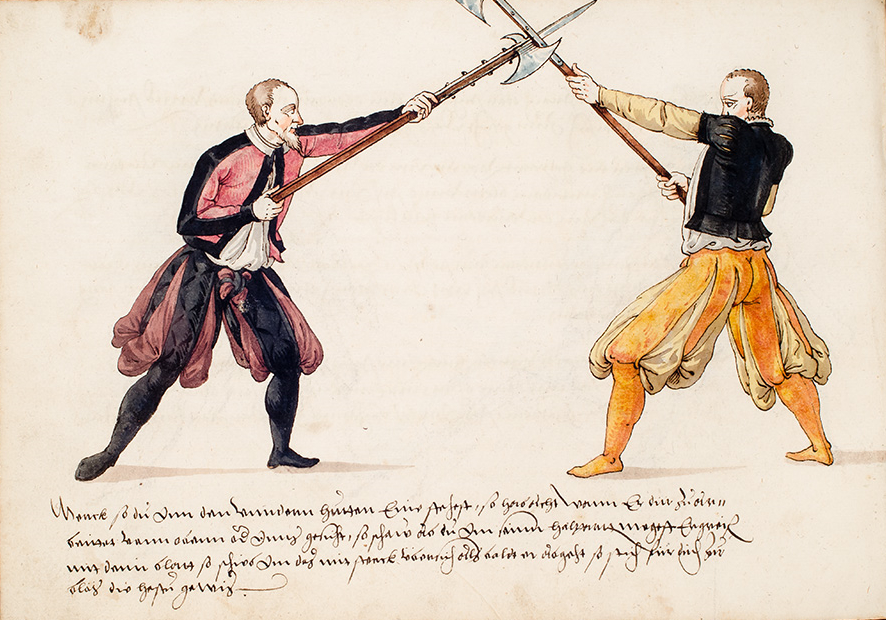
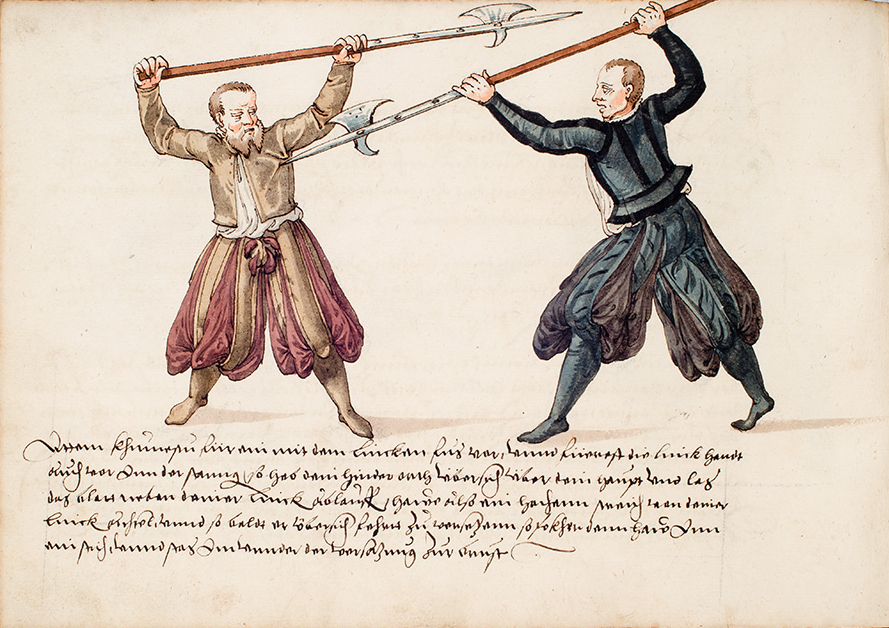
Item: Firstly do this, stand with the left foot forward so that you lead with the left, hold your halberd in the right Ox and rip through with the hook from your right over the left leg, the second cut through from your left shoulder with the blade, so that again you come into the right Ox, thus drive these two cuts together, the one from the right with the hook is a rip, the second with the blade is a cut.
Munich Manuscript · fol. 82v.1
[82v.1] Eche ich die helpartten setzenn will ich vor die threibhew leren welche sehr nützlich zum Reißen sindt ⁋
Denn Ersten mach also stanndt mit dem Lincken fus vor, so du die Linck vorfirst halt dein helpartt Im rechtenn Ochsenn, haw oder reiß mit dem hacken, vonn deiner rechtenn über das Linck bein durch, denn andern hawe von deiner Lincken achselln mit dem blatt durch, das du wüder Inn rechtenn Ochsenn kummest also threib die zwen hew zu samen Der vonn der rechtenn mit dem hackenn, Ist ein Rüß Der ander mit dem blatt Ist Ein haw ⁋
82v.1
9.1linked passage
9.2
[2] Item: Stand with the left foot forward, the halberd beside your right, the point at the ground, cut the first with the hook from below diagonally through the opponent, the second from your right also from below diagonally through the opponent with the blade, the third rip again through from below with the hook from your left like the first, the fourth also again from the lower right with the blade like the second and from then on however many cuts as you want through the cross from below or like the first driving from above, to your advantage and note that the rip with the hook is from the right and is the Taker, the cut from the left is the Hitter, however if you lead with the right hand forward, then the rip comes from the left and the cut from the right.
Munich Manuscript · fol. 82v.2
[82v.2] Ittem stanndt mit dem Lincken vor, die helpartt nebenn deiner rechtenn die spietz auff die Erdenn, hawe Denn Erstenn mit dem hackenn vonn vnndenn schlims durch denn mann, Denn anndern vann deiner Rechtenn auch vonn vnnden schlüems durch denn Mann, mit dem blatt, Denn drittenn Reüß wüder vonn vnndenn mit dem hackenn vonn[83r.1] Deiner Linnckenn wie denn Erstenn durch, Denn füerttenn auch wüder vonn der Rechtenn vonn vnndenn mit dem blatt wie den andern vnnd also fortann wie viel hew du wilt magstu durch das kreutz von vnndenn, oder wie im Ersten von obenn threiben nach deiner gelegenheit vnnd merck, das alweg der Rüß mit dem hackenn vonn der rechten Ein nemer vnnd der haw vonn der Linckenn ein threffer Ist, so du aber die recht hanndt vor füerest, so kumpt der Rüß vonn der Linnckenn vnnd der hew von der rechten ⁋
82v.283r.1
9.2linked passage
9.3
[3] Once again stand with the left forward and cut the Low Cut from your left with the blade so that you come into the right Ox, from there rip downwards over your left leg thus you may drive the rip and cut together from below and above over your left thigh until you see an advantage.
Munich Manuscript · fol. 83r.2
[83r.2] Weütter stanndt mit dem limckenn[!] vor, vnnd hawe den vnnder haw vonn deiner Linckenn mit dem blatt dz du in rechten Ochsen kumest von danen Reis wüder vndersich über dein Linck bein also magstu denn Ris vnnd haw vonn vnnden vnnd von obenn über deinn Linnckenn schennckell zu samenn threiben büs du dein fortheill Ersichest ⁋
83r.2
9.3linked passage
9.4
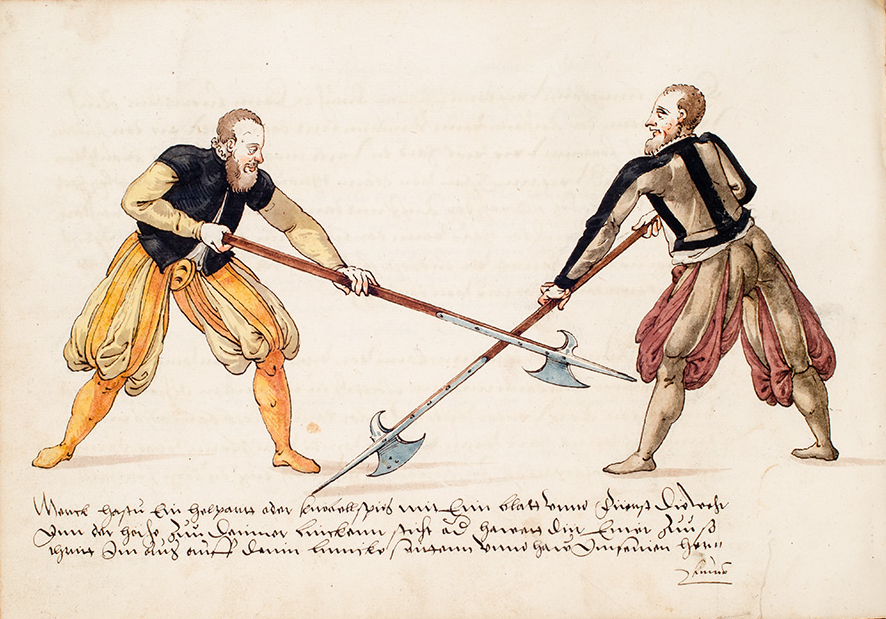
[4] Note if you have a halberd or a partisan with a blade, and you lead the weapon high to your left, and one thrusts or cuts at you, then step out to your left side and cut his incoming strike or thrust with a High Cut to the ground, and thrust him quickly upwards to the face this goes to both sides.
Munich Manuscript · fol. 83v
[83v] Merck hastu Ein helpartt oder knöbellspies mit Eim blatt vnnd Füerst die wehr Inn der höche zuu deinner Linckenn sticht oder hawett dür Einer zuu so thritt Im aus auff deinn linncke seittenn vnnd haw Im seinen her[84r.1] herkummenten streich oder stich mit Eim oberhaw zw grundt, vnnd stich im bechenndt übersich zum gesicht daß gehtt zw beüdenn seittenn ⁋
83v84r.1
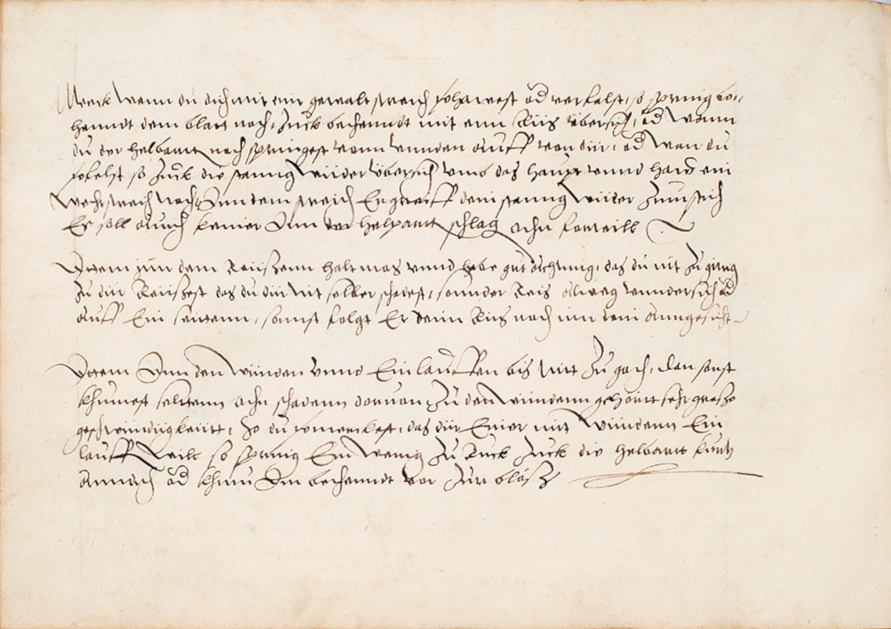
9.4linked passage
9.5
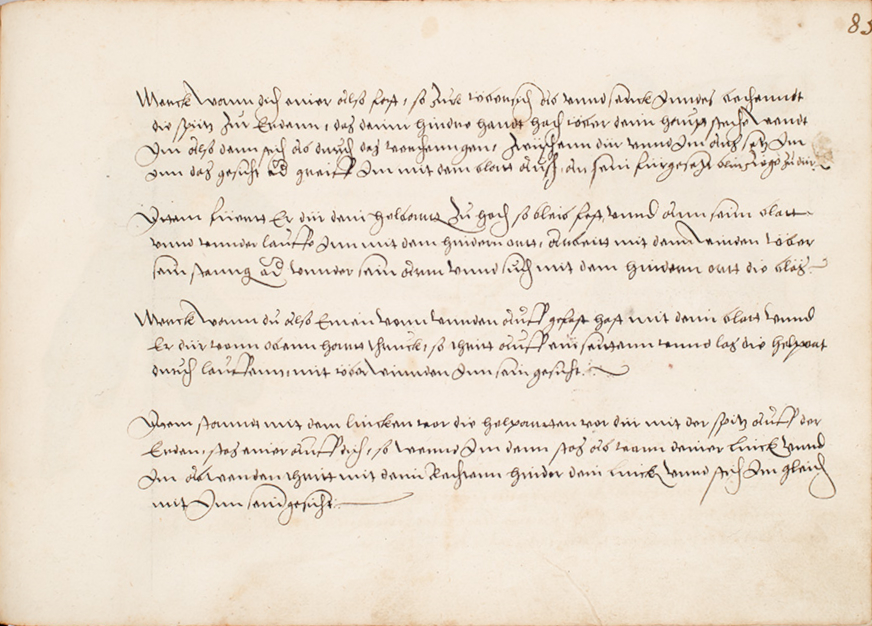
[5] Item: If you have the halberd in front of you in the Side Guard, then take his thrust or strike with the blade and thrust him to the next opening, the same as when you are positioned in the Low Guard.
Munich Manuscript · fol. 84r.2
[84r.2] Ittem hast du düe helpartten vor dür Inn der nebenn hutt, so nüm Im denn stos oder streüch mit dem blatt vnnd stich Im zur nechstenn blös desgleichen thu wann du Inn den vnndern hutt ligest ⁋
84r.2
9.5linked passage
9.6
[6] Note when you are positioned in a Low Guard, then pay attention when he thrusts at you, then step out and thrust in with him simultaneously how it is taught in the staff.
Munich Manuscript · fol. 84r.3
[84r.3] Merck so du Inn der vnndern hutt stehest so hab acht als baldt Er gegenn dür sticht, so thritt aus vnnd stich mit Ime gleüch hinein wie Inn der stangen gelechrtt ist werden ⁋
84r.3
9.6linked passage
9.7
[7] Item: If you stand before one in the Low Guard, then note when thrusts at you, then drive to him with your blade with a rip on his blade and wrench to you to one side, Indes thrust quickly from below to his face.
Munich Manuscript · fol. 84r.4
[84r.4] Ittem so duu Inn der vnnder hutten Eine stehest, so merck wann Er auf dich sticht, so fachr Im mit deim blatt mit Eim Rüs Inn sein blatt vnnd Reiß zw dür auff Ein seittenn, stos Inndes bechenndt von vnnden auff zum gesicht. ⁋
84r.4
9.7linked passage
9.8
[8] Note: If you stand in a Low Guard before an opponent, then pay attention when he will work at you from above or to your face, so see when you can catch his halberd with your blade, then do it with force upwards and as soon as he goes off, then thrust forth to the opening that you certainly have.
Munich Manuscript · fol. 84v
[84v] Merck so du Inn den vnndern hutten Eine stehest, so hab acht wann Er dür arbeittet vonn obenn oder Inns gesicht, so schaw ab du Im seinn halpartten mogest Ergreifen mit deim blatt so schieb Im des mit sterck übersich als baldt er abgeht so stich für dich zur blös die hastu gewis ⁋
84v
9.8linked passage
9.9
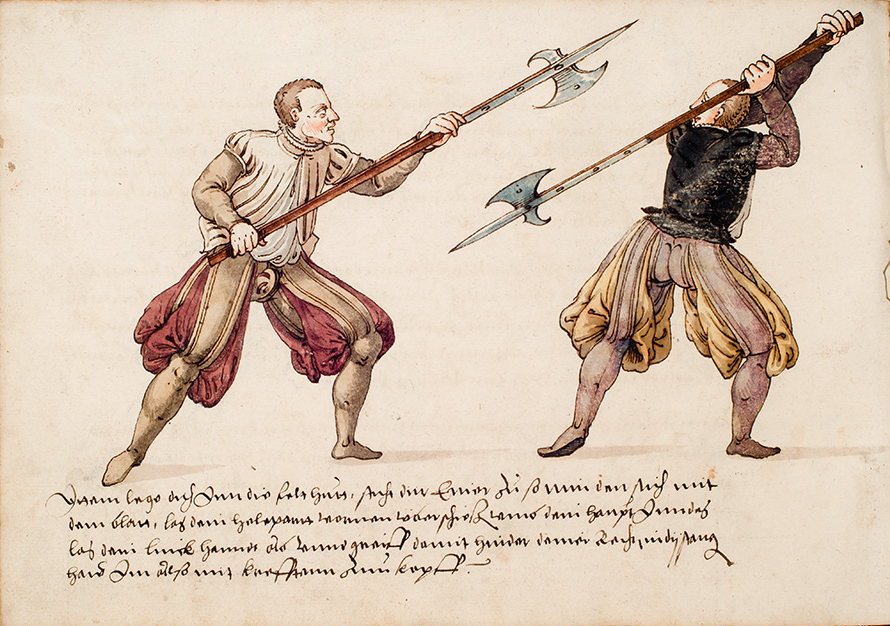
[9] Note when one is almost at you, then pull upwards while instantly sinking with the point to the ground, so that your rear hand is high above your head, turn out his thrust then through the hanging between you and him, set it off into his face, or attack him with the blade also to his forward set leg, pulling to you.
Munich Manuscript · fol. 85r.1
[85r.1] Merck wann dich einer also fast, so zuck übersich ab vnd senck Inndes bechenndt die spütz zur Erdenn, das deinn hindre[!] handt hoch über deim haupt steche wendt Im also denn stich ab durch das verchenngen, zwüschenn dür vnnd Im aus setz Im Inn das gesicht oder greiff Im mit dem blatt auch, an sein fürgesezt bein ziege zu dür ⁋
85r.1
9.9linked passage
9.10
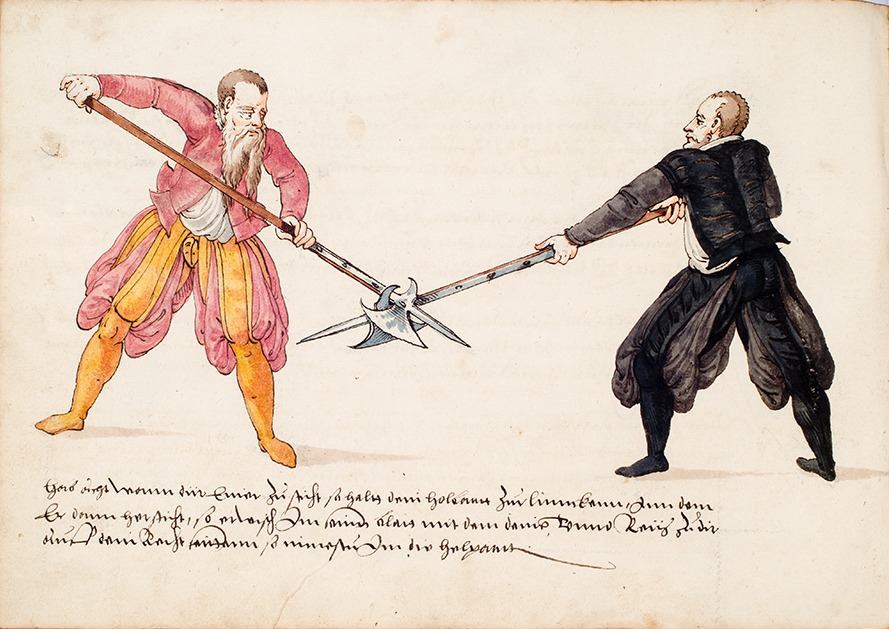
[10] If he leads his halberd too high, then remain nearly on his blade and run in under him with the rear point, work with winding over his staff or under his arm and search with the rear point for the opening.
Munich Manuscript · fol. 85r.2
[85r.2] Ittem füertt Er dür dein helbartten zu hoch so bleib fest, vnnd ann seim blatt ⁋ vnnd vnnder lauffe Inn mit dem hindern ortt, arbeitt mit denn winden über sein stanngen oder vnnder sein arm vnnd such mit dem hindern ortt die blös ⁋
85r.2
9.10linked passage
9.11
[11] Note when you have caught one from below with your blade and he strikes at you from above, then step out to one side and allow the halberd to run through with winding over to his face.
Munich Manuscript · fol. 85r.3
[85r.3] Merck wann du also Einen vonn vnnden auff gefast hast mit deim blatt vnnd Er dür vonn obenn hartt thruck, so thritt auff ein seittenn vnnd las die helport durch lauffenn, mit über winnden Inn sein gesicht ⁋
85r.3
9.11linked passage
9.12
[12] Item: Stand with the left foot before the halberd, with the point at the ground if one thrusts at you, then turn his thrust away from your left and in the parrying step with your right foot behind your left and thrust likewise with him to his face.
Munich Manuscript · fol. 85r.4
[85r.4] Ittem stanndt mit dem lincken vor die helpartten vor dür mit der spitz auff der Erden, stos einer auff dich, so wennd Im dem stos ab vonn deiner Lincken vnnd Im abwenden thritt mit deim Rechtenn hinder dein Lincken vnnd stich Im gleich mit Inn sein gesicht ⁋
85r.4
9.12linked passage
9.13
[13] Be careful when someone thrusts at you, keep your halberd to your left, and when he stabs you, catch his blade with yours and pull it to you on your right side, so you take away his halberd.
Munich Manuscript · fol. 85v
[85v] Hab acht wann dür Einer zu sticht so haltt dein holbartt zu linnckenn, Inn dem Er dann hersticht, so erwisch Im seinn blatt mit dem deinem vnnd Reüs zu dir auff dein Recht seittenn so nimestu Im die helpartten
85v
9.13linked passage
9.14
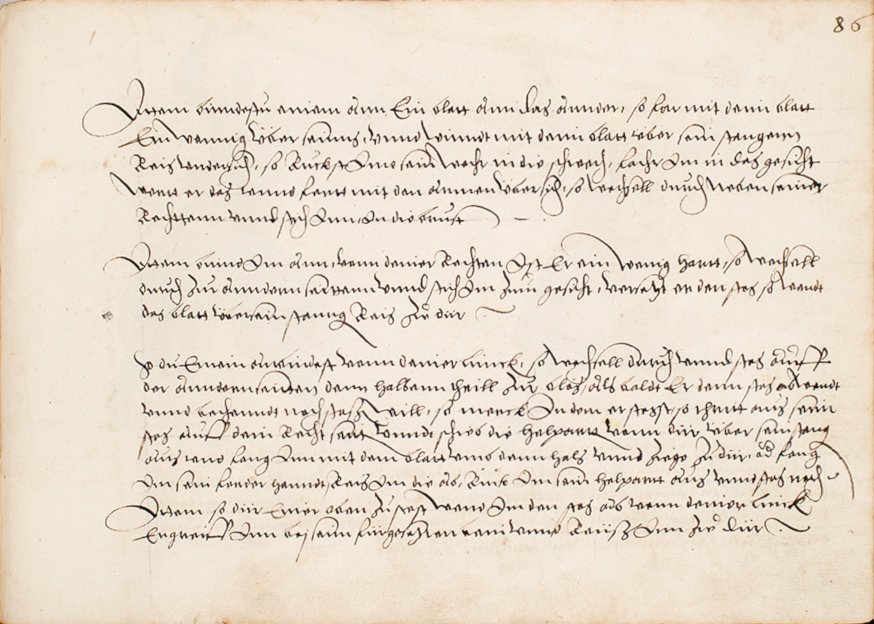
[14] Item: If you bind on his blade with yours, then drive with your blade a little above his, and wind with your blade over his staff and wrench downwards, then yank his weapon on the Weak and change through by his right and thrust him to the chest.
Munich Manuscript · fol. 86r.1
[86r.1] Ittem binndestu einem ann Ein blatt ann das annder, so far mit deim blatt Ein wennig über seinns, vnnd winndt mit deim blatt über sein stangenn Reis vndersich, so Ruckst Ime sein wechr in die schwech, fachr Im in das gesicht wertt er das vnnd fertt mit den armen übersich, so wechsell durch neben seiner Rechtenn vnnd stich Inn, In die brust ⁋
86r.1
9.14linked passage
9.15
[15] Item: Bind on him from your right, if he is a little hard, then change through to the other side and thrust him to the face, if he parries this thrust then turn the blade above his staff and wrench it to yourself.
Munich Manuscript · fol. 86r.2
[86r.2] Ittem binnd Im ann, vonn deiner Rechten Ist Er ein wenig hartt, so wechsell durch zur anndern seittenn vnndt stich Im zum gesicht, versetzt er den stos so wendt das blatt übersein stanngen Reis zw dür ⁋
86r.2
9.15linked passage
9.16
[16] If you bind on to him from your left, then change through and thrust to the other side, to the half part, as soon as he turns away your thrust and will quickly thrust after, then note when he thrusts that you step out from his thrust to your right side and shove the halberd off from you and over his staff, capture him with your blade around his neck and pull to you or catch him by his forward hand, and wrench that away, yank his halberd away from him and then thrust after.
Munich Manuscript · fol. 86r.3
[86r.3] So du Einem anbindest vonn deiner Lincken, so wechsell durch vnnd stos auff der anndern seitten denn halbenn theill zur blös, als baldt Er denn stos ab wendt vnnd bechenndt noch stoßen will, so merck In dem er stosst, so thritt aus seim stos auff dein Recht seitten vnndt schieb die helpartten vonn dür über sein stangen aus vnd fang Inn mit dem blatt vmb denn hals vnnd ziege zu dür, oder fang Im sein forder hanndt, Reis Im die ab, Rück Im sein helpartt aus vnnd stos nach ⁋
86r.3
9.16linked passage
9.17
[17] Item: If he thrusts above at you then turn his thrust off from your left, catch him by his forward most leg and wrench him to you.
Munich Manuscript · fol. 86r.4
[86r.4] Ittem so dür Einer oben zu stost wend Im den stos ab vonn deiner Lincken Ergreiff Inn bej seim fürgesezten bein vnnd Reüß Inn zw dür ⁋
86r.4
9.17linked passage
9.18
[18] If you come to him with your left foot forward and also your left hand forward on the staff, then lift your rear point over your head and let the blade run down next to your left side. Then strike a High Blow from your left shoulder and as soon as he moves upwards to displace, so turn the strike into a thrust and stab him under his displacement to the chest.
Munich Manuscript · fol. 86v
[86v] Ittem khumestu für ein mit dem Lincken fus vor, vnnd füerest die linck handt auch vor Inn der stanngen, so heb dein hinder orth übersich über dein haupt vnd las das blatt neben deiner Lincken ablauffen, hawe also ein hochenn streich von deiner lincken achsel, vnnd so baldt er übersich fehrtt zu versezenn so verkher denn haw Inn ein stich, vnnd sos Im vnnder der versazung zur brust ⁋
86v
9.18linked passage
9.19
[19] Note when one brings at you a Round Strike with the hook, that you must drive this strike upwards with your hook to parry, so pay attention as soon as he reverses it into a thrust, then remain with your arms high and sink the blade beside your lower left, then turn out his thrust from your left between he and you, through the hanging and thrust from below to his belly.
Munich Manuscript · fol. 87r.1
[87r.1] Merck wann dür Einer also ein hochen Rundenstreich bringt, das du must übersich faren mit den armen denn streich zu versezenn, so hab acht als baldt Er denn haw verkhertt zu Einem stich so bleib mit den armen hoch, vnd senck das blatt neben deiner Lincken vndersich, wennd Im also denn stich von deiner Lincken, zwischen dür vnnd Im ab, durch das verhenngen, vnnd stich von vndenn auff zuu seim bauch ⁋
87r.1
9.19linked passage
9.20
[20] Item: Do a high Round Strike from your left and once you note that he drives out to capture the strike, then pull the strike in the air and cut him diagonally to his forward placed knee. Thus you come through to your right side, if he thrusts after again or not, then thrust him quickly to his left with a step back.
Munich Manuscript · fol. 87r.2
[87r.2] Ittem nim also ein hochen Rundtstreich vonn deiner Lincken als baldt du merkest das Er auff fehrtt denn streich zu entpfanngen, so zuck den streich Inn der lufft, vnnd haw Im schlim zu seinem fürgesezten knie, So khumestu durch auff dein Rechte seittenn, sticht Er ferner nach oder nit so stich Im bechendt zur seiner linckenn mit eim abthritt ⁋
87r.2
9.20linked passage
9.21
[21] Item: Thrust him to his right to the face, and if he wards this thrust, then allow your halberd to run around your head into a Round Strike, cut him to the opening inside or outside or hold the wrenching with a cutting off.
Munich Manuscript · fol. 87r.3
[87r.3] Ittem stich im zu seiner Rechtenn zum gesicht wertt er den stich, so las vmb lauffen zu Eim Rundtstreich vnnd zuck vmb dein haupt, hawe Im mit gekreutzigten zu seim Lincken arm, zuck bechenndt vnnd stich Im zur blös Inwendig oder auswendig oder helt dich der Reißen mit abschneiden
87r.3
9.21linked passage
9.22
[22] Item: Position yourself in the Field Guard, if one thrusts at you, then take the thrust with your blade, let your halberd shoot forward and around your head Indes let go with your left hand and then grab the staff again behind the right hand, cut him to the head with power.
Munich Manuscript · fol. 87v
[87v] Ittem lege dich Inn die felt hutt, sticht dür Einer zu so nim den stich mit dem blatt, las dein helepartt vornen überschießen vmb dein haupt Inndes las ein lincken hanndt ab vnnd greiff domit hinder deiner Rechten in dij stangen haw Im also mit krefftenn zum kopff ⁋
87v
9.22linked passage
9.23
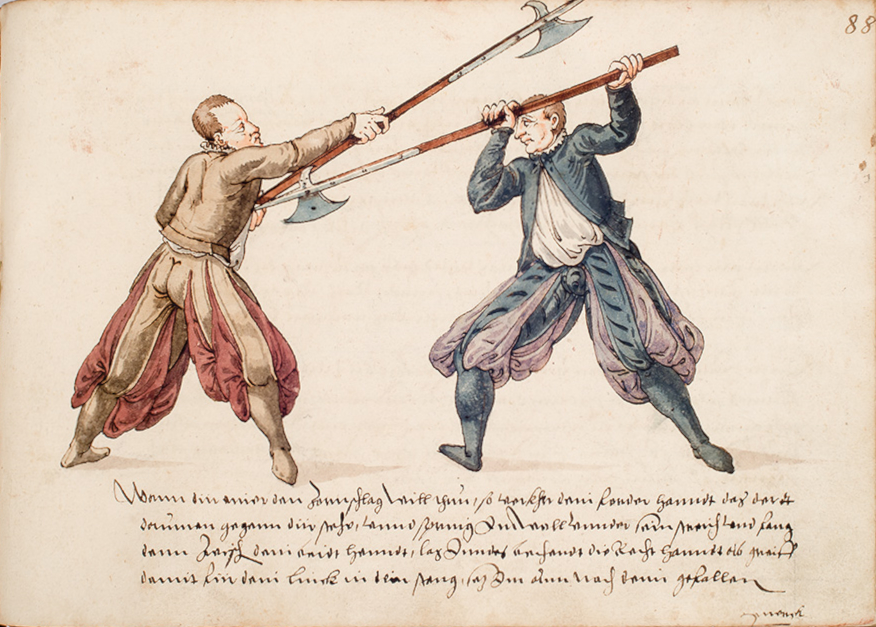
[23] When one will make the Wrath Strike at you, then reverse your forward hand so that the thumb is pointed at you, and spring well in under his strike, capture it between both your hands, quickly let go with the right hand, grab the staff forward of the left hand, lay it on him at your pleasure.
Munich Manuscript · fol. 88r
[88r] Wann dür einer den zornschlag will thun, so verkher dein forder hanndt das der daumen gegenn dür stehe, vnnd spring Im woll vnnder sein streich vnd fang denn zwischen dein beidt henndt, las Inndes bechendt die Recht hanndt ab greiff domit für dein Linck in dein stang, sez Im ann noch deim gefallen
88r
9.23linked passage
9.24
[24] Note when you have thrown a power strike at him or failed with it, then spring the blade quickly after, quickly pull with a rip upwards or when you spring after with the halberd from below away from you, or when you fail with the cut then pull the staff back up again around your head and cut at him a Wecht Strike (Overhanging Strike?), in the strike grab your staff again for the thrust he shall not be able to hit anyone with the halberd to his benefit.
Munich Manuscript · fol. 88v.1
[88v.1] Merck wann du dich mit eim gewalt streich verhawest oder verfelst, so spring behenndt dem blatt noch, zuck bechenndt mit eim Rüs übersich, oder wann du der helbartten nach springest vonn vnnden auff von dür, oder wan du verfelst so zuck die stanng wüder übersich vmb das haupt vnnd haw ein wechr streich nach, Inn dem streich Ergreiff dein stanng wüder zum stich Er soll auch keiner Inn der helpartten schlagen ochn forwill ⁋
88v.1
9.24linked passage
9.25
[25] Item: In the wrenching hold fast and pay good attention, when wrenching to yourself, that you do not go (away), so that you don't open yourself, rather always wrench downwards or out to a side, or else he will follow after your wrench to your face.
Munich Manuscript · fol. 88v.2
[88v.2] Ittem inn dem Reüßenn halt mas vnnd habe gut achtung, das du nit zu girig[!] zu dür Reüßest das du dür nit selber schadest, sonnder Reis alweg vnndersich oder auff Ein seittenn, sampt folgt Er deim Rüs noch inn dein anngesicht ⁋
88v.2
9.25linked passage
9.26
[26] Item: In the winding and running in don't be too high, for generally you will not be harmed by it at all, to the winding must belong a very great speed, if you note that someone wants to run in at you with winding, then jump back a little with the halberd across your body or come in before quickly to the opening.
Munich Manuscript · fol. 88v.3
[88v.3] Ittem Inn den wünden vnnd Einlauffen bis nitt zu hoch, dan sonst khumest selttenn ochn schadenn doruon, zu den wündenn gehörtt sehr große geschwündügkeütt, So du vermerckest, das dür Einer nitt wündenn Ein lauffen wilt so spring Ein wenig zu Ruck zuck die helbartt kurtz ann dich oder khum Im bechenndt vor zur blöß ⁋