[1] Fencing in Dussack, techniques in all Kinds of One handed Weapons Thorough Descriptions
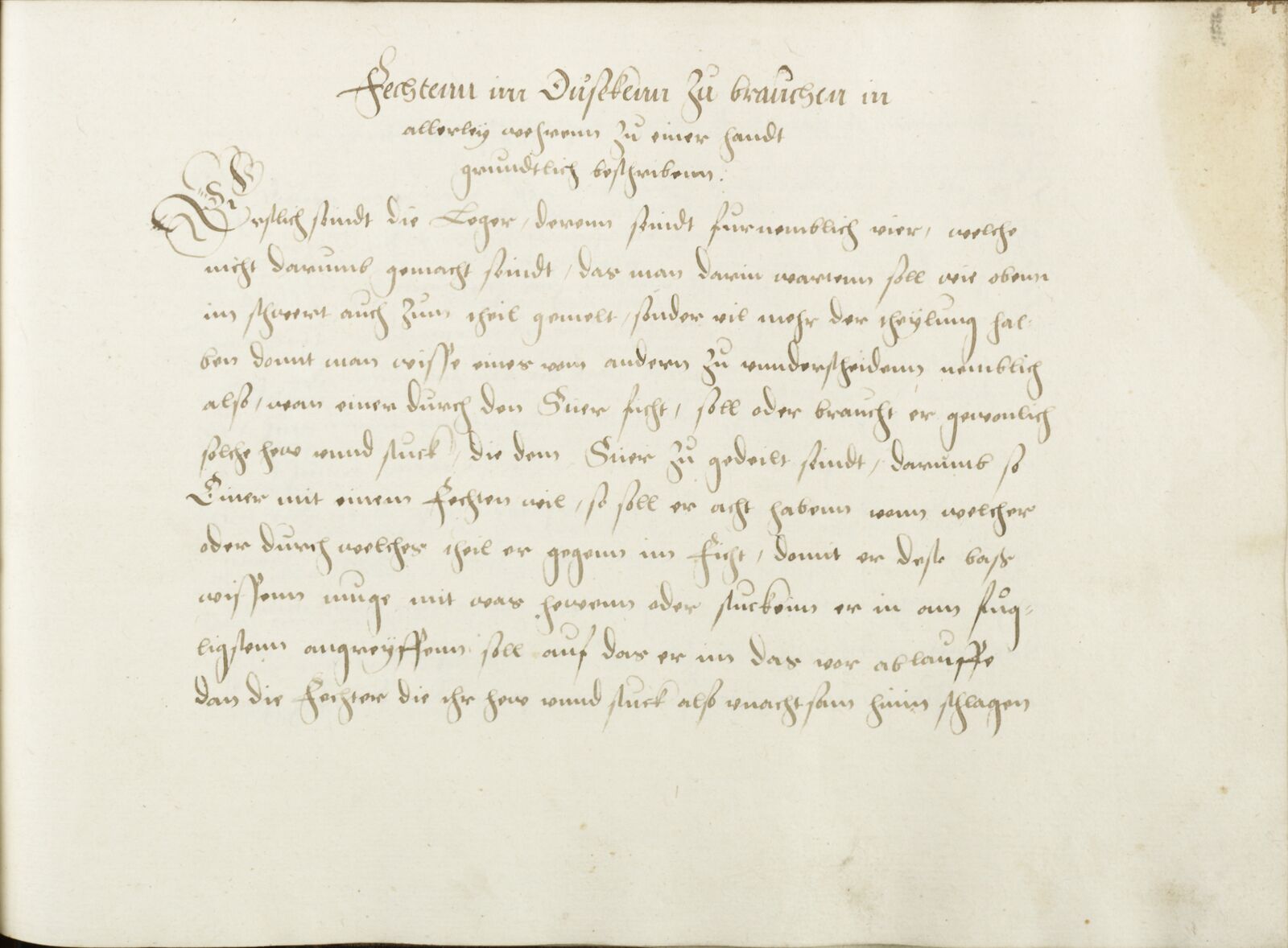
Firstly are the guards, therein are namely Four which are not made so that one should wait in them how it is previously and partially reported above in the sword. But rather has more divisions there with one knows One from the other to distinguish, namely thus, when one fights from the Steer, he will generally use such Strikes and Stücken, that are assigned to the Steer therefore he who will fight with them, thus should he pay attention from which or through which division he goes against in fighting, thus that he may know best, with what cuts or Stücken he should lay on against him, in that he in the Before runs off, then your fighting and your cuts to him and techniques will be correctly cut in and soon put, it must usually give way to harm.
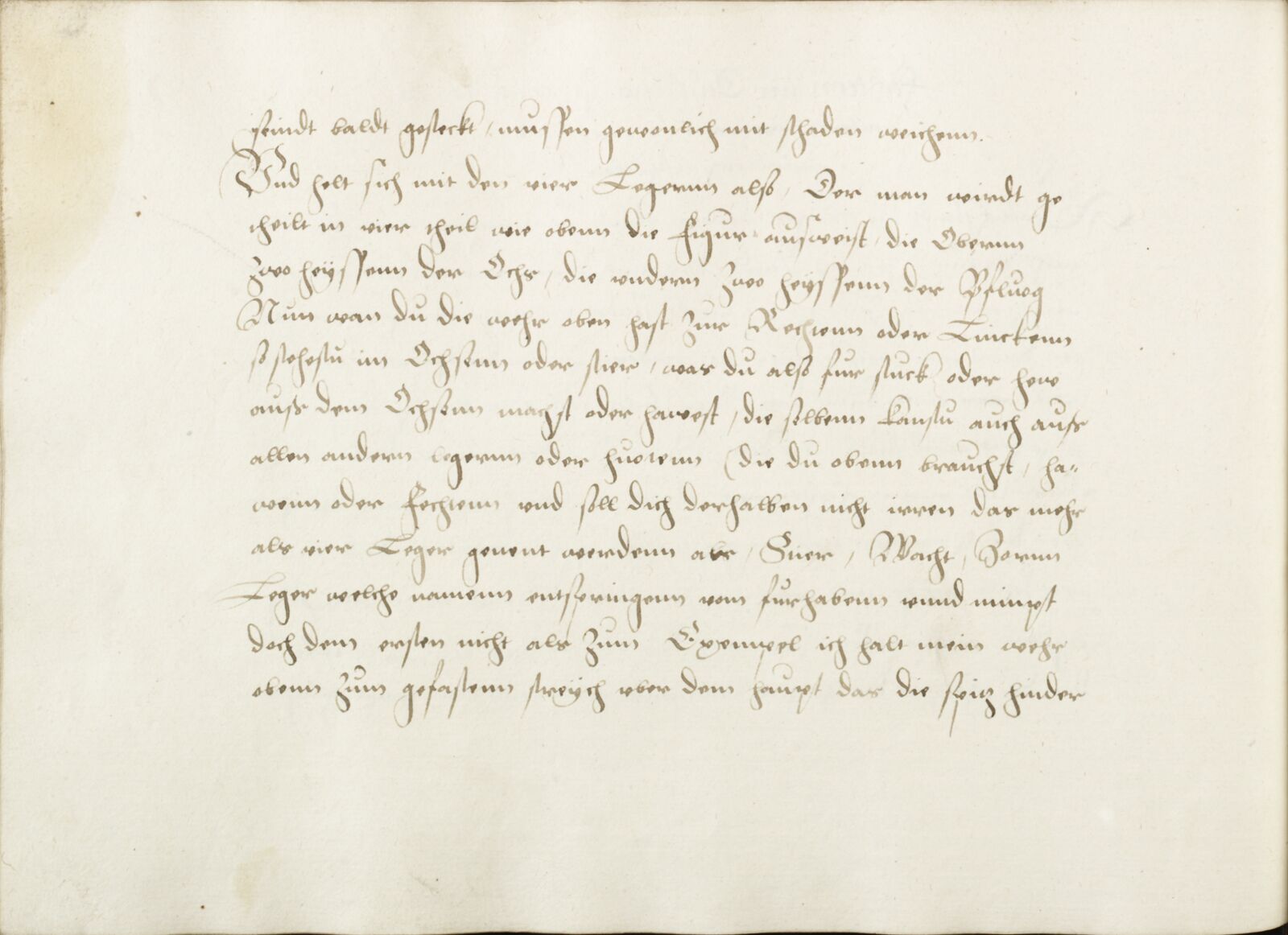
Lund Manuscript · fol. 44r
[44r] Fechtenn in Dusekenn zu brauchen in
allerley wehrenn zu einer handt
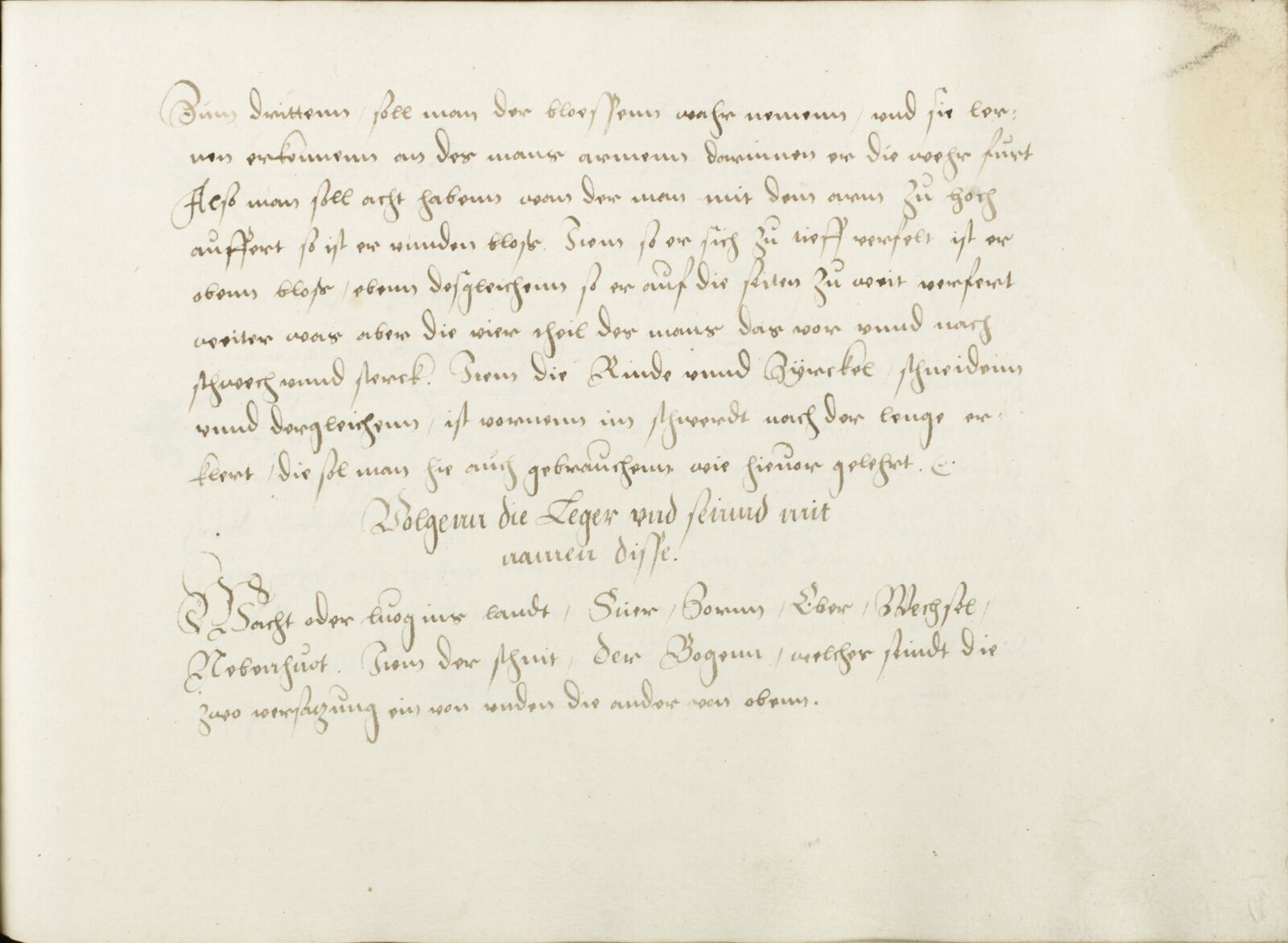
grundtlich beschribenn.
Erstlich seindt die Leger, derenn seindt furnemblich vier, welche
nicht darumb gemacht seindt, das man darin wartenn soll wie obenn
im schwert auch zum theil gemelt, sonder vil mehr der theylung halben
damit man wisse eines vom andern zu unnderscheidenn nemblich
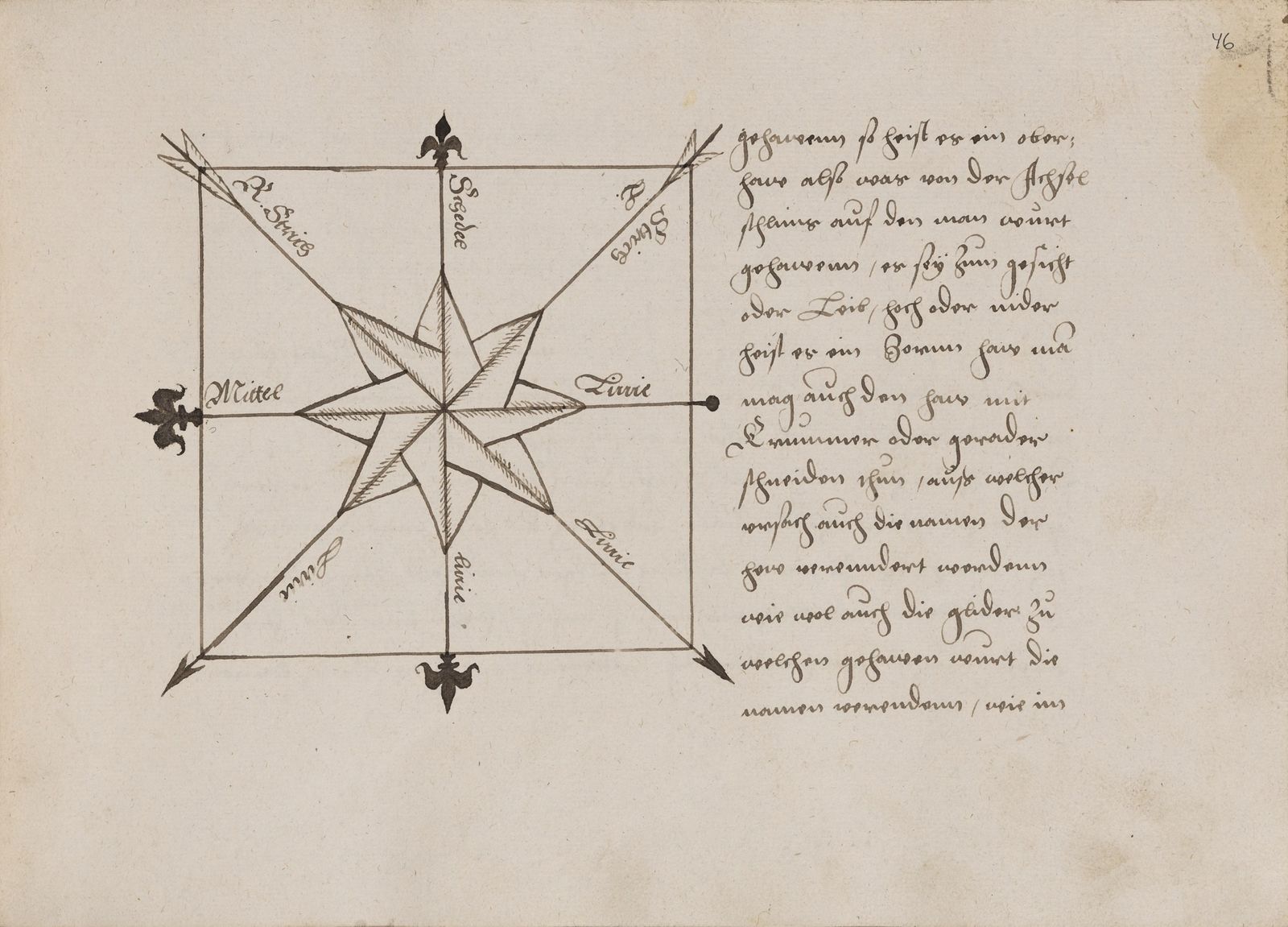
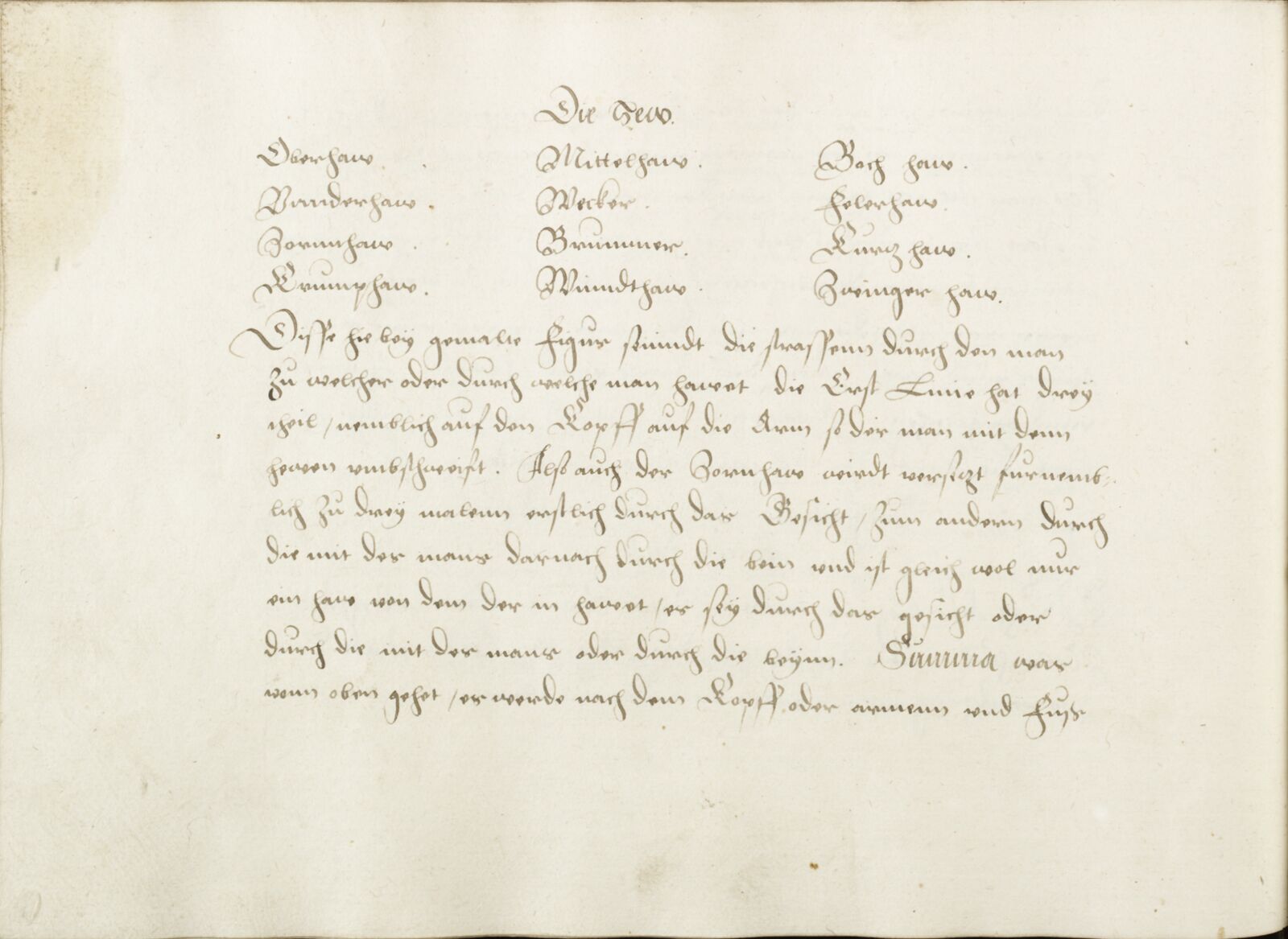
also, wan einer durch den Stier ficht, soll oder braucht er gewonlich
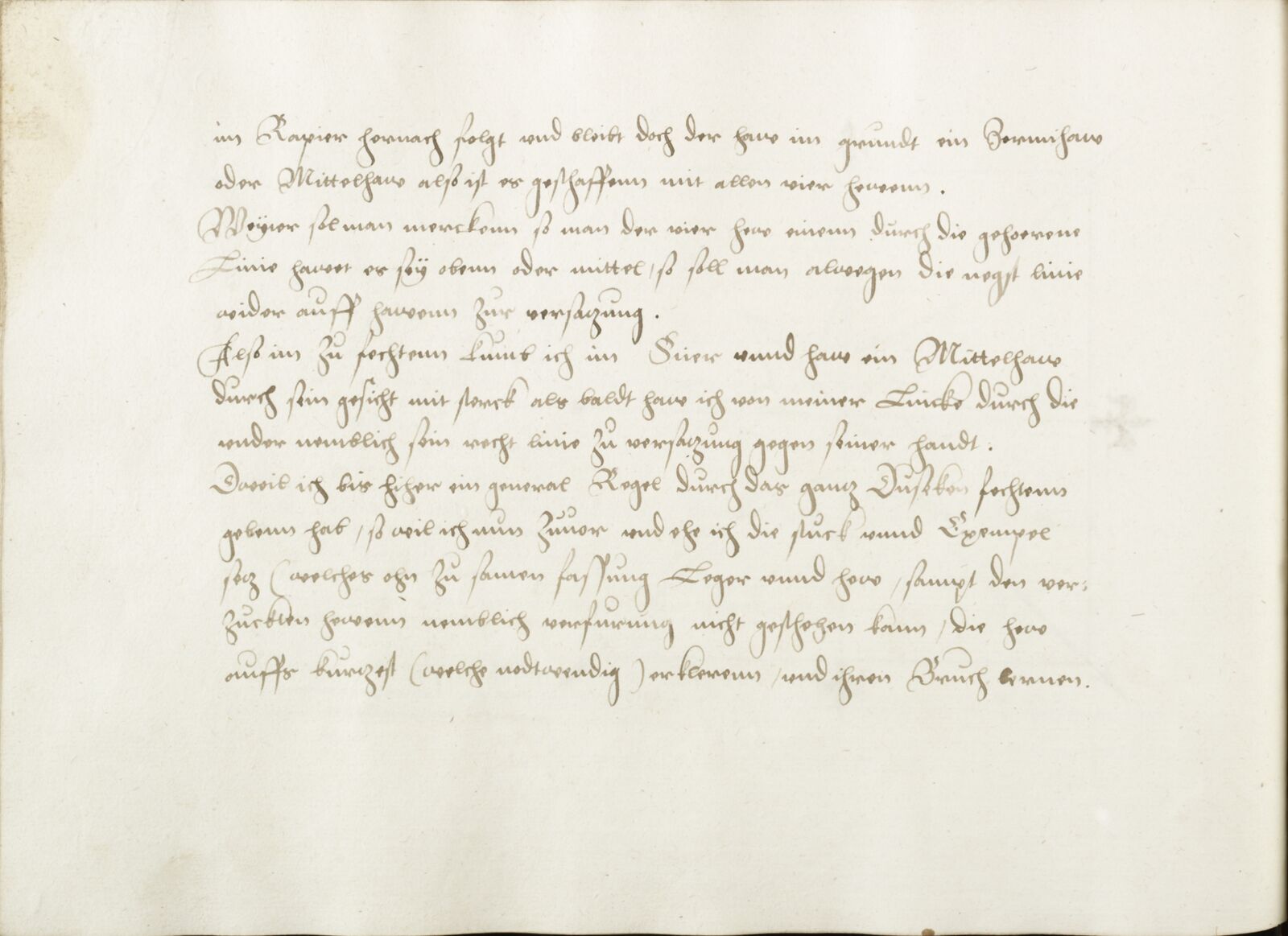
solche hew unnd stuck, die dem Stier zu gedeilt seindt, darumb so
Einer mit einem Fechten wil, so soll er acht habenn wenn welcher
oder durch welches theil er gegenn in Ficht, domit er desto baß
wissenn muge mit was hewenn oder stuckenn er in am fugligstenn
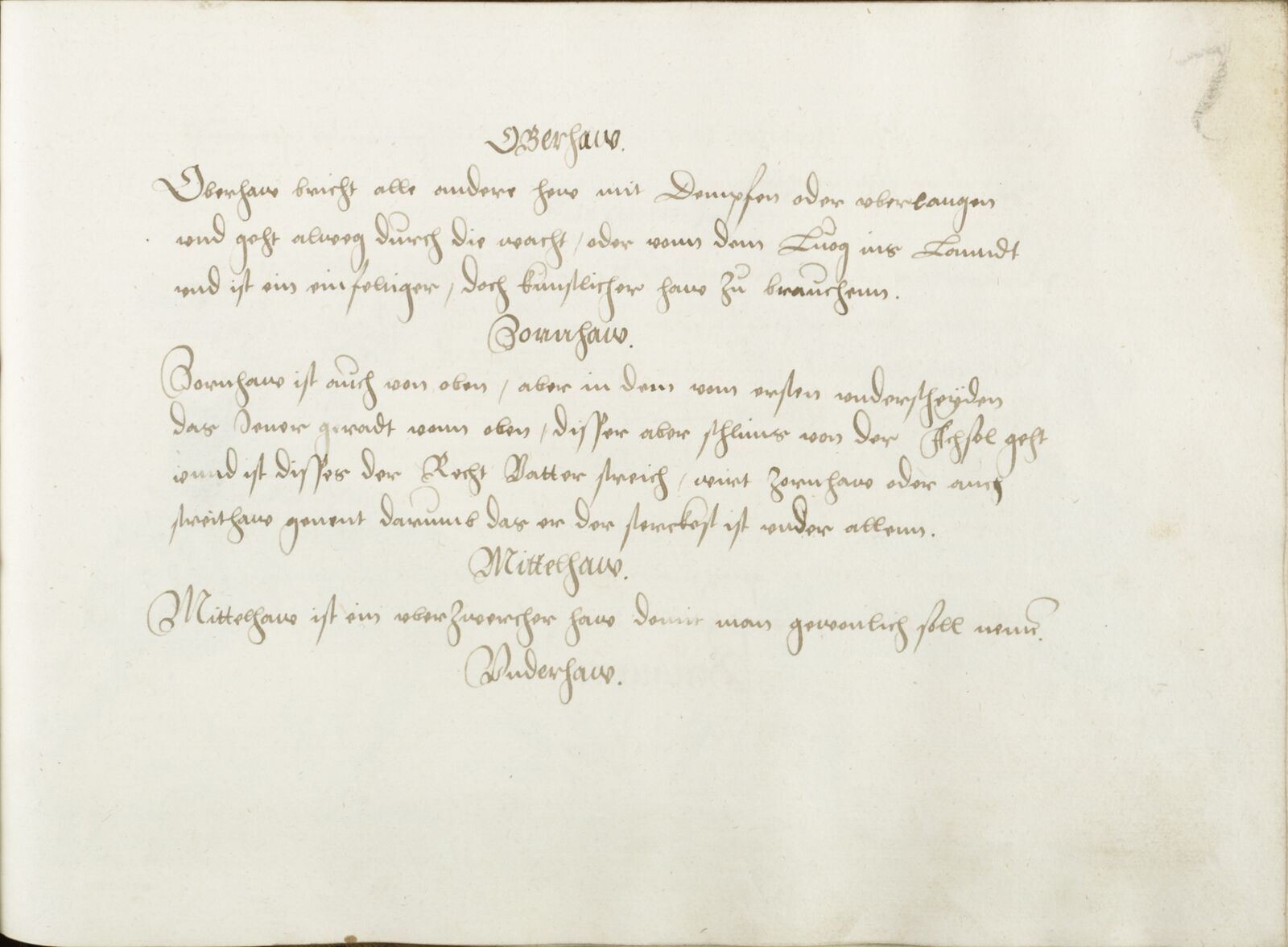
angreyffenn soll auf das er in das vor ablauffe
dan die Fechter die ihr hew unnd stuck also unachtsam hinin schlagen [44v.1] seindt baldt gesteckt, mussen gewonlich mit schaden weichenn.
44r44v.1
3.1linked passage
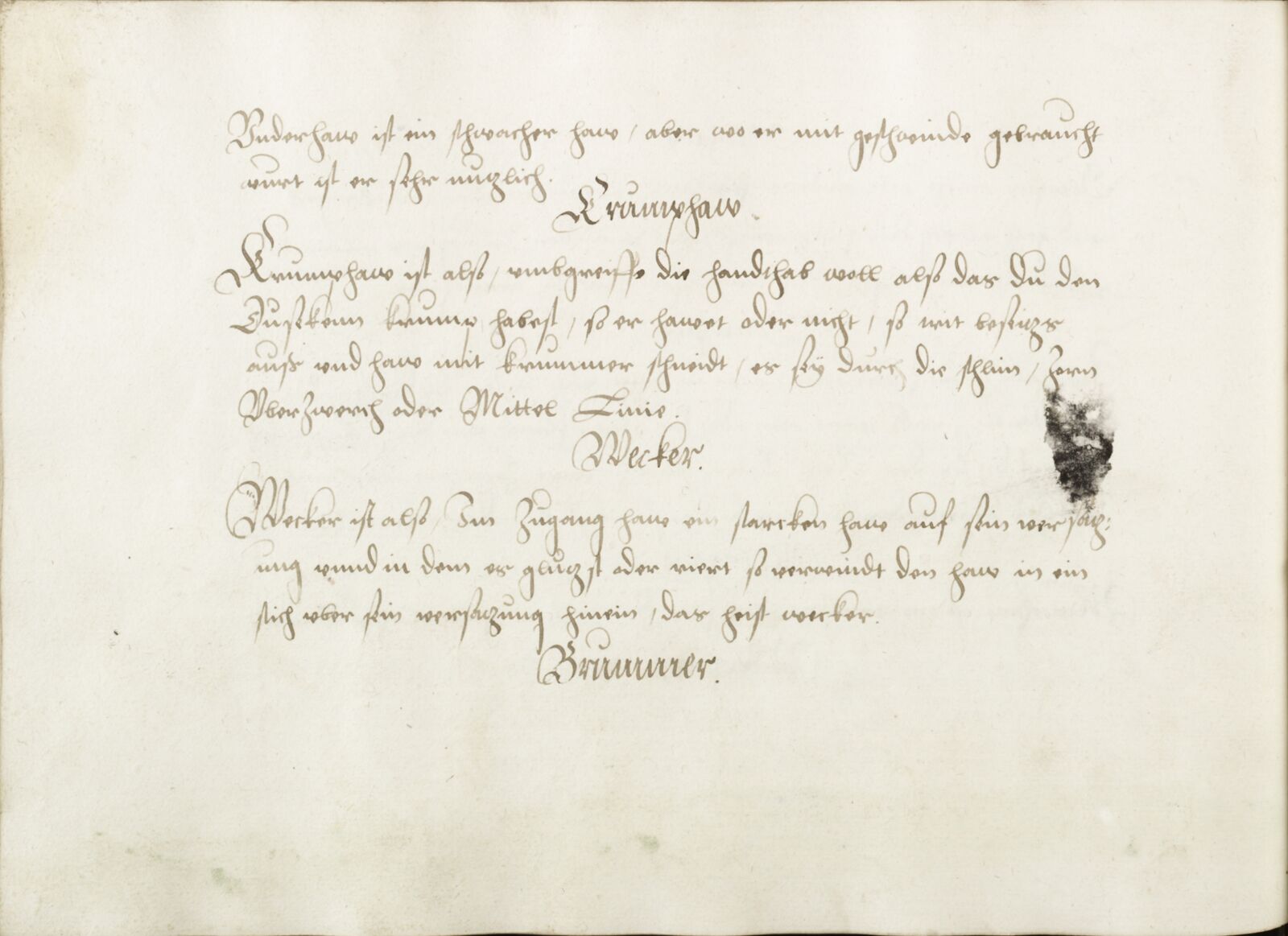
3.2
[2] And should you know thus with the four guards that the opponent is divided into four parts, how in the above figure it is shown, the two from High are called the Ox, the other two are called the Plow take an example, when you hold the weapon high, to the right or the left thus you stand in Ox or Steer, what cuts and strikes you do from the Ox, you can also do from the other high guards. And you should yourself not mistake that more than four are known. Steer, Watch, Wrath whose names spring from their intentions and take this first as not only an example, I Hold my weapon above, prepared to strike over my head, that the point is behind me, which I call the Watch, not that he is always in Ox, but rather because my plan is to have prepared or ready strikes and pay attention and watch where he will give cuts to me, then be very ready to cut into the openings, thus I would like to say he who stays in Ox, holds good watch.
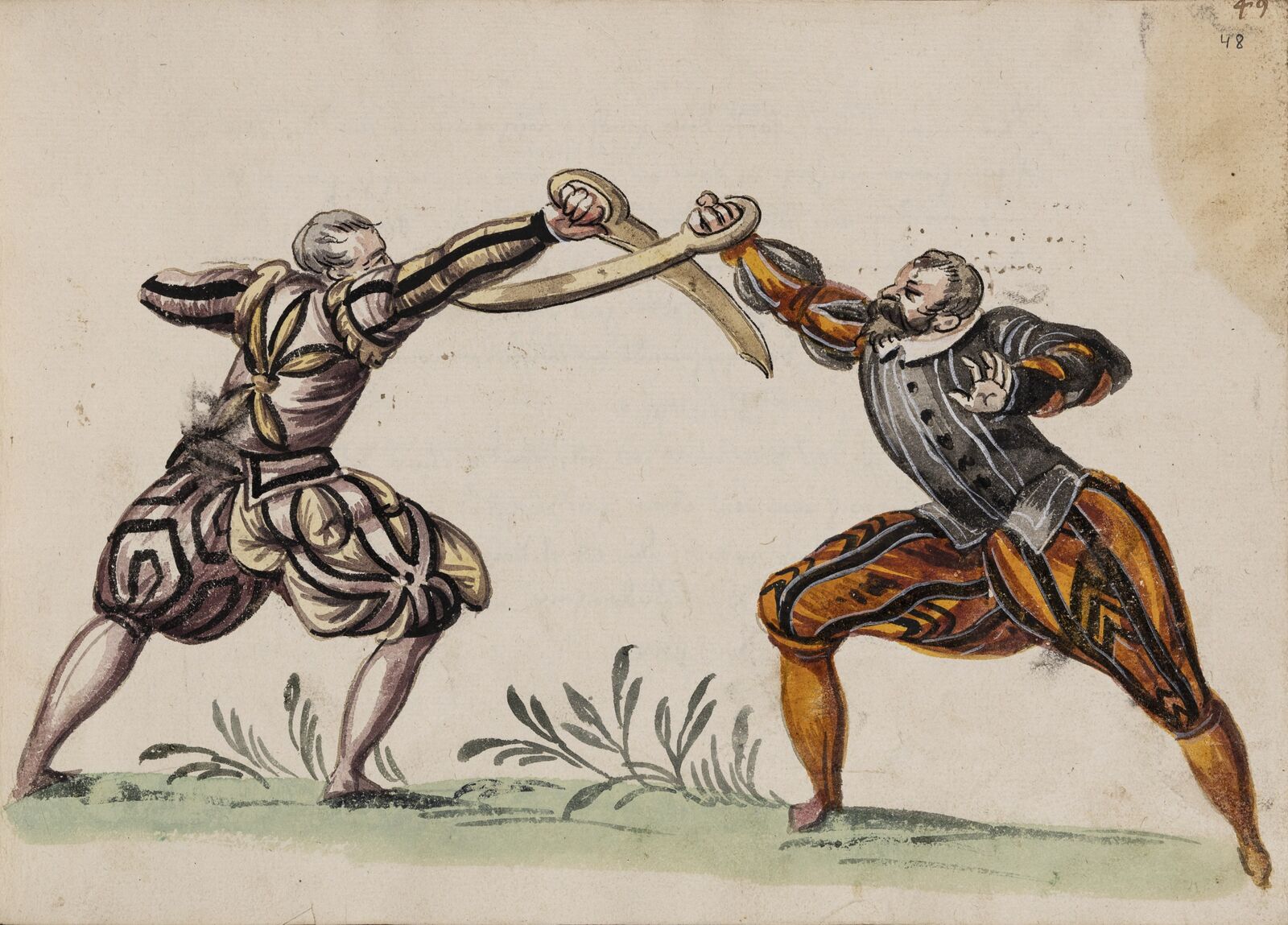
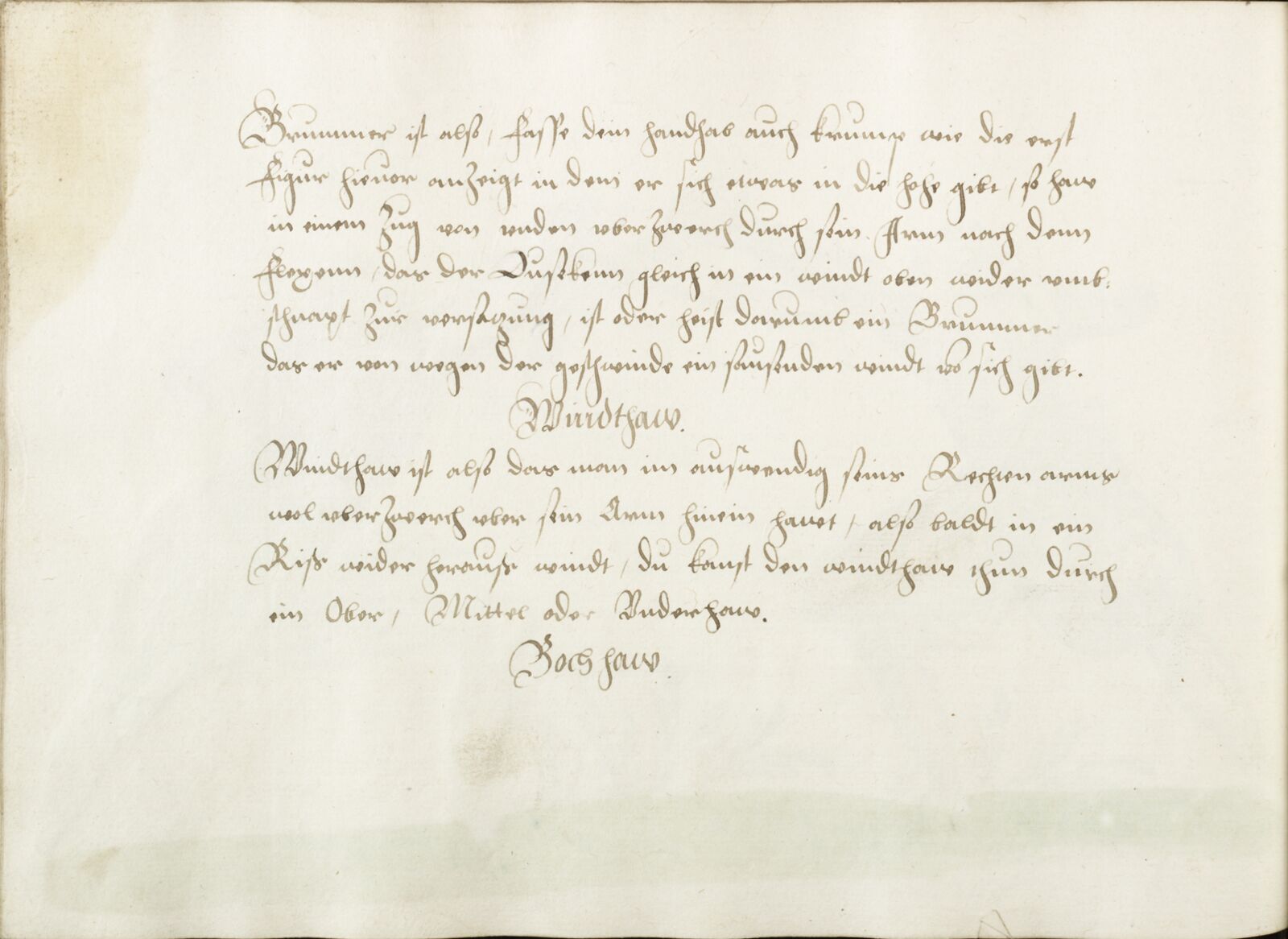
Lund Manuscript · fol. 44v.2
[44v.2] Und helt sich mit den vier Legernn also, Der man wirdt ge
theilt in vier theil wie obenn die Figur ausweist, die Obernn
zwo heyssenn der Ochs, die undern zwo heyssenn der Pfluog
Nun wan du die wehr oben hast zur rechtenn oder Linckenn
so stehestu in Ochsenn oder stier, was du also fur stuck oder hew
auß dem Ochsenn machst oder hawest, die selbenn kanstu auch auß
allen andern legernn oder huotenn (die du obenn brauchst, ha-
wenn oder Fechtenn und soll dich derhalben nicht irren das mehr
als vier Leger genent werdenn als Stier, Wacht, Zornn
Leger welche namenn entspringenn vom furhabenn unnd nimpst
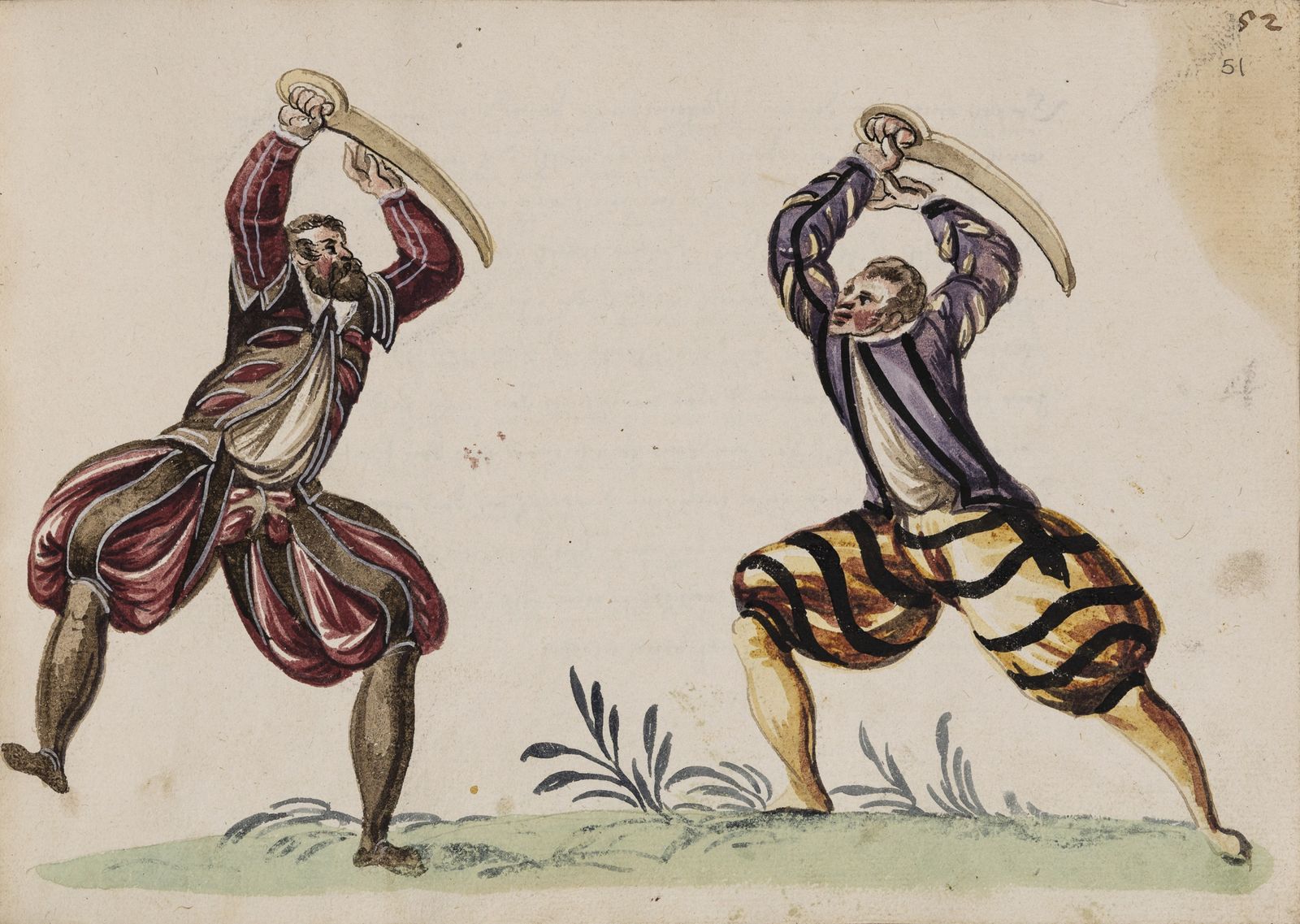
doch dem ersten nicht als zum Exempel ich halt mein wehr
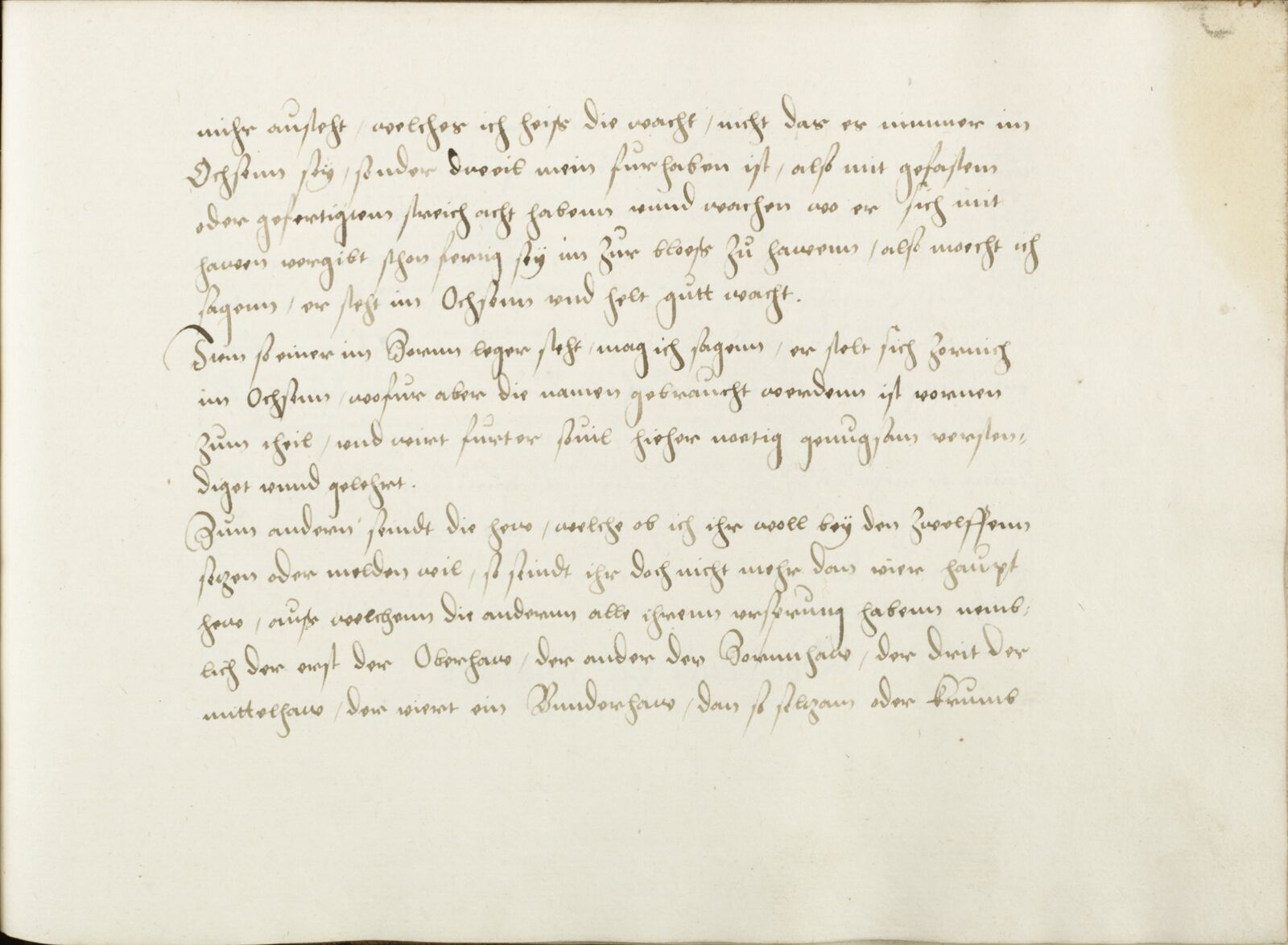
obenn zum gefastenn streych uber dem haupt das die spitz hinder[45r.1] mihr austeht/ welches ich heiß die wacht, nicht das es nimmer in
Ochsenn sey, sonder dweil mein furhaben ist, also mit gefastem
oder gefertigtem streich acht habenn unnd wachen wo er sich mit
hawen vorgibt schon fertig sey in zur bloeß zu hawenn, also moecht ich
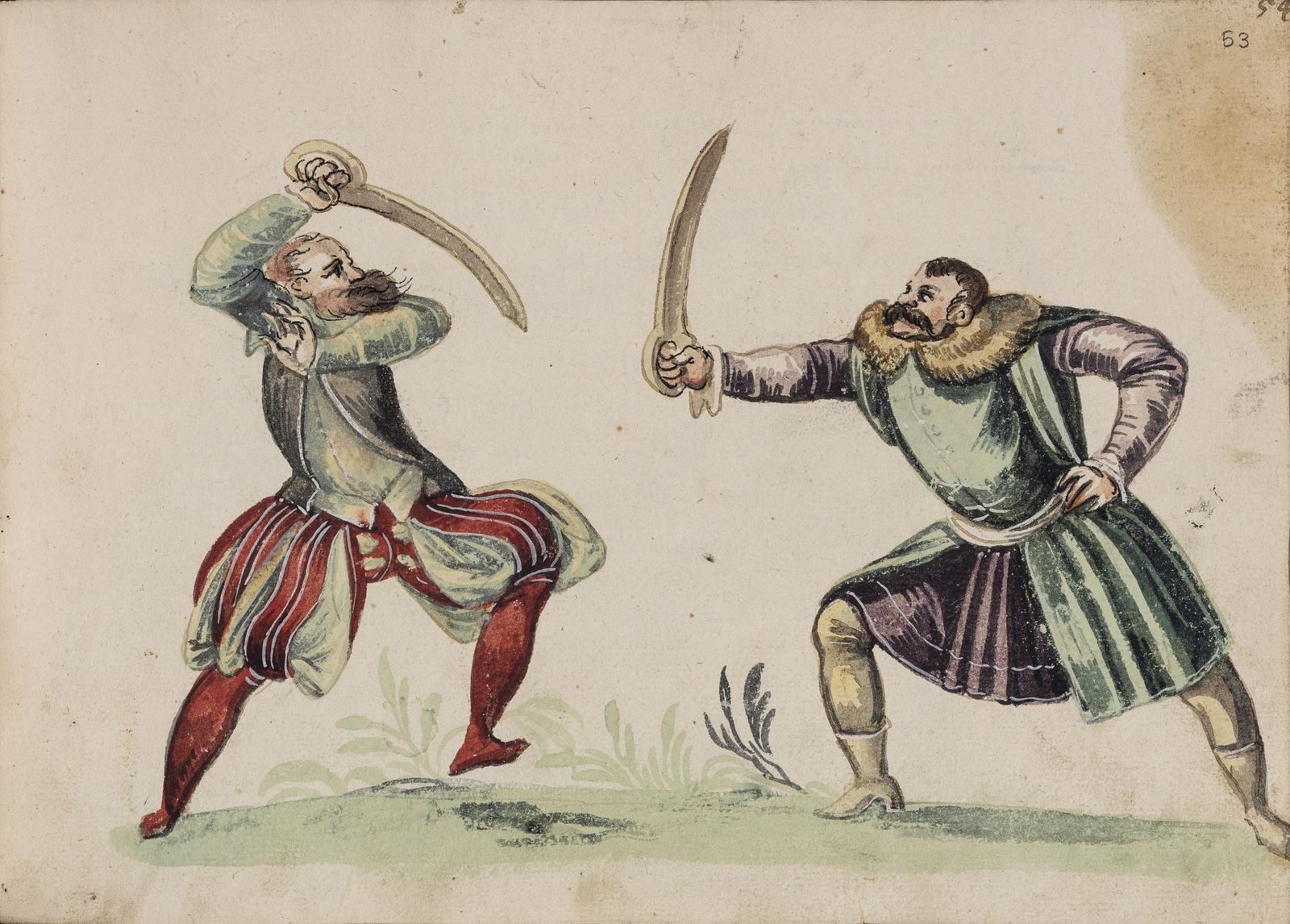
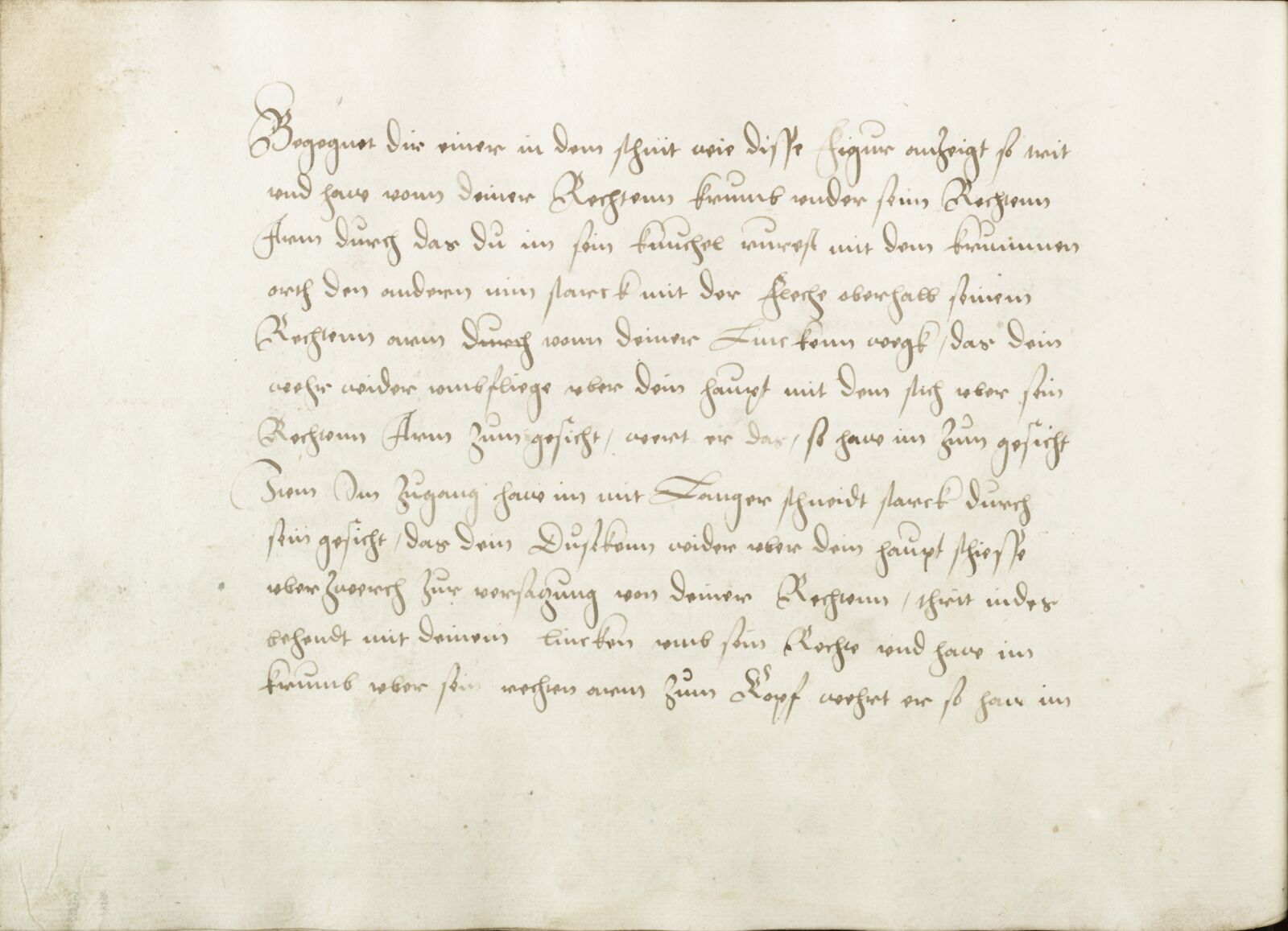
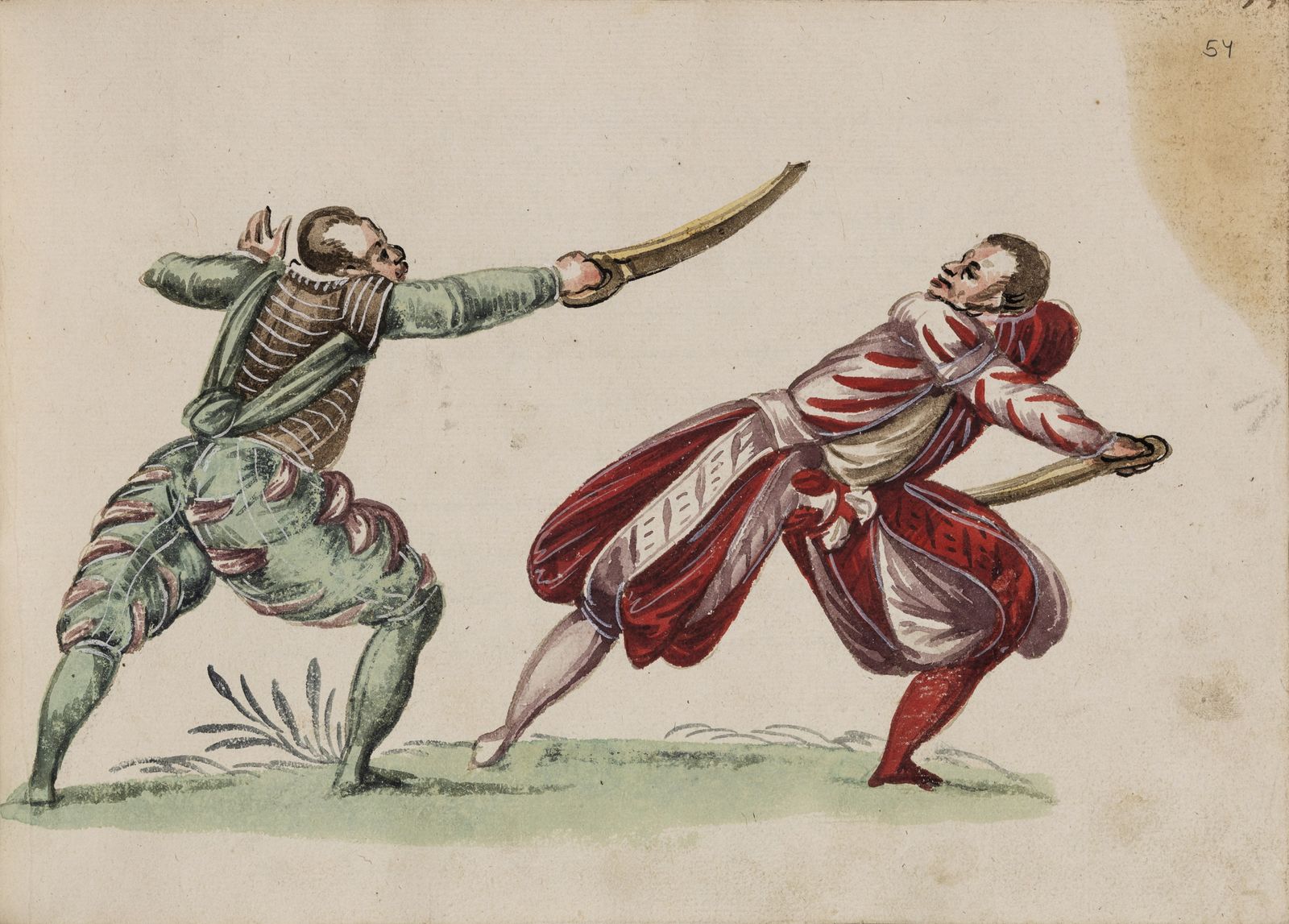
sagenn, er steht in Ochsenn und helt gutt wacht.
44v.245r.1
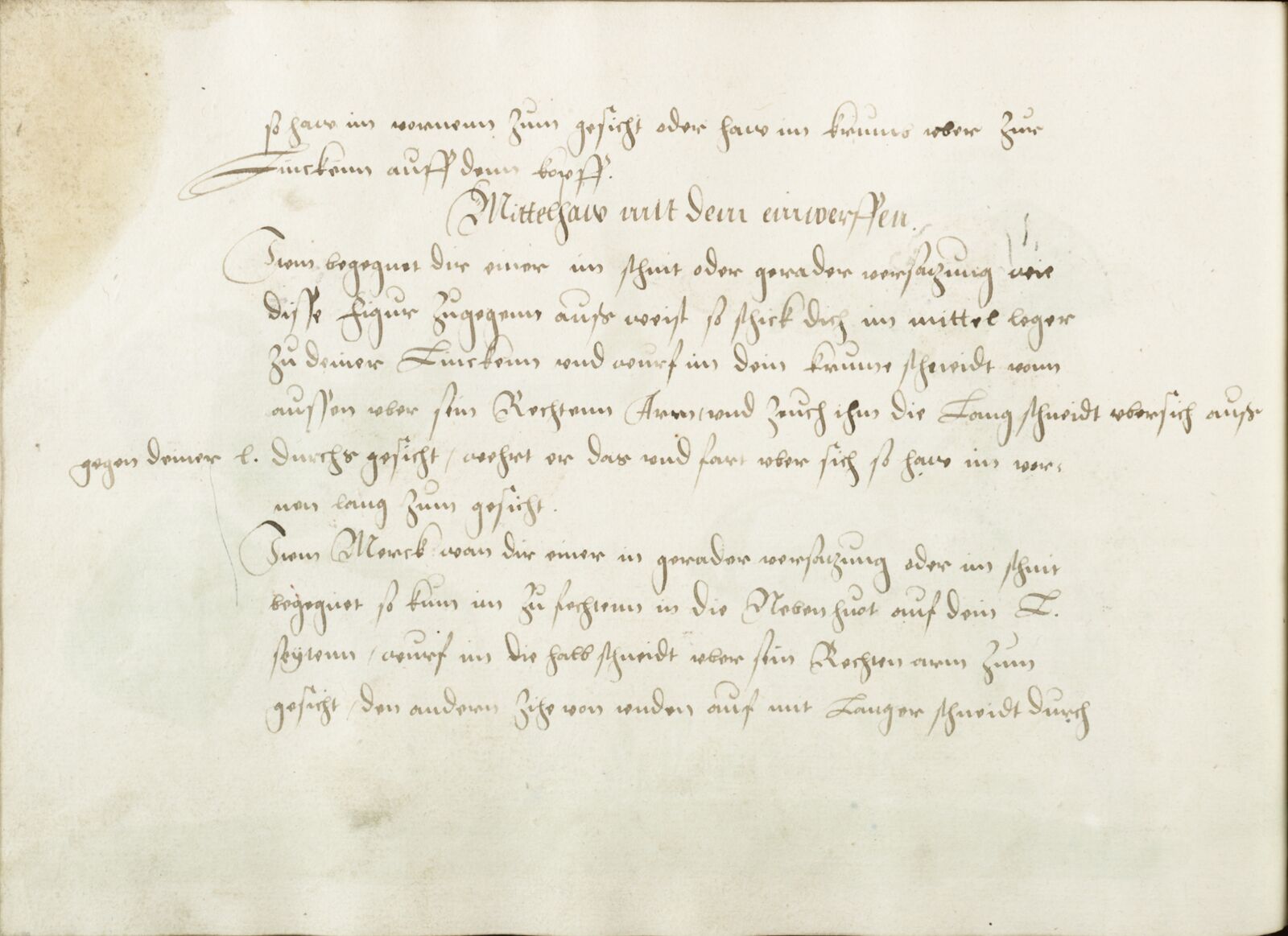
3.2linked passage
3.3
[3] Item Thus one in Wrath Guard stays, may I say, he opposes you wrathfully in Ox, from which comes the name's use, but this is premature and will further, as much as, hereafter, needfully enough, and understandingly be given and taught.
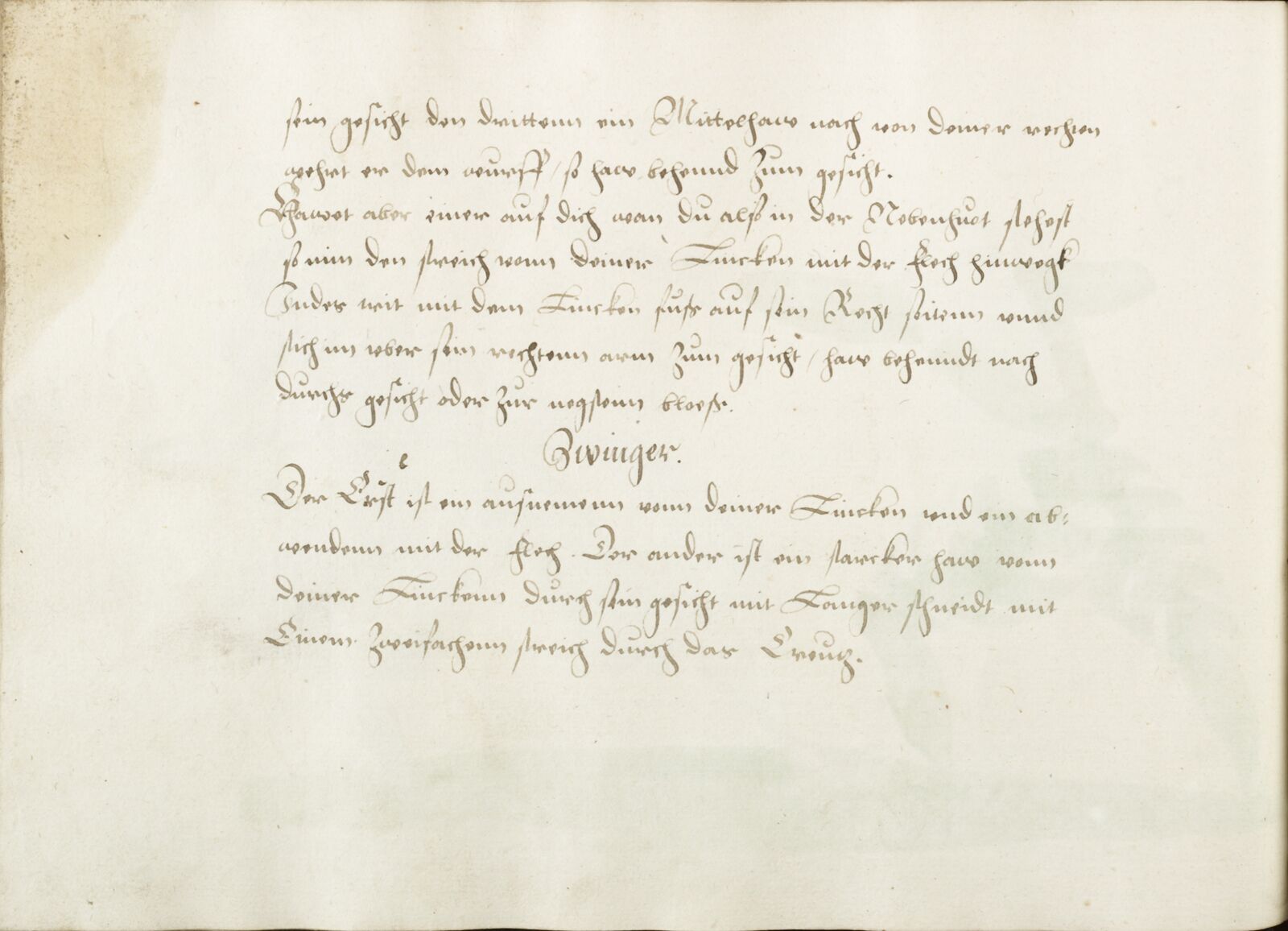
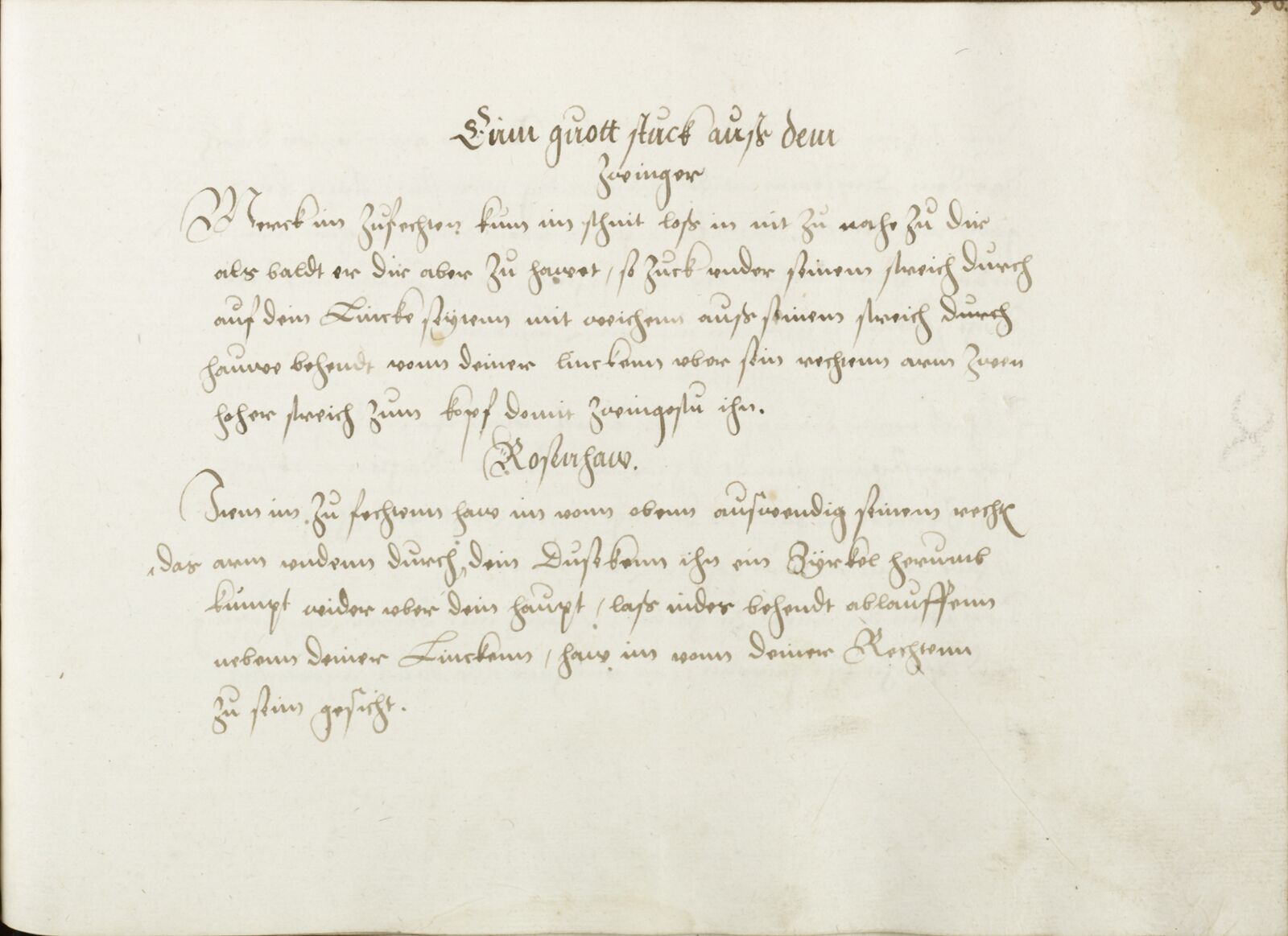
Lund Manuscript · fol. 45r.2
[45r.2] Item so einer in Zornn leger steht, mag ich sagenn, er stelt sich zornich
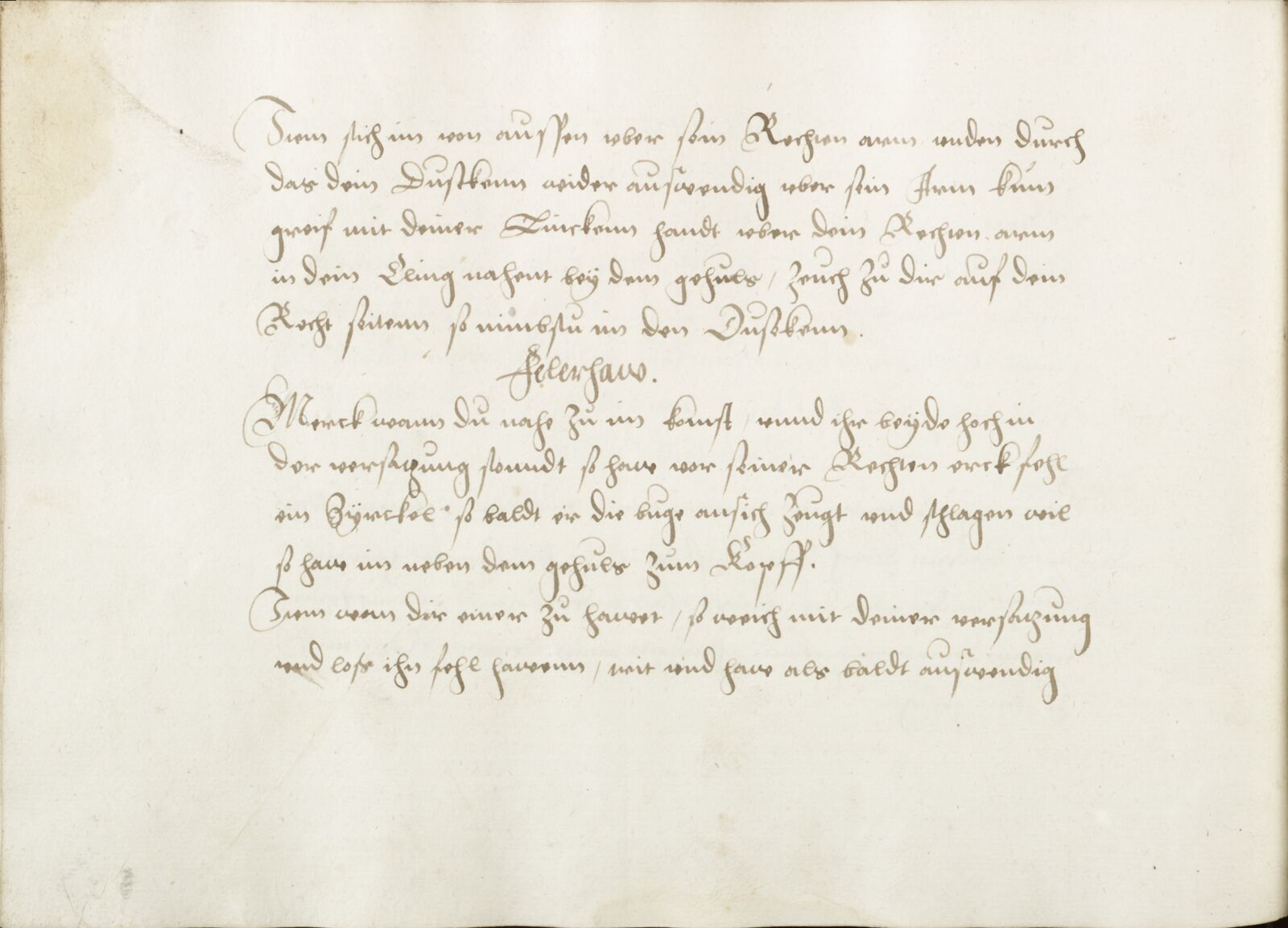
im Ochsenn, wofur aber die namen gebraucht werdenn ist vornen
zum theil, und wirt furter souil hieher noetig genugsam verstendiget
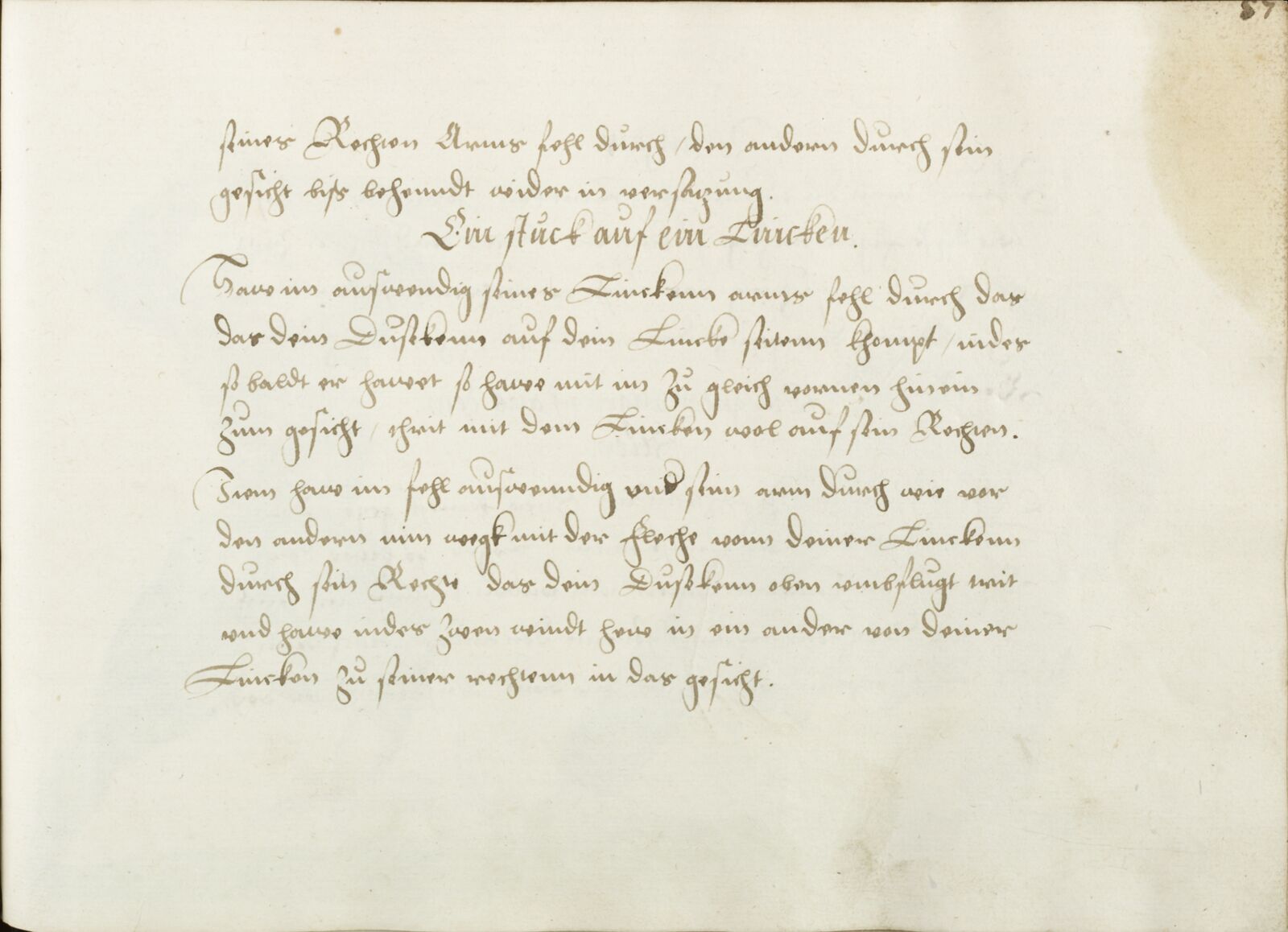
unnd gelehrt.
45r.2
3.3linked passage
3.4
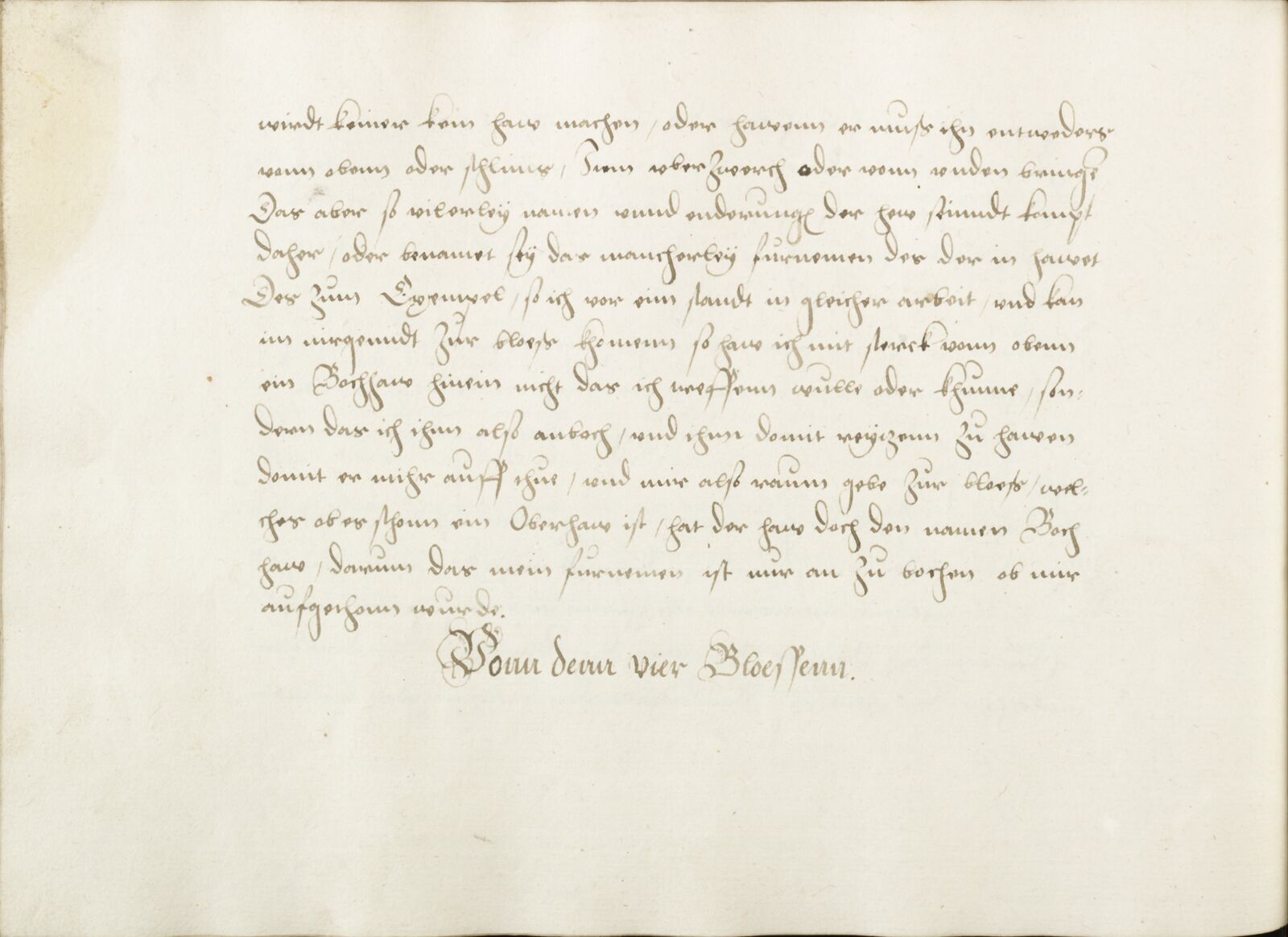
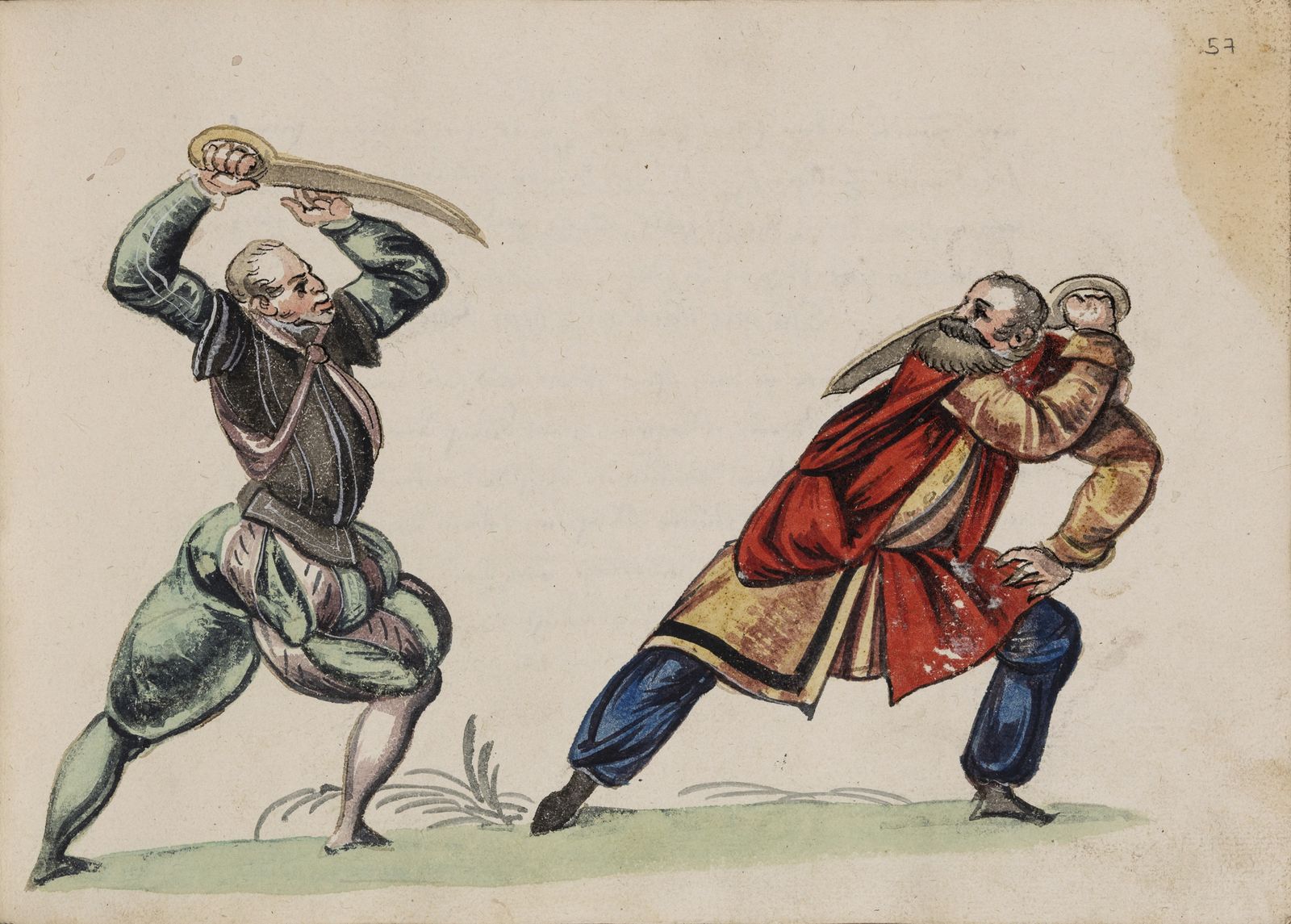
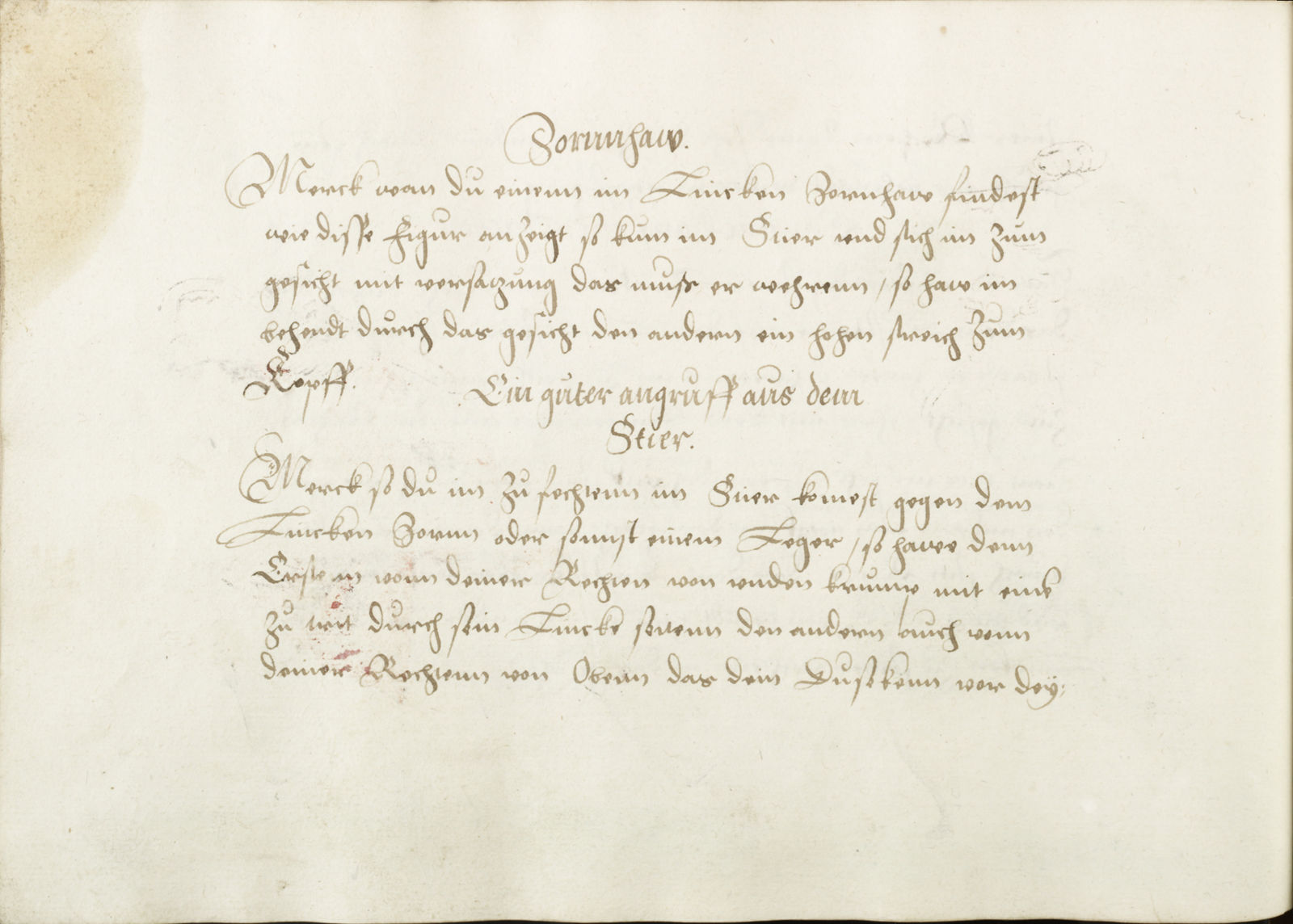
[4] Next are the cuts, which even if I would set forth and report to you, of all twelve, yet there are still not more than four main cuts, from which the others all have sprung from, namely, first the High Cut, second the Wrath Cut, third the Middel Cut, and the fourth an Low Cut, than slashing or Crooked so that no one can make cuts, or cut him usefully either from above, or diagonally, Item athwart, or bring from under, thus there are many kinds of names and alterations to the cuts, hence, so named that quite a few are carried out during the cuts, for example, thus I stand before one in the same work, and can't come at all to the openings, thus I cut strongly from above a Knock Strike not that I intend to hit or strike through but rather that I crash on to him and wrench into a cut and with this he will also do this to me, and would thus give room to the openings, from which a High Cut comes nicely. This cut has the name Knock Cut, therefore that my naming this is only about the clashing on that is to be done.
Lund Manuscript · fol. 45r.3
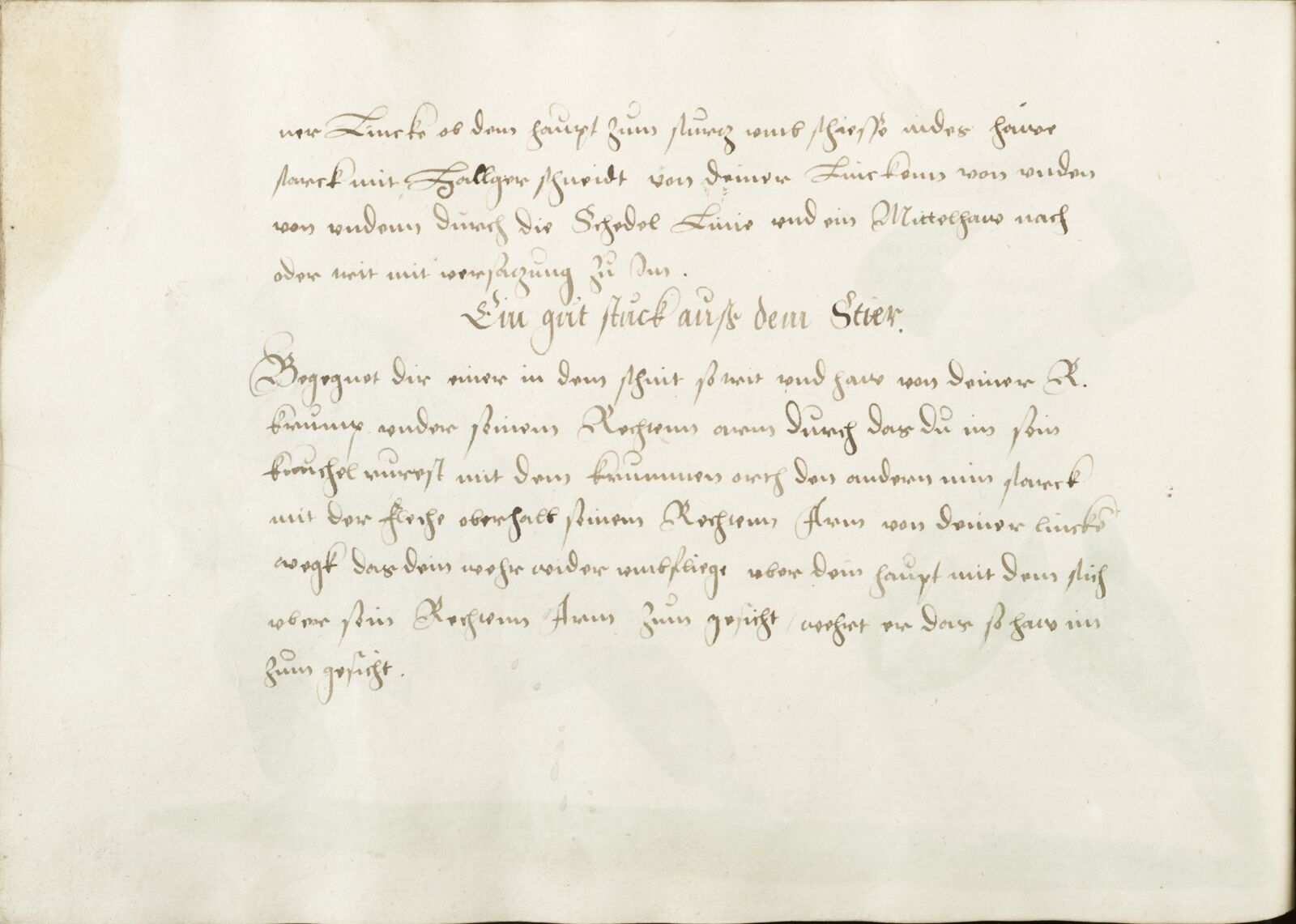
[45r.3] Zum andern seindt die hew, welche ob ich ihr woll bey den zwelffenn
setzen oder melden wil, so seindt ihr doch nicht mehr dan vier haupt
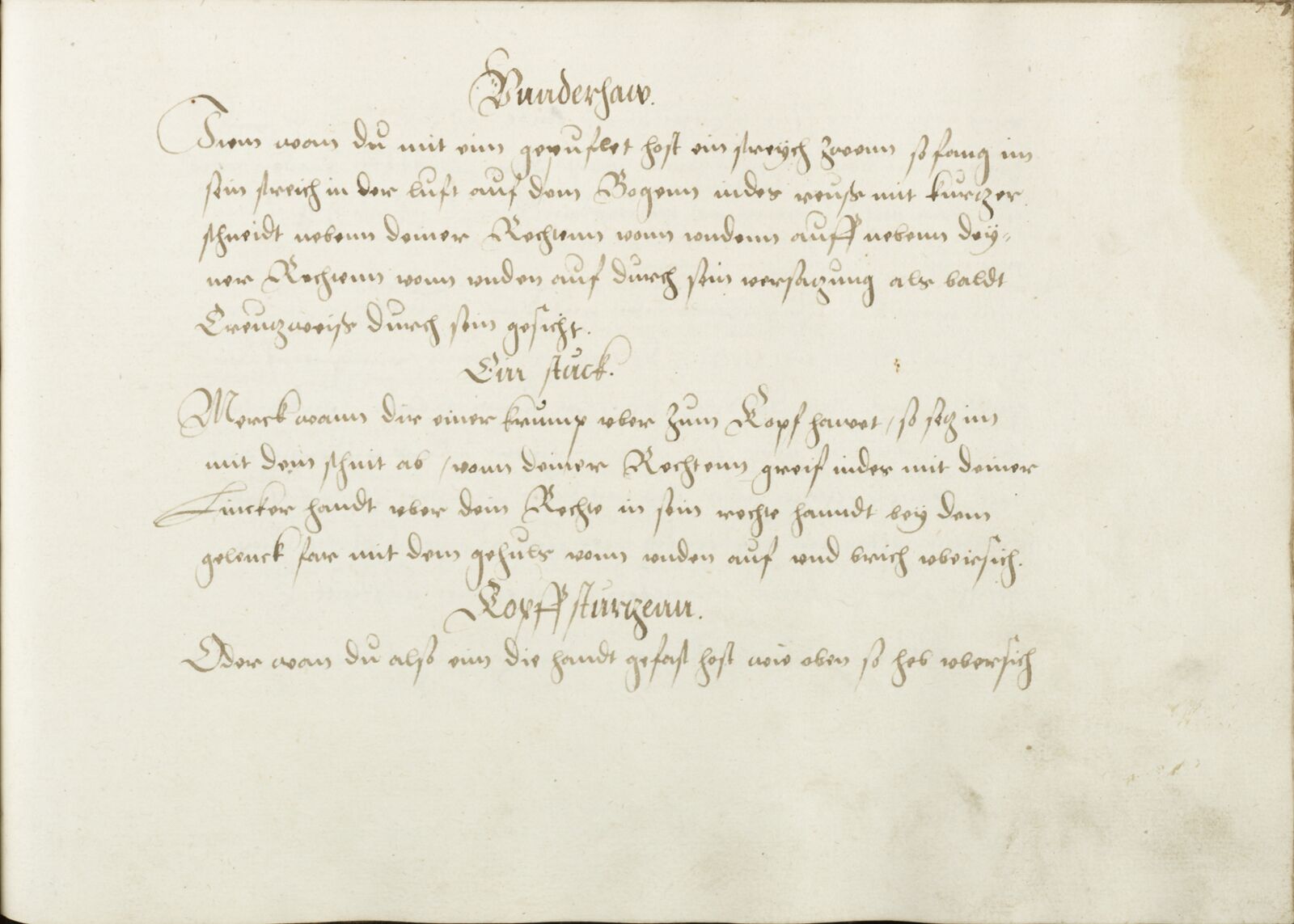
hew, auß welchenn die andernn alle ihrenn ursprung habenn nemblich
der erst der Oberhaw, der ander der Zornnhaw, der drit der
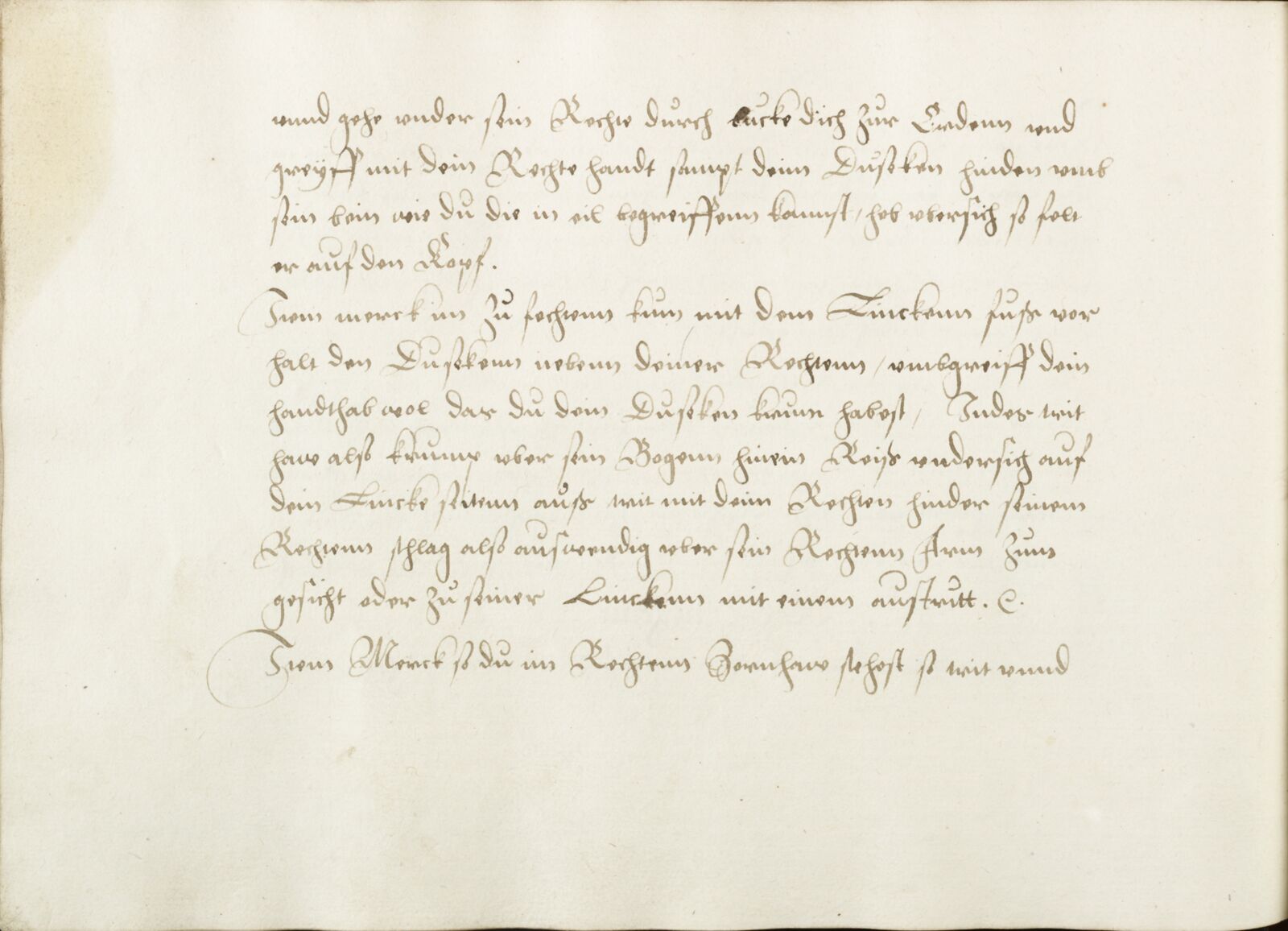
mittelhaw, der viert ein Unnderhaw, dan so seltzam oder krumb[45v.1] wirdt keiner kein haw machen, oder hawenn er muß ihn entweders
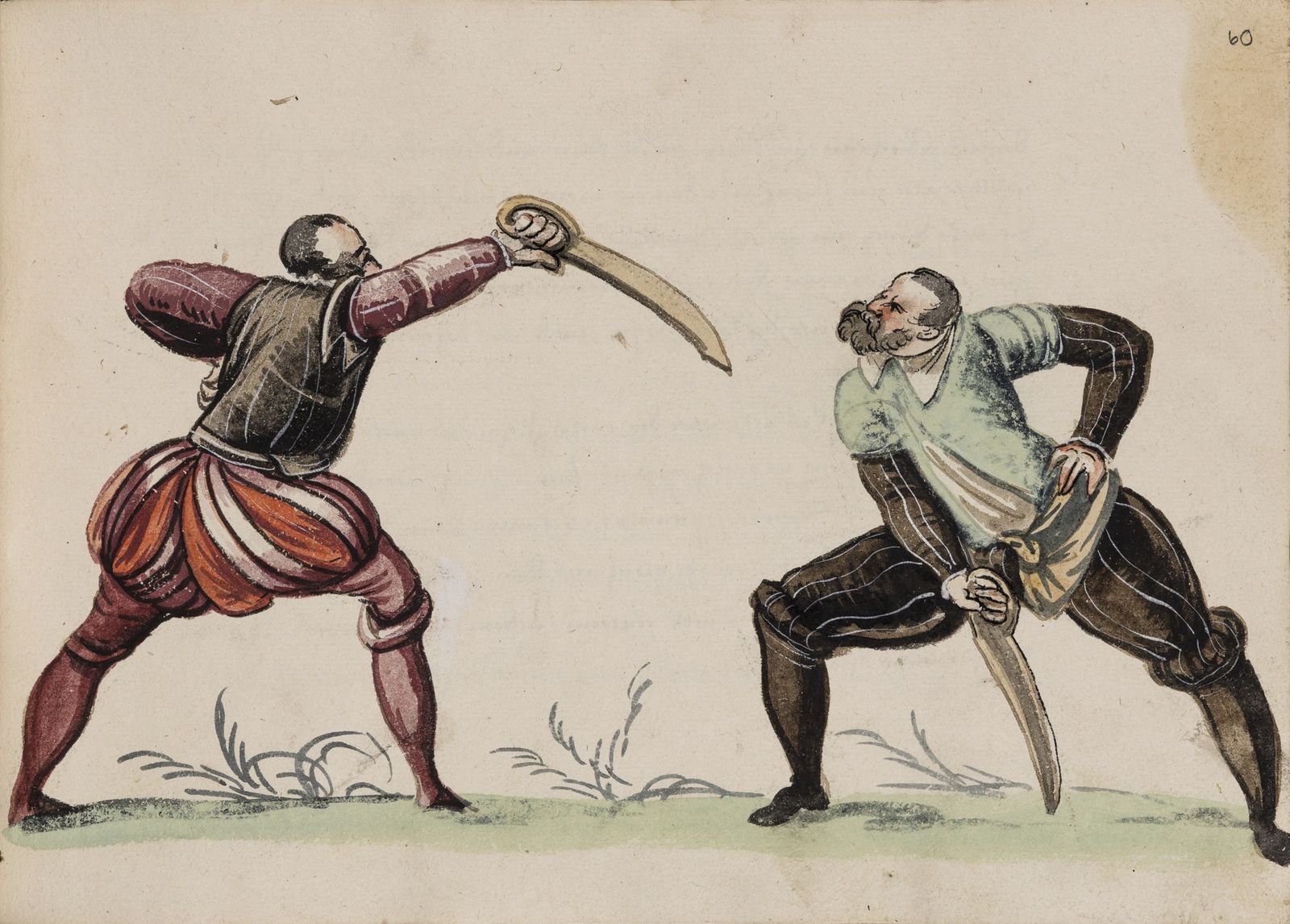
vonn obenn oder schlims, Item uberzwerch oder vonn unden bringen
Das aber so vilerley namen unnd enderungen der hew seinndt kompt
daher, oder benamet sey das mancherley furnemen des der in hawet
Des zum Exempel, so ich vor eim standt in gleicher arbeit, und kan
im nirgenndt zur bloeß khomenn so haw ich mit sterck vonn obenn
ein Bochhaw hinein nicht das ich treffenn wulle oder khunne, sondern
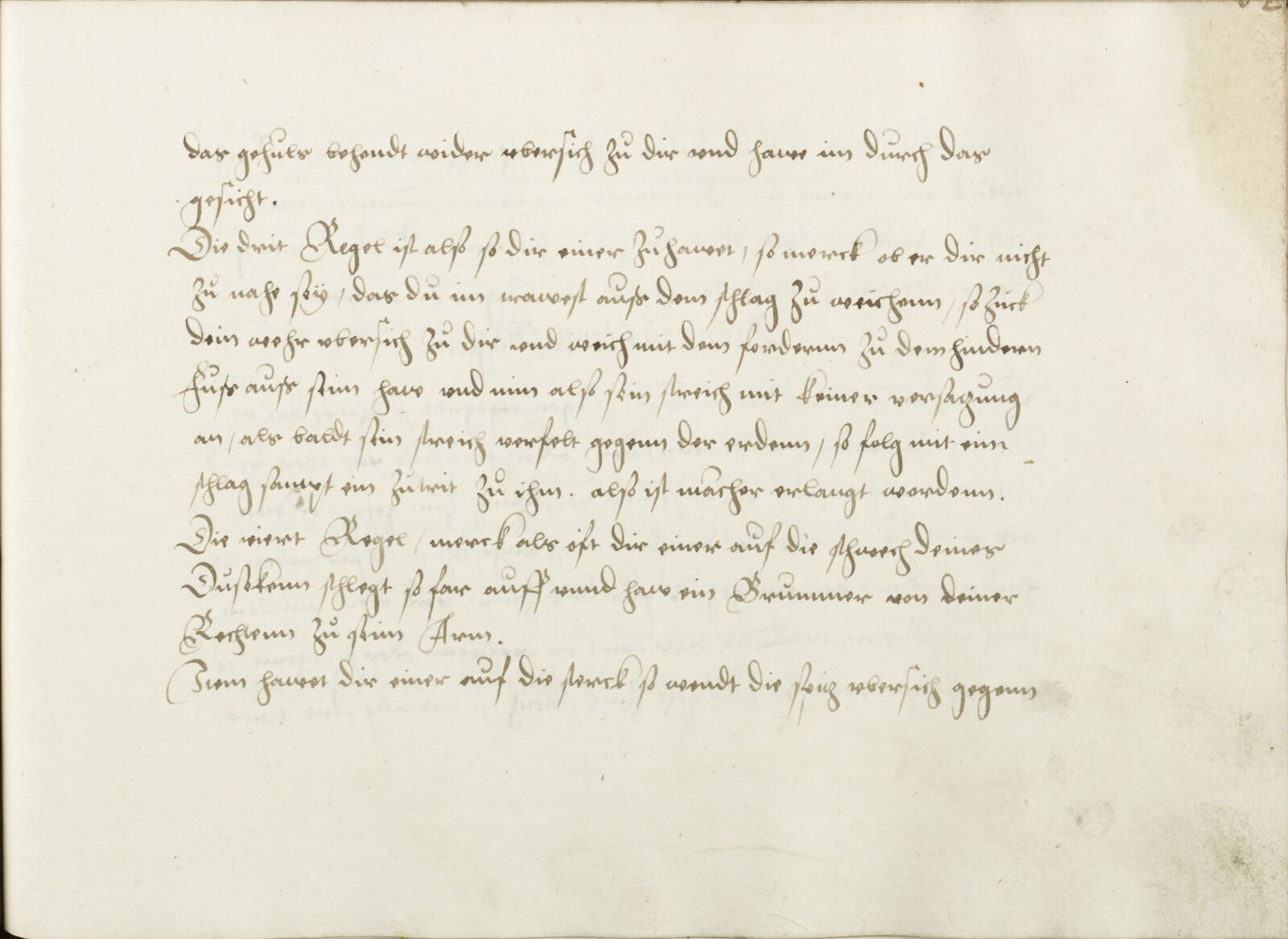
das ich ihnn also anboch, und ihnn domit reytzenn zu hawen
domit er mihr auff thue, und mir also raum gebe zur bloeß, welches
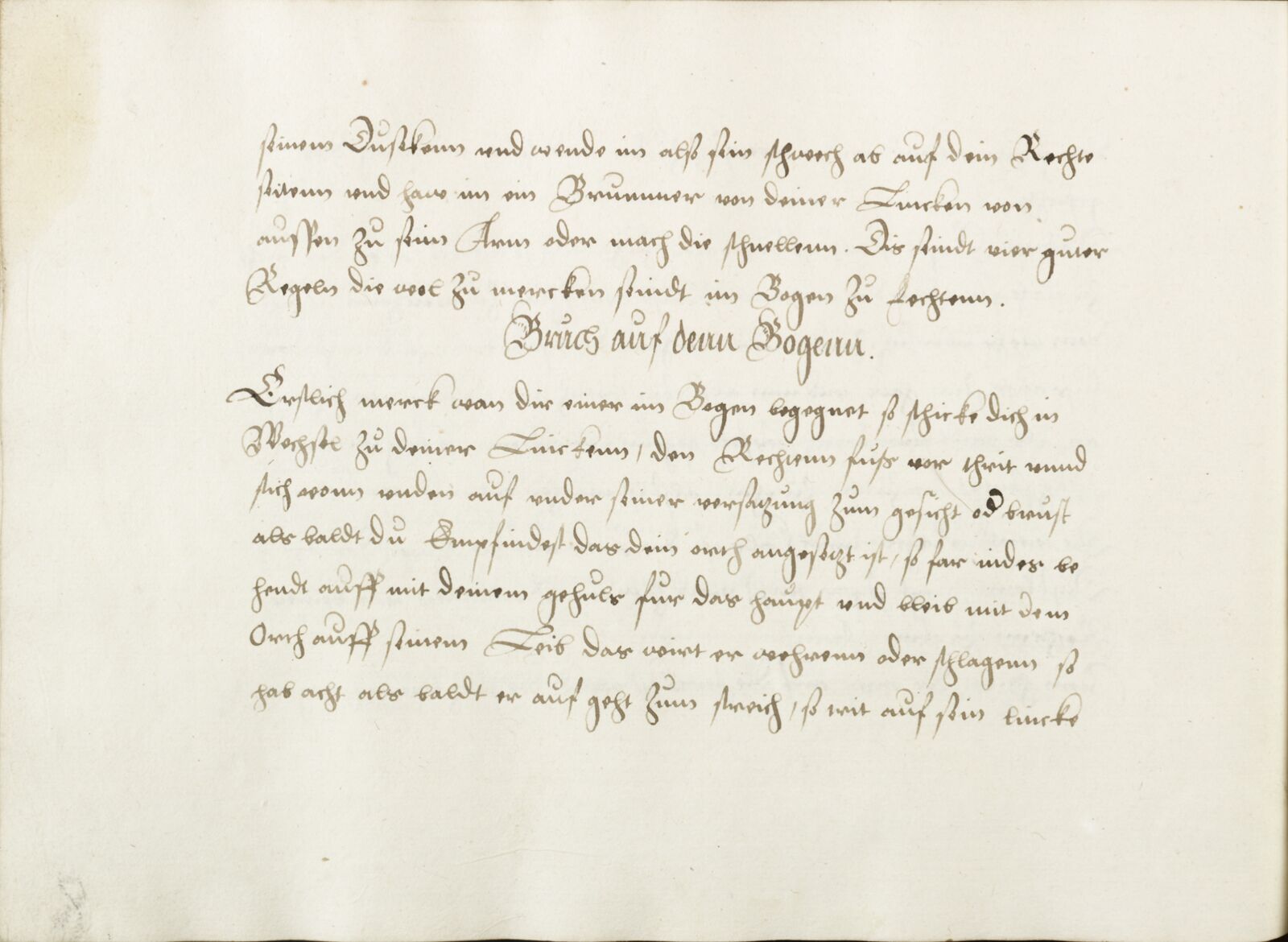
ob es schonn ein Oberhaw ist, hat der haw doch den namen Boch
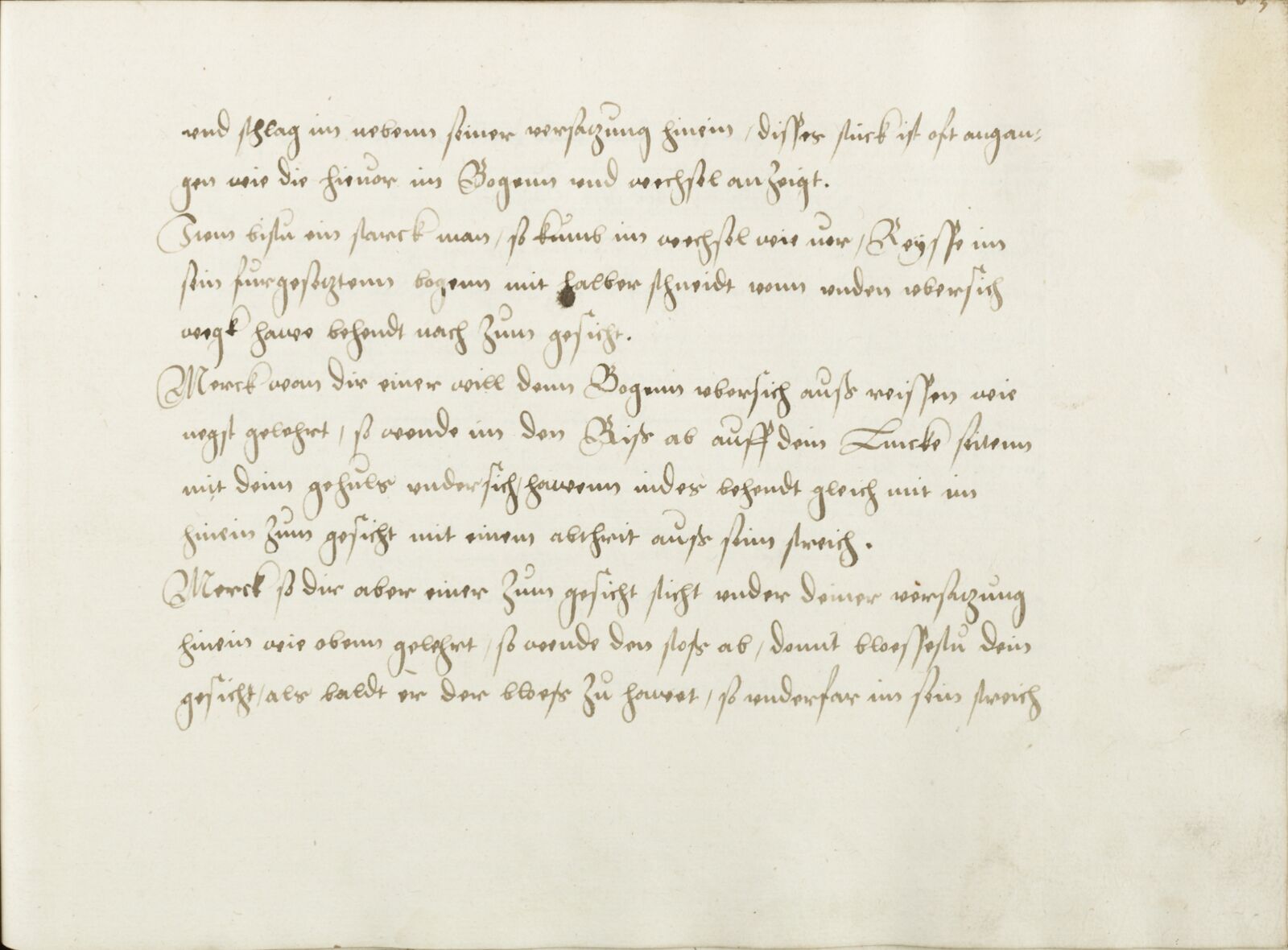
haw, darum das mein furnemen ist nur an zu bochen ob mir
aufgethonn wurde.
45r.345v.1
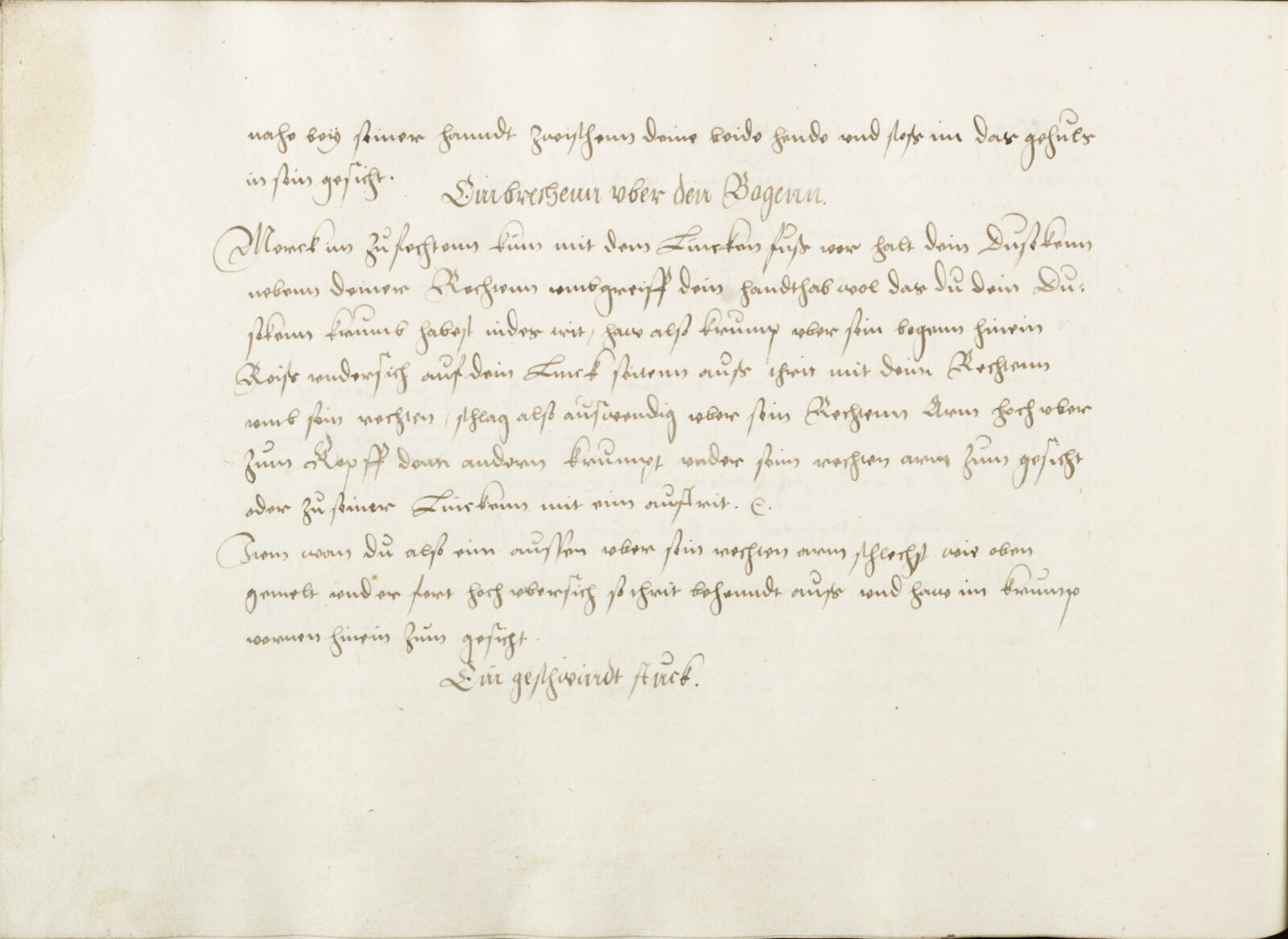
3.4linked passage
3.5
[5] From the Four Openings
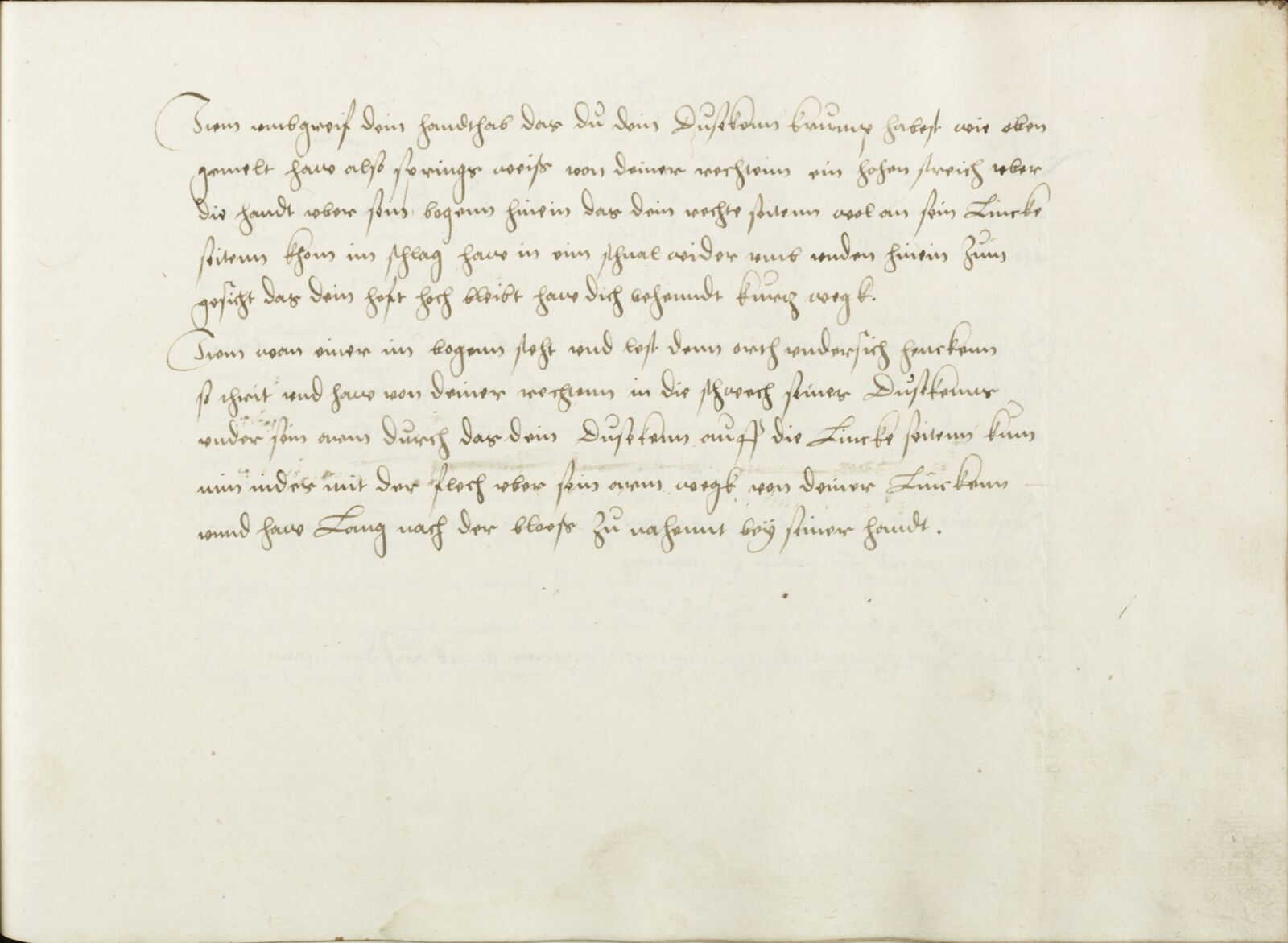
And thirdly, should one protect the openings, and learn to recognize them on the arms of the man, therein one should be aware, of he who leads diligently the defense when each are up high, thus he is open below.
[46r.1] Zum drittenn soll man der bloessenn wahr nemenn, und sie lernen
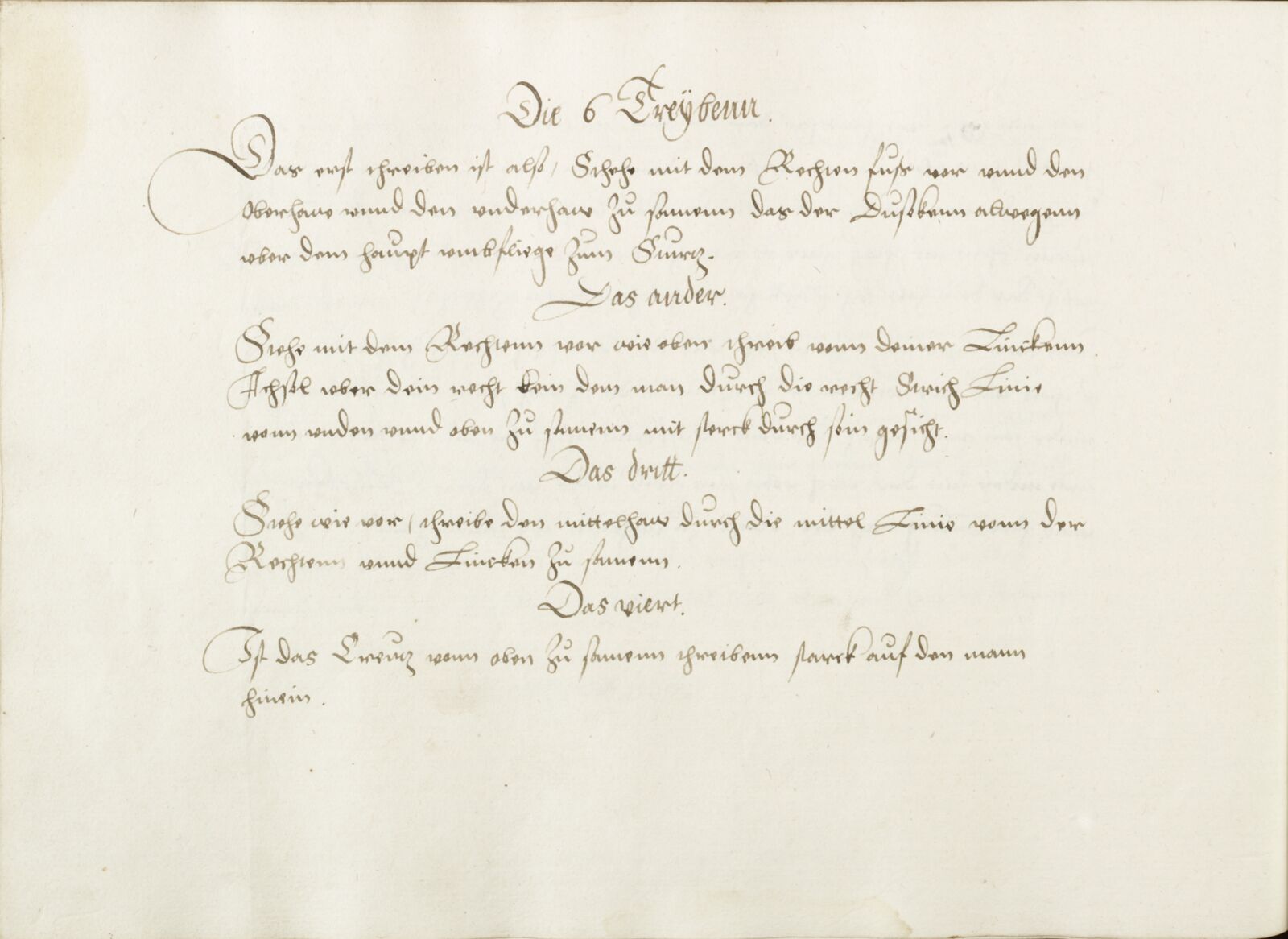
erkennenn an des mans armenn darinnen er die wehr furt
Also man soll acht habenn wan der man mit dem arm zu hoch
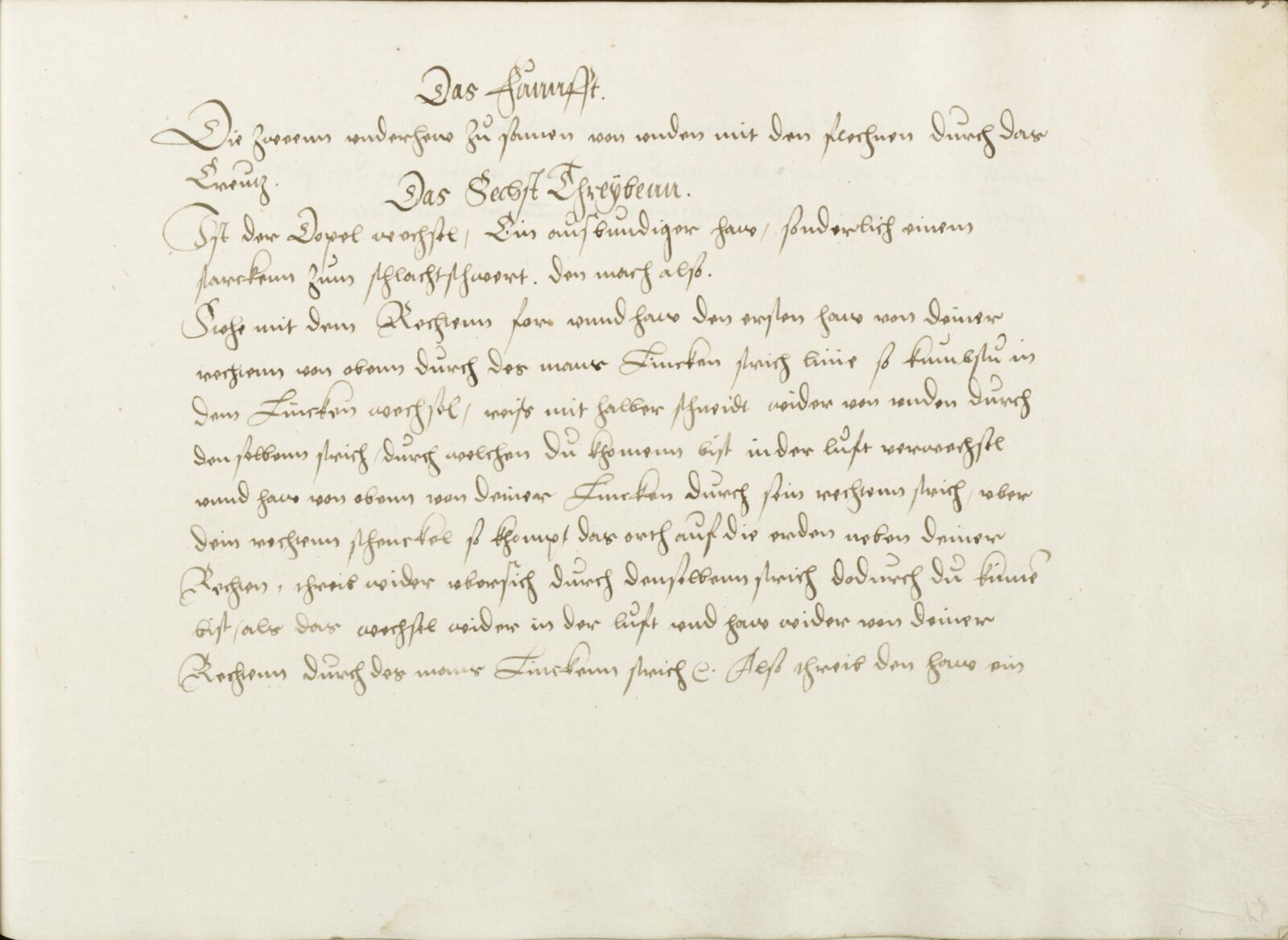
auffert so ist er unnden bloß.
45v.246r.1
3.5linked passage
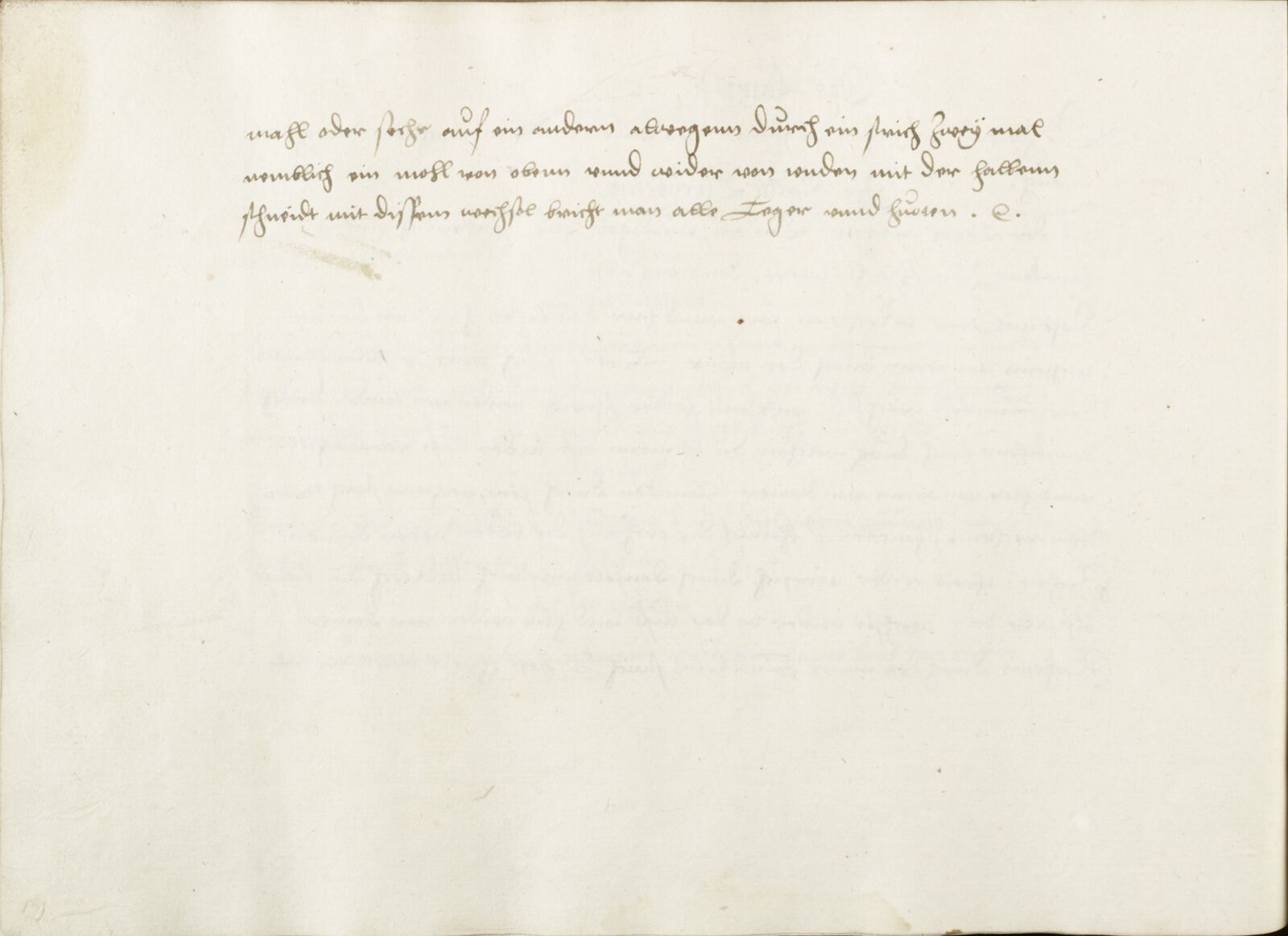
3.6
[6] Item Thus he who is low is even likewise open high, as is he who proceeds too far to the side, further but more importantly, the four divisions of the man, the Before and the After, strong and weak, Item the looping round, and the Circle, slices, and likewise, how it is previously presented and taught in the Sword and should be used here, as before.
Lund Manuscript · fol. 46r.2
[46r.2] Item so er sich zu tieff verfelt ist er
obenn bloß, ebenn desgleichenn so er auf die seiten zu weit verfert
weiter was aber die vier theil des mans das vor unnd nach
schwech unnd sterck, Item die Rinde unnd Zyrckel, schneidenn
unnd dergleichenn, ist vornenn in schwerdt nach der lenge erklert,
die sol man hie auch gebrauchenn wie hieuor gelehrt. 
46r.2
3.6linked passage
3.7
[7] Follow the Guards and they are given these Names
Watch or Luginslandt, Steer, Wrath, Boar, Changer, Side Guard.
Lund Manuscript · fol. 46r.3
[46r.3] Volgenn die Leger und seinnd mit
namen disse.
Wacht oder luog ins landt, Stier, Zornn, Eber, Wechsel,
Nebenhuot.
46r.3
3.7linked passage
3.8
[8] Item: The Slice, the Bow, which are the two displacings, one from under, the other from above.
Lund Manuscript · fol. 46r.4
[46r.4] Item der schnit, der Bogenn, welcher seindt die
zwo versatzung ein von unden die ander von obenn.
[10] These figures painted here are the paths through the man to which and through which one Cuts, the first line has three parts, namely on the Head, on the Arm and thus that one strikes Outright. Thus also the Wrath Guard winds, displaces, namely the three depictions, firstly through the face, to the other, through the Middle of the man, and thereafter through to the Legs and is nevertheless just a cut from one of the inward cuts, through his face or through the Middle of the man or through the Legs.
Lund Manuscript · fol. 46v.2
[46v.2] Disser hie bey gemalte Figur seinndt die strassenn durch den man
zu welcher oder durch welche man hawet die Erst Linie hat drey
theil, nemlich auf den Kopff auf die Arm so der man mit denn
hewen umbschweift. Also auch der Zornhaw wirdt versetzt furnemblich
zu drey malenn erstlich durch das Gesicht, zum andern durch
die mit des mans darnach durch die bein und ist gleich wol nur
ein haw von dem der in hawet, es sey durch das gesich oder
durch die mit des mans oder durch die beynn.
46v.2
3.10linked passage
3.11
[11] In summation: What comes from above, or that which cuts to the head or arms and feet thus is called from the High Cuts, thus that which would be cut from the Shoulder diagonally to the man, whether to the face or Body, high or from under, are called the Wrath Cuts and may also be done with the crooked or straight edge from which reason the cuts are well named for the limbs that they will be cut to. In Rappier hereafter follows and remains that the cut is still basically a Wrath Cut or a Middle Cut and thus it is created with all four cuts.
Lund Manuscript · fol. 46v.3
[46v.3] Summa was
vonn oben gehet, es werde nach dem Kopff oder armenn und Fuß[47r] gehawenn so heist es ein oberhaw
also was von der Achsel
schlims auf den man wurt
gehawenn, es sey zum gesicht
oder Leib, hoch oder nider
heist es ein Zornn haw man
mag auch den haw mit
Krummer oder gerader
schneiden thun, auß welcher
vrsach auch die namen der
hew verenndert werdenn
wie wol auch die glider zu
welchen gehawen wurt die
namen verendenn, wie in[47v.1] im Rapier hernach folgt und bleibt doch der haw in grundt ein Zornnhaw
oder Mittelhaw also ist es geschaffenn mit allen vier hewenn.
46v.347r47v.1
3.11linked passage
3.12
[12] Further, one should note when one cuts one of the four cuts through the stated line, and he is High or Middle, thus should one always cut out to the next line to the displacing.
Lund Manuscript · fol. 47v.2
[47v.2] Weyter sol man merckenn so man der vier hew einenn durch die gehoerene
Linie hawet es sey obenn oder mittel, so soll man alwegen die negst linie
wider auff hawenn zur versatzung.
47v.2
3.12linked passage
3.13
[13] Thus in Zufechten I come into the Steer and cut a Middle Cut through his face strongly, at once I cut from my left through the under weakly on his right line, displacing against his hand.
Lund Manuscript · fol. 47v.3
[47v.3] Also in zu fechtenn kumb ich in Stier unnd haw ein Mittelhaw
durch sein gesicht mit sterck als baldt haw ich von meiner Lincke durch die
under nemblich sein recht linie zu versatzung gegen seiner handt.
47v.3
3.13linked passage
3.14
[14] Meanwhile, I have given here to you a general rule throughout the whole of Dussack fencing, thus will I now as before, set forth an example of the technique which without the togetherness of the guards and cuts, together with the Pulled cuts, namely deceiving, no defeat comes, for they are based on the cuts from the shortest explanation (which is necessary) and their counters.
Lund Manuscript · fol. 47v.4
[47v.4] Dweil ich bis hiher ein general Regel durch das gantz Duseken fechtenn
gebenn hab, so wil ich nun zuuor und ehe ich die stuck unnd Exempel
setz (welches ohn zu samen fassung Leger unnd hew, sampt den verzuckten
hewenn nemblich verfurung nicht geschehen kann, die hew
auffs kurtzest (welche nodtwendig) erklerenn, und ihren Bruch lernen.
47v.4
3.14linked passage
3.15
[15] High Cut
The High Cut breaks all other cuts with suppressing or extra length and always goes through the Watch or from the Luginslandt and is a blissful and still artful cut to use.
Oberhaw bricht alle andere hew mit Dempfen oder uberlangen
und geht alweg durch die wacht, oder vonn dem Luog ins Lanndt
und ist ein einfeltiger, doch kunstlicher haw zu brauchenn.
48r.1
3.15linked passage
3.16
[16] Wrath Cut
Wrath Cut is also from above, but in those from the first it is differentiated of those from straight from above, this goes however diagonal from the shoulder and is known as the correct Father Strike, Wrath Cut or also the Battle Cut for this reason then, he who is strongest is greatest amongst all.
Zornhaw ist auch von oben, aber in dem vom ersten underscheyden
das jener geradt vonn oben, disser aber schlims von der Achsel geht
unnd ist disses der recht Vatter streich, wirt zornhaw oder auch
streithaw genent darumb das er der sterckest ist under allenn.
48r.2
3.16linked passage
3.17
[17] Middle Cut
Middle Cut is an athwart cut wherein one should know as common.
[48v.1] Underhaw ist ein schwacher haw, aber wo er mit geschwinde gebraucht
wurt ist er sehr nutzlich.
48r.448v.1
3.18linked passage
3.19
[19] Crooked Cut
Crooked is thus, grab around the grip well so that you have the Dussack crooked, thus if he cuts or not, so step immediately out and cut with the crooked edge, through the Diagonal Wrath or Middle Athwart Line.
Krumphaw ist also, umbgreiffe die handthab woll also das du den
Dusekenn krump habest, so er hawet oder nicht, so trit beseitzs
auß und haw mit krummer schneidt, es sey durch die schlim, zorn
Uberzwerch oder Mittel Linie.
48v.2
3.19linked passage
3.20
[20] Whacker
Whacker is thus, in the onset cut a strong cut onto his displacement and in that it clashes, or rests thus wind the cut into a thrust over his displacement line, that's called the Whacker.
Wecker ist also, in zugang haw ein starcken haw auf sein versatzung
unnd in dem es glutzst oder riert so verwindt den haw in ein
stich uber sein versatzung hinein, das heist wecker.
48v.3
3.20linked passage
3.21
[21] Buzzer
The Buzzer is thus, take hold of your grip crooked as the first figure here shows, in those cuts that he would give to you from somewhat on high, then cut through in a stroke from under and athwart to his arm, so that the Dussacks are both in the wind above, and again you shoot around to the displacement. It is or is called therefore a Buzzer, because of the sound from the fast rushing wind that it makes.
[49v.1] Brummer ist also, fasse dein handhab auch krump wie die erst
Figur hieuor anzeigt in dem er sich etwas in die hohe gibt, so haw
in einem zug von unden uberzwerch durch sein Arm nach denn
Flexenn, das der Dusekenn gleich in ein windt oben wider umbschnapt
zur veratzung, ist oder heist darumb ein Brummer
das er von wegen der geschwinde ein sausenden windt von sich gibt.
48v.449v.1
3.21linked passage
3.22
[22] Wind Cut
Wind Cut is thus when one would cut athwart well outside his right arm over his arm line, thus quickly in a rip, wind out again. You can do the Wind Cut through a High, Middle or Low Cut.
Windthaw ist also das man in auswendig seins rechten arms
wol uberzwerch uber sein Arm hinein hawt, also baldt in ein
Riß wider herauß windt, du kanst den windthaw thun durch
ein Ober, Mittel oder Underhaw.
49v.2
3.22linked passage
3.23
[23] Knock Cut
Knock Cut is here sufficiently clarified by examples.
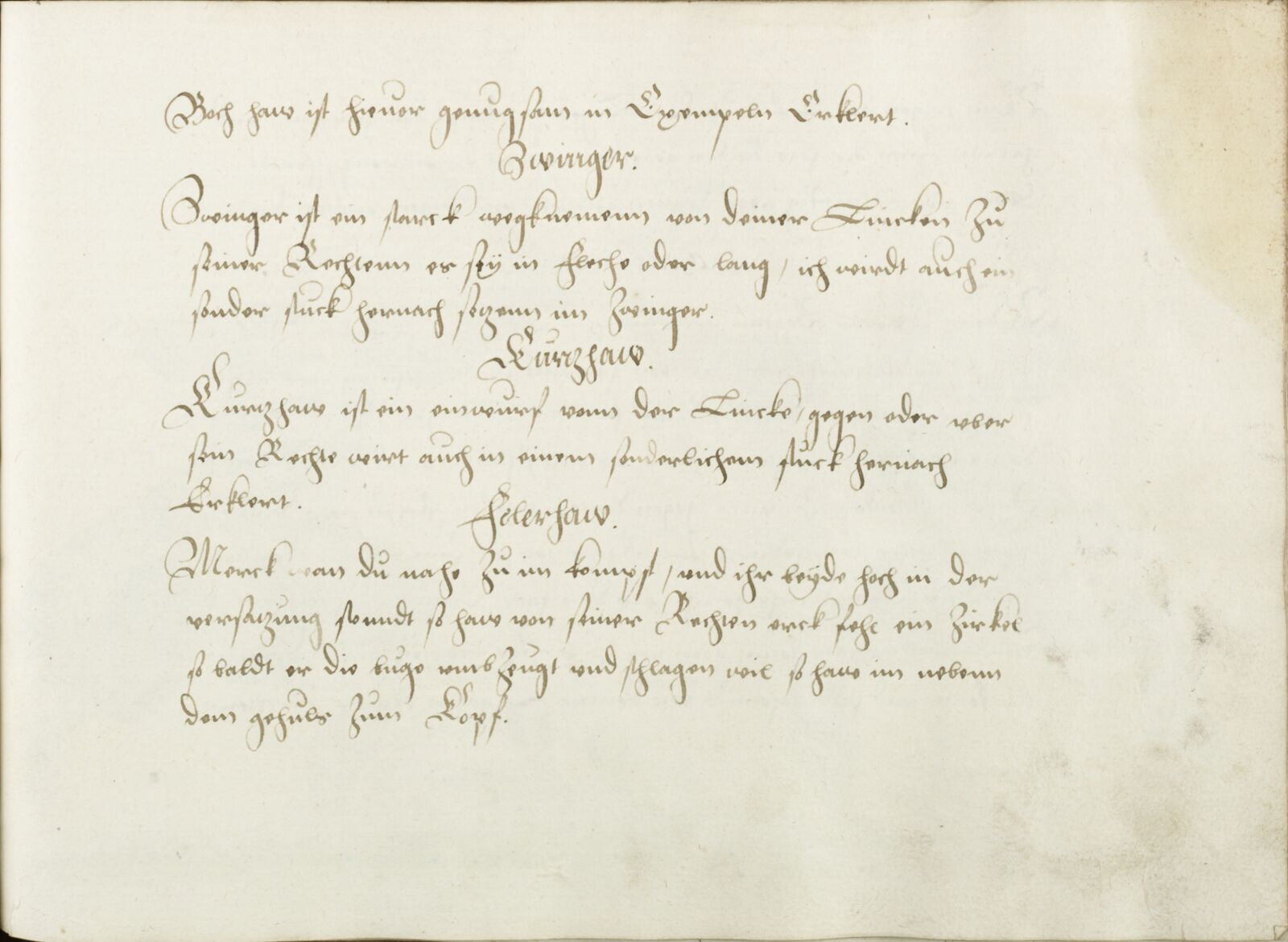
[50r.1] Boch haw ist hieuor genugsam in Exempeln Erklert.
49v.350r.1
3.23linked passage
3.24
[24] Constrainer
Constrainer is a strong taking away from your left to his right it is with the Flat or the Long, also I wind a special technique afterwards about the Constrainer.
Zwinger ist ein starck wegknemen von deiner Lincken zu
seiner rechtenn es sey in Fleche oder lang, ich wirdt auch ein
sonder stuck hernach setzenn in zwinger.
50r.2
3.24linked passage
3.25
[25] Short Cut
Short Cut is a throwing in from the left against or over his right, which will also be clarified afterwards in a special Stück.
Kurtzhaw ist ein einwurf vonn der Lincke, gegen oder uber
sein rechte wirt auch in einem sonderlichem stuck hernach
Erklert.
50r.3
3.25linked passage
3.26
[26] Failer Cut
Mark when you come near to him, and the both of you are standing high in the displacing, thus cut from his right shoulder a circle so soon as he is convinced and will strike, thus cut him beside the hilt to the head.
Merck wan du nahe zu in kompst, und ihr beyde hoch in der
versatzung stenndt so haw von seiner rechten erckfehl ein zirkel
so baldt er die buge umbzeugt und schlagen wil so haw in nebenn
dem gehuls zum Kopf.
50r.4
3.26linked passage
3.27
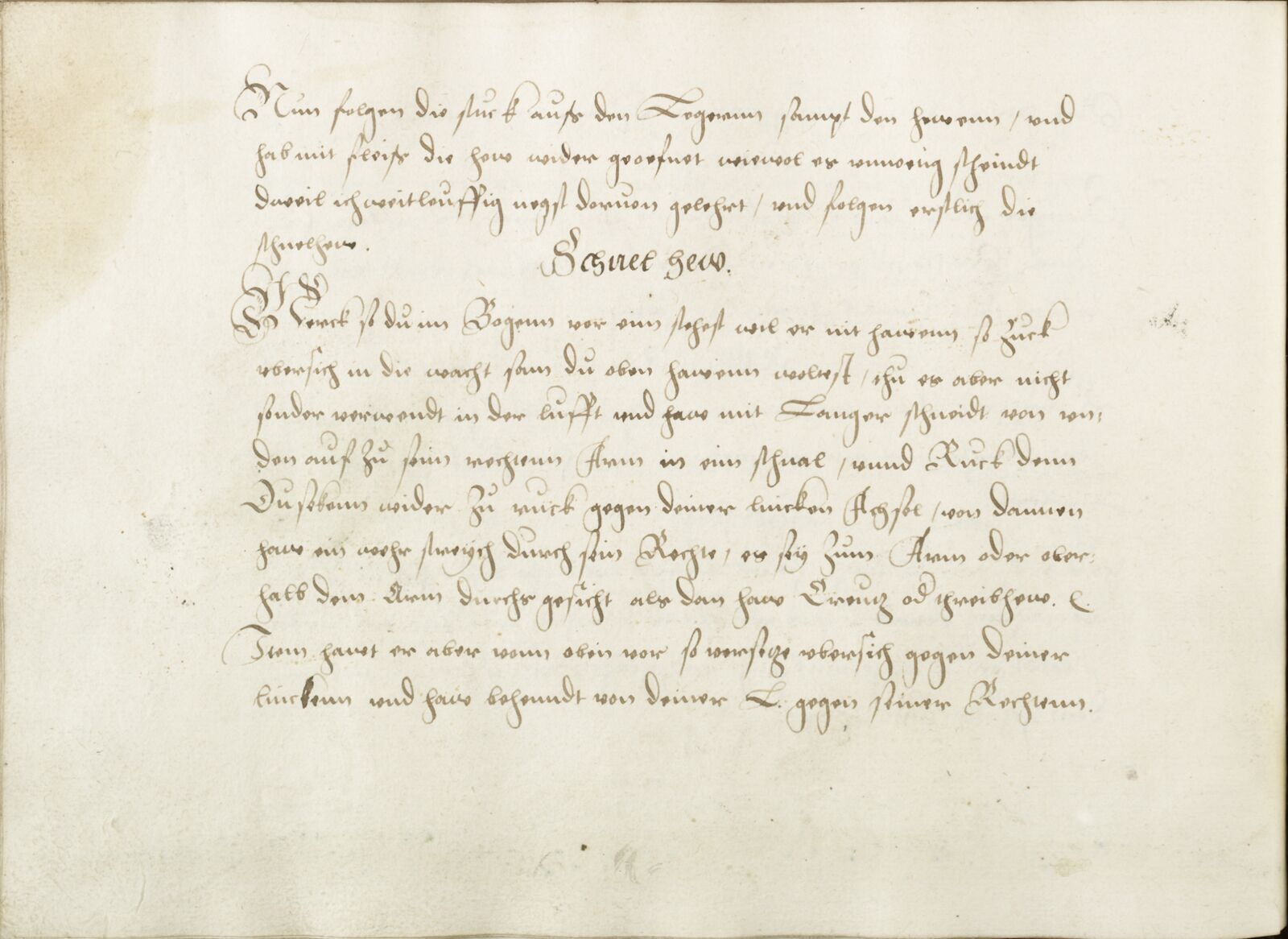
[27] Now follow the techniques on the guards together with the cuts, and have diligence with the cuts when they again make you open, even though he doesn't seem far. While I amply teach next, but follow firstly the Quick Cut.
Lund Manuscript · fol. 50v.1
[50v.1] Nun folgen die stuck auß den Legernn sampt den hewenn, und
hab mit fleiß die hew wider geoefnet wiewol es unnoetig scheindt
dweil ich weitleuffig negst daruon gelehrt, und folgen erstlich die
schnelhew.
50v.1
3.27linked passage
3.28
[28] Quick Cut
Mark thus when you stand before one in the Bow, and he will not cut so pull upwards into the Watch as if you would cut from high especially if he does nothing, wind in the air and cut with the long edge from under to his right arm quickly and jerk the Dussack again around to your left shoulder, from there cut a defense strike through his right, to the arm or above the arm through to his face, and then cut Cross or a Driving Cut.
Merck so du in Bogenn vor eim stehest wil er nit hawenn so zuck
ubersich in die wacht sam du oben hawenn woltest, thu es aber nicht
sonder verwendt in der Lufft und haw mit Langer schneidt von unden
auf zu seim rechtenn Arm in eim schnal, unnd Ruck denn
Dusekenn wider zu ruck gegen deiner lincken Achsel, von dannen
haw ein wehr streych durch sein rechte, es sey zum Arm oder oberhalb
dem Arm durchs gesicht als dan haw Creutz oder threibhew. 
50v.2
3.28linked passage
3.29
[29] Item If he cuts from above in the Before, thus displace upwards towards your left and cut through quickly from your left to his right it is under or above the Dussack thus you come with your Dussack beside your right side, from there cut again athwart from under with the long edge strongly through his arm, or if he cuts against your strike so that your Dussack comes to your left shoulder, cut away directly from the over line.
Lund Manuscript · fol. 50v.3
[50v.3] Item hawt er aber vonn oben vor so versetze ubersich gegen deiner
linckenn und haw behenndt von deiner Lincken gegen seiner rechtenn.[51v.1] durch es sey unden oder uberhalb dem Dusekenn, so kumbstu mit deim
Dusekenn nebenn dein rechte seytenn, von dannen haw wider uberzwerch
von unden auf mit Langer schneidt starck durch sein Arm, oder so Er
hawt gegenn deim streich das dein Dusekenn auf dein Linck Achsel
khom von dannen haw gerichts vonn oben hinein.
50v.351v.1
3.29linked passage
3.30
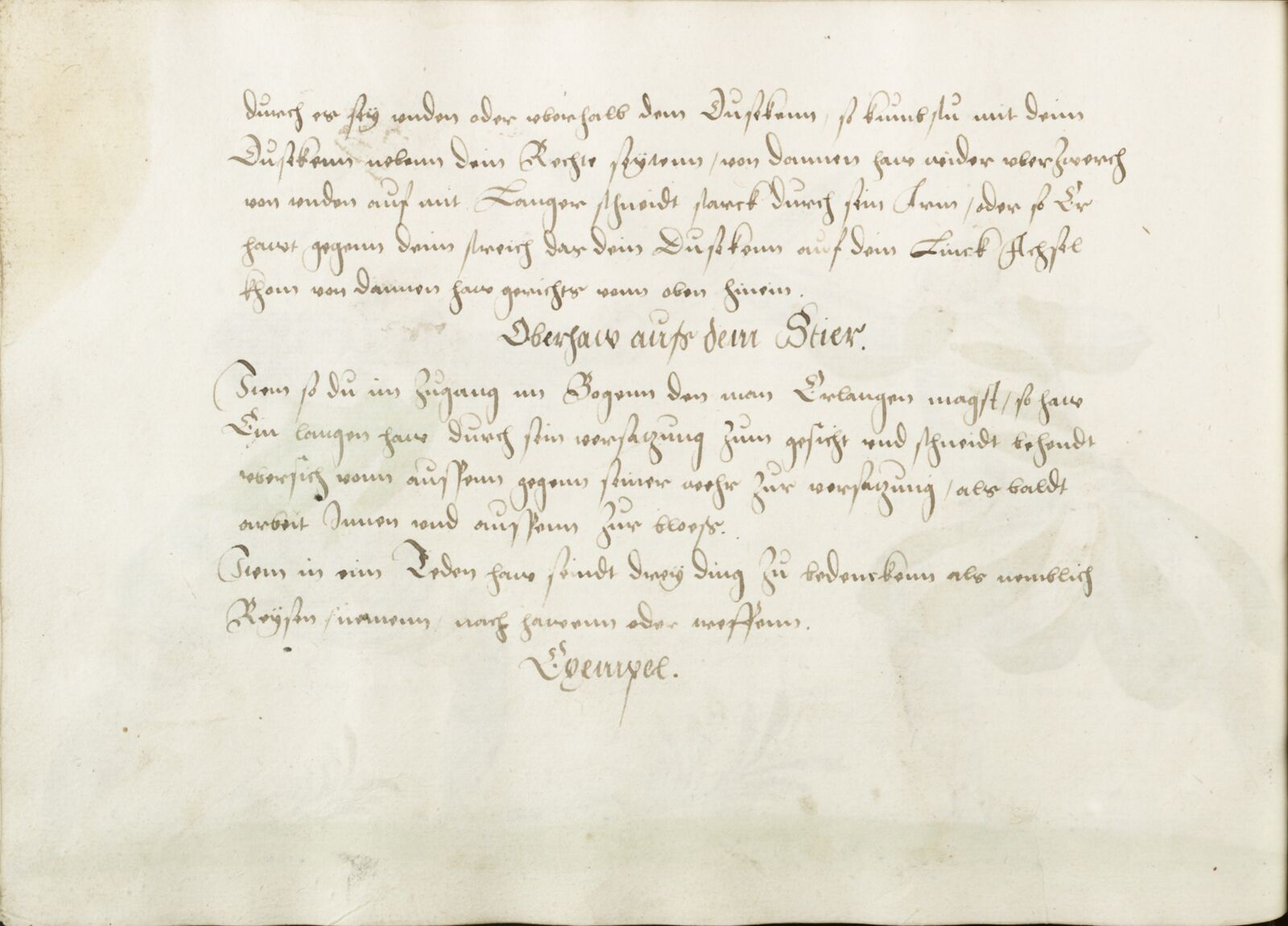
[30] High Cut on the Steer
Item: Thus when you may reach him, in the on going, in the Bow thus cut a long cut through his displacement to the face and cut quickly to the displacing, upwards from outside against his weapon, right away work inside and outside to the Openings.
Item so du in zugang in Bogenn den man Erlangen magst, so haw
ein langen haw durch sein versatzung zum gesicht und schneidt behendt
vbersich vonn aussenn gegenn seiner wehr zur versatzung, als baldt
arbeit innen und aussenn zur bloeß.
51v.2
3.30linked passage
3.31
[31] Item In every cut are three things to think about, that namely you provoke, take, and cut after or hit.
Lund Manuscript · fol. 51v.3
[51v.3] Item in eim jeden haw seindt drey ding zu bedenckenn als nemblich
Reysen, nemenn, nach hawenn oder treffenn.
51v.3
3.31linked passage
3.32
[32] Example
He who stands before you in the Bow, now may you not be unmindful of striking to his advantage, thus he makes you rush while he after is not weakened, so do to him now thus, when one stands before you in the Bow, thus cut him the first through his Bow not that you would, but rather, with it you cut him where he is open, when he goes out to cut. and when he has cut, then you must suppress or ground his strike with a High Cut, as soon as you have cut the first the second is taken, then cut the third long after.
[52v.1] Es steht einer vor dir in Bogenn, nun darfstu in nit aslo in seinn
vortheil hawenn unbedacht, dan er macht dich sampt ubereylen dweil
er noch ungeschwecht ist, so thu in nun also, wan einer vor dir in
Bogenn steht so haw in den Ersten durch sein Bogenn nit das ihr
treffenn wolt, sonder damit reytzst du ihn das er aufgeht unnd
schlagen wil, in dem er dan schlegt, so so nimpstu in mit eim oberhaw
sein streich zu grunndt oder dempf in den, als baldt du in also
den erstenn gereitzst den andern genomen so haw den dritten lang nach.
51v.452v.1
3.32linked passage
3.33
[33] Item Go at him with a cut and displace his strong cut with the Bow from under, the third, cut him after to the Openings, if he cuts, however without strength, then take his cut with a Suppressing strike and cut after to the next opening.
Lund Manuscript · fol. 52v.2
[52v.2] Item Reytz in mit eim haw unnd versetz in den gereytztenn haw
mit dem bogenn vonn unnden auf, den drittenn schneidt in nach zur
Bloeß, hawt er aber ungereytzt, so nim in sein haw mit eim dempfhaw,
unnd haw nach zur negstenn bloeß.
52v.2
3.33linked passage
3.34
[34] Item Take note when he goes out to strike, thus cut him after besides his hilt to the face and that must happen, while he has his Dussack in the air to strike.
Lund Manuscript · fol. 53r.1
[53r.1] Item hab acht wann er aufgeht zu schlagenn, so haw in nach nebenn
seim gehuls zum gesicht und das muß geschehenn, dweil er seinn
Dusekenn in der luft hat zum streich.
53r.1
3.34linked passage
3.35
[35] Item Cut him a Buffalo Cut, as soon as he cuts after, thus displace and cut after him through to his forward limb and come quickly again in the displacing.
Lund Manuscript · fol. 53r.2
[53r.2] Item Reytz in zu einem Buffel schlag, als baldt er den thut
so versetz unnd haw in nach zu seim vorgesetztenn schenckel durch
unnd kum behenndt wider in versatzung.
53r.2
3.35linked passage
3.36
[36] Item Cut him initially a long High Cut to his head near by his hilt and allow this quickly to run off besides his right, and cut a long cut after to his face, and the two cuts should go hand in hand.
Lund Manuscript · fol. 53r.3
[53r.3] Item haw in zugang ein Langen oberhaw zu seim Kopff
nahet bey seim gehuls, unnd laß behenndt ablauffenn nebenn
seiner rechtenn, und haw ein langen nach zu seim gesicht, und
die zwen hew sollenn behenndt gehen.
53r.3
3.36linked passage
3.37
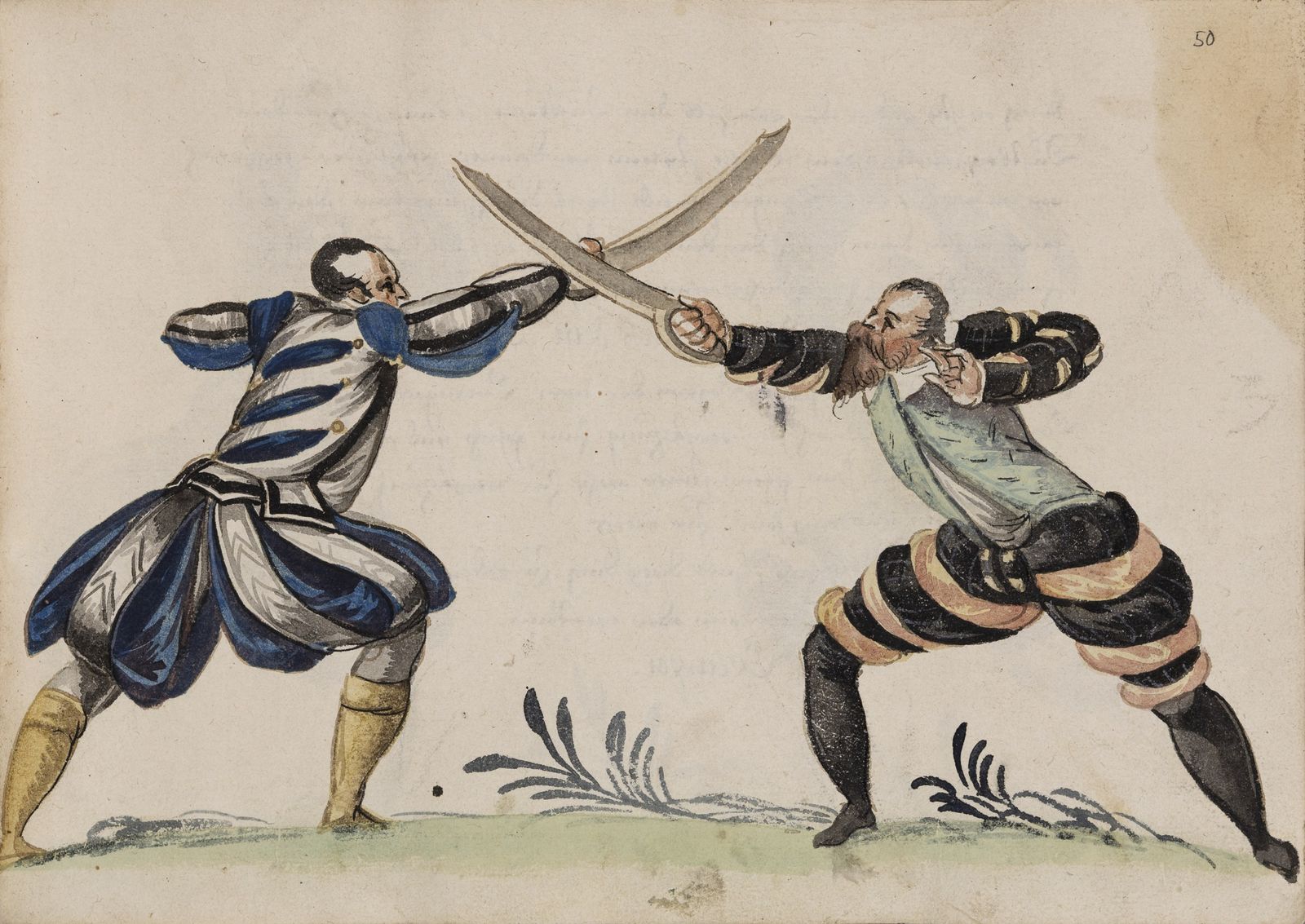
[37] A Good Stuck from the Steer how it follows
If you encounter one who is in the Slice how this figure shows, thus step and cut from your right Crooked under his right arm through so that you connect near his knuckles with the crooked point, the other take him strongly away with the flat upwards through his right arm from your left, so that your weapon again flies around your head, with this thrust over his right arm to the face, if he defends this, thus cut him to the face.
[53v.1] Begegnet dir einer in dem schint wie disse Figur anzeigt so trit
und haw vonn deiner rechtenn krumb under seim rechtenn
Arm durch das du in sein knuchel rurest mit dem krummen
orth den andern nim starck mit der Fleche oberhalb seinem
Rechtenn arm durch vonn deiner Linckenn wegk, das dein
wehr wider umbfliege uber dein haupt mit dem stich uber sein
Rechtenn Arm zum gesicht, wert er das, so haw in zum gesicht
53r.453v.1
3.37linked passage
3.38
[38] Item In the onset cut in with long edge strongly through his face, so that your Dussack again shoots over your head athwart to the displacement from your right, step instantly and quickly with your left around his right and cut him Crooked over his right arm to the head if he defends, thus cut him forwards to the face or cut him Crooked to the left at the head.
Lund Manuscript · fol. 53v.2
[53v.2] Item in zugang haw in mit Langer schneidt starck durch
sein gesicht, das dein Dusekenn wider uber dein haupt schiesse
vberzwerch zur versatzung von deiner rechtenn, thrit indes
behendt mit deinem lincken umb sein rechte und haw in
krumb uber sein rechten arm zum Kopf wehrt er so haw in[54v.1] so haw in vornenn zum gesicht oder haw in krumb uber zur
Linckenn auff denn Kopff.
53v.254v.1
3.38linked passage
3.39
[39] Middle strike with the Throwing In
Item If you encounter one who is in the Slice or Straight Parrying how this figure shows. Thus send yourself in the Middle Guard to your left side and throw at him your crooked edge from outside over his right arm and Pull the long edge to your left, through his face, if he defends this, and he drives above you thus cut before him long to the face.
Item begegnet dir einer in schnit oder gerader versatzung wie
disse Figur zugegenn auß weist so schick dich in mittel leger
zu deiner Linckenn und wurf in dein krume schneidt vonn
aussen uber sein rechtenn Arm, und zeuch ihm die Lang schneidt ubersich außgegen deiner lincken durchs gesicht, wehrt er das und fart uber sich so haw in vornen
lang zum gesicht.
54v.2
3.39linked passage
3.40
[40] Item Mark when you encounter one who is in Straight parrying or in the Slice thus come in the Zufechten into the Side Guard on your left side, throw the half edge over his right arm to his face, the second proceeds from under with the long edge through his face. The third a Middel Cut after from your right, if one defends these thrown strikes, thus cut nimbly to the face.
Lund Manuscript · fol. 54v.3
[54v.3] Item Merck wan dir einer in gerader versatzung oder in schnit
begegnet so kum in zu fechtenn in die Nebenhuot auf dein Lincke
seytenn, wurf in die halb schneidt uber sein rechten arm zum
gesicht, den andern zihe von unden auf mit Langer schneidt durch[55v.1] sein gesicht den drittenn ein Mittelhaw nach von deiner rechten
wehrt er dem wurff, so haw behennd zum gesicht.
54v.355v.1
3.40linked passage
3.41
[41] But if one cuts to you when you thus stand in the Side Guard so take away the strike from your left with the Flat Instantly step with the left foot to his right side and thrust him over his right arm to the face, cut quickly after through his face or to the Next opening.
Lund Manuscript · fol. 55v.2
[55v.2] Hawet aber einer auf dich wan du also in der Nebenhuot stehest
so nim den streich vonn deiner Lincken mit der Flech hinwegk
Indes trit mit dem Lincken fuß auf sein recht seitenn unnd
stich in uber sein rechtenn arm zum gesicht, haw behenndt nach
durchs gesicht oder zur negstenn bloeß.
55v.2
3.41linked passage
3.42
[42] Constrainer
The first is a taking out from your left and a winding out with the Flat, the other is a Strong cut from your left through his face with the long edge with a twofold strike through the Cross.
Der Erst ist ein ausnemenn vonn deiner Lincken und ein abwendenn
mit der Flech. Der ander ist ein starcker haw vonn
deiner Linckenn durch sein gesicht mit Langer schneidt mit
Einem zweifachenn streich durch das Creutz.
55v.3
3.42linked passage
3.43
[43] A Good Stuck from the Constrainer
Mark in Zufechten you come into the Slice, allow him not too close to you as soon as he would strike to you, thus pull under his strike, through to your left side avoid his striking through and cut quickly from your left, over his right arm, two high strikes to the head with this you go twice to him.
Merck in zufechten kum in schnit laß in nit zu nahe zu dir
als baldt er dir aber zu hawet, so zuck under seinem streich durch
auf dein Lincke seytenn mit weichenn auß seinem streich durch
hauwe behend vonn deiner linckenn uber sein rechtenn arm zwen
hoher streich zum Kopf domit zwingestu ihn.
56r.1
3.43linked passage
3.44
[44] Rose Cut
Item: In the Zufechten cut him from above outside his right arm, (go) under and through him, so that your Dussack comes around again in a Circle above your head, let it low and nimbly run out next to your left, cut him from your right to his face.
Item in zufechtenn haw in vonn obenn auswendig seinem rechten
arm undenn durch^ ^das dein Dusekenn ihn ein Zyrkel herumb
kumpt wider uber dein haupt, laß indes behendt ablauffenn
nebenn deiner Linckenn, haw in vonn deiner rechtenn
zu seim gesicht.
56r.2
3.44linked passage
3.45
[45] Item Thrust him outside from over his right arm going under and through so that your Dussack again comes outside over his Arm grab with your left hand over your right arm on your incoming blade by the hilt, Pull to you, and to your right side, thus you have taken his Dussack.
Lund Manuscript · fol. 56v.1
[56v.1] Item stich in von aussen uber sein rechten arm unden durch
das dein Dusekenn wider auswendig uber sein Arm kum
greif mit deiner Linckenn handt uber dein rechten arm
in dein Cling nahent bey dem gehuls, zeuch zu dir auf dein
Recht seitenn, so nimbstu in den Dusekenn.
56v.1
3.45linked passage
3.46
[46] Failer Strike
Mark when you can come close to him and both of you are standing high in the displacement, thus cut from his right corner, fail with a circle, and then as soon as he witnesses this failing and will strike, then cut him beside the hilt to the head.
Merck wann du nahe zu in komst, unnd ihr beyde hoch in
der versatzung stonndt so haw vor seiner rechten erckfehl
ein Zyrckel so baldt er die buge ansich zeugt und schlagen wil
so haw in neben dem gehuls zum Kopff.
56v.2
3.46linked passage
3.47
[47] Item When one cuts to you, thus yield with your displacement and allow his cut to fall, step and cut from outside as soon as his right arm falls through, then next through his face. See that you are nimble again in displacing.
Lund Manuscript · fol. 56v.3
[56v.3] Item wan dir einer zu hawet, so weich mit deiner versatzung
und loß ihn fehl hawenn, trit und haw als baldt auswendig[57r.1] seines rechten Arms fehl durch, den andern durch sin
gesicht biß behenndt wider in versatzung.
56v.357r.1
3.47linked passage
3.48
[48] A Stuck on the left
Cut him outside his left arm fail through that your Dussack comes to your low left side, as soon as he cuts, then cut with him together, ahead of the line to his face, step with the left well on his right.
Haw in auswendig seines Linckenn arms fehl durch das
das [!] dein Dusekenn auf dein Lincke seitenn khompt, indes
so baldt er hawet so hawe mit in zu gleich vornen hinein
zum gesicht, thrit mit dem Lincken wol auf sein rechten.
57r.2
3.48linked passage
3.49
[49] Item Cut him failing through from outside his arm like before then next take him away with the Flat from your left through his right so that your Dussack flies above, step and cut Indes two wind strikes to his face, one into the other from your left to his right.
Lund Manuscript · fol. 57r.3
[57r.3] Item haw in fehl auswendig under seim arm durch wie vor
den andern nim wegk mit de Fleche vonn deiner Linckenn
durch sein rechte das dein Dusekenn oben umbflugt trit
und hawe indes zwen windt hew in ein ander von deiner
Lincken zu seiner rechtenn in das gesicht.
57r.3
3.49linked passage
3.50
[50] Wrath Strike
Mark when you find someone in left Wrath Guard how this figure shows, thus come into Steer and thrust him to the face with displacing, that he must defend, thus cut him nimbly through the face the other is a High strike to the head.
Merck wan du einenn in Lincken Zornhaw findest
wie disse Figur anzeigt so kum in Stier und stich in zum
gesicht mit versatzung das muß er wehrenn, so haw in
behendt durch das gesicht den andern ein hohen streich zum
Kopff.
57v.1
3.50linked passage
3.51
[51] A Good Attack from the Steer
Mark thus in Zufechten that you come into the Steer against the left Wrath or a similar guard, thus cut the first Crooked in from your right from below with a step to, through to his left side the other also from your right from above so that your Dussack shoots around from your left, over your head, into the Plunge, instantly cut hard with the long edge from your lower left through the Scalp Line, and then a Middle Cut after or step with displacing to him.
Merck so du in zu fechtenn in Stier komest gegen dem
Lincken Zornn oder sonnst einem Leger, so hawe denn
Erstenn vonn deiner rechten von unden krump mit einem
zu trit durch sein Lincke seitenn den andern auch vonn
deiner rechtenn von Obenn das dein Dusekenn vor dey- [58v.1] ner Lincke ob dem Haupt zum sturz umb schiesse indes hawe
starck mit Langer schneidt von deiner Linckenn von unden
von undenn [!] durch die Schedel Linie und ein Mittelhaw nach
oder trit mit versatzung zu in.
57v.258v.1
3.51linked passage
3.52
[52] A Good Stuck from the Steer
If you are approached by one who is in the Slice, thus step and cut Crooked from your right under and through his right arm so that you connect on his knuckles with the crooked point, the other, take him out strongly from your left with the Flat over his right arm, so that your weapon again flies around over your head and with your cut going over his right arm to his face, if he defends this, thus cut him to the face.
Begegnet dir einer in dem schnit so trit und haw von deiner Rechten
krump under seinem rechtenn arm durch das du in sein
knuchel rurest mit dem krummen orth den andern nim starck
mit der Fleche oberhalb seinem rechtenn Arm von deiner lincken
wegk das dein wehr wider umbfliege uber dein haupt mit dem stich
vber sein rechtenn arm zum gesicht, wehrt er das so haw in
zum gesicht.
58v.2
3.52linked passage
3.53
[53] Low Cut
Item: When you have warded a strike twice, thus catch his strike in the air on the Bow, Indes wrench with the short edge from below, to your right through his displacement, then at once Cut Crosswise through his face.
Item wan du mit eim gepuflet hast ein streych zwenn so fang in
sein streich in der luft auf dem Bogenn indes reuß mit kurtzer
schneidt nebenn deiner rechtenn vonn undenn auff nebenn deyner
rechtenn vonn unden auf durch sein versatzung als baldt
Creutzweiß durch sein gesicht.
59r.1
3.53linked passage
3.54
[54] A Stuck
Mark when one strikes over, Crooked to your head, thus set him off with your slice, from your right, grab with your left hand over your right down onto his right hand by the joints and drive with your hilt from under and break upwards.
Merck wann dir einer krump uber zum Kopf hawet, so setz in
mit dem schnit ab, vonn deiner rechtenn greif indes mit deiner
Lincker handt uber dein rechte in sein rechte hanndt bey dem
gelenck far mit dem gehuls vonn unden auf und brich ubersich.
59r.2
3.54linked passage
3.55
[55] Plunging to the Head
Or when you thus have caught one's hand as described above, then heave upwards and go through under his right, stoop down to the ground and grab with your right hand and your Dussack around behind his Leg, how you may do in all Grabbing, heave upwards, thus he falls on his head.
Oder wan du also eim die handt gefast hast wie oben so heb ubersich [59v.1] unnd gehe under sein rechte durch bucke dich zur Erdenn und
greyff mit dein rechte handt sampt deim Duseken hinden umb
sein bein wie du die in eil begreiffenn kannst, heb ubersich so felt
er auf den Kopf.
59r.359v.1
3.55linked passage
3.56
[56] Item Note in the Zufechten, that you come with the left foot forwards hold the Dussack besides your right, grab the handle well so that you have the Dussack Crooked, Indes step cut then Crooked over his Bow Line, wrench downwards to your left side, step out with your right behind his right Strike then outside over his right arm to the face or to his left with a step out.
Lund Manuscript · fol. 59v.2
[59v.2] Item merck in zu fechtenn kum mit dem Linckenn fuß vor
halt den Dusekenn nebenn deiner rechtenn, umbgreiff dein
handthab wol das du dein Duseken krum habest , indes trit
haw also krump uber sein Bogenn hinein Reiß undersich auf
dein Lincke seitenn auß trit mit deim rechten hinder seinem
Rechtenn schlag also auswendig uber sein rechtenn arm zum
gesicht oder zu seiner Linckenn mit einem austritt. 
59v.2
3.56linked passage
3.57
[57] Item Mark thus when you stand in right Wrath Guard, thus step and cut the first from under through his left, the second also from under through his right, both Crooked, the third, from above through his left, the fourth also from above through his right so that your Dussack again stays over your head in the Plunge, the fifth a Middel Cut through his left, the sixth a High Cut.
Lund Manuscript · fol. 59v.3
[59v.3] Item Merck so du in rechtenn Zornhaw stehest so trit unnd[60r.1] haw denn Erstenn vonn unden durch sein Lincke, den andernn
Auch vonn undenn durch sein rechte alle beyde krumb gefasset
den dritten vonn Oben durch sein Lincke den vierten auch vonn
obenn durch seinn rechte, das dein Dusekenn wider uber dein haupt
schieß zum Sturtz, denn funften ein Mittelhaw durch sein Lincke
denn Sechsten ein Oberhaw.
59v.360r.1
3.57linked passage
3.58
[58] In Zufechten cut from your lower left, out to his right arm, as soon as he clashes, then thrust into his face, if he parries that, thus grab his Dussack in the Middle and take him downwards to your left side.
Lund Manuscript · fol. 60r.2
[60r.2] Im zu fechtenn haw vonn deyner Linckenn von unden auff
zu seim rechtenn Arm als baldt es glutzst so stich in unden hinein
zum gesicht wehrt er das, so begreiff in sein Dusekenn in der
mit unnd nim in den Undersich auf dein Lincke seytenn auß
der handt. ¶.
60r.2
3.58linked passage
3.59
[59] Work for Running in
Mark thus when you come close together, then work him high over his displacement firstly with a Crooked Cut over his displacement to the left ear.
Merck so ihr nahe zu samenn khomenndt so arbeit in obenn [60v.1] vber sein versatzung erstlich mit einem Krumphaw uber sein versatzung
zum Linckenn ohr.
60r.360v.1
3.59linked passage
3.60
[60] Item If he displaces you, thus cut a Crooked Cut outside and over his right arm to the right ear If he displaces once again, thus cut Crooked under his arm to the face. The Fourth strike is a Thwart strike to his left ear from under with the long edge so that your hilt is well gripped, in these four strikes you should always be high with the hilt, above your head to the displacing.
Lund Manuscript · fol. 60v.2
[60v.2] Item versetzt er das so haw ein
Krumphaw auswendig uber sein rechten Arm zum Rechten ohr.
versetzt er das abermals so haw krumb under seim rechtenn
Arm zum gesicht. Der viert streich ist ein zwerch schlag zu seim
Linckenn ohr. von unden mit Langer schneidt das dein handthab
wol umbgriffenn sey, in dissenn vier streichenn, soltu mit dem
gehuls alweg hoch sein uber dem haupt zur versatzung.
60v.2
3.60linked passage
3.61
[61] Follow Several Good Rules from the Fencing in Bow
The first Rule is when someone strikes to you from the Bow, thus step with your left foot behind you right and follow with to his left and have instantly let your haft go above you Then when his strike clashes on your weapon Hoist the weapon(s) through his face, so that your Dussack flies above your head step and cut outside from your left over his right arm from this Rule are many nimble Lists to use with deception.
Lund Manuscript · fol. 60v.3
[60v.3] Folgen etliche gutte Regeln auß dem
Bogenn zu Fechtenn.
Die Erst Regel, so dir einer auff dein Bogenn hawet so trit
mit deinem Linckenn fuß hinder dein rechten unnd folg mit [61v.1] deiner rechtenn zu seiner Linckenn und heb indes dein hefft ubersich
laß also sein streich auf deinem wehr abrauschenn und zihe in
die wehr durch sein gesicht, das dein Dusekenn uber dein haupt fliege
thrit unnd haw vonn deiner Linckenn uber sein rechtenn Arm
Auswenndig. auß disser Regel seindt vil behender List zu nemen.
mit verfierenn.
60v.361v.1
3.61linked passage
3.62
[62] The Second Rule is thus when one strikes to you from above, thus drive with the Bow upwards against his strike, wind out his strike to your left side, thus come with your Dussack on your left shoulder wind after likewise with your Body and Dussack to your left side Indes step nimbly again to him and cut him outside over his right arm, pull the hilt nimbly upward to you and strike him through the face.
Lund Manuscript · fol. 61v.2
[61v.2] Die ander Regel ist also wan dir einer zu hawet vonn Oben, so far
mit dem Bogenn ubersich gegenn seinem streich, wende in also den
schlag auf dein Lincke seytenn ab, so kumpt dein Duseken auff
dein Lincke Achsel, wende gleich mit deim Leib wol dem Dusekenn
nach auf dein Linck seytenn, indes trit behendt wider
zu ihm unnd schlag in auswendig uber sein rechten Arm zuck[62r.1] das gehuls behendt wider ubersich zu dir und haw in durch das
gesicht.
61v.262r.1
3.62linked passage
3.63
[63] The Third Rule is thus; When one would cut to you, thus Note however that you are not too close, and that you move out from his Cut, then Pull your weapon upwards to you and yield your forward foot back to the rear foot and out from his cut, and take then his strike with out displacing, as soon as his strike falls to the ground, so follow with a cut and with a step to him. Thus the attacker has been attacked instead.
Lund Manuscript · fol. 62r.2
[62r.2] Die drit Regel ist also so dir einer zuhawet, so merck ob er dir nicht
zu nahe sey, das du in trawest aus dem schlag zu weichenn, so zuck
dein wehr ubersich zu dir und weich mit dem fordernn zu dem hindern
Fuß auß seim haw und nim also sein streich mit keiner versatzung
an, als baldt sein streich verfelt gegenn der erdenn, so folg mit eim
schlag sampt ein zutrit zu ihm. also ist mancher erlangt wordenn.
62r.2
3.63linked passage
3.64
[64] The Fourth Rule, note then when one is weak to you on your Dussack thus drive out and cut a Buzzer from your right to his arm.
Lund Manuscript · fol. 62r.3
[62r.3] Die viert Regel, merck als oft dir einer auf die schwech deines
Dusekenn schlegt so far auff unnd haw ein Brummer von deiner
Rechtenn zu seim Arm.
62r.3
3.64linked passage
3.65
[65] Item When one strikes to you on the strong, so wind the point upwards against his Dussack and wind in on his weak on your right side and cut to him a Buzzer from your left outwards to his arm or cut the Quick Cut. These are four good rules the better to mark, when you are Fighting in the Bow.
Lund Manuscript · fol. 62r.4
[62r.4] Item hawet dir einer auf die sterck so wendt die spitz ubersich gegenn[62v.1] seinem Dusekenn und wende in also sein schwech ab auf dein rechte
seitenn und haw in ein Brummer von deiner Lincken von
aussen zu seim Arm oder mach die schnellenn. Dis seindt vier guter
Regeln die wol zu mercken seindt in Bogen zu Fechtenn.
62r.462v.1
3.65linked passage
3.66
[66] Stück with the Bow
Firstly mark when you meet one who is in the Bow, so send yourself into the Changer to your left, the right foot forwards. Step and thrust from under his displacement to the face or chest as soon as you find that you are in the After, so drive instantly and nimbly out with your hilt before the head and remain with the point at his body so that he must defend or strike, thus have care as soon as he goes on to strike, then step to his left and strike him besides his displacement line, this Stück is often on going how it is seen here in the Bow and Changer.
Erstlich merck wan dir einer in Bogen begegnet so schicke dich in
Wechsel zu deiner Linckenn, den rechtenn fuß vor thrit unnd
stich vonn unden auf under seiner versatzung zum gesicht oder brust
als baldt du Empfindest das dein orth angesetzt ist, so far indes be
hendt auff mit deinem gehuls fur das haupt und bleib mit dem
Orth auff seinem Leib das wirt er wehrenn oder schlagenn so
hab acht als baldt er auf geht zum streich, so trit auf sein lincke [63r.1] und schlag in nebenn seiner versatzung hinein, disses stuck ist oft angangen
wie die hieuor in Bogenn und wechsel anzeigt.
62v.263r.1
3.66linked passage
3.67
[67] Item If you are a Strong man, so come into Changer like before, cut his forward held Bow with the half edge from under and away from you, cut nimbly after to the face.
Lund Manuscript · fol. 63r.2
[63r.2] Item bistu ein starck man, so kumb in wechsel wie uor, Reysse in
sein furgesetztenn bogenn mit halber schneidt vonn unden ubersich
wegk hawe behendt nach zum gesicht.
63r.2
3.67linked passage
3.68
[68] Mark when one will wrench your Bow upwards, how it is taught next, thus wind out his wrenching to your left side with the hilt underneath, Indes cut nimbly and likewise with a line to the face, step out from his strike.
Lund Manuscript · fol. 63r.3
[63r.3] Merck wan dir einer will denn Bogenn ubersich auß reissen wie
negst gelehrt, so wende in den Riß ab auff dein Lincke seitenn
mit deim gehuls undersich, hawenn indes behendt gleich mit in
hinein zum gesicht mit einem abthrit auß seim streich.
63r.3
3.68linked passage
3.69
[69] Mark when one however thrusts to your face, under your displacement line, how you were taught above, thus wind the thrust out, therewith you make open your face, as soon as he strikes to your opening, so drive under his strike close by his hand, between the both of your hands, and thrust him in the face with your hilt.
Lund Manuscript · fol. 63r.4
[63r.4] Merck so dir aber einer zum gesicht sticht under deiner versatzung
hinein wie obenn gelehrt, so wende den stoß ab, domit bloessestu dein
gesicht, als baldt er der bloeß zu hawet, so underfar in sein streich[63v.1] nahe bey seiner hanndt zwischenn deine beide hende und stoß in das gehuls
in sein gesicht.
63r.463v.1
3.69linked passage
3.70
[70] Breaking in above the Bow
Mark in the Zufechten that you come with the left foot forwards, hold your Dussack beside your right, grip your handle well that you have your Dussack Crooked, instantly Step, cut Crooked over his Bow Line, wrench downwards to your left side, step out with your right around to his right. Strike then outside above his right arm high above to the head, wherein cut the next Crooked under his right arm to the face or to his left, with a step out.
Merck in zufechtenn kum mit dem Lincken fuß vor halt dein Dusekenn
nebenn deiner rechtenn umbgreiff dein handthab wol das du dein Dusekenn
krumb habest indes trit, haw also krump uber sein bogenn hinein
Reiß undersich auf dein Linck seitenn auß thrit mit deim rechtenn
vmb sein rechten, schlag also auswendig uber sein rechtenn Arm hoch uber
zum Kopff denn andern krumpt under seim rechten arm zum gesicht
oder zu seiner Linckenn mit eim austrit. ¶.
63v.2
3.70linked passage
3.71
[71] Item When you cut outside over his right arm diagonally, how it is mentioned above, and he Drives high above you, thus step nimbly out and cut on the Crooked Line to his face.
Lund Manuscript · fol. 63v.3
[63v.3] Item wan du also eim aussen uber sein rechten arm schlechst wie oben
gemelt und er fert hoch ubersich so thrit behenndt auß und haw in krump
vornen hinein zum gesicht.
63v.3
3.71linked passage
3.72
[72] A Fast Stück
Item grab around the grip so that you have the Dussack crooked, how it is reported above. Thus Cut a wide springing high strike from your right, over the hands and over his Bow Line so that your right side comes well to his left side, throw a strike at him in a Squint again from below through the Low Line to his face so that your hand remains high, cut nimbly a Short Cut.
[64r.1] Item umbgreif dein handthab das du dein Dusekenn krump habest wie oben
gemelt haw also springs weiß von deiner rechtenn ein hohen streich uber
die handt uber sein bogenn hinein das dein rechte seitenn wol an sein Lincke
seitenn khom in schlag haw in ein schnal wider umb unden hinein zum
gesicht das dein heft hoch bleibt haw dich behenndt kurtz wegk.
63v.464r.1
3.72linked passage
3.73
[73] Item When one stays in the Bow and allows his Dussack to hang downwards thus step and cut through from your right to the weak of his Dussack beneath his arm so that your Dussack comes out to your left side, Indes with the flat above his arm away from your left and cut long after to the opening by his oncoming hand.
Lund Manuscript · fol. 64r.2
[64r.2] Item wan einer in bogenn steht und lest denn orth undersich henckenn
so thrit und haw von deiner rechtenn in die schwech seines Dusekenns
under sein arm durch das dein Dusekenn auff die Lincke seitenn kum
nim indes mit der flech uber sein arm wegk von deiner Linckenn
unnd haw Lang nach der bloeß zu nahennt bey seiner handt.
64r.2
3.73linked passage
3.74
[74] The 6 Drivings
The first Driving is thus, stay with the right foot forwards and then High strike and Low strike together so that the Dussack always flies around over your head to the Plunge.
Das erst threiben ist also, Sthehe mit dem rechten fuß vor unnd den
Oberhaw unnd den underhaw zu samenn das der Dusekenn alwegenn
vber dem haupt umbfliege zum Sturtz.
64v.1
3.74linked passage
3.75
[75] The Second
Stand with the right foot forward as in the above driving, cut from your left Shoulder over your right leg to the Opponent, through the right Strike Line from under and over together strongly through his face.
Stehe mit dem rechtenn vor wie oben threib vonn deiner Linckenn
Achsel uber dein recht bein dem man durch die recht Strich Linie
vonn unden unnd oben zu samenn mit sterck durch sein gesicht.
64v.2
3.75linked passage
3.76
[76] The Third
Stand as before. Drive the Middle Cuts together through the Middle Line from the right and left.
Die zweenn underhew zu samen von unden mit den flechnen durch das
Creutz.
65r.1
3.78linked passage
3.79
[79] The Sixth Driving
Is the Double Changer, a choice cut, usually a hard one like from a battlesword. It is done thus:
Stand with the right foot forward and strike the first cut from your upper right and through the opponent's strong Left Line, thus you come into the left Changer, wrench (cut) with the half edge again from under through the same Line, through which you are familiar with, and in the air change and cut from above from your left through his right Strike Line over to your right strongly, thus come to defense of your lower right side, then drive upwards through the same line you were just on, and change again in the air and cut then from your right through the opponents Left Line.
Ist der Dopel wechsel, Ein ausbundiger haw, sonderlich einem
starckenn zum schlachtschwert. den mach also.
Stehe mit dem rechtenn for unnd haw den ersten haw von deiner
rechtenn von obenn durch des mans Lincken strich linie so kumbstu in
dem Lincken wechsel, reiß mit halber schneidt wider von unden durch
den selbenn strich, durch welchen du khomenn bist in der luft verwechsel
unnd haw von obenn von deiner Lincken durch sein rechten strich, uber
dein rechtenn schenckel so khompt das orth auf die erden neben deiner
Rechten, threib wider ubersich durch denselbenn strich dodurch du kumen
bist, als das wechsel wider in der luft und haw wider von deiner
Rechtenn durch des mans Linckenn strich ¶.
65r.2
3.79linked passage
3.80
[80] Diligently cut the strikes once or more, one after another always through a line, twice namely once from above and again from below with the short edge, thus with this changing you can break the guards and strikes.
Lund Manuscript · fol. 65r.3
[65r.3] Also threib den haw ein[65v] mahl oder sechs auf ein andern alwegenn durch ein strich zwey mal
nemblich ein mohl von obenn unnd wider von unden mit der halbenn
schneidt mit dissem wechsel bricht man alle Leger unnd huoten. ¶.